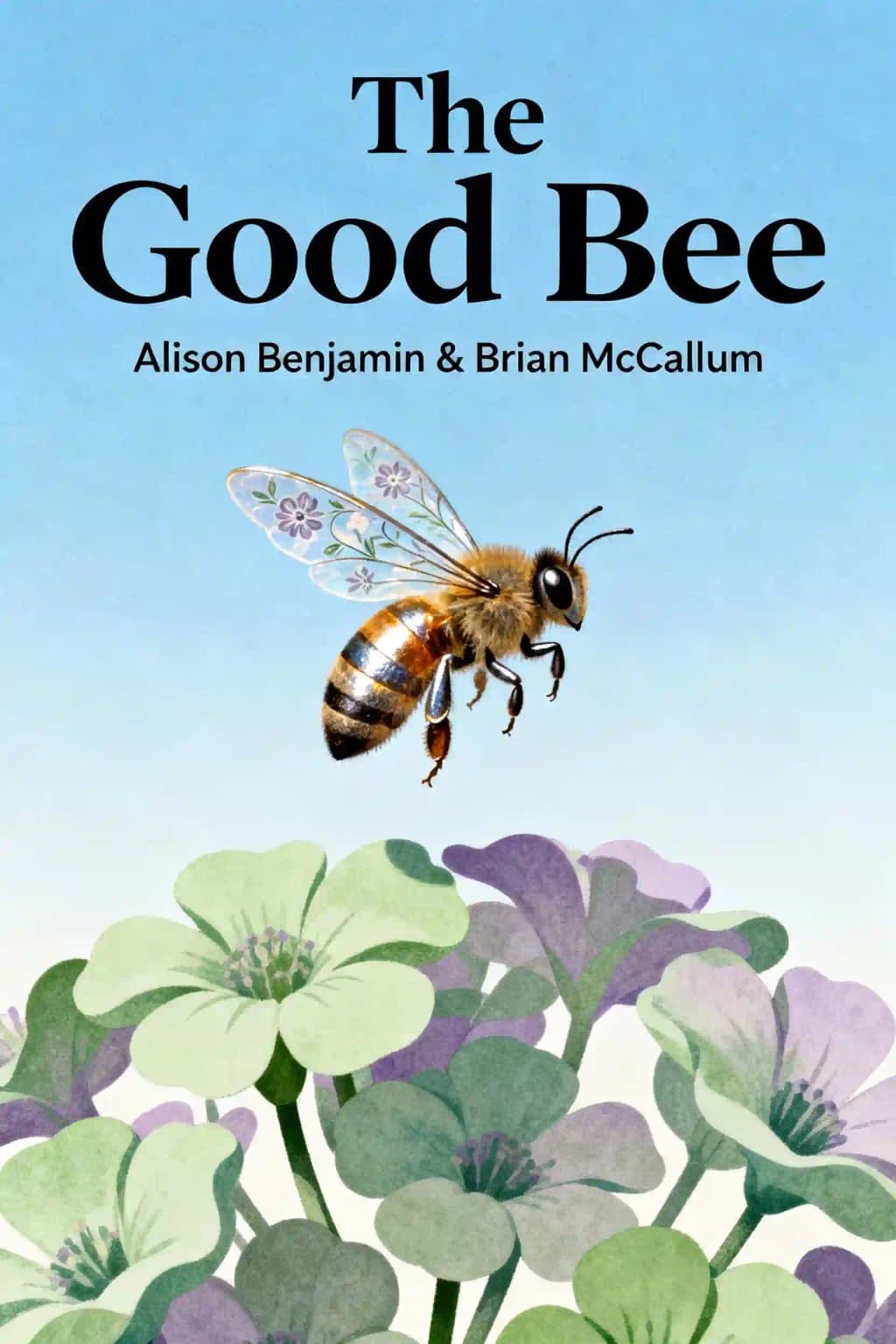
Discover "The Good Bee" - a stunning illustrated journey through the 25,000 bee species vital to our food supply. Did you know only a handful produce honey? Learn how these threatened pollinators shape our ecosystem and what you can do to save them.
Alison Benjamin and Brian McCallum, co-authors of The Good Bee: A Celebration of Bees and How to Save Them, are renowned beekeepers, environmental advocates, and bestselling authors specializing in pollinators and biodiversity. Their work blends nature writing with practical ecology, reflecting their two decades of hands-on experience as urban beekeepers. They are also the founders of the social enterprise Urban Bees, which transforms city rooftops into wild bee habitats.
The duo has penned influential titles like A World Without Bees, a global investigation into honeybee decline, and Bees in the City: An Urban Beekeeper’s Handbook, cementing their authority on sustainable cohabitation with pollinators.
Benjamin, a former Guardian editor, and McCallum, a photographer-turned-conservationist, frequently contribute to environmental discourse through TEDx talks and collaborations with institutions like London’s King’s Cross development. Their books have been featured in The New York Times and endorsed by leading entomologists, with The Good Bee praised as “a masterclass in making entomology accessible.” Published in 2019, the title has inspired urban biodiversity initiatives worldwide and remains a cornerstone text for bee conservationists.
The Good Bee explores the vital role of bees in ecosystems, covering their behavior, diversity (over 20,000 species), and historical ties to humans. Authors Alison Benjamin and Brian McCallum blend science with actionable steps to address threats like pesticides and habitat loss, offering practical conservation strategies for readers.
Nature enthusiasts, gardeners, educators, and anyone interested in environmental conservation will benefit. The book combines accessible science, engaging case studies, and hands-on tips—like creating bee-friendly gardens—making it ideal for both casual readers and eco-conscious individuals.
Yes. Reviews praise its concise yet comprehensive approach, balancing bee biology with urgent conservation themes. Readers gain actionable insights, such as planting pollinator-friendly flora and building solitary bee habitats, alongside striking illustrations.
The book highlights habitat destruction, pesticide use, climate change, and industrial agriculture as critical threats. It underscores how declining bee populations risk global food security and biodiversity, urging immediate action.
Plant native flowers (e.g., lavender, sunflowers), avoid pesticides, provide water sources, and build “bee hotels” for solitary species. These steps create safe habitats and support pollination networks.
No. While honeybees are covered, the authors emphasize lesser-known species like solitary and bumblebees, detailing their unique behaviors and ecological roles. Over 20,000 bee species exist, with only a few producing honey.
Opt for diverse, nectar-rich plants (e.g., heather, rosemary), leave bare soil for ground-nesting bees, and avoid synthetic chemicals. Even small balconies can host bee-friendly potted plants.
It delves into communication methods like waggle dances, pollination techniques, and lifecycle stages. The book also examines mysteries, such as how bees navigate long distances.
Yes. Chapter 2 includes honey-based recipes, celebrating bees’ culinary contributions. These recipes highlight honey’s versatility while connecting readers to sustainable practices.
Its blend of scientific rigor, historical context, and hands-on conservation advice—paired with hand-drawn illustrations—sets it apart. The focus on both honeybees and overlooked species adds depth.
Yes. It traces millennia of beekeeping, humanity’s reliance on bees for crop pollination, and cultural symbolism, from ancient Egypt to modern urban apiaries.
Some readers wished for deeper analysis of threats like climate change in Chapter 3. However, the concise format prioritizes accessibility over exhaustive detail.
通过作者的声音感受这本书
将知识转化为引人入胜、富含实例的见解
快速捕捉核心观点,高效学习
以有趣互动的方式享受这本书
Darwin called [honeycomb] 'perfection in architecture.'
Bees became specialized pollinators, evolving complete dependence on flowering plants.
Their mutual dependence represents one of nature's most successful and enduring evolutionary collaborations.
将《Good Bee》的核心观点拆解为易于理解的要点,了解创新团队如何创造、协作和成长。
将《Good Bee》提炼为快速记忆要点,突出坦诚、团队合作和创造力的关键原则。

通过生动的故事体验《Good Bee》,将创新经验转化为令人难忘且可应用的精彩时刻。
随心提问,选择声音,共同创造真正与你产生共鸣的见解。

"Instead of endless scrolling, I just hit play on BeFreed. It saves me so much time."
"I never knew where to start with nonfiction—BeFreed’s book lists turned into podcasts gave me a clear path."
"Perfect balance between learning and entertainment. Finished ‘Thinking, Fast and Slow’ on my commute this week."
"Crazy how much I learned while walking the dog. BeFreed = small habits → big gains."
"Reading used to feel like a chore. Now it’s just part of my lifestyle."
"Feels effortless compared to reading. I’ve finished 6 books this month already."
"BeFreed turned my guilty doomscrolling into something that feels productive and inspiring."
"BeFreed turned my commute into learning time. 20-min podcasts are perfect for finishing books I never had time for."
"BeFreed replaced my podcast queue. Imagine Spotify for books — that’s it. 🙌"
"It is great for me to learn something from the book without reading it."
"The themed book list podcasts help me connect ideas across authors—like a guided audio journey."
"Makes me feel smarter every time before going to work"

免费获取《Good Bee》摘要的 PDF 或 EPUB 版本。可打印或随时离线阅读。
A single honeybee visits roughly 5,000 flowers in a day. Multiply that by the billions of bees working across the planet, and you begin to glimpse an invisible architecture holding our world together. Every third bite of food we take exists because a bee, somewhere, carried pollen between flowers. Yet most of us walk past these tireless workers without a second glance, unaware that we're witnessing one of nature's oldest partnerships-a collaboration refined over 100 million years, now unraveling in our lifetime.