第 1 章
A Twisted Fairy Tale: Where Shadows Dance with Light
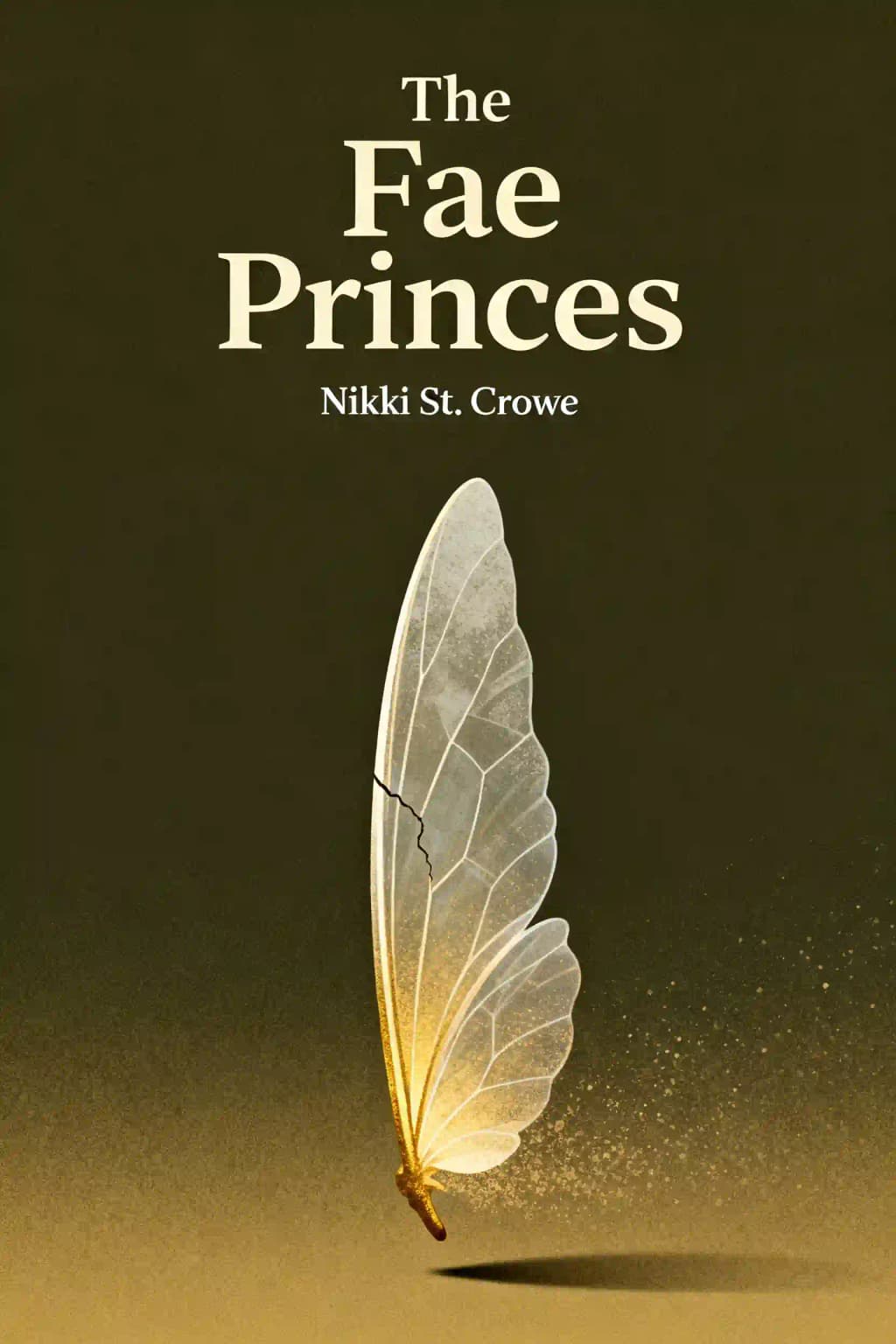
In the realm of dark fantasy romance, few series have captured readers' imaginations quite like Nikki St. Crowe's "Vicious Lost Boys." Her fourth installment, "The Fae Princes," has become a TikTok sensation, with readers across platforms praising its subversive take on Peter Pan lore. This isn't your childhood bedtime story-St. Crowe has reimagined Neverland as a place where shadows have substance, fairies harbor deadly ambitions, and Peter Pan himself grapples with godhood. The series has developed a cult following for its perfect blend of fantasy, spice, and psychological depth, with celebrities like Megan Fox and Sydney Sweeney spotted carrying copies. What makes this reimagining so compelling is how it transforms familiar characters into complex adults navigating power, desire, and belonging-themes that resonate far beyond the boundaries of Neverland.
第 2 章
When the Dead Return: Tinker Bell's Impossible Resurrection
Peter Pan stands frozen on his balcony, staring in disbelief at Tinker Bell - the fairy he killed not once, but twice. She stands before him in her skeleton leaf dress, fairy dust swirling around her like a golden storm, her wings casting prismatic shadows in the moonlight. "Did you miss me, Peter?" she asks with unnerving familiarity, her voice carrying the same musical lilt he remembers from centuries past. When he demands to know how she's alive, her answer is cryptic: the island brought her back as "a gift" and "a little light for your darkness." Her smile holds secrets darker than the shadows between stars.
Meanwhile, across Neverland, snow begins to fall - an impossible weather pattern for this magical island where eternal summer has reigned since time immemorial. The flakes descend like scattered diamonds, each one a violation of natural law. Winnie (once known as Wendy Darling) wakes freezing despite being surrounded by the warmth of her lovers - Vane, with his storm gray eyes; Bash, whose wings once shimmered with dawn light; and Kas, whose missing wings left scars that still ache. The cold seeps through the walls of their treehouse, carrying with it whispers of change and warning.
When they discover Peter Pan missing from his usual perch, they follow sounds of steel on steel to find him with a blade at his throat, confronted by the resurrected Tinker Bell. Her fairy light pulses with an otherworldly power that seems both familiar and wrong, like a song played in the wrong key. The air around her crackles with ancient magic that makes even the Lost Boys' tattoos burn.
The fairy makes an extraordinary claim that shatters centuries of carefully guarded secrets - she is not just Tinker Bell, but the mother of the twins, Bash and Kas. Her words fall like hammer blows, each syllable weighted with implications that threaten to reshape Neverland's hierarchy. She offers to have their banishment revoked and their wings returned if they visit the fae palace, speaking of ancient rights and older promises. "It's time to unite Neverland," she declares before disappearing in a cloud of fairy dust that lingers like golden mist, spelling out words in an ancient fae language before dissolving.
This impossible resurrection sends ripples through Neverland's magical fabric. For Peter Pan, it resurrects old wounds and betrayals - memories of fairy wars and broken promises that he'd buried beneath centuries of careful forgetting. For the twins, it reopens the grief of losing their wings and royal birthright, a pain that manifests in phantom aches where their wings once grew. And for all of them, it signals that something fundamental has shifted in the magic that governs their world - as if the island itself is waking from a long dream.
The snow continues to fall, covering the usually verdant landscape in an ominous white blanket that feels like a warning. Palm fronds bow under the weight of ice, and mermaids surface through breaks in the frozen lagoon, their songs turned to worried whispers. The Lost Boys gather in clusters, their eternal youth suddenly feeling precarious as winter claims their summer paradise.
What makes Tinker Bell's return so unsettling isn't just that she's alive - it's that she seems to know things she shouldn't, speaking of uniting Neverland under new leadership with the certainty of someone reading from an already written ending. Her presence raises uncomfortable questions that echo through the frozen forest: How did she return? What price was paid for her resurrection? And what does she really want from Peter Pan and his chosen family? The answers lie somewhere between the snowflakes and shadows, in the space where old magic meets new promises, and where the price of resurrection might be higher than anyone is willing to pay.
第 3 章
Royal Blood and Broken Wings: The Twins' Painful Past
Bash and Kas, the fae twins, carry the weight of royal blood and the phantom pain of wings torn away. Once princes of the fae court, they were banished and stripped of their birthright-their magnificent wings-leaving them with both physical and emotional scars. Their grandmother Nani had been their anchor, teaching them to braid sweetgrass and telling stories that kept them connected to their heritage even in exile.
When they visit Nani's grave in the royal burial grounds, they discover their sister Tilly-now queen of the fae-standing there. The confrontation quickly turns bitter as Tilly reveals she made an offering to the lagoon, sacrificing her throne in exchange for a way to defeat Peter Pan. "It was an ugly thing anyway!" she cries defensively when her brothers express their shock at her reckless decision.
The twins' relationship with their sister is complicated by years of resentment. Kas grabs her throat in anger, accusing her of being a spoiled princess who sacrificed their family's birthright. Yet when they notice wreaths of braided sweetgrass on Nani's grave-placed there by Tilly-they glimpse another side of their sister. Through tears, she confesses that Nani was the only family member who never wanted something from her. "I tried," she says, "I tried to do my duty to the throne and court like our parents would have wanted. I was afraid of disappointing them."
This revelation humanizes Tilly, showing her as someone trapped by expectations rather than simply power-hungry. The twins watch her return to a palace without her throne, sensing she's in trouble but unsure if they should-or can-save her.
The twins' story resonates because it explores the universal experience of family wounds. Their missing wings represent not just physical loss but the severing of identity and belonging. Despite their outward indifference, they yearn for connection to their fae heritage, for the feeling that they belong somewhere. Their grandmother's memory serves as their emotional anchor, while their complicated relationship with their sister reveals how family can simultaneously be a source of deepest pain and potential healing.
第 4 章
Shadows and Desires: The Complex Web of Relationships
The relationships in Neverland form a complex web of desire, possession, and unexpected tenderness. At its center is Winnie (formerly Wendy Darling), who shares a unique shadow bond with Vane while also being claimed by Peter Pan and desired by the twins, Bash and Kas. This polyamorous dynamic creates a fascinating exploration of different types of love and connection.
Vane and Winnie share perhaps the deepest bond, connected through their shadows in a way that's unprecedented. During an intimate moment in the library, Vane confesses he can feel Winnie's love "like a million golden stars in the endless abyss that is me," bringing her to tears. When she asks him to promise he'll always be there, he kisses her gently and says, "I promise, Win." The nickname itself becomes significant-Winnie prefers when Vane calls her "Win" rather than "Darling," explaining that "Darling" felt dehumanizing when Pan used it, but Vane made her name intimate.
Meanwhile, Peter Pan struggles with his feelings for Winnie, keeping an emotional distance even as he desires her physically. When he overhears Vane and Winnie together in the library, he respects the closed door as Vane's signal for privacy-showing growth from his typically possessive nature. Later, he admits to Vane, "I am a better man because of her," acknowledging how Winnie has transformed him.
The twins, Bash and Kas, add another layer to this dynamic. They care deeply for Winnie, protecting her and desiring her, while also maintaining their own unique bond as brothers. Their shared history and twin connection gives them a language of their own, often communicating telepathically during crucial moments.
What makes these relationships so compelling is how they balance darkness and tenderness. These are dangerous men-killers and monsters in their own right-who find themselves capable of surprising gentleness. After an intense sexual encounter where all four men take turns with Winnie's body, they tenderly care for her afterward-cleaning her, giving her water, and dressing her in Pan's shirt before they all curl up together in bed. This juxtaposition of violence and tenderness creates characters of genuine complexity rather than simple heroes or villains.
The relationships also explore power dynamics in fascinating ways. While the men are physically stronger and often domineering, Winnie holds her own power-particularly through her connection to the shadow and her emotional intelligence. By the story's end, when she commands all four men to kneel before her and they obey, it's clear that true power in Neverland is more complex than physical strength or magical ability.
第 5 章
The Mystery of Peter Pan: Godhood Disguised
At the heart of Neverland's mysteries lies Peter Pan himself-a figure whose true nature has been obscured even from him. Throughout the story, Pan is haunted by whispers from the lagoon spirits: "Never King, Never King. Given light, trapped in the dark." These cryptic messages torment him as he struggles to understand his purpose now that he has regained his shadow.
Tinker Bell delivers a devastating revelation that shakes Pan's identity to its core. She tells him what the lagoon spirits revealed during her imprisonment: "Peter Pan had a mother once, and his mother abandoned him to the lagoon because he was an insolent little boy who didn't fit in with his family." This suggestion that he isn't special-not a myth or god, just abandoned-strikes him to his core.
The truth, however, is far more complex. Through Balder the wolf's memories, we learn that long ago, a woman referred to as "the Mother" carried a troublesome baby boy to the lagoon's edge. She placed him on a large leaf that sank with his weight, pushing him away with the words "I'm sorry." As the Mother and her brother, the wolf, watched, the spirits of the lagoon turned the baby in circles until his cries turned to laughter.
When the leaf teetered and the baby rolled beneath the surface, the Mother panicked, but the wolf stopped her. "The lagoon will give him what he needs," he assured her. Moments later, a boy-aged years in seconds-broke through the surface. "He's beautiful," the Mother whispered. "Like his Mother," the wolf replied. Before leaving, she asked her brother to watch over him from earth while she watched from above-as the second star on the right.
This revelation transforms our understanding of Peter Pan. He wasn't abandoned out of rejection but out of necessity-his mother was a star goddess who knew he would destroy her other children if she kept him. The lagoon gave him the shadow not as punishment but as protection, a crutch to help him navigate his existence until he was ready to embrace his true nature.
Roc, Vane's brother, helps Pan discover this truth by forcing him underwater in the lagoon until he drowns. Rather than dying, Pan undergoes a transformation, emerging from the water glowing like a star, finally understanding his true nature. "I always needed something to prop myself up, to feel less weak," Pan realizes. "The lagoon gave me the Neverland Shadow because I needed that crutch until I knew how to walk."
This journey from abandoned boy to self-aware godling forms the emotional core of Pan's arc. By losing his shadow-the thing he thought defined him-he discovers his own light, literally and metaphorically. When he returns to battle Tinker Bell, he's transformed, "glowing like a star, somehow changed." His declaration to her captures his evolution perfectly: "Found my own light, Tink."
第 6 章
The Price of Power: Tilly's Desperate Gambit
Queen Tilly's story is one of isolation and desperate choices. As the fae queen, she should wield tremendous power, yet she feels powerless-unloved by her mother, unrespected by her brothers, and trapped by royal expectations. When Kas and Bash confront her at their grandmother's grave, she reveals the terrible bargain she made: sacrificing her throne to the lagoon in exchange for a way to defeat Peter Pan.
"It was an ugly thing anyway!" she cries defensively about her throne, but her brothers see through this facade to her fear. Through tears, she confesses that their grandmother Nani was the only family member who never wanted something from her. "I tried to do my duty to the throne and court like our parents would have wanted. I was afraid of disappointing them."
The consequences of Tilly's bargain are severe. The lagoon responds by resurrecting Tinker Bell-not as a benevolent guide but as a power-hungry manipulator who quickly takes control of both the fae court and the Lost Boys through dark magic. Tilly finds herself with neither throne nor respect, merely a pawn in her mother's schemes.
Yet in her darkest moment, Tilly finds redemption. When Winnie is buried alive in a box by Tinker Bell, it's Tilly who digs her out, confessing, "This is all my fault." She helps the others fight against her mother, even attempting to stab Tinker Bell with a Lostland knife during the final battle.
After Tinker Bell's defeat, Tilly makes another significant choice-she formally abdicates the throne to her brothers. "There's no place for her on Neverland anymore," Kas acknowledges sadly. She gives the throne to them, recognizing they've earned their power by saving the fae and claiming the Neverland Shadow. In a touching moment of closure, she promises to write if she ever finds a home, then walks away toward the palace.
Tilly's arc explores how power without connection becomes a prison rather than freedom. Her desperate gambit-sacrificing her throne-was ultimately an attempt to escape the isolation of her position. By the story's end, she finds a different kind of freedom by relinquishing her claim to power entirely, sailing away from Neverland with Roc toward new possibilities in Everland.
第 7 章
The Shadow's True Nature: A Gift, Not a Curse
Throughout the Vicious Lost Boys series, the Neverland Shadow has been portrayed as something dark and dangerous-a malevolent force that possesses and corrupts. "The Fae Princes" reveals a more nuanced truth: the shadow was never a curse but a gift, a tool meant to protect and guide until it was no longer needed.
When Peter Pan loses his shadow to the twins, he initially feels devastated, believing he's lost an essential part of himself. But through his drowning and rebirth in the lagoon, he comes to a profound realization: "The lagoon gave me the Neverland Shadow because I needed that crutch until I knew how to walk." The shadow wasn't his strength-it was training wheels for a god learning to exist in the world.
Meanwhile, when the shadow transfers to the twins, it manifests not as darkness but as magnificent wings-"dark and iridescent like mermaid scales in the firelight." What was taken from them (their fae wings) is restored through the shadow's power, transforming their loss into newfound strength. The shadow doesn't corrupt them but completes them, restoring their birthright in an unexpected form.
Even Winnie's relationship with her portion of the shadow evolves. Initially frightened by its power and bloodthirst, she gradually learns to work with it rather than against it. During the final battle, she and Vane "unleash the Neverland Death Shadow," cutting through opponents with surprising efficiency. Rather than being consumed by the shadow's darkness, Winnie harnesses it, eventually commanding all four men to kneel before her-a queen in her own right.
This reframing of the shadow as a tool rather than a curse adds depth to the entire series. What seemed like a straightforward battle between light and darkness becomes more complex-sometimes darkness protects, sometimes light destroys. When Pan faces Tinker Bell in the final battle, he doesn't defeat her with shadow but with light-his own inner light that he discovered only after losing his shadow.
The shadow's journey through different hosts-from Pan to the twins, with a portion in Winnie and Vane-suggests that power itself is neutral. What matters is how it's used and who wields it. In the right hands, even darkness can heal and restore rather than corrupt and destroy.
第 8 章
The Battle for Neverland's Soul
The climactic battle against Tinker Bell represents not just a physical confrontation but a struggle for Neverland's very identity. Tinker Bell, resurrected through Tilly's desperate bargain with the lagoon, has corrupted the natural order-bringing snow to an island that should be verdant, controlling minds that should be free, and attempting to install puppet rulers who would bend to her will.
As the battle begins, Winnie, Vane, and the twins face overwhelming odds. Tinker Bell has amassed an army of mind-controlled fae and Lost Boys, all armed with volcanic stone blades from Lostland-the same weapons that can extract shadows. Despite their fighting skills, they begin to lose ground. Winnie is bleeding from a cut on her torso, struck by a wooden staff that sends pain vibrating through her bones.
Just when defeat seems inevitable, a light streaks across the night sky. Peter Pan returns, transformed by his experience in the lagoon, "glowing like a star." When he crashes into Tinker Bell with thunderous force, she rises with one wing crooked and the other missing completely. "What have you done, Peter Pan?" she demands. "Found my own light, Tink," he answers, catching her arm when she attacks and melting her black stone blade like ink in his grip.
The battle's imagery is striking-Pan's light versus Tinker Bell's darkness, with "inky ribbons" of darkness leaking from her as Pan's "inferno" rages around them. Her skin breaks open "like parched earth" as darkness seeps out, revealing that this was never truly the twins' mother but a worse version embodying everything they hated about her power-hungry nature. As light pours from Tinker Bell's mouth, she disintegrates, bursting into fairy dust.
When the battle ends, the fae and Lost Boys look around confused, as if waking from a trance. The mind control broken, Neverland begins to heal. This victory represents more than defeating a villain-it restores the natural order of Neverland itself, allowing it to return to its true nature rather than the corrupted version Tinker Bell attempted to create.
The battle's resolution brings closure to multiple storylines. The twins reclaim their birthright, becoming fae kings with magnificent dark wings. Peter Pan embraces his true nature as something beyond human, neither dependent on his shadow nor defined by it. And Tinker Bell, who returned as a twisted version of herself, finds final rest rather than continuing as a corruption of what she once was.
第 9 章
Finding Light in Darkness: Neverland's New Beginning
Two weeks after defeating Tinker Bell, Neverland begins to heal. The snow melts, revealing the lush landscape beneath. The mind-controlled fae and Lost Boys return to themselves, no longer puppets in Tinker Bell's schemes. And our central characters find new equilibrium in their relationships and identities.
Winnie spends nights in Pan's room using his telescope to search for the second star on the right, having pieced together that Pan was born of a star goddess. Though Pan remains "stingy with details, distracting me with sex whenever I ask if he's a god," his transformation is evident. He glows with inner light, no longer dependent on his shadow for strength or identity.
The twins prepare for their coronation as fae kings-a position they've earned through both birthright and sacrifice. With their magnificent dark wings restored through the shadow's power, they've reclaimed their place in fae society while maintaining their connection to their chosen family. Their sister Tilly has formally abdicated, acknowledging they've "earned their power by saving the fae and claiming the Neverland Shadow."
Even Vane, perhaps the most resistant to change, has evolved. When Pan tells him "I am a better man because of her," referring to Winnie, Vane agrees: "We all are." Their grudging affection culminates in Vane's reluctant admission: "I love you too, you fucking asshole." Across the clearing, Winnie mouths "I love you three" while Bash draws a heart with his fingers-a moment of tenderness that would have been unimaginable at the story's beginning.
The epilogue hints at new adventures to come. Roc and the former fae queen Tilly sail toward Everland, with Roc excited not just to hunt for Wendy Darling but to encounter "a certain pirate with a fuckable mouth and an attitude I'd love to break." His parting thought-"I'm coming for you, Captain. I hope you're ready to be devoured by a Crocodile"-suggests that Captain Hook's story is far from over.
The final scene brings the story full circle, with Winnie commanding all four men to kneel before her. Looking at "these four vicious men on their knees before me," she realizes "they're all mine." This moment of empowerment completes Winnie's journey from captive to queen, claiming her own power rather than being defined by her relationships with these men.
What makes this ending satisfying is how it balances resolution with new beginnings. The immediate threat is vanquished, but the characters continue to evolve. Neverland itself has been transformed-not back to exactly what it was before, but into something new that honors its true nature while incorporating the changes these characters have brought to it. In finding the balance between shadow and light, between past and future, between individual desire and collective good, they've created a Neverland that can truly be home to all of them.