第 1 章
When Darkness Falls, Feathers Rise
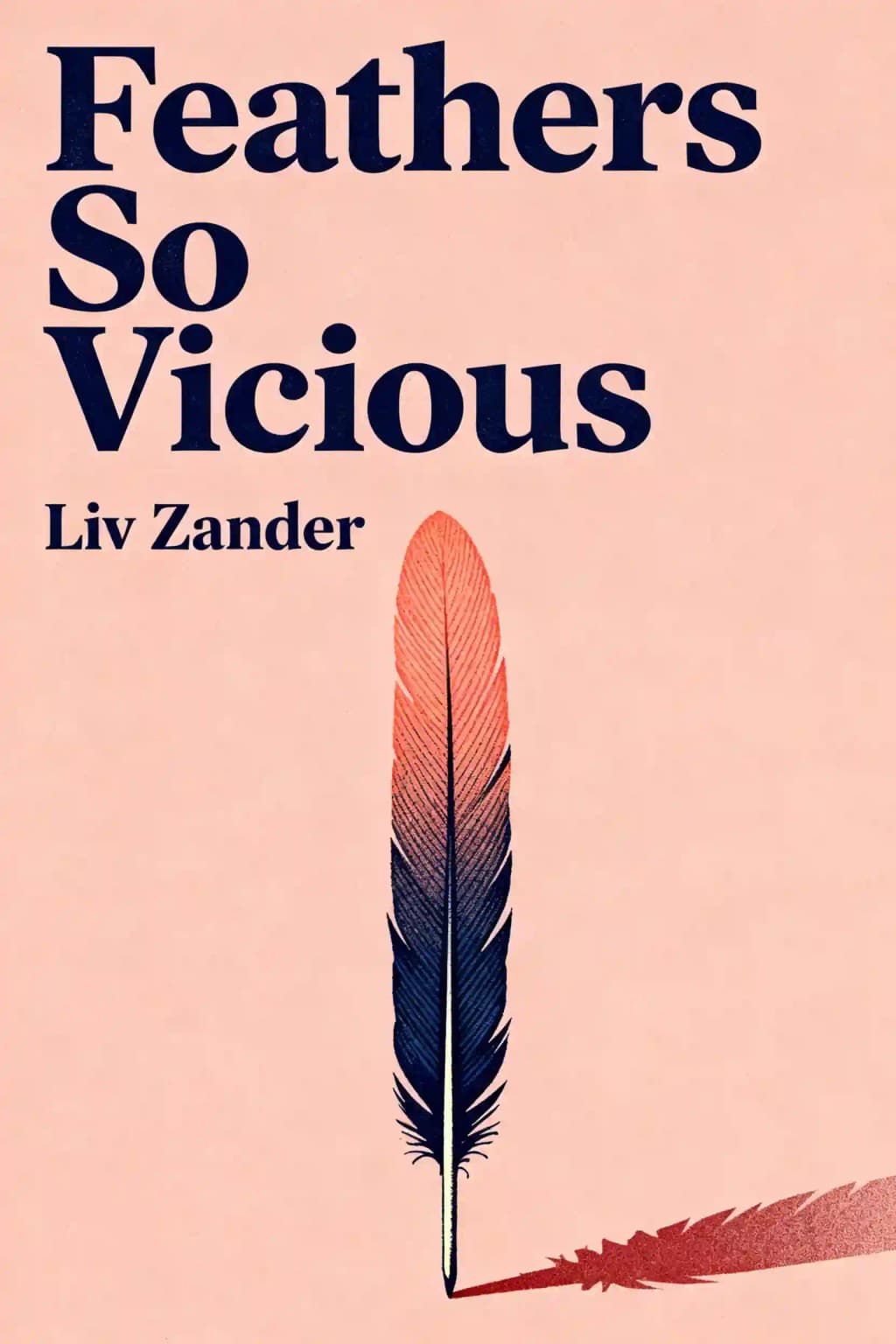
The haunting tale of Feathers So Vicious has captivated readers worldwide since its release, earning its place among BookTok's most discussed dark fantasy romances. Author Liv Zander crafts a world where the line between love and hatred blurs into something both beautiful and terrifying. This enemies-to-lovers story resonated deeply with celebrities like Florence Pugh, who praised its "raw emotional complexity" on Instagram, and has inspired countless cosplayers to don raven-inspired outfits at conventions. The novel's exploration of trauma, power dynamics, and forbidden desire speaks to our cultural fascination with morally gray characters who challenge our understanding of good and evil. As we dive into this story of ravens and shadows, prepare to question everything you thought you knew about villains, victims, and the thin line between them.
第 2 章
A Kingdom Divided by Feathers and Blood
The world of Feathers So Vicious is one torn apart by ancient hatred between humans and Ravens-people who can transform into birds. This conflict reaches back generations, with King Barat waging war against the Raven King Omaniel of House Khysal. For young Galantia Brisden, this war becomes personal on the day her brother is born.
As a child, Galantia experiences her first taste of her father's approval through violence against Ravens. When she accidentally causes the death of a young Raven prince attempting to escape the dungeons beneath her home, her father praises her instead of punishing her. This moment coincides with the death of her newborn brother, creating a twisted association in her mind: her father's love comes only through the suffering of Ravens.
Nineteen years later, Galantia travels to meet her betrothed, Prince Domren, accompanied by her cold mother and loving nursemaid Risa. Their journey reveals the brutal reality of the ongoing conflict-burned fields allegedly devastated by Raven-spread pests, villages where suspected Ravens are tortured and killed, and the looming threat of the mysterious "Lord of Shadows" who leads the Raven forces.
The true horror of this war becomes visceral when their carriage stops in a village where Galantia witnesses the torture of a woman accused of being a Raven. When the woman transforms into five ravens under extreme pain, confirming her nature, the crowd descends into savage chaos, killing and consuming the birds. Despite being raised to believe Ravens deserve death, Galantia finds herself disturbed by the scene-a first crack in her worldview that will soon shatter completely.
This fragile moment of questioning is violently interrupted when Ravens attack the inn where they're staying. In the chaos, Galantia's beloved nursemaid Risa is captured and brutally murdered before her eyes, while Galantia herself is taken prisoner by a Raven named Sebian, who has been ordered to deliver her "alive and unharmed" to someone called "the fate."
The true shock comes when Galantia meets her captor-the Lord of Shadows himself, whose empty, passionless gaze and aura of ancient sorrow belie his youth. When he learns her identity as "Lady Galantia," his demeanor transforms from apathy to frightening interest as he whispers, "She's the bastard's daughter," before choking her with shadows that slither into her lungs, leaving her in darkness.
第 3 章
The Prince of Darkness and Shadows
The Lord of Shadows is Malyr Khysal, last surviving son of King Omaniel and Queen Elnora, and heir to the Raven throne. His reputation precedes him-a man who commands deadly shadows and leads the Raven forces against humans with ruthless efficiency. But beneath this fearsome exterior lies a soul fractured by trauma and driven by revenge.
Malyr's interest in Galantia is deeply personal. As Captain Asker and Malyr debate what to do with her, we learn they plan to exchange her for Asker's captured mate Marla. Yet Malyr's motivations run deeper than military strategy-he harbors a specific hatred for Lord Brisden, Galantia's father, that transcends the general conflict between their peoples.
This hatred manifests in cruelty toward Galantia. When she attempts to threaten him with a knife, he responds with disturbing excitement rather than fear, leaning into the blade and revealing he knows her father "intimately"-that because of her father, he's "a million shattered pieces, put back together all wrong." In a moment of shocking revelation, Galantia recognizes a black, round birthmark beneath his earlobe-this is the Raven boy from the dungeons, the prince she thought she'd killed years ago.
Malyr's trauma is revealed through haunting flashbacks. We see him as a child carrying his sister Naya away from danger, only to lose her when a catapult strike hits nearby. Overwhelmed with grief, he loses control of his shadows, which spread across the ground and engulf his parents, turning "kingdom to crypt." Later flashbacks reveal even more horrific abuse at the hands of Lord Brisden, who had Malyr flogged and sexually assaulted in an attempt to break him and force him to remove the shadows protecting Valtaris.
The shadows themselves become a character-extensions of Malyr that sometimes act independently of his will. They represent his fractured psyche, responding to his emotions and often betraying his true feelings even when he attempts to maintain his cold exterior. These shadows become particularly erratic around Galantia, simultaneously wanting to kill her because of her lineage and caress her because of his growing attraction.
Malyr's complexity lies in this contradiction-he is both victim and villain, capable of extreme cruelty yet haunted by his own suffering. He tells Galantia, "I would rather suffer The Endless Ache than watch my mate endlessly suffer me," revealing his belief that he is too damaged for love. Yet despite his attempts to remain cold and vengeful, his interactions with Galantia gradually reveal glimpses of "the prince beneath the shadows"-moments of nobility and tenderness that confuse both Galantia and himself.
第 4 章
The Pathfinder Between Worlds
While Malyr represents darkness and vengeance, Sebian offers Galantia something different-protection and a gentler form of desire. As a pathfinder who harvests herbs in the wild, Sebian moves between the human and Raven worlds with relative ease, making him uniquely positioned to understand Galantia's predicament.
From their first encounter, Sebian shows concern for Galantia's wellbeing, even as he participates in her capture. He defends her from other Ravens who would harm her and offers her small comforts in her captivity. Yet his motivations are complex-he harbors his own hatred for humans, particularly Prince Domren, who raided a Raven refugee camp where Sebian's family lived.
The tragedy that shapes Sebian is revealed gradually: he was supposed to be on watch the night Domren attacked but was injured and unconscious. He returned too late to save his family from being burned alive and suffered severe burns trying to rescue them. He carries immense guilt for the deaths of nearly a hundred souls, including his mate who now "sparkles among the stars."
This past trauma explains Sebian's protective instincts toward Galantia-as Malyr cruelly points out, he cannot forgive himself for failing to save his loved ones and sees in Galantia another chance at redemption. Yet his feelings for her grow beyond mere protection into genuine desire, creating a complicated triangle between himself, Galantia, and Malyr.
Sebian's relationship with Malyr adds another layer of complexity. They are close friends who have survived trauma together, yet they use Galantia as a pawn in their own power games. When Malyr asks why Sebian hasn't kissed Galantia, we learn that among Ravens, those never kissed are "forever rejected"-revealing how both men manipulate Raven customs in their interactions with her.
Despite participating in Galantia's manipulation, Sebian offers her moments of genuine tenderness. During a violent storm, he provides comfort when she's terrified, holding her close after pleasuring her and cleaning her gently afterward. These moments of care stand in stark contrast to Malyr's deliberate cruelty, offering Galantia glimpses of what a different kind of relationship might feel like.
Yet Sebian remains bound by his past-his dead mate still claims his loyalty, preventing him from fully committing to Galantia despite their growing connection. This unresolved grief creates a barrier between them that neither can fully overcome, adding another layer of tragedy to their relationship.
第 5 章
The Daughter of the Enemy
Galantia Brisden begins her journey as a sheltered noblewoman with a simplistic understanding of the world. Raised to believe Ravens are monsters deserving death, she has never questioned her father's role in the conflict or considered the humanity of their enemies. Yet beneath this conditioning lies a young woman desperate for love and acceptance, having grown up with a cold mother who preferred her now-dead brother and a father who values her only when she participates in violence against Ravens.
Her capture forces her to confront the complexity of the conflict and her own place within it. As she interacts with Malyr and Sebian, she begins to see Ravens as individuals with their own traumas and motivations rather than faceless enemies. This growing awareness creates internal conflict as she struggles to reconcile her upbringing with her experiences.
Galantia's isolation has shaped her in profound ways. We learn she has never been allowed to leave Tidestone Castle, never even visiting nearby towns for harvest celebrations. This extreme confinement has left her naive in many ways but has also fostered a fierce determination and adaptability that serves her well in captivity.
Her relationship with her own body becomes a central theme as she discovers desire through her interactions with Malyr and Sebian. Initially shocked by her body's responses to their touch, she gradually embraces these feelings, finding power in her sexuality even as it's used against her. When Malyr carves his raven sigil into her chest, marking her as his, she worries about how this will affect her marriage prospects-yet later comes to see this scar as part of her evolving identity.
Galantia's strategic mind emerges as she navigates the dangerous politics of Deepmarsh Castle. When she learns her father has refused to exchange Marla for her, considering the Raven too valuable militarily, she pivots quickly-proposing marriage to Malyr instead, offering three incentives: her father's army, her willingness to endure whatever pain Malyr inflicts, and a promise to free Marla from Tidestone's dungeons.
This proposal reveals her growing agency and willingness to use whatever tools she has available-including her body and her family connections-to secure her position. She secretly plans to get pregnant to ensure Malyr can't break their betrothal once Marla is freed, showing her capacity for manipulation even as she develops genuine feelings for both Malyr and Sebian.
Yet beneath this strategic thinking lies a deep longing for genuine connection. When she watches young Ravens courting, she questions why Sebian never kissed her, revealing her desire for more than just physical pleasure or political security-she wants love, despite knowing how dangerous such feelings are in her situation.
第 6 章
The Politics of Power and Desire
The personal relationships between Galantia, Malyr, and Sebian unfold against a backdrop of complex political machinations. The marriage alliance between House Khysal and House Brisden represents more than just a union between two people-it's a potential turning point in the war between humans and Ravens.
Captain Asker, who can glimpse the future, tells Galantia that this wedding will unite Ravens and humans in a powerful new era. Yet beneath this optimistic vision lie darker motivations. Asker wants to use Galantia to secure the release of his mate Marla, while Malyr sees the alliance as a way to gain Lord Brisden's army for his spring campaign against Ammarett.
The political landscape is further complicated by internal divisions within both human and Raven societies. Lady Cecilia (Cici) of House Taradur represents human nobles who have allied with the Ravens against their own kind, while Lorn embodies Ravens who resent any potential peace with humans after suffering at their hands.
Power dynamics permeate every interaction, particularly those involving sexuality. When Malyr forces Galantia to her knees, threatening to spread rumors about her and Sebian if she refuses to perform oral sex on him, he demonstrates how intimacy can be weaponized. Similarly, when he publicly violates her after learning her father has offered her hand in marriage, he uses sexual humiliation as a tool of political dominance.
Yet power flows both ways. Galantia learns to use her sexuality as leverage, offering herself to Malyr in exchange for political concessions. When she deliberately fails during a horseback riding lesson to provoke his punishment, she shows her growing understanding of how desire can be manipulated for her own ends.
The most significant political revelation comes when Sebian discovers Malyr's betrayal. The wagons supposedly carrying grain to Tidestone actually contain siege weapons-Malyr never intended to honor the marriage alliance but was using it as a distraction while positioning forces to attack Galantia's home. This betrayal extends to Galantia personally when she discovers Cici wearing her wedding gown, revealing Malyr has promised to marry Taradur's daughter instead.
This moment crystallizes how personal and political betrayals intertwine in this world. Malyr's revenge against Lord Brisden takes precedence over any genuine feelings he might have developed for Galantia, just as her father's military calculations outweighed any paternal concern for her safety when he refused to exchange her for Marla.
第 7 章
The Language of Ravens and Shadows
Throughout the narrative, Raven culture and magic create a rich tapestry that contrasts with the human world Galantia knows. Ravens possess the ability to transform into birds-an "unkindness" form that represents their true nature. This transformation is both beautiful and dangerous, requiring them to jump from heights to successfully shift.
The magic system revolves around "anoa"-the raven that carries a Raven's gift. When Galantia meets Tjema, a girl with severe burn scars, she learns that losing one's anoa means losing one's magical gift and the ability to find a destined mate. This fate resonates with Galantia's own fears of being unwanted and reveals the deep connection between magic and identity in Raven culture.
Raven language adds another layer of authenticity to their world. When Malyr speaks the traditional promise "Yeh ash valtem haron fer'ya" (I will forever provide for you) during their courtship ritual, the words carry weight beyond their literal meaning-they represent centuries of tradition and the binding nature of Raven commitments. Similarly, when he later adds "Yeh ash valtem flig ak'ya" (I will forever fly with you), he reveals a deeper level of commitment than he's willing to admit consciously.
The concept of mates-destined partners connected by magic-stands in stark contrast to human arranged marriages. Ravens recognize their mates through scent and magical connection, creating bonds that transcend death. Sebian remains connected to his dead mate despite his growing feelings for Galantia, while Asker's desperate efforts to free his mate Marla drive much of the plot.
Perhaps the most fascinating aspect of Raven magic is Malyr's shadow powers. As a deathweaver, he commands shadows that can kill, restrain, and even pleasure. These shadows represent his fractured psyche-sometimes acting independently of his conscious will, particularly around Galantia. When he admits his shadows have become erratic in her presence, "wanting her dead because he hates how innocent she remained while her father corrupted him," we see how magic manifests emotional trauma in physical form.
The mysterious blue ribbon tied around Galantia's wrist during a storm becomes a significant plot point-when she mentions it to Malyr and Sebian, their alarmed reaction suggests another layer of Raven magic at work. This subtle thread hints at forces beyond even Malyr's understanding, perhaps connected to the "Lord of Shadows" identity he embodies.
第 8 章
The Price of Revenge and Redemption
Revenge drives many characters in this dark tale, creating cycles of violence that span generations and territories. Malyr's consuming hatred for Lord Brisden stems from horrific abuse suffered in Tidestone's dungeons - systematic torture that included daily floggings, sexual assault, and psychological manipulation designed to break his spirit and force him to remove the ancient shadows protecting Valtaris. This prolonged trauma has fractured his psyche, leaving him "a million shattered pieces, put back together all wrong." His nightmares feature the constant drip of water from cell walls and the rattling of chains, sensory memories that continue to haunt him years later.
Malyr's revenge extends beyond Lord Brisden to encompass Galantia, whom he initially views solely as an extension of her father's legacy. When he carves his raven sigil into her chest during their first encounter, he's deliberately marking her as property - mirroring how her father branded him with the Tidestone seal. His calculated cruelty toward her represents displaced vengeance, a way of hurting the daughter to wound the father who destroyed him. The psychological parallel becomes even more pointed when Malyr forces Galantia to watch as he executes prisoners, just as her father made him watch the execution of fellow Valtarian captives.
Sebian's quest for revenge focuses with laser precision on Prince Domren, who led the brutal raid on the Raven refugee camp where his family sought sanctuary. The attack left seventeen dead, including Sebian's pregnant sister and elderly father. When intelligence suggests Domren's hunting party has been spotted in the northern territories, Sebian abandons his carefully laid plans with Galantia to pursue this opportunity, demonstrating how the promise of revenge can override even the strongest personal connections. The bitter irony that Domren is Galantia's intended husband adds another layer of complexity to their already complicated relationship.
Captain Asker stands apart, seeking not revenge but redemption through his desperate mission to rescue his mate Marla from Tidestone's notorious dungeons. His revelation that he's already lost his daughter Ravenna to the kingdom's cruelty adds urgent weight to his quest - he cannot bear to lose another family member to the same dark fate. This more constructive motivation provides a stark contrast to the destructive cycles of revenge that consume other characters, though his methods grow increasingly extreme as time runs short.
Galantia's transformation from innocent victim to active participant in these cycles of violence occurs when she uncovers the full scope of her father's betrayal. His cold refusal to exchange Marla for her safe return - effectively abandoning his only daughter to torture and death - forces her to confront his true nature. This devastating revelation, combined with Malyr's subsequent betrayal of their betrothal agreement, pushes her toward crafting her own form of revenge, or perhaps seeking redemption through personal transformation and rebellion against everything she once held dear.
The devastating cost of these revenge cycles becomes increasingly apparent in the mounting losses each character endures. Malyr lost not only his family but his entire kingdom to shadows he couldn't control, leaving him both physically and emotionally scarred. Sebian lost his family and mate to human violence, destroying his faith in any possibility of peaceful coexistence. Galantia loses her innocence, identity, and every relationship she trusted through repeated betrayals. The central question emerges: can any of these damaged souls break free from these destructive patterns, or are they doomed to perpetuate them, creating ever-widening circles of violence and loss?
第 9 章
When White Feathers Rise from Ashes
The climactic transformation that concludes this portion of the story represents both destruction and rebirth. After discovering Malyr's betrayal-that he never intended to marry her but was using their betrothal as a distraction while positioning forces to attack Tidestone-Galantia's heart shatters completely. Malyr cruelly laps up her tears, savoring his promise fulfilled: he has broken her completely.
Yet from this complete destruction emerges something unexpected and powerful. As Malyr reminds her that no love exists for her anywhere, "a blinding storm of white feathers erupts from me as color bleeds across the room and my vision sharpens." This transformation into white ravens-extraordinarily rare in this world-represents Galantia's rebirth from the ashes of betrayal.
The symbolism of white feathers is profound. Throughout the story, Ravens are associated with darkness-black feathers, shadows, night. Galantia's transformation into white ravens suggests she has transcended the binary opposition between human and Raven, becoming something new that defies categorization. The white plumage "blending with snow and clouds" as she flies eastward symbolizes both purity and camouflage-she has been purified through suffering yet remains hidden, her true nature concealed even as it emerges.
This transformation also represents Galantia claiming agency after being used as a pawn by everyone around her-her father, Malyr, even Sebian to some extent. By literally taking flight, she escapes the constraints that have bound her throughout her life, from her father's controlling isolation to Malyr's manipulative cruelty.
The timing is significant-this transformation occurs after Galantia has experienced both extreme cruelty and unexpected tenderness from Malyr, after she has learned painful truths about her father's willingness to sacrifice her, and after she has glimpsed what genuine connection might feel like with Sebian. These experiences have shattered her previous understanding of herself and her world, creating space for something new to emerge.
As she flies eastward "away from the pain," we're left wondering what this transformation means for the ongoing conflict between humans and Ravens. Could Galantia-now neither fully human nor traditional Raven-represent a potential bridge between these warring peoples? Or will her newfound power fuel a different kind of revenge against those who betrayed her?
The white feathers rising from the ashes of her former self suggest both endings and beginnings-the death of Galantia Brisden, daughter of the enemy, and the birth of something new that transcends the limitations of both human and Raven identity. In this transformation lies the promise of the story's continuation, where love and hatred, revenge and redemption, might find new expressions beyond the boundaries of what either society thought possible.