第 1 章
A Dance with Power and Deception in the Faerie Realm
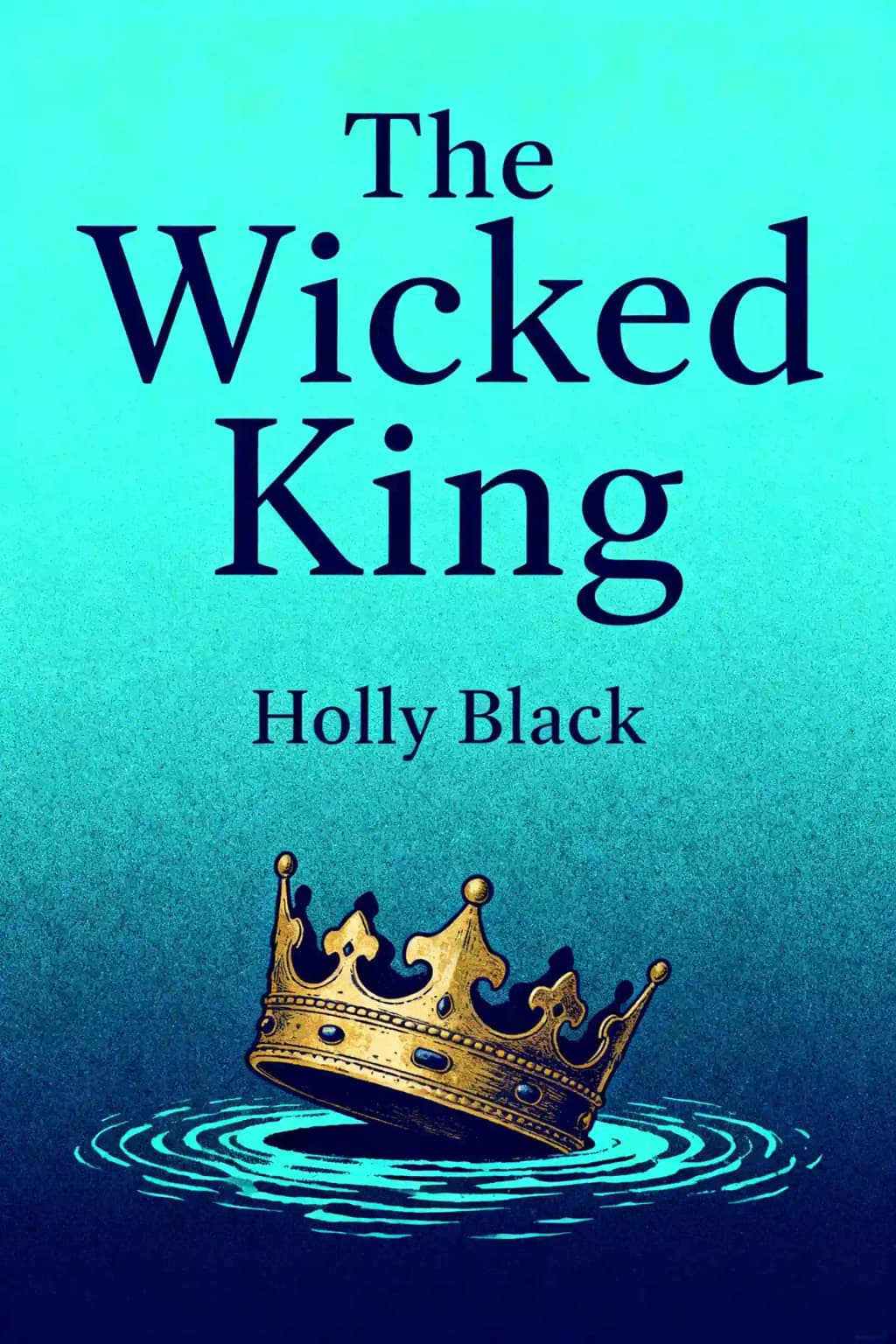
In a world where beauty conceals cruelty and power changes hands like poisoned wine, Holly Black's "The Wicked King" has captivated millions with its dark faerie tale of political intrigue. This second installment in the Folk of the Air trilogy has garnered a cult following among young adult readers and fantasy enthusiasts alike, with celebrities like Olivia Rodrigo and Taylor Swift citing it among their favorite reads. The novel's exploration of power dynamics and moral ambiguity has sparked countless TikTok trends and fan theories, cementing its place as a cornerstone of modern fantasy literature. What makes this tale of a mortal girl navigating the treacherous courts of Faerie so compelling? Let's delve into the shadows of Elfhame to discover how Jude Duarte continues her dangerous dance with power.
第 2 章
The Puppet Master's Dilemma
Five months into her secret rule over Elfhame, Jude Duarte walks a precarious tightrope. Having manipulated Cardan onto the throne through blackmail, she finds herself in an unprecedented position-a mortal seneschal with the High King of Faerie bound to her will. Yet this arrangement proves far more complicated than she anticipated. "Power is much easier to acquire than it is to hold on to," Madoc once taught her, and now she lives this lesson daily.
The Court of Shadows-Jude's network of spies including the Roach, the Bomb, and the Ghost-serves as her eyes and ears throughout the kingdom. Through them, she intercepts messages between Cardan's imprisoned brother Balekin and the High King, discovering troubling communications that hint at conspiracy. Meanwhile, Cardan himself proves an unpredictable puppet, indulging in debauchery and deliberately testing the limits of Jude's control.
When Locke, Jude's sister's fiance, becomes Master of Revels and plans an extravagant Hunter's Moon celebration, Jude senses trouble brewing. Her suspicions are confirmed when she learns that Queen Orlagh of the Undersea has been secretly communicating with Balekin, potentially planning to break her treaty with the land. The delicate political balance Jude has maintained begins to crumble as she realizes the Undersea might sink Elfhame beneath the waves unless Cardan agrees to marry Orlagh's daughter Nicasia.
What makes this political intrigue so compelling is Jude's unique perspective as both insider and outsider. As a mortal in Faerie, she possesses immunity to glamour but lacks the immortality and magic of those around her. Her power comes not from birthright but from cunning and willingness to embrace manipulation-qualities that make her both vulnerable and dangerous. "I am not like them," she acknowledges, "but I can pretend."
第 3 章
The Poison of Desire
Perhaps the most intoxicating element of Jude's journey is her complicated relationship with Cardan. What began as mutual hatred has transformed into something far more dangerous - desire. Their antagonism crackles with unresolved tension that finally ignites in a passionate encounter behind the throne room. "I hate you so much that sometimes I can't think of anything else," Jude breathes as they fall into each other's arms, a confession that reveals the thin line between hatred and desire. This moment marks a turning point, where their carefully maintained facades begin to crack, revealing the raw vulnerability beneath.
This relationship embodies the novel's exploration of power dynamics in its most nuanced form. Jude may control Cardan through her command, but he exerts his own influence through her growing feelings for him. Their dance of power extends beyond political maneuvering into emotional territory, where each victory comes with its own defeat. When she later sees him with Nicasia - part of her own scheme to extract information - the jealousy that flares surprises her. "Making me like him is the worst thing he's ever done to me," she realizes, recognizing how her feelings create a vulnerability she cannot afford. These moments of jealousy reveal not just romantic attachment but a deeper fear of losing control, of being outmaneuvered in their complex game.
The physical manifestation of this poisonous attraction appears in Jude's nightly ritual of mithridatism - consuming small doses of various poisons to build immunity. Her body begins to crave what should kill her, "an apt metaphor for other things in my life," she acknowledges. The side effects - too-bright eyes, bluish fingernails, and vivid dreams - mirror the transformative effects of her dangerous attraction to Cardan. Each night, as she carefully measures out her doses, she's equally conscious of measuring out her feelings, trying to maintain that delicate balance between immunity and addiction.
What makes this romance compelling is its foundation in mutual recognition rather than idealization. Cardan sees Jude clearly - her ambition, her ruthlessness, her vulnerability - just as she glimpses the wounded boy beneath his cruel prince facade. Their connection forms not despite their antagonism but because of it; they recognize in each other a kindred spirit shaped by trauma and driven by a desperate need for control. In their quieter moments, when guards drop and masks slip, they see in each other a reflection of their own damaged souls. Their shared understanding of power's corrupting influence and the weight of expectations creates a bond that's as authentic as it is dangerous.
The evolution of their relationship serves as a mirror for the broader themes of the novel: the complexity of power, the price of ambition, and the transformative nature of desire. Their story suggests that true intimacy comes not from trying to change each other, but from accepting the darkness within themselves and each other. As Jude notes, "If you want to know what someone fears losing, watch what they photograph." In Cardan's case, she realizes, he photographs nothing - having never had anything he couldn't bear to lose until now.
第 4 章
Family Ties and Betrayals
Blood binds as strongly as magic in Elfhame, and Jude's complicated family relationships form another central thread. Her twin sister Taryn's upcoming marriage to Locke creates tension, especially after Taryn's previous betrayal of Jude's trust. Despite her reservations, Jude agrees to attend the wedding when she learns her younger brother Oak will visit from the mortal world.
Oak's presence raises uncomfortable questions about Jude's future plans. As Madoc's foster daughter, she was raised on lessons of strategy and power, but her ultimate goal has always been to protect Oak until he's old enough to claim the throne that is his birthright. Yet as she grows accustomed to wielding influence, she begins to question whether she'll willingly relinquish control when the time comes.
Her relationship with Madoc proves equally complex. The redcap general who murdered her parents and raised her as his own represents both mentor and adversary. When she confronts him about allowing her to be hurt in Faerie, she holds up her hand with the missing fingertip: "The only difference now is that my suffering benefits me instead of you." This accusation visibly shakes him, revealing the complicated love beneath their power struggle.
Most devastating is the betrayal that comes from her own twin. When Jude is poisoned and imprisoned by the Undersea, Taryn impersonates her to trick Cardan into freeing Madoc from his vows to the crown. This betrayal cuts deeper than any physical wound, severing the last remnants of trust between the sisters and setting the stage for war.
These family dynamics reflect the novel's central theme-that love and betrayal are often two sides of the same coin. In Faerie, where direct lies are impossible but manipulation is an art form, even the closest bonds can become weapons. As Jude observes, "In Faerie, there is no difference between a trick and a lesson."
第 5 章
Captive in the Undersea
Jude's imprisonment in the Undersea marks the darkest chapter of her journey, revealing both her vulnerability and her indomitable spirit. Captured through the Ghost's calculated betrayal and imprisoned in Queen Orlagh's crystalline underwater palace, she experiences true powerlessness for the first time since gaining control over Cardan. The physical torment is multifaceted and relentless - severe dehydration wreaks havoc on her mortal body, while withdrawal from her carefully cultivated poison immunity leaves her trembling and weak. The disorienting experience of breathing water through gills magically forced upon her serves as a constant reminder of her helplessness in this alien realm.
During her captivity, Jude faces layers of psychological warfare. Nicasia, driven by both jealousy and genuine hatred, takes particular pleasure in taunting her about her mortality and her presumption in trying to rule Faerie. These confrontations are punctuated by Balekin's more calculated approach to breaking her will - combining physical deprivation with sophisticated manipulation techniques learned from years of court intrigue. In her weakened state, Jude finds herself revealing more than intended about Madoc's military strategies and her own complicated history with the Court of Shadows. Yet even as her body fails her, her mind remains sharp. She develops a system of selective memory, pretending to forget crucial details when commanded while carefully cataloging everything she learns about her captors.
The most psychologically devastating moment comes through Balekin's cruel test, commanding her to kiss him "as though he were Cardan." This violation goes beyond physical abuse, striking at the complex emotions she harbors for the High King. Balekin's command reveals not only his sadistic nature but also his keen understanding of her emotional vulnerabilities. When he later presents her with what seems like an opportunity for freedom - ordering her to assassinate Cardan - she demonstrates her strategic thinking by appearing to acquiesce while secretly constructing her own plans.
This period of captivity serves as a crucible for Jude's character, testing the limits of human endurance while revealing the intricate ways imprisonment can simultaneously break and strengthen resolve. The experience forces her to confront her own limitations as a mortal in the realm of Faerie, yet also helps her discover depths of resilience she never knew she possessed. She emerges from the Undersea physically depleted but mentally fortified, her determination to reclaim her position of power burning with renewed intensity.
Her time underwater proves strategically valuable as well, providing critical intelligence about the alliance between Balekin and Orlagh. She learns of their ambitious plan to create a new crown through the legendary smith Grimsen - information that becomes crucial in understanding the broader political machinations threatening Elfhame. Through her suffering, Jude gains not just survival knowledge but also vital insights into the power dynamics that will shape the coming conflict.
第 6 章
The High King Transformed
While Jude struggles in the Undersea, Cardan undergoes his own transformation. When she returns, she discovers the High King has grown into his power without her guidance. The palace guards inform her she's barred from entering-by Madoc's orders-and she realizes Cardan has outmaneuvered her, using a loophole to keep her away without directly disobeying her commands.
This evolution becomes most apparent during the masquerade ball, where Cardan appears to behave outrageously-falling to the floor laughing, playing vulgar songs on a lute, and dismissing Lord Roiben's formal request for vengeance. Only Jude recognizes that he's been poisoned with wraithberry, not drunk. When she rushes to save him, their roles reverse-she becomes the protector while he lies vulnerable.
In this vulnerable state, Cardan reveals surprising depth. He speaks of his past cruelty with genuine regret, admitting he felt powerful only when being awful to others. This confession humanizes him, showing the wounded child beneath the wicked king facade. When Balekin offers the antidote in exchange for the crown, Cardan contemplates surrender, revealing his complex feelings about kingship.
The climax of Cardan's transformation comes after Jude murders Balekin and learns of Madoc's betrayal. Seemingly recovered from the poison, Cardan proposes an unexpected bargain: marriage in exchange for freedom from his vow of obedience. He argues that as Queen of Elfhame, she wouldn't need his obedience to have power. Despite her suspicions, Jude agrees, exchanging simple vows that bind them until the crown passes from their hands.
Only after releasing him from his vow does Jude discover his true power. When Orlagh demands justice for Balekin's death, threatening war unless Jude is surrendered to the sea, Cardan demonstrates his connection to the land by raising a new island and trapping Nicasia in a growing tree. This display forces Orlagh to agree to a truce-but comes with a devastating price for Jude.
第 7 章
The Exile's Revenge
In the novel's final devastating twist, Cardan exercises his power as High King to exile Jude to the mortal world until pardoned by the crown-a seemingly infinite sentence. When she desperately protests that she is the Queen of Faerie, the entire court erupts in mocking laughter, exposing the clever trap hidden within their marriage vows. The ceremony's precise wording, which had seemed a triumph, becomes her undoing. As the knights drag her away, she watches Cardan perform one last act of calculated cruelty: naming the new island "Insear, Isle of Ash"-a deliberate play on her name, Jude Duarte, transforming her identity into a geographic reminder of her defeat.
Exiled to the mortal world, Jude takes reluctant refuge with her older sister Vivi in a small apartment that feels impossibly mundane after the glittering courts of Faerie. She spends days lying listlessly on the couch, replaying every moment of her downfall, every subtle clue she missed. The human world's plastic and iron surroundings-once so familiar-now feel alien and confining. Yet even in the depths of her humiliation, her tactical mind refuses to remain idle. She methodically evaluates her options: aligning with Madoc's rebellion could provide military strength, while Grimsen's artifacts could offer magical advantages. Each potential ally represents a different path to power, though each carries its own dangers.
As Vivi taunts her with the title "Queen of Faerie in exile," Jude's shame gradually crystallizes into cold determination. She begins meticulously plotting her return, drawing on years of court intrigue and combat training. Madoc's first lesson echoes in her mind with new relevance: "You must be strong enough to strike and strike and strike again without tiring"-words that now serve as both motivation and strategic guidance.
This ending masterfully sets up the final installment while deepening the novel's central themes. Power proves itself perpetually fluid, shifting between players like a deadly dance where today's victor becomes tomorrow's victim. Trust remains a double-edged sword in a world where every oath contains hidden thorns and every alliance masks potential betrayal. Love-whether familial bonds, romantic entanglements, or raw ambition-creates vulnerabilities that skilled players can exploit with devastating precision.
Jude's exile represents both catastrophic defeat and strategic opportunity. Stripped of her position and physically separated from Faerie, she must reinvent herself yet again, but under radically different circumstances. This time, she carries not just the contested title of Queen, but also hard-won knowledge about power's true nature and cost. Her evolution from powerless mortal girl to exiled queen perfectly embodies the novel's central message: authentic power stems not from titles or birthright but from relentless resilience in the face of betrayal and defeat.
第 8 章
The Art of Manipulation
Throughout "The Wicked King," manipulation emerges as both weapon and art form. In a realm where direct lies are impossible but deception flourishes, characters must master the delicate balance between truth and misdirection. Jude excels at this game, having learned from both Madoc's strategic lessons and her own experiences navigating Faerie politics.
Her most complex manipulation involves Lady Asha, Cardan's imprisoned mother. After discovering the mysterious woman in the Tower of Forgetting, Jude uses her as a channel to feed false information to Balekin. She plants the suggestion that Oak will be secretly transported by boat after Taryn's wedding, setting a trap for the Undersea forces. This scheme demonstrates Jude's growing sophistication as a strategist, using multiple layers of deception to achieve her goals.
Even personal relationships become battlegrounds for manipulation. When Jude suggests Cardan seduce Nicasia to extract information about Balekin's plans, she unwittingly reveals her own jealousy. Cardan turns this suggestion back on her, demonstrating seduction techniques that quickly transform from mockery to genuine passion. Later, when she sees them together, she must confront the consequences of her own scheme.
The novel explores the psychological toll of constant manipulation. Jude begins to question whether she enjoys controlling others too much-whether power has become an addiction rather than a means to an end. The Roach observes that she enjoys manipulating the Folk, a comment she doesn't deny. This self-awareness distinguishes Jude from purely power-hungry characters like Balekin, giving her moral complexity that drives the narrative forward.
Most fascinating is how manipulation affects trust. In a world where everyone has hidden agendas, genuine connection becomes nearly impossible. Jude's growing feelings for Cardan create a vulnerability she can't afford, yet also offer a rare moment of authenticity in her deception-filled existence. This tension between strategic necessity and emotional truth forms the heart of the novel's psychological drama.
第 9 章
The Mortal in Faerie
Jude's mortality fundamentally shapes her existence in Elfhame, creating a complex web of vulnerabilities and unexpected advantages. Unlike the Folk who possess inherent magical abilities and immortal lifespans, she faces constant physical threats - she ages, bleeds easily, and lacks supernatural defenses against the myriad dangers of the faerie realm. These limitations force her to develop extraordinary vigilance and cunning, transforming what appears to be weakness into tactical advantage.
Her daily poison regimen stands as perhaps the most striking example of her determination to overcome mortal limitations. Each morning, she carefully ingests measured doses of various faerie toxins, building resistance through controlled exposure. This dangerous practice protects her against one of the Folk's favorite weapons while simultaneously marking her as something unique - her too-bright eyes gleam with an unnatural intensity, and her fingernails carry a distinctive bluish tinge. These physical changes symbolize her gradual transformation into something neither purely mortal nor truly faerie, a hybrid existence that mirrors her complex position in Elfhame's society.
This liminal status extends deeply into her identity and relationships. Though raised from childhood in Faerie, her mortal birth creates an unbridgeable gap between her and the Folk. Yet she can never fully belong in the mortal world either, having been shaped by faerie politics and violence. When confronted by Heather about why she remains in such a hostile environment, Jude's response - "It's home" - reveals layers of complicated truth. Elfhame has simultaneously been her prison and her crucible, the source of her deepest traumas and the forge of her strongest qualities.
Her mortality also introduces a desperate urgency to her political machinations. While the Folk can spend centuries carefully positioning themselves in their elaborate power games, Jude operates on a mortal timeline. This temporal pressure drives her to take bold risks that immortal beings would consider foolish, making her an unpredictable and therefore dangerous player in faerie politics. Her human lifespan becomes both limitation and weapon - she must achieve her ambitions quickly, and this very necessity makes her actions difficult for the long-lived Folk to anticipate.
The most complex manifestation of her mortality appears in her relationship with Cardan. As High King, he embodies the eternal nature of Faerie itself - powerful, unchanging, and fundamentally inhuman. Their marriage represents an unprecedented joining of mortal determination with immortal power, a union that challenges the fundamental order of both worlds. Yet the temporary nature of their partnership - limited by Jude's mortality - adds both poignancy and urgency to their connection. Their relationship becomes a metaphor for the broader tension between the mortal and immortal realms, suggesting that even temporary bridges between these worlds can create lasting change.
第 10 章
The Price of Power
"The Wicked King" ultimately explores the various costs of power-what we sacrifice to obtain it and what we lose by wielding it. For Jude, power requires constant vigilance, isolation, and moral compromise. She murders Balekin, manipulates those she loves, and hardens herself against vulnerability. Each decision takes her further from the mortal girl she once was, raising the question of whether power is worth its price.
Cardan's journey reveals a different cost. Born to privilege but denied affection, he initially rejects responsibility in favor of hedonism. His transformation into a true king requires confronting his past trauma and finding the courage to embrace his connection to the land. When he finally demonstrates his power by raising an island from the sea, it represents both his growth and his willingness to sacrifice his relationship with Jude for what he perceives as the greater good.
Even Madoc pays a price for his ambitions. His betrayal of the crown forces him to choose power over family once again, echoing his murder of Jude's parents years before. Though he justifies his actions as necessary for Faerie's future, each betrayal isolates him further from those he claims to protect.
The novel suggests that power itself is neither good nor evil-it simply amplifies the wielder's nature while demanding sacrifices in return. Those who seek power must decide what they're willing to lose and who they'll become in its pursuit. As Jude discovers, sometimes the greatest cost is not external but internal-the gradual transformation of one's own heart and mind.
In the end, "The Wicked King" leaves us with a question rather than an answer: Is power worth its price? Jude's exile forces her to confront this question directly as she plots her return to Elfhame. Her answer will determine not just her fate but the future of two worlds balanced precariously between order and chaos, mortality and magic, love and power.