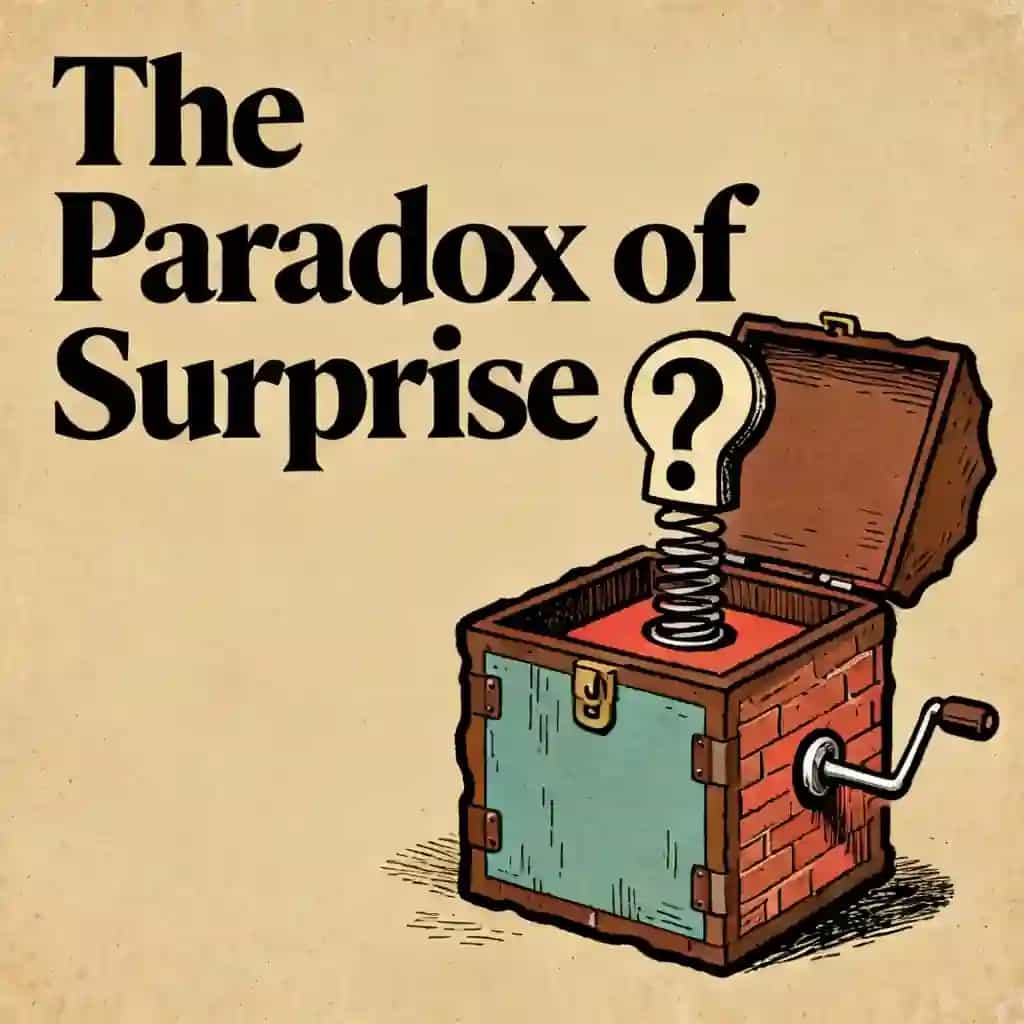
Surprise: Embrace the Unpredictable and Engineer the Unexpected

《Surprise》概述
Discover the science of surprise - a psychological force that can transform your relationships, spark creativity, and reinvigorate your life. Luna and Renninger's research reveals how embracing unpredictability creates more meaningful connections, boosts workplace innovation, and enhances happiness. Ready to engineer the unexpected?
- Surprise triggers a four-phase brain response: Freeze, Find, Shift, Share for processing novelty
- Balancing predictability with surprise reduces boredom and anxiety while boosting happiness
- Small daily surprises rewire brains to embrace uncertainty as fuel for growth
- Workplace surprises increase creativity when intentionally designed into routines and meetings
- Relationship sparks reignite through planned spontaneity and unexpected shared experiences
- The "Surprise Paradox" explains why humans crave yet fear unexpected events
- Engineers of surprise use novelty frameworks to make products memorable and viral
- Resilience training helps reframe negative surprises as catalysts for personal transformation
- "Surprisologist" mindset turns daily routines into discovery-driven adventures through micro-changes
- Strategic surprise deployment strengthens brand recall and emotional consumer connections
- Dopamine-driven wonder activates when 80% familiarity pairs with 20% unpredictability
- Surprise journaling builds neural pathways to recognize opportunity in life's disruptions
《Surprise》作者介绍
Tania Luna and LeeAnn Renninger are organizational psychologists, TED speakers, and co-founders of LifeLabs Learning, a leadership training company serving clients like Google and Reddit.
Their book Surprise: Embrace the Unpredictable and Engineer the Unexpected blends psychology research and practical insights to explore how embracing uncertainty fuels creativity, connection, and personal growth.
Luna, a contributor to Harvard Business Review and host of the Talk Psych to Me podcast, and Renninger, a Columbia University lecturer with a PhD in cognitive psychology, draw from their work training over 500,000 managers to debunk myths about predictability.
They also co-authored The Leader Lab: Core Skills to Become a Great Manager, Faster, a leadership guide used by Fortune 500 companies to build high-performance teams. Their research on surprise has been featured in The New York Times and at TED events, with frameworks applied by organizations to engineer memorable customer experiences and resilient workplace cultures.
关于《Surprise》的常见问题
What is Surprise by Tania Luna about?
Surprise by Tania Luna and LeeAnn Renninger explores how embracing unpredictability fuels growth, innovation, and connection. The book blends psychology research and storytelling to reveal how surprise transforms mundane experiences into memorable ones. It introduces a four-step framework (Freeze, Find, Shift, Share) to navigate uncertainty and offers practical strategies like "activating awe" and expanding comfort zones to harness surprise’s benefits.
Who should read Surprise?
This book is ideal for individuals seeking personal growth, professionals in fast-paced industries (e.g., marketing, leadership), and anyone balancing predictability with spontaneity. It’s especially relevant for those feeling stagnant or overwhelmed by change, as it provides tools to reframe anxiety into curiosity and resilience.
Is Surprise by Tania Luna worth reading?
Yes, Surprise is praised for its actionable insights and engaging narratives, though some critics note it leans more on anecdotes than deep scientific analysis. Its strengths lie in practical advice for thriving in uncertainty, making it valuable for readers interested in psychology, self-improvement, or creativity.
What are the key concepts in Surprise?
Key ideas include:
- The Surprise Sequence: Freeze (pause), Find (assess), Shift (reframe), Share (communicate).
- Resilience as a tension buster to transform negative surprises.
- Vulnerability’s role in fostering adaptability and creativity.
- "Surprise Engineering": Designing novelty into daily life to boost engagement.
How does Surprise address handling unexpected changes?
The authors argue that surprise is inevitable but manageable. By practicing mindfulness during the "Freeze" phase and reframing challenges as opportunities ("Shift"), readers can reduce anxiety. Techniques like gratitude journaling and novelty-seeking build resilience over time.
What quotes from Surprise are most impactful?
A standout quote from Samuel Johnson: "Our brightest blazes of gladness are commonly kindled by unexpected sparks." This encapsulates the book’s thesis that joy often stems from unplanned moments, urging readers to welcome serendipity.
How can Surprise improve workplace dynamics?
The book suggests incorporating surprise into team-building (e.g., unexpected rewards, creative challenges) to boost morale and innovation. Leaders are encouraged to model adaptability, helping employees view disruptions as growth opportunities rather than threats.
What criticisms exist about Surprise?
Some reviewers argue the book lacks in-depth scientific rigor and could benefit from more structured frameworks. However, its strength lies in accessibility, making complex psychological concepts relatable through stories.
How does Surprise relate to Tania Luna’s other books?
Unlike Lead Together (focused on collaborative leadership), Surprise centers on individual mindset shifts. Both emphasize adaptability, but Surprise offers more personal strategies, while Lead Together targets organizational change.
Why is Surprise relevant in 2025?
In an era of rapid technological shifts and remote work, the book’s lessons on resilience and embracing uncertainty remain critical. Its focus on mental agility aligns with contemporary trends in workplace well-being and hybrid collaboration.
How do the authors define a "surprisologist"?
A "surprisologist" actively seeks and engineers unexpected experiences to enhance creativity and connection. This involves practices like "collecting novelty" (trying new activities) and "activating wonder" through mindful observation.
Can Surprise help with relationship-building?
Yes, the book highlights surprise as a catalyst for deeper connections. Simple tactics like planning unexpected gestures or engaging in novel shared activities can reinvigorate relationships and foster empathy.
通过作者的声音感受这本书
将知识转化为引人入胜、富含实例的见解
快速捕捉核心观点,高效学习
以有趣互动的方式享受这本书
《Surprise》主要人物
- Tania LunaCo-author and former obsessive life planner
- LeeAnn RenningerCo-author and seeker of surprise
- Wolfram SchultzNeuropsychologist who studied emotional intensity
- Nate SilverStatistician known for mathematical analysis
《Surprise》核心主题
- cognitive processing sequence
- emotional intensification
- uncertainty management
- mental schema flexibility
- engineering unexpected moments
《Surprise》经典语录
Surprise has a unique power to transform our lives.
Surprise intensifies emotions by at least 400 percent.
Change is happening exponentially rather than linearly.
Our attention fractures across countless competing stimuli.
Resilient people develop confidence in their ability to handle surprises.
探索你的学习方式
 快速摘要模式
10分钟阅读或收听《Surprise》摘要
将《Surprise》的核心观点拆解为易于理解的要点,了解创新团队如何创造、协作和成长。

 趣味模式
趣味模式
《Surprise》的启示 - 20分钟故事
通过生动的故事体验《Surprise》,将创新经验转化为令人难忘且可应用的精彩时刻。
 个性化模式
个性化模式
用你自己的学习方式体验《Surprise》
随时提问,选择你的学习方式,共创真正适合你的洞察。
"Instead of endless scrolling, I just hit play on BeFreed. It saves me so much time."


"I never knew where to start with nonfiction—BeFreed’s book lists turned into podcasts gave me a clear path."


"Perfect balance between learning and entertainment. Finished ‘Thinking, Fast and Slow’ on my commute this week."
"Crazy how much I learned while walking the dog. BeFreed = small habits → big gains."
"Reading used to feel like a chore. Now it’s just part of my lifestyle."

"Feels effortless compared to reading. I’ve finished 6 books this month already."
"BeFreed turned my guilty doomscrolling into something that feels productive and inspiring."

"BeFreed turned my commute into learning time. 20-min podcasts are perfect for finishing books I never had time for."
"BeFreed replaced my podcast queue. Imagine Spotify for books — that’s it. 🙌"

"It is great for me to learn something from the book without reading it."
"The themed book list podcasts help me connect ideas across authors—like a guided audio journey."
"Makes me feel smarter every time before going to work"
"Instead of endless scrolling, I just hit play on BeFreed. It saves me so much time."
"I never knew where to start with nonfiction—BeFreed’s book lists turned into podcasts gave me a clear path."
"Perfect balance between learning and entertainment. Finished ‘Thinking, Fast and Slow’ on my commute this week."
"Crazy how much I learned while walking the dog. BeFreed = small habits → big gains."
"Reading used to feel like a chore. Now it’s just part of my lifestyle."
"Feels effortless compared to reading. I’ve finished 6 books this month already."
"BeFreed turned my guilty doomscrolling into something that feels productive and inspiring."
"BeFreed turned my commute into learning time. 20-min podcasts are perfect for finishing books I never had time for."
"BeFreed replaced my podcast queue. Imagine Spotify for books — that’s it. 🙌"
"It is great for me to learn something from the book without reading it."
"The themed book list podcasts help me connect ideas across authors—like a guided audio journey."
"Makes me feel smarter every time before going to work"
"Instead of endless scrolling, I just hit play on BeFreed. It saves me so much time."
"I never knew where to start with nonfiction—BeFreed’s book lists turned into podcasts gave me a clear path."
"Perfect balance between learning and entertainment. Finished ‘Thinking, Fast and Slow’ on my commute this week."
"Crazy how much I learned while walking the dog. BeFreed = small habits → big gains."
"Reading used to feel like a chore. Now it’s just part of my lifestyle."
"Feels effortless compared to reading. I’ve finished 6 books this month already."
"BeFreed turned my guilty doomscrolling into something that feels productive and inspiring."
"BeFreed turned my commute into learning time. 20-min podcasts are perfect for finishing books I never had time for."
"BeFreed replaced my podcast queue. Imagine Spotify for books — that’s it. 🙌"
"It is great for me to learn something from the book without reading it."
"The themed book list podcasts help me connect ideas across authors—like a guided audio journey."
"Makes me feel smarter every time before going to work"
"Instead of endless scrolling, I just hit play on BeFreed. It saves me so much time."
"I never knew where to start with nonfiction—BeFreed’s book lists turned into podcasts gave me a clear path."
"Perfect balance between learning and entertainment. Finished ‘Thinking, Fast and Slow’ on my commute this week."
"Crazy how much I learned while walking the dog. BeFreed = small habits → big gains."
"Reading used to feel like a chore. Now it’s just part of my lifestyle."
"Feels effortless compared to reading. I’ve finished 6 books this month already."
"BeFreed turned my guilty doomscrolling into something that feels productive and inspiring."
"BeFreed turned my commute into learning time. 20-min podcasts are perfect for finishing books I never had time for."
"BeFreed replaced my podcast queue. Imagine Spotify for books — that’s it. 🙌"
"It is great for me to learn something from the book without reading it."
"The themed book list podcasts help me connect ideas across authors—like a guided audio journey."
"Makes me feel smarter every time before going to work"

下载《Surprise》摘要
免费获取《Surprise》摘要的 PDF 或 EPUB 版本。可打印或随时离线阅读。