第 1 章
The Sales Revolution That Changed Everything
Have you ever wondered why some sales professionals consistently outperform their peers, even when selling identical products? In 1988, Neil Rackham shattered conventional sales wisdom with his groundbreaking book "SPIN Selling," based on the largest study of selling effectiveness ever conducted. Over 12 years, Rackham's team at Huthwaite analyzed more than 35,000 sales calls across 23 countries to discover what actually works in major sales. The results were shocking - traditional closing techniques, objection handling, and benefit statements that worked for small sales were actively undermining success in larger ones. The book became an instant classic, with companies like IBM, Xerox, AT&T, and Motorola adopting its methodology and seeing sales increases averaging 17%. Even today, SPIN Selling remains on Warren Buffett's recommended reading list and continues to influence modern sales training programs worldwide. What Rackham discovered wasn't just another sales technique - it was a fundamental rethinking of how human psychology operates in significant purchasing decisions.
第 2 章
Why Traditional Sales Techniques Fail in Major Sales
When Neil Rackham presented his research findings to a Fortune 100 VP of Sales, the executive was indignant. "Are you serious?" he asked. "You've just taken the three most important areas of selling-closing, objection handling, and probing-and told me they don't matter?" His reaction was understandable. After all, these were the exact skills taught by major corporations across America.
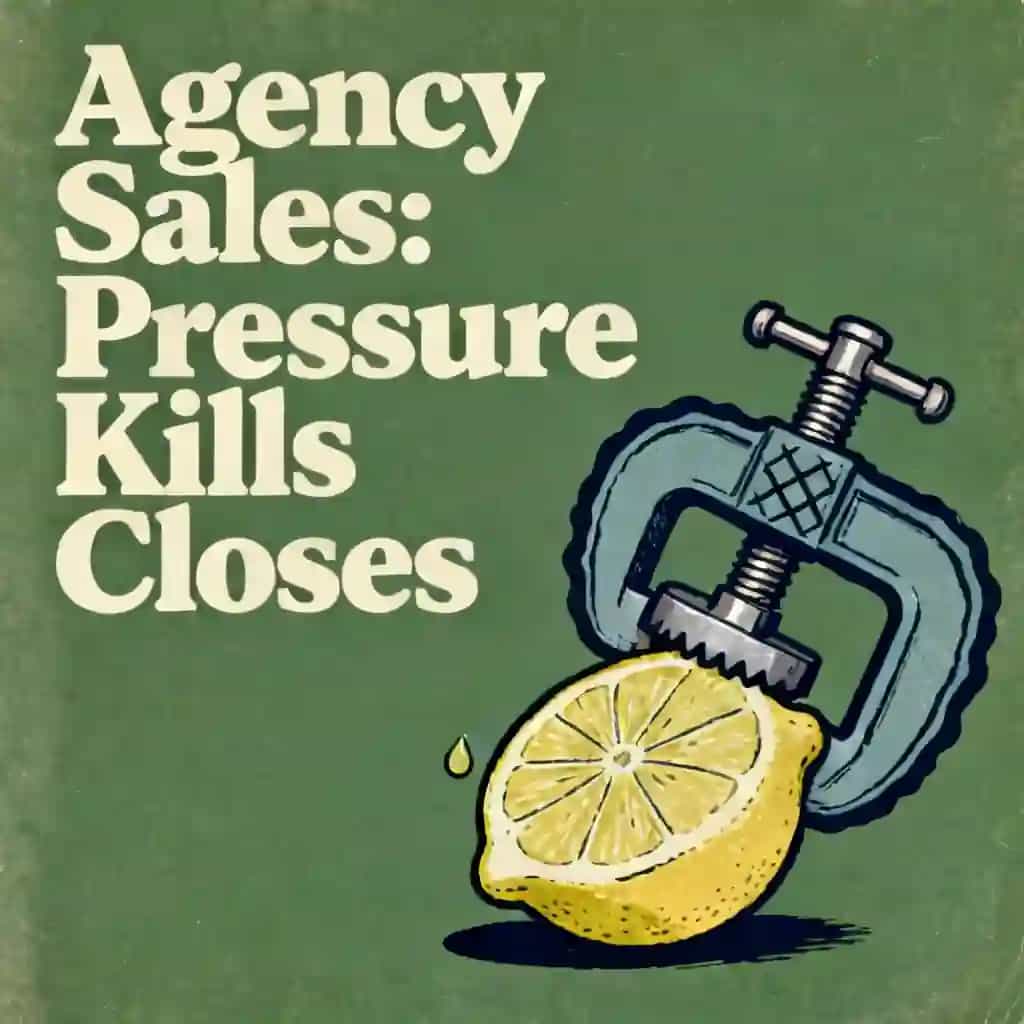
The problem isn't that traditional sales techniques are outdated-they simply don't transfer to major sales. The psychology of purchasing decisions changes dramatically as sales grow larger. In small, single-call transactions, techniques developed in the 1920s still work remarkably well. A pushy closing technique might secure an immediate decision when selling a $50 item. But apply that same pressure to a $50,000 purchase, and you'll likely destroy the relationship.
What makes major sales fundamentally different? First, the length of the selling cycle stretches from a single interaction to multiple calls over months. In single-call sales, buying decisions happen with the seller present, but in multi-call sales, the most critical deliberations occur when you're not there. Research shows customers forget over half of key points from product presentations within just one week.
Second, the size of customer commitment creates an entirely different value equation. When a purchase represents a significant investment, the perceived value must substantially outweigh the cost. One salesperson I observed at Buffalo airport frantically studied product literature before meeting with an office manager about an expensive copying system. Despite his extensive product knowledge, he failed because he couldn't demonstrate enough value to justify the large expenditure.
Third, major sales involve ongoing relationships. When purchasing a $70,000 computer system, customers aren't just buying a product-they're entering a relationship with you that might last years. The product and seller become inseparable in the customer's mind.
Finally, the risk of mistakes increases exponentially. While I can hide the useless gadgets I've impulsively purchased in my closet, corporate decisions involve multiple stakeholders and highly visible outcomes. The fear of making a public mistake often outweighs price considerations. One London client readily approved a $40,000 research project after just one morning's selling because it involved only his budget, but required much harder negotiation for a $1,500 expenditure where his colleagues would be involved.
Understanding these psychological differences explains why traditional sales approaches backfire in larger sales-and why a completely different model is needed.
第 3 章
The Four Critical Stages of Every Sales Call
Every sales interaction, from the simplest to most sophisticated, progresses through four distinct stages: Preliminaries, Investigating, Demonstrating Capability, and Obtaining Commitment. While traditional sales training emphasizes closing as the most crucial stage, our research reveals a surprising truth-success in larger sales depends primarily on how you handle the Investigating stage.
The Preliminaries are those warming-up events before serious selling begins: introductions, small talk, and initial rapport-building. While many believe these first two minutes create crucial impressions, our research suggests preliminaries have less influence on success in larger sales than commonly thought.
The Investigating stage involves uncovering information through questions-finding needs and understanding customers and their organizations. Far more than simple data collection, investigating is the most important selling skill, particularly crucial in larger sales. Our research shows the average major-account salesperson can increase overall sales volume by more than 20 percent simply by developing improved investigating skills.
During the Demonstrating Capability stage, you show customers you have something worthwhile to offer-typically solutions to their problems. This may involve formal presentations, product demonstrations, or describing potential benefits. While there are effective ways to demonstrate capability in major sales, methods that work in smaller sales often fail as sale size increases.
Finally, a successful call ends with some form of customer commitment. In smaller sales, this usually means a purchase, but larger sales involve multiple intermediate commitments (called Advances) before reaching the final order. These might include agreements to attend demonstrations, test materials, or provide access to higher-level decision makers.
Most sales training emphasizes Obtaining Commitment as the most crucial stage. One sales manager wrote: "The bottom line is that if you can't close, you can't sell." However, our extensive research involving thousands of sales calls consistently shows that successful calls (leading to Orders and Advances) contain significantly more questions than unsuccessful calls. Questions persuade more powerfully than any other form of verbal behavior-not just in selling but across negotiations, management interactions, and performance interviews.
Interestingly, the traditional distinction between open and closed questions proved irrelevant to success. Instead, we discovered that successful questions follow a distinct pattern we call SPIN: Situation Questions, Problem Questions, Implication Questions, and Need-payoff Questions. This questioning sequence forms the backbone of effective major sales.
第 4 章
The Myth of Closing Techniques
For decades, sales experts have unanimously declared closing techniques to be the most crucial element of sales success. The prevailing consensus suggests that closing techniques strongly correlate with success, that sellers should master many types of closes, and that they should close frequently during calls. Sales managers consistently identify closing as the skill they most want to develop in their teams, embodying the old selling proverb: "The ABC of selling is Always Be Closing."
When I began researching closing techniques in the late 1960s, I was initially convinced of their importance. After leaving academia to start Huthwaite, I enrolled in sales training and applied an Alternative Close in my first major client meeting, asking "Would you prefer the project to begin in September or in November?" When the client chose September, I was delighted and became a devoted practitioner of closing techniques for over a year.
Our first study in an office-equipment corporation compared 30 high-close calls with 30 low-close calls from 190 observed sales interactions. Surprisingly, only 11 high-close calls resulted in sales while 21 low-close calls succeeded. This contradicted the popular "five closes per call" recommendation. More concerning was the visible customer antagonism I observed when sellers used closing techniques beyond simply asking for the order.
In a chemical company study, we discovered that salespeople with favorable attitudes toward closing performed below target, while those with less favorable attitudes exceeded targets. In a high-technology company study, we measured closing behavior before and after intensive closing training. The training successfully increased closing frequency but decreased sales success.
The breakthrough came when investigating a training company's claim that closing training increased sales by 30%. I discovered their evidence came from small-sale contexts like door-to-door magazine subscriptions. This suggested a crucial insight: closing techniques might work for small decisions where saying yes is easier than arguing, but backfire with larger decisions where people react negatively to pressure.
A photographic store chain provided the perfect opportunity to test this theory. Their practice of rotating salespeople between low-value counters (films, accessories) and high-value counters (cameras, hi-fi equipment) allowed us to control for decision size impact. For low-value items, closing training shortened transaction time, increased closing attempts, and slightly improved success rates (from 72% to 76%). For high-value items ($109), the results were dramatically different-while transaction time shortened and closing attempts increased, success rates actually dropped from 42% to 33%.
Beyond price factors, customer sophistication plays a crucial role in closing effectiveness. Professional buyers and senior executives who make large purchasing decisions typically react negatively to closing techniques. A survey of 54 professional buyers showed that 34 found closing techniques made them less likely to buy, while only 2 said more likely. Despite claims in some sales books, sophisticated buyers don't appreciate closing techniques-they resent them.
第 5 章
How Customer Needs Develop in Major Sales
Major sales differ fundamentally from small sales in how customer needs develop. While small purchase decisions happen quickly with minimal consultation and often emotional motivation, larger sales involve slower needs development, multiple decision-makers, more rational justification, and greater consequences for poor decisions.
Needs develop from initial minor dissatisfaction through clear problems to specific wants or intentions to act. In larger sales, this process may take months or years, while in smaller sales it can be almost instantaneous. Huthwaite divides needs into two categories: Implied Needs (statements of problems or dissatisfactions) and Explicit Needs (specific statements of wants or desires).
Research shows that while Implied Needs predict success in simple sales, they don't in larger sales. In a study of 646 simple sales, successful calls contained twice as many Implied Needs as unsuccessful ones. However, in 1406 larger sales averaging $27,000, there was no relationship between Implied Needs and success. Instead, Explicit Needs were twice as high in successful larger sales.
This is because in larger sales, the value equation matters more-the customer's perceived problem must outweigh the cost of solving it. With higher costs in major sales, needs must be developed further to justify purchase. The key skill in major sales isn't just uncovering problems but developing those Implied Needs into Explicit Needs.
Buying signals differ between small and large sales. Implied Needs are accurate buying signals for small sales, but Explicit Needs are the true indicators of success in larger sales. Experienced salespeople recognize this distinction. An inexperienced seller might judge a call successful because the customer admitted to problems (Implied Needs), while top performers understand that real success comes when customers talk about action (Explicit Needs).
The fundamental purpose of questions in larger sales is to uncover Implied Needs and develop them into Explicit Needs. This is where the SPIN questioning sequence becomes crucial.
第 6 章
The SPIN Strategy: Questions That Sell
The SPIN strategy builds on the conclusion that questions in sales calls should uncover Implied Needs and develop them into Explicit Needs. This questioning sequence-Situation, Problem, Implication, and Need-payoff-forms a powerful framework for major sales success.
Situation Questions collect facts and background data about the customer's existing situation. While essential, especially early in the sales cycle, they must be used carefully. Research shows successful salespeople ask fewer, more focused Situation Questions than unsuccessful ones. Buyers quickly become bored with excessive fact-finding, as these questions primarily benefit the seller, not the buyer. Inexperienced salespeople rely heavily on these "safe" questions, while veterans do their homework before calls to eliminate unnecessary background questions.
Problem Questions probe for difficulties, dissatisfactions, and problems that the seller might solve. These questions invite customers to state Implied Needs ("They are rather hard to use"). Research shows Problem Questions are strongly linked to success in smaller sales but less effective in larger ones. While essential in all sales contexts for uncovering issues to solve, Problem Questions alone aren't enough for major sales.
Implication Questions transform small problems into serious business issues by exploring their consequences. In one example, a seller converts "difficult machines" into multiple business impacts: $25,000 in training costs, high turnover, production bottlenecks, expensive overtime, quality issues with outsourced work, and delivery problems. This changes the buyer's value equation-when problems appear more costly, expensive solutions become justified. These questions are especially powerful with decision makers who naturally think in terms of implications, and work particularly well in high-technology sales where customers need to see severe problems before risking new solutions.
Need-payoff Questions complement Implication Questions by focusing on solutions rather than problems. Instead of dwelling on difficulties, they ask about the value or usefulness of solving a problem: "Is it important to you to solve this problem?" or "Why would you find this solution so useful?" These questions create a positive problem-solving atmosphere and, crucially, get customers to articulate the benefits themselves. Customers rate calls with many Need-payoff Questions as positive, constructive and helpful, making them particularly effective in relationship-dependent sales.
While both Implication and Need-payoff Questions develop Implied Needs into Explicit Needs, they serve different psychological functions. An 8-year-old boy provided the simplest distinction: "Implication Questions are always sad. Need-payoff Questions are always happy." This childlike observation captures a profound truth-Implication Questions are problem-centered, making issues seem more serious, while Need-payoff Questions are solution-centered, focusing on the value of solving problems.
第 7 章
Demonstrating Capability: Features, Advantages, and Benefits
While conventional sales wisdom distinguishes between Features and Benefits, Huthwaite's research revealed surprising findings across 18,000 sales calls. Features (neutral facts about products) are generally harmless but unpersuasive in most situations. In larger sales, Features have a negative effect when used early in calls, and decision makers respond less positively to Features than users do.
After testing various definitions of Benefits, researchers identified two distinct types: Advantages (showing how a product can be used or help the customer) and true Benefits (showing how a product meets an Explicit Need expressed by the customer). Research revealed that Advantages work well in small sales but have much less impact in larger ones. To make a Benefit, you must first develop an Explicit Need from an Implied Need using Implication and Need-payoff Questions.
A study of 5,000 high-technology sales calls confirmed that Benefits were significantly higher in successful calls, while Advantages showed no significant difference between successful and unsuccessful calls. Interestingly, Advantages had moderate impact early in the selling cycle but diminished in effectiveness as the cycle progressed, while Benefits maintained high impact throughout.
New product launches frequently fail because salespeople focus too heavily on Features and Advantages rather than customer needs. Research shows salespeople give over 3 times more Features and Advantages when selling new products compared to existing ones. This product-centered approach undermines sales effectiveness.
In one experiment with medical diagnostic equipment, Huthwaite launched a product to an experimental group by focusing on problems the machine solved rather than its features. This group achieved 54% higher sales than the traditional group during the first year. Interestingly, sales of new products often improve only after initial enthusiasm wanes and salespeople shift focus back to customer needs.
Three key principles can help salespeople demonstrate capabilities more effectively in larger sales: Don't demonstrate capabilities too early in the call; beware of Advantages; and be careful with new products by focusing on problems solved rather than features offered.
第 8 章
Preventing Objections Before They Happen
Contrary to conventional sales wisdom that "objections are a sign of customer interest," research shows successful salespeople actually receive fewer objections than unsuccessful ones. Objections are more often created by sellers than customers, with some salespeople receiving ten times more objections than others on the same team. The key is learning objection prevention rather than objection handling.
With premium products, listing many features is counterproductive as it makes customers question value. This is especially evident in watch advertising-where a $100 watch benefits from feature listings, but a $10,000 watch would not. Features increase price sensitivity, which helps when selling lower-cost products but hurts premium offerings.
Advantages (statements showing how products can help customers) frequently create objections-which explains why they're poorly linked to success in larger sales. In call recordings, we consistently observed that when sellers present Advantages before building sufficient value, buyers respond with objections. The fundamental problem is offering solutions before establishing enough value.
This pattern repeats throughout unsuccessful calls: Problem Question -> Implied Need -> Advantage -> Objection. Teaching objection-handling skills treats only the symptom. The cure is using the SPIN Model to build value before presenting solutions. By asking Implication Questions and Need-payoff Questions, sellers can transform the customer's value equation so the perceived benefits outweigh the costs-preventing objections before they arise.
Linda Marsh's research revealed a strong positive link between giving Benefits and receiving customer approval. This makes intuitive sense-Benefits, by definition, show how you can meet an Explicit Need the customer has already expressed. When you demonstrate you can provide something a customer has explicitly stated they want, they naturally respond with approval.
The fundamental choice in handling objections is between objection-handling (reactive) and objection-prevention (proactive) strategies. Prevention is far more effective in larger sales. In one fascinating case study, eight salespeople with unusually high objection rates received training focused solely on developing Explicit Needs with the SPIN Model and offering Benefits-without any mention of objection handling. This reduced their objections by 55%.
Research confirms that objections correlate negatively with success-the more objections in a call, the less likely it will succeed. Early call objections and value-related objections ("it's too expensive") are clear signals that the seller is prematurely offering solutions before developing strong needs.
第 9 章
Opening the Call: Less Critical Than You Think
Contrary to traditional sales wisdom that emphasizes the critical importance of first impressions, research suggests people notice far less in early interactions than commonly believed. While reasonable standards of dress and presentation remain important, minor details have minimal impact on sales success in larger sales. In the initial moments of interaction, people are typically so overloaded with information that many potentially important impressions get crowded out.
Since the 1920s, sales training has promoted two primary methods for opening calls: relating to the buyer's personal interests (discussing family photos or golf trophies visible in the office) and making opening benefit statements ("Our product will contribute to your productivity"). However, research indicates these approaches, while potentially effective in smaller sales, show little evidence of success in larger sales.
While Huthwaite's research found that personal references helped sellers succeed with small retail outlets in rural areas, they discovered no such relationship in larger urban stores with bigger sales. Modern buyers increasingly prioritize business value over personal relationships, with many professional purchasers actively resenting attempts to build rapport through personal interests. As one BP buyer demonstrated with his sailing picture "trap," senior executives particularly value their time and may become suspicious of salespeople who appear to be manipulating them through personal conversation.
Despite the popularity of opening benefit statements, Huthwaite's study of over 300 calls found no relationship between using this technique and call success in larger sales. The most effective salespeople varied their openings rather than using the same approach repeatedly. Opening benefit statements can also backfire by forcing premature product discussions and allowing buyers to take control through questions.
Rather than following rigid opening formulas, successful salespeople use a flexible framework focused on a clear objective: gaining the customer's consent to move to the Investigating stage. The key is establishing who you are, why you're there (without product details), and your right to ask questions.
For effective preliminaries: Get down to business quickly-executives complain about time-wasting chatter, not about salespeople who are too direct; don't talk solutions too soon-this causes objections and reduces success; and concentrate on questions-planning good questions is more valuable than perfecting your opening. The preliminaries should establish your role as questioner and the customer's role as information provider.
第 10 章
Turning Theory into Practice: Making SPIN Work for You
Converting theoretical models into practical selling skills requires dedicated practice-reading alone won't improve selling abilities any more than reading about swimming teaches you to swim. While significant sales improvement is possible by following the book's advice, most readers will fail to practice adequately. The challenge is "entelechy"-turning potential knowledge into actual practical usefulness.
Why do people struggle to learn skills? Unlike knowledge acquisition, where we've developed effective learning methods from school, most of us never learned systematic skill-building techniques. The key to successful skill development follows four simple rules: Practice only one behavior at a time-trying to improve multiple behaviors simultaneously leads to failure; try new behaviors at least three times before judging effectiveness-initial awkwardness is normal; focus on quantity before quality-using a behavior frequently builds competence faster than obsessing over perfect execution; and practice in safe situations-never experiment with new skills in critical sales situations where failure would be costly.
The most helpful implementation advice includes focusing on the Investigating stage rather than what you'll tell customers. Many salespeople mistakenly focus on what they'll tell customers rather than what they'll ask. The key selling skill is in the Investigating stage-using SPIN questions to develop customer needs. When customers genuinely want your capabilities, demonstrating benefits and obtaining commitment become much easier.
Begin by simply asking more questions of any type until questioning feels as comfortable as telling. Then plan to ask at least six Problem Questions per call about difficulties and dissatisfactions. After becoming comfortable with Problem Questions, move to Implication Questions by planning questions that help customers see problems as serious enough to justify action. Finally, practice Need-payoff Questions that get customers to articulate benefits themselves rather than you telling them.
Stop thinking about products in terms of Features and Advantages. Instead, analyze each product by listing the problems it solves. This problem-solving perspective makes it easier to adopt the SPIN questioning style and plan effective questions for sales calls.
While most salespeople acknowledge the importance of planning, the most valuable learning comes from systematically reviewing calls. Top performers distinguish themselves by meticulously analyzing call details, asking questions like: "Did I achieve my objectives?", "What would I do differently?", and "What have I learned for future calls?" Success depends on getting these behavioral details right, not just developing broad strategy.
The most significant conclusion from Huthwaite's research is that sales success lies in behavioral details rather than broad factors like personality or interpersonal chemistry. As William Blake wrote in 1801, "He who would do good to another must do it in Minute Particulars." By examining and improving these fundamental building blocks of selling, you can achieve measurable improvements in your results.