第 1 章
Beyond Pink and Blue: The Gender Journey We All Navigate
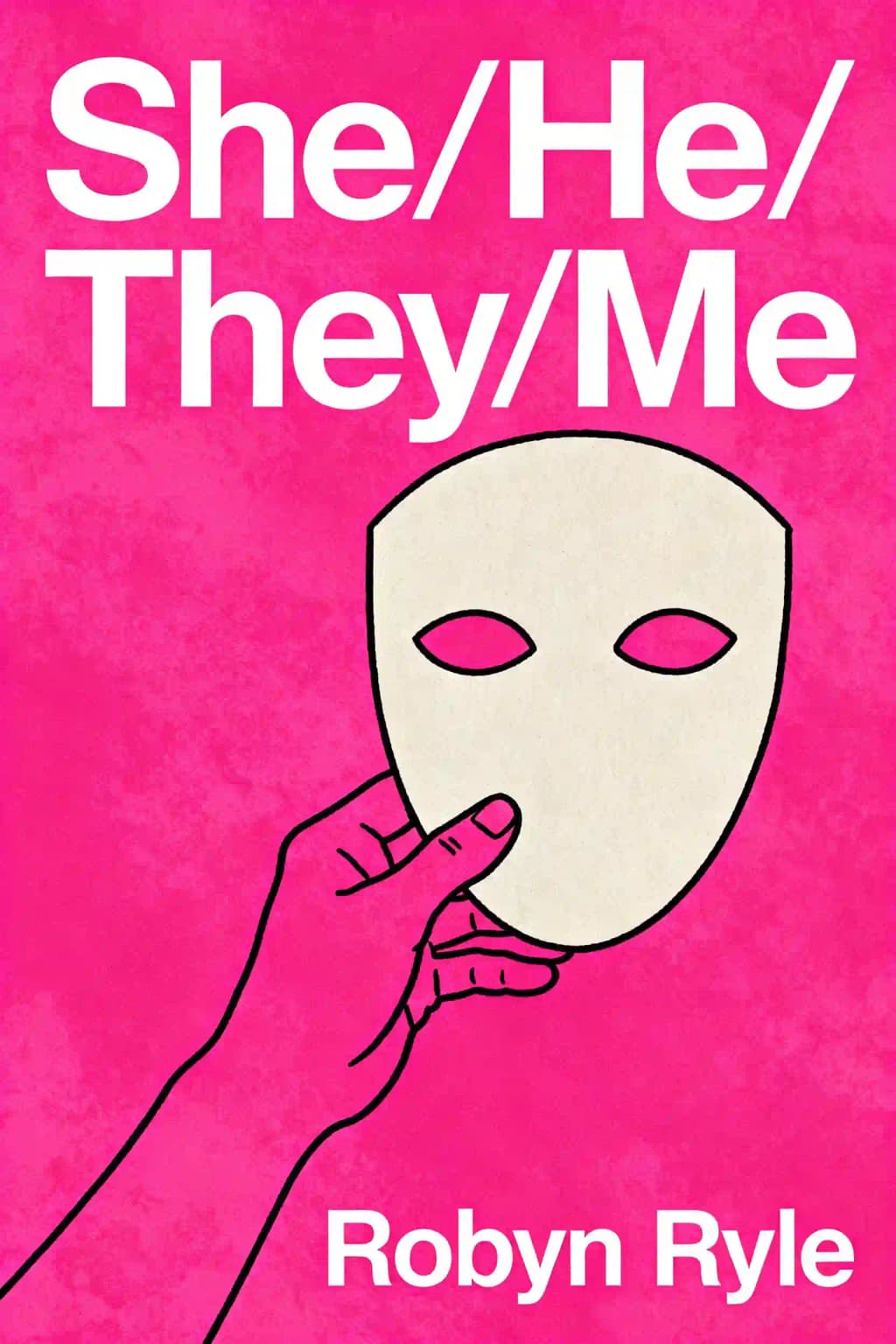
In a world obsessed with gender reveals and binary thinking, Robyn Ryle's "She/He/They/Me" arrives as a revolutionary exploration of gender's true complexity. This choose-your-own-adventure style book has become something of a cult favorite among gender studies students and progressive celebrities like Emma Watson, who praised it as "mind-expanding in the best possible way." Unlike traditional gender theory texts that can feel academic and inaccessible, Ryle's approach invites readers to personally experience different gender paths, making abstract concepts tangible and relatable. Since its 2019 publication, the book has sparked conversations in college classrooms and book clubs alike about how gender shapes our lives in ways both obvious and invisible. As gender continues to dominate cultural discourse-from bathroom bills to sports participation debates-this book offers a timely, nuanced framework for understanding what's really at stake.
第 2 章
The Starting Point: Gender Begins Before Birth
Your gender journey begins long before you take your first breath. The time and place of your birth fundamentally determine how gender will be conceptualized in your society. Some cultures, like the Bugis people of Indonesia, recognize five distinct genders, while the Navajo traditionally acknowledge four. In contrast, many Western societies maintain rigid male-female binaries. Some cultures, particularly in South Asia, prioritize gender as a central organizing principle that shapes everything from daily routines to career paths, while others, like certain Scandinavian societies, actively work to minimize gender's social impact.
Upon birth, you're immediately assigned a gender based on external genitalia-a practice that reveals our culture's fixation on reproductive anatomy as the definitive marker of identity. This assignment carries profound implications, setting you on a path laden with expectations, opportunities, and limitations. If you're assigned male, you receive blue items and toys that encourage spatial reasoning and physical activity - building blocks, sports equipment, and action figures that subtly promote leadership and competition. If you're assigned female, you receive pink items and toys fostering nurturing behaviors - dolls, kitchen sets, and craft supplies that emphasize caregiving and domestic skills. These seemingly innocent choices begin channeling you toward different life trajectories, influencing everything from career aspirations to emotional expression.
But what if your body doesn't fit neatly into binary categories? Intersex variations-where reproductive or anatomical characteristics don't align with typical definitions of male or female-occur in approximately 1.7% of the population, roughly the same frequency as red hair. These natural variations might involve chromosomal patterns beyond XX or XY (like XXO, XXY, or XO), hormonal differences affecting development, or anatomical variations visible at birth. Some intersex individuals may have ambiguous genitalia, while others might not discover their intersex status until puberty or later. The outdated term "hermaphrodite" has been replaced with "intersex," acknowledging these conditions as normal human diversity rather than disorders requiring correction. Historical practices of immediate surgical intervention are increasingly questioned by medical ethicists and intersex advocates.
Your gender path also depends on whether you're born into a patriarchal society (where men hold primary power) or a matriarchal one (where power is more equally distributed). In patriarchal systems, which dominate globally, androcentrism positions men and masculinity as superior, creating both privileges and constraints for boys. While boys-particularly white, cisgender, straight ones-receive advantages like higher pay expectations and presumed leadership capability, they also face strict rules against showing emotion, vulnerability, or interests deemed "feminine." This paradox of masculinity grants power while simultaneously restricting full human expression, leading to what researchers call "toxic masculinity" - a rigid adherence to traditional male roles that can damage mental health and relationships. Some societies, like the Mosuo of China or the Khasi of India, offer alternative models where women hold significant social and economic power, demonstrating that patriarchal systems are not universal or inevitable.
第 3 章
Beyond the Binary: Alternative Gender Systems Across Cultures
Western society typically recognizes only two genders, but this binary system is far from universal. Throughout human history and across diverse cultures, alternative gender systems have flourished, challenging our assumptions about what gender is and how it operates.
In India, hijras represent a gender-variant category that isn't assigned at birth but becomes one's identity. Understanding hijras requires knowledge of Hinduism, where gender fluidity appears in ancient religious texts like the Rig Veda. Hindu mythology embraces multiple genders among both gods and humans, depicting men with wombs, male gods with breasts, and pregnant men-reflecting an ancient recognition that gender exists beyond binary categories.
Among the Mohave Native American tribe, alyhas are identified through maternal dreams containing both masculine symbols and hints of future alyha status. Around age ten, alyhas pursue feminine activities and clothing despite initial parental resistance. A ceremonial transition marks their permanent status change, after which they take women's names, marry men, and symbolically menstruate. While adopting women's roles, alyhas maintain distinct identities-they can't use women's lineage names and follow different courtship customs. They're respected within their tribe and believed to possess supernatural healing abilities.
In the Balkans, sworn virgins represent another alternative gender category. When families lack male heirs in this patriarchal warrior culture, a girl might become a sworn virgin with parental support, dressing and working as a man while keeping her birth name but using masculine pronouns. The sworn virgin performs male social duties-giving away sisters in marriage, potentially commanding military units-while maintaining a vow of celibacy. This transition might save a family lineage from "disappearing" or help a woman avoid forced marriage. Though not fully accepted as men (receiving different funeral rites), sworn virgins occupy a distinct gender category that persists today.
These examples reveal that our contemporary Western understanding of gender-as a binary system determined at birth and unchangeable-represents just one possibility among many. Human societies have developed diverse ways of conceptualizing and organizing gender, demonstrating that our current system isn't inevitable or "natural" but rather one cultural construction among many possibilities.
第 4 章
Gender Through Time: Historical Perspectives on Masculinity and Femininity
Gender isn't just culturally variable-it transforms dramatically across historical periods. What we consider "masculine" or "feminine" today would be unrecognizable to people living just a few centuries ago.
Before the eighteenth century in Europe, a one-gender system prevailed, originating in ancient Greek culture. Rather than seeing men and women as opposite sexes, this system viewed women as lesser versions of men-similar to how men were lesser versions of gods. Gender existed on a continuum with gods at the top and women and slaves at the bottom. Despite understanding human anatomy through dissections, physicians saw vaginas as internal penises and ovaries as lesser testes-not entirely different organs. This perspective wasn't ignorance but a different cultural lens through which to understand anatomy.
In eighteenth-century America, boys encountered two primary masculine ideals: the Genteel Patriarch (refined, elegant landowners like Thomas Jefferson who valued sensory pleasures, passionate male friendships, and family supervision) and the Heroic Artisan (physically strong urban craftsmen like Paul Revere who valued hard work, economic independence, and family devotion). Unlike contemporary American masculinity, neither ideal emphasized violence, competitiveness, or wealth accumulation-showing how masculinity transforms across different historical periods.
For boys in contemporary America, four unspoken rules now govern masculinity: "no sissy stuff" (avoid femininity), "give 'em hell" (be competitive risk-takers), "be a sturdy oak" (show no emotions), and "be a big wheel" (achieve economic success). This socialization starts in infancy, with parents comforting male babies less, giving more instructions rather than conversation, telling stories emphasizing independence, playing more aggressively, and assigning different chores.
Girls in contemporary America face somewhat looser gender rules than boys, though experiences vary widely based on race, class, and sexuality. They're typically rewarded for nurturing behaviors like caring for dolls or siblings, while being subtly punished for "unladylike" behaviors. Gender-typed behaviors include leadership qualities, which might be praised as showing "future leader" potential in boys but criticized as "bossy" in girls.
These historical shifts demonstrate that what seems "natural" about gender in any era is actually a cultural construction that changes over time. Understanding this history helps us recognize that current gender norms aren't inevitable or fixed-they're constantly evolving products of specific social and historical circumstances.
第 5 章
Gender Socialization: How We Learn to Be Boys and Girls
Gender socialization-the process through which we learn and internalize gender norms-begins at birth and continues throughout our lives. This process is so effective that we often mistake culturally specific gender patterns for universal, biological truths.
For boys, socialization operates through rewards when conforming (praise for playing with trucks) and punishments when breaking gender norms (scolding for playing with dolls). Parents treat male and female infants differently from the beginning-comforting male babies less, giving them more instructions rather than conversation, telling stories emphasizing independence rather than connection, playing more aggressively, and assigning different household chores.
Anthropologist Margaret Mead challenged the notion that gender roles are biologically hardwired by studying diverse cultures in Papua New Guinea. Among the Mundugumor, she found that girls and boys were socialized with the same ideals-valuing violence, competitiveness, jealousy, and readiness to fight. Girls were rewarded for behaviors that Western cultures would consider masculine, demonstrating that gender expectations vary dramatically across cultures.
Among the Arapesh tribe, Mead discovered a culture where boys are socialized to be gentle, maternal, responsive, and nonaggressive-traits Western cultures would consider feminine. This research demonstrated how dramatically masculine behavior can vary across cultures. While American boys avoid physical affection with each other to prevent being labeled "sissy" or "gay," men in Middle Eastern and South Asian cultures freely hold hands and kiss cheeks in greeting without such stigma.
Some parents today attempt gender-neutral parenting-using socialization to unmake rather than reinforce gender. They might not disclose their child's gender to others, use gender-neutral names, employ neutral pronouns, and avoid rewarding or punishing behaviors based on gender appropriateness. Children are allowed to wear whatever they want and play with any toys. Some countries like Sweden support this approach with gender-neutral preschools and officially recognized neutral pronouns.
The effectiveness of gender socialization explains why we often experience gender as an internal, "natural" identity rather than recognizing it as something we've been taught. Yet this socialization isn't deterministic-people frequently develop gender identities that differ from their socialization, as transgender experiences demonstrate. Gender assignment at birth doesn't necessarily match one's internal gender identity, highlighting the complex interplay between social influences and personal identity development.
第 6 章
Intersectionality: How Gender Interacts with Race, Class and Other Identities
Your gender journey is complicated by how it intersects with other aspects of your identity, particularly race and ethnicity. An intersectional approach recognizes you can't separate which experiences stem from gender versus racial background-you move through life as both simultaneously.
For African American boys, masculinity is interpreted differently than for white boys. While white boys' behavior is often excused as "boys being boys," African American boys' actions are viewed as dangerous and adult-like rather than natural or excusable. This racial difference in interpreting masculine behavior contributes to unjust police violence. As an African American boy, your gender expression will be interpreted differently because of your race. While men generally take up more space, there's danger in doing so for African American boys. Teachers and authority figures are less likely to excuse your behavior, and you're more likely to be punished for behaviors excused in white boys.
For African American women, experiences are shaped by the intersection of race, gender, and sexuality. Historically, Europeans depicted African women as hypersexual with exaggerated physical features, contrasting them with "pure" white women to justify racial hierarchies. These stereotypes persist today, with African American girls more likely to be viewed as sexualized, aggressive, and unfeminine. Despite Black women like Sojourner Truth, Ida B. Wells-Barnett, and Tarana Burke (who started #metoo in 2006) being at the forefront of social movements, their contributions are often downplayed or ignored.
As an Asian American woman, you sit at a dangerous intersection of gender and ethnicity, as evidenced by the 2021 murder of six Asian American women. You're likely stereotyped as passive, weak, submissive, and sexually exotic, with media reinforcing these images. You might be subjected to the "model minority" myth or newer stereotypes like the "tiger mother"-strict, demanding, and potentially abusive toward children in pursuit of academic success.
For Arab American women, particularly those who wear hijab, people might assume you're oppressed by men in your culture. Your hijab might subject you to hostility, though its meaning to you differs greatly from outsiders' perceptions. For you, hijab may represent deep faith, connection to family and community, and even empowerment-allowing you to escape objectification and interact with men based on who you are rather than your appearance.
White women experience privilege through their race while facing discrimination through their gender. When people discuss "women's issues," they're typically addressing concerns that affect white women. Though women of color have always been part of feminism, their needs were often sidelined. White women are positioned as the pinnacle of femininity, giving them power over people of color. However, if you're poor, disabled, or transgender, your experiences may not be considered the norm for womanhood.
These intersections demonstrate that gender is never experienced in isolation-it's always modified by other aspects of identity, creating unique experiences that can't be reduced to simple categories.
第 7 章
Transgender Experiences: Navigating Identity in a Binary World
For transgender, nonbinary, agender, and gender fluid individuals, navigating a world built around binary gender categories presents unique challenges. These experiences reveal the limitations of our current gender system while pointing toward more expansive possibilities.
Nonbinary individuals identify outside the strict binary categories of masculine and feminine. They might also describe themselves as genderqueer or gender nonconforming. While precise numbers are difficult to determine, studies suggest nonbinary people comprise 25-30% of the transgender population. The text distinguishes between gender identity (who you want to be) and sexual orientation (who you want to be with), emphasizing that nonbinary people have always existed even if terminology has changed.
Agender identity means "without a gender"-feeling one exists outside gender roles with no internal gender identity or need for gender expression. While the term first appeared online around 2000, the experience has always existed. Agender individuals often face unique challenges due to lower awareness of their identity compared to transgender men and women.
For transgender individuals, social transition might include changing one's name, pronouns, clothing style, hair, makeup habits, or overall appearance. Legal name changes involve costly, time-consuming processes-court petitions, public notices (potentially dangerous for transgender people), and updating all official documents. With costs between $100-$400, this presents real barriers for transgender people, who face higher poverty rates. Beyond financial hurdles, 60% of transgender people experience discrimination when applying for name or gender changes.
Medical transition is complicated by a system built around binary transitions. The dominant model assumes trans people want to achieve either social maleness or femaleness, but nonbinary people seek to exist outside this binary. Accessing hormones or surgery often requires a gender dysphoria diagnosis, yet nonbinary dysphoria may be more nuanced or partial. Many nonbinary people turn to other trans people for guidance rather than navigating the costly, sometimes hostile medical system.
Even within transgender communities, unspoken rules and expectations exist about "correct" ways to be trans. The dominant media narrative focusing on medical transition can make those who don't pursue hormones or surgery feel "not trans enough." Trans people who "pass" as their gender may experience greater safety than those with more ambiguous expressions, but physical characteristics like height can make achieving society's gender expectations challenging.
Transgender individuals face significant legal barriers as well. While some places like Sweden provide comprehensive protections against discrimination, many U.S. states offer partial or no protections at all, creating a confusing patchwork of rights depending on location. Despite growing public support for transgender rights, many states passed anti-transgender legislation in 2020-2021, focusing on sports participation, gender-affirming care for youth, and bathroom access.
第 8 章
Gender, Health, and the Body: Physical Dimensions of Gender Experience
Gender profoundly shapes our relationship with our bodies and our experiences of health and illness. From body image to medical care to life expectancy, gender creates different physical realities for different people.
For women, body image issues often begin at puberty when gender conformity pressure intensifies. This is when what feminists call "the third shift" begins-the beauty work women must perform beyond paid work and household labor. This beauty obligation serves to undermine women's increasing social power by diverting time, energy, and money while lowering self-confidence. The average woman spends $300,000 on facial beauty products alone in her lifetime, often pursuing unattainable standards that lead to eating disorders and health risks.
Men generally feel better about their bodies than women do because they're encouraged to view their bodies as active subjects rather than passive objects. While women in advertising are often depicted passively or as fragmented body parts, men are shown doing things-playing sports, giving presentations, standing confidently. This subject-oriented perspective makes it easier to value your body for what it can do rather than just how it looks, though men still face some appearance standards, particularly around height and muscularity.
Gender affects health outcomes in profound ways. Men typically die earlier than women-seven years sooner in the US, twelve in Russia. This mortality gap stems from masculinity's construction: men engage in riskier behaviors, drive faster, pursue dangerous hobbies, and use more lethal suicide methods. The masculine imperative to appear tough and self-sufficient means men often delay medical care, allowing treatable conditions to worsen.
Women seeking medical care face a system with a complicated history regarding women's bodies. Historically, doctors both ignored women's unique medical problems while simultaneously treating female bodies as inherently diseased. Today, women's pain is more likely dismissed as emotional, and women receive less aggressive treatment. Black women and women of color face even greater disparities, with worse outcomes in pregnancy, cancer treatment, and overall care.
For transgender people, healthcare presents unique challenges. Doctor's visits become anxiety-inducing experiences where discrimination and hostility lurk-like the transgender patient whose asthma attack became a spectacle when the doctor called colleagues to "take a look at this." Many transgender people worry whether medical professionals will use their correct name and pronouns, or if they'll insist on treating them according to their assigned gender. Additionally, those using hormone therapy or who have had gender-confirming surgery need specialized care that many doctors aren't equipped to provide.
Disability intersects with gender in complex ways. For women with physical disabilities, meeting society's beauty ideals becomes especially challenging. Society often desexualizes disabled people entirely. Women with ADHD or autism are frequently diagnosed later than men because their symptoms present differently-inattentiveness rather than hyperactivity with ADHD, and better masking of autistic traits that are dismissed as typical "girl behavior."
第 9 章
The Future of Gender: Possibilities and Pathways Forward
As we contemplate gender's future, several possible paths emerge: maintaining the status quo, working toward equality within existing gender categories, eliminating gender altogether, or creating entirely new gender systems.
Some scholars argue that gender itself is problematic-that categorization inevitably creates hierarchy. Since gender is a human construct historically used to distribute power unequally, breaking this relationship may require moving beyond gender categories entirely. In a world without gender, people wouldn't be more similar-they'd be more unique. John Stoltenberg imagines such a world where chromosomal diversity (XX, XY, XO, XXY, XYY) is celebrated rather than forced into binary categories. Genital formations would be understood as existing along a continuous spectrum, all derived from the same genital tubercles. What we call sex hormones would be known as "individuality inducers."
Others argue we can maintain gender while eliminating inequality, especially as we expand beyond the binary. Transgender perspectives note that dismissing gender entirely can feel dismissive to those who've fought hard for gender recognition. Gender-neutral parenting represents one attempt to create more expansive possibilities within existing frameworks, allowing children to develop without rigid gender constraints.
Could a world without gender exist? Some anthropologists suggest early human hunter-gatherers might not have prioritized genital differences over other physical traits like foot size or earlobes. Without cultural emphasis on genitalia, sexual behavior wouldn't organize around them, and concepts like gender or sexual identity wouldn't exist. Other scholars argue gender might have been absent in some pre-colonial cultures (like the Yoruba, who prioritized seniority over gender) before European contact.
Despite believing gender is better now than in the past, progress isn't guaranteed or linear. The gender pay gap has stalled for thirty years despite women's educational advances. Access to reproductive healthcare faces constant challenges, and book bans targeting LGBTQ+ content have increased 67% in just one year. Some argue that European gender concepts have actually worsened inequality globally. Those outside cisgender, heterosexual norms continue struggling for basic rights and acceptance. Whatever progress exists comes from constant activism and vigilance, not inevitable historical improvement.
The concept of infinite genders exists more as a philosophical perspective than an actual cultural system. This viewpoint suggests that since no one perfectly embodies their gender category all the time, perhaps we all have unique, personal genders as distinctive as our names. As transgender activist Kate Bornstein suggests, the traditional gender system often fails everyone. The infinite gender perspective proposes that gender could be as fluid as changing throughout the day-different at lunch than at bedtime.
Whether we maintain, modify, or move beyond gender, understanding its constructed nature opens possibilities for more intentional, equitable arrangements that honor human diversity rather than constraining it.