第 1 章
The Paradox of Personality: How We Shape and Are Shaped By Our Traits
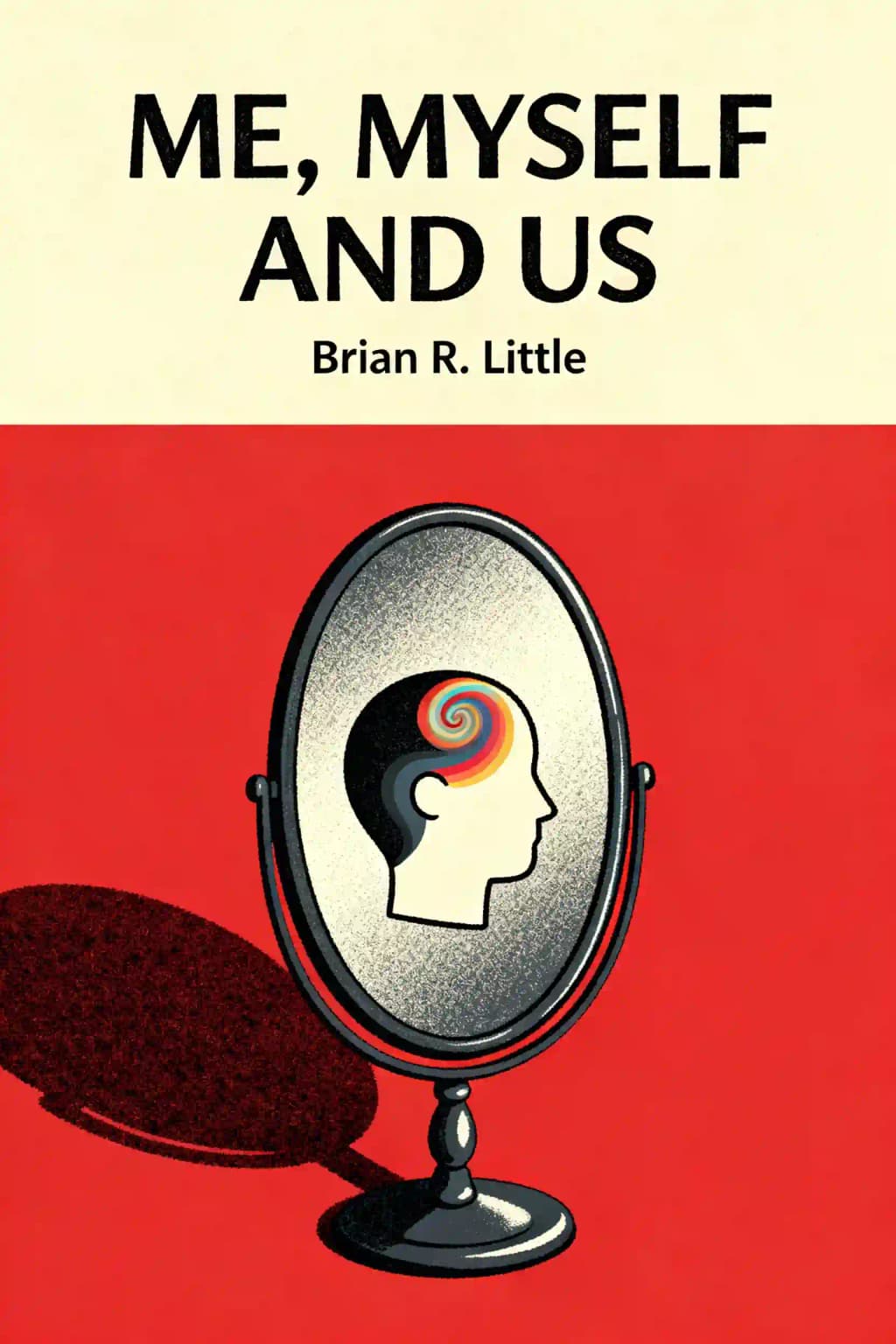
Have you ever wondered why you feel like a completely different person in different situations? Why you might be outgoing at work but shy at parties? Or why your partner seems to transform around their family? These questions lie at the heart of Brian R. Little's groundbreaking work "Me, Myself, and Us," a book that has transformed how psychologists understand personality. Little's approach has garnered attention from business leaders like Bill Gates, who praised its practical insights, and academics who value its integration of traditional trait psychology with newer contextual approaches. The book's influence extends beyond psychology into organizational behavior, where companies use its frameworks to improve team dynamics and leadership development. At its core, Little challenges the notion that we are prisoners of our personality traits, offering instead a liberating perspective on how we can transcend our natural dispositions to pursue what matters most to us.
第 2 章
The Architecture of Identity: How We Construct Our Understanding of Others and Ourselves
When we encounter strangers, our minds immediately begin constructing narratives about them. Consider that demanding diner sending back his steak repeatedly - is he simply obnoxious (a trait attribution), trying to impress his boss (a project inference), or having a terrible day (a narrative explanation)? These first impressions reveal as much about our own mental frameworks as they do about the people we're observing.
These mental frameworks, what psychologist George Kelly called "personal constructs," function as both illuminating lenses and restricting cages. The more diverse our constructs, the more adaptively we can navigate life's complexities. When our constructs are limited, we become trapped in rigid interpretations that diminish our well-being.
Take Gerald, a military cadet I taught in the 1970s who stood out in his uniform and rigid demeanor. Through personal construct analysis, I discovered he had essentially one core construct: "in the army-not in the army." While most students had about seven moderately linked constructs, Gerald's entire identity was subordinated to this single framework. When suddenly discharged from officer training, he collapsed psychologically and was hospitalized with acute anxiety disorder. Without alternative constructs like "committed student" or "hardworking" to fall back on, the invalidation of his only core construct left him without any stable sense of self.
This extreme case illustrates how our personal constructs shape our emotional responses. Core constructs-those with strong implications for other constructs-create vulnerability when challenged. For college students, "intelligent-not intelligent" often connects to constructs like "successful-unsuccessful" or even "worthwhile-useless," making academic failures potentially devastating to their entire identity structure.
We assess personality through different orientations as well. "Person specialists" focus on people's intentions and motivations, while "thing specialists" attend to physical objects and observable data. Neither approach is inherently superior, but they lead to different kinds of insights and blind spots. Person specialists risk making unwarranted inferences when information is insufficient, while thing specialists may miss deeper significance by sticking only to what's immediately apparent.
Consider Jack, a forestry executive who, like Gerald, operated with one dominant construct - "hippie-not hippie." When evaluating Derek, a candidate with long hair and a smock, Jack immediately categorized him negatively. But when Derek demonstrated technical expertise and stood up to environmentalists, Jack experienced "slot-change" - flipping from one extreme to the other on his rigid construct. Without multiple independent constructs to provide flexibility, Jack could only see Derek as either completely hippie or completely not-hippie.
The lesson here is clear: we should avoid slotting people away as mere stereotypes. We have the freedom to reconstrue others and ourselves, considering not just how people are like some others, but also how they are like no other person. By exploring new ways of seeing yourself and others, you can increase your degrees of freedom and experience greater satisfaction in life.
第 3 章
The Big Five: Personality Dimensions That Shape Our Lives
Despite the enduring popularity of personality tests like the Myers-Briggs Type Indicator (MBTI), contemporary personality research has converged on the Big Five traits - Conscientiousness, Agreeableness, Neuroticism, Openness, and Extraversion (CANOE) - as dimensions along which all people can be placed. Unlike the MBTI's categorical approach, these are continuous dimensions with most people falling in the middle regions. Research shows these traits have a genetic component accounting for roughly 50% of variation between individuals, and they significantly impact happiness, health, and achievement.
High conscientiousness - being organized, careful, persevering, and prudent - strongly predicts success across multiple domains. It's a better predictor of college grades than high school performance and correlates with job market success across diverse occupations. Beyond achievement, conscientiousness also predicts better health outcomes and longevity - its positive impact rivals the negative effects of cardiovascular disease on life expectancy.
However, conscientiousness has potential downsides. In chaotic, fast-paced settings, lower conscientiousness might be advantageous, allowing for greater flexibility and responsiveness. Research with jazz musicians found those rated lower in conscientiousness were considered better musicians by peers - likely because improvisation requires sensitivity to subtle cues and willingness to deviate from structure.
Agreeableness, involving being pleasant, cooperative, friendly, and empathic, is highly valued in first impressions but surprisingly shows weak correlation with career success. In fact, agreeable people often earn less, particularly men. Context matters though - a Finnish study found agreeable key account managers excelled by nurturing long-term client relationships. Health-wise, agreeable people benefit from stronger social networks, while disagreeable individuals face health risks from anger and cynicism.
Neuroticism represents sensitivity to negative environmental cues, with neurological roots in amygdala hypersensitivity. Those high in this trait detect, recall, and ruminate on perceived threats others might miss. This vigilance creates chronic stress, compromising physical health. Despite these challenges, neuroticism likely evolved for good reason - in our Pleistocene past, neurotic individuals' heightened sensitivity to threats protected both themselves and their groups.
Openness to experience reflects receptivity to new ideas, interactions, and environments, strongly linking to creativity. Open individuals possess artistic interests, exotic preferences, and complex worldviews. Unlike other Big Five dimensions, openness correlates with both positive and negative emotional experiences - they acknowledge negative feelings like anxiety but also experience more positive emotions like joy and wonder.
Extraversion-introversion affects how we interact with our environment to regulate arousal levels. Introverts are more sensitive to stimulation, while extraverts seek more stimulation. This extends to beverage choices - alcohol initially lowers arousal (making introverts more talkative and extraverts potentially sluggish), while caffeine increases arousal (helping extraverts perform better but hindering introverts on quantitative tasks under pressure). Intellectually, introverts generally achieve higher academic marks except in stimulating environments like kindergarten or lab classes.
Despite cultural bias favoring extraversion, all five personality dimensions must be considered together to understand well-being. The relationship between personality and well-being must consider both individual traits and the social ecology in which one operates.
第 4 章
Free Traits: How We Transcend Our Natural Dispositions
While stable personality traits exist and influence our lives, humans can also act "counter-dispositionally" - behaving in ways that contradict our natural traits. As a natural introvert who transforms into an apparently extraverted presenter when lecturing, I've experienced this firsthand. We are "half-plastered" - partially stable in our traits but also capable of adapting our personalities to meet situational demands and advance what matters to us.
Our everyday behavior stems from three motivational sources. Biogenic sources are rooted in genetics and brain structures - detectable even in newborns, with some orienting toward noise (future extraverts) while others turn away (future introverts). Sociogenic sources arise through socialization and cultural norms - American culture prizes extraversion while some Asian cultures encourage blending in quietly. These cultural differences can create challenges in cross-cultural communication.
Most fascinating are idiogenic sources - our personal projects and core values that drive us to act in surprising ways. Take Stephanie, who despite her typically disagreeable nature, acted sweetly at Thanksgiving because she was pursuing a personal project of "being a more nurturing mom" before moving to Australia. Similarly, introverted Markus appears extraverted when producing music events because it serves his passion. People enact these "free traits" primarily out of professionalism and love.
When the introverted mother transforms into an energetic host for her daughter's birthday party, she's acting out of character in two senses: deviating from her typical behavior while simultaneously expressing her core values. This isn't insincerity - it's a natural expression of what matters most to her.
Free traits help advance meaningful personal projects and expand our capabilities. However, protracted counter-dispositional behavior can extract psychological and physical costs. Research shows people thrive when their environments match their biogenic traits; extraverts flourish in social settings, disagreeable people excel as bill collectors rather than counselors.
Prolonged suppression of biogenic traits can extract health costs. Flight attendants required to maintain professional smiles regardless of their natural disposition illustrate this phenomenon. Research by Jamie Pennebaker shows that suppressing important aspects of oneself leads to chronically elevated autonomic arousal and increased health problems.
Restorative niches offer respite from the physiological costs of free trait behavior. As a biogenic introvert who lectures energetically, I need to lower my arousal level between sessions. At the Royal Military College, I initially found solace walking by the Richelieu River. When the campus relocated, I resorted to using the men's room as my sanctuary - until an extravert recognized me and initiated an unwelcome inter-stall conversation, completely defeating my purpose.
I propose a "free trait agreement" - an informal pledge ensuring everyone can access restorative niches that satisfy their biogenic natures. This means showing forbearance when behaviors seem puzzling, like when an extraverted wife needs a wild weekend with friends after isolated work, or when a naturally agreeable auditor who's been stern all week needs emotional connection on Fridays.
Don't take your Big Five scores too seriously or let them cage you. You're more nuanced than five numbers can capture. Focus instead on your core projects and commitments - from that perspective, your fixed traits and strategic free traits appear in a different light.
第 5 章
The Chameleon Effect: How We Adapt to Social Situations
Why do some people maintain consistent behavior across situations while others shift chameleon-like depending on context? Do you act funereally at funerals and playfully at barbecues, or maintain the same demeanor regardless? These tendencies significantly impact our achievements and well-being.
The self-monitoring scale measures how much we adjust our behavior to fit social situations. High self-monitors (HSMs) constantly attune to social contexts, while low self-monitors (LSMs) stay true to their internal traits regardless of situation. This distinction emerged from Walter Mischel's revolutionary 1968 challenge to traditional personality theory, suggesting situations matter more than fixed traits.
High self-monitors crave situational clarity before entering social contexts. They're more likely to participate in situations requiring extraverted behavior if the expectations are clearly defined, regardless of their natural extraversion level. When situations lack clarity, HSMs work to transform them into clearer guideline-driven environments.
HSMs are Google's best friends, researching extensively before entering new situations. Before job interviews, they'll investigate not just the company but the interviewer's educational background and hobbies to establish connection points - behavior LSMs might find calculating or creepy. HSMs find ambiguous social invitations stressful ("Come to dinner tomorrow night") because they crave details about attendees, dress code, and expectations.
Self-monitoring profoundly affects romantic relationships. When evaluating potential partners, HSMs prioritize physical appearance and social status, spending more time studying photographs than biographies. LSMs do the opposite, focusing on personality traits and values. These differences extend to relationship stability: LSMs tend toward more enduring partnerships and fewer extramarital affairs, while HSMs demonstrate greater "flexibility" in managing romantic interests.
HSMs typically achieve greater occupational success than LSMs. They emerge more frequently as leaders in work groups and receive higher performance ratings in "boundary spanning" management positions requiring attention to diverse roles. HSMs possess subtle professional skills, such as controlling information flow about failed projects to minimize personal blame - a practice LSMs might view as dishonest but which proves advantageous.
Beyond disposition, self-monitoring may also reflect ability differences. Research using the Thematic Apperception Test revealed striking contrasts when fraternity members were asked to write "the sexiest story" possible. One participant produced genuinely erotic content with passionate descriptions, while another wrote a decidedly non-erotic story about pregnancy and family advice - despite explicit instructions to be sexy.
While self-monitoring research focuses on individual differences, situations themselves exert varying degrees of pressure on behavior. The highest "self-monitoring press" situations included job interviews, public speaking, court appearances, meeting university deans, funerals, class presentations, customer service, and first dates - contexts where judgment has personal consequences.
Self-monitoring discussions often become heated because they touch on fundamental values. Snyder and colleagues propose LSMs adopt a "principled" approach to social interaction, adhering to core convictions regardless of circumstances, while HSMs take a more "pragmatic" utilitarian stance. This principled-pragmatic dichotomy raises important moral questions, but two issues deserve consideration: First, the contrast seems invidious, implying HSMs lack principles when they may simply value different principles like sensitivity and connection to others. Second, both orientations taken to extremes can become pathological.
Rather than viewing self-monitoring as purely trait-like, we should consider that most people display flexible self-monitoring depending on context. Either high or low self-monitoring can be adaptive depending on the environment - HSMs thrive in diverse modern urban settings requiring multiple selves, while LSMs fit better in traditional communities where consistency is valued.
第 6 章
The Control Factor: How Our Sense of Agency Shapes Our Lives
How much control do we have over our lives? While philosophers examine the technical aspects, personality psychology focuses on how our beliefs about control impact our well-being. Some approach life convinced they are controlling agents, while others believe external forces determine outcomes.
Research consistently shows that an internal orientation positively impacts well-being and accomplishment in several key areas. Internals demonstrate remarkable resistance to social pressure. In classic conformity experiments where participants judge line lengths while confederates deliberately give wrong answers, internals maintain their independent judgments while externals yield to group consensus.
Internals consistently avoid risks that externals readily embrace. Research shows internals wear seatbelts more frequently and use contraception more reliably than externals. This risk-taking difference extends to behavioral choices: when given options between safe, low-reward actions versus risky, high-reward alternatives, internals consistently choose the safer, more certain path.
Internals excel at connecting their aspirations to specific actions that will achieve them. The Coleman Report on American schools revealed that internal locus of control predicted academic success better than intelligence or socioeconomic status. Economists now confirm that internal orientation positions adolescents for better educational and workforce outcomes.
Internals also excel at delaying immediate gratification for greater future rewards. Walter Mischel's famous marshmallow experiments with four-year-olds demonstrated this clearly: children who could resist eating one marshmallow to receive two later employed effective distraction techniques to manage temptation. Follow-up studies revealed these same children achieved significantly higher SAT scores and better academic performance years later.
Groundbreaking research at Rockefeller University demonstrated how perceived control affects our response to stressors. Participants exposed to unpredictable loud noise showed physiological adaptation but suffered performance costs afterward. However, those who believed they could stop the noise by pressing a button (even when that button wasn't actually connected) adapted more quickly physiologically and showed fewer performance deficits afterward.
Research consistently shows that having a sense of control yields psychological and health benefits. Studies in nursing homes demonstrate this dramatically - when residents were given simple control over daily activities like movie choices and room decoration, they became happier, healthier, and even lived longer. However, when nursing home residents who had enjoyed control over student visits suddenly lost that control, they experienced not only reduced health and happiness but significantly higher mortality rates.
While positive illusions can enhance well-being, we must be strategic about when to embrace them. Nearly everyone believes they have above-average humor, which is statistically impossible! Such moderate illusions are adaptive, while depressed individuals tend to be more realistic but sadder. The timing of our illusions matters crucially - when deciding whether to pursue a path (like changing jobs or committing to a relationship), we should tilt toward reality and gather objective information. Once committed to our projects, however, positive spin becomes advantageous.
第 7 章
The Resilient Personality: How Traits Influence Health and Hardiness
The popular Holmes-Rahe Life Events Change Scale suggests that major life changes increase illness risk. However, this approach has significant limitations - it assumes both positive and negative events contribute to health problems, ignores personal significance, simply adds scores when some events might offset others, and research shows only negative events predict health decline.
A fascinating study at Illinois Bell Telephone Company during its massive downsizing revealed that while two-thirds of employees showed health decline, one-third remained resilient despite experiencing identical levels of life changes. What distinguished them was "hardiness" - comprising three Cs: commitment (staying engaged rather than feeling isolated), control (trying to influence events rather than feeling powerless), and challenge (viewing changes as growth opportunities).
The Type A personality concept has become part of everyday conversation about health risk. Its most recognized features include time urgency, forcefulness, and competitiveness. Type A individuals are often more productive and successful in competitive environments, but their interaction style - speaking loudly, interrupting others, and being blunt and impatient - can frustrate coworkers and family. Most dangerously, they're insensitive to stress signals in their own bodies due to intense task focus.
Research reveals that hostility is the core pathological feature underlying Type A behavior - not merely hurry sickness or workaholism. This distinction has practical implications for dealing with Type A individuals. Confronting them about relaxing can backfire by triggering the very hostility that endangers their health.
The apparent paradox that control, commitment, and challenge both enhance health (in hardy people) and endanger it (in Type A people) can be resolved by examining how differently these traits manifest. Type As exercise indiscriminate control from low self-esteem, while hardy people employ flexible, calibrated control. Type As demonstrate either hyper-commitment or myopic commitment, whereas hardy people commit more discriminately. Type As approach challenges with grim earnestness and hostility, while hardy people engage challenges playfully and enthusiastically. The fundamental difference is perspective - Type As lack it, which pushes their autonomic nervous system into overdrive.
Aaron Antonovsky's concept of a "sense of coherence" (SOC) provides an integrative perspective on personality and health. SOC represents one's confidence that their environment is predictable and things will work out "as well as can reasonably be expected." It comprises three elements: comprehensibility (life makes logical sense), manageability (ability to cope with demands), and meaningfulness (finding daily pursuits worthy of commitment).
第 8 章
The Creative Mind: Personality Traits of Innovative Thinkers
Creativity researchers define creative individuals as those who generate products that are both novel and useful - mere novelty or utility alone is insufficient. A challenge arises when evaluating creativity in brief encounters: narcissists believe themselves to be highly creative and can convincingly persuade others of their creativity through enthusiasm and charisma, despite not scoring well on objective creativity tests.
Contrary to what many might expect, studies found no significant IQ differences between highly creative architects and their conventional peers. Beyond an IQ of about 120 (typical for professionals), higher intelligence doesn't correlate with greater creativity. Academically, future creative innovators typically graduated as B students, excelling only in courses they connected with while performing mediocrely in others.
Creative individuals' childhoods shared several patterns: their families accorded them significant respect and autonomy to explore independently. Notably, they experienced neither extremely negative nor intensely positive emotional relationships with parents - connections were pleasant and friendly rather than intensely intimate. Creative individuals also experienced significantly more relocations during childhood, potentially increasing their adaptive flexibility while fostering self-reliance.
On psychological assessments, highly creative people strongly prefer introversion over extraversion, perceiving over judging, and overwhelmingly favor intuition over sensing. They also demonstrate a marked preference for complexity, asymmetry, and tension-inducing experiences. Yet this isn't merely about complexity for its own sake - creative people engage with complexity initially but drive toward elegant resolution.
Creative individuals describe themselves as inventive, determined, independent and individualistic, while conventional people identify as responsible, sincere, reliable and dependable. They're typically asocial rather than antisocial - neither drawn to nor antagonistic toward others, but focused intensely on their creative domains. They can be charming when necessary but lack sustained sociability, appearing demanding, sharp-witted, aggressive and uninhibited.
The relationship between creativity, eccentricity, and mental illness requires careful distinction. Unlike creative individuals, eccentrics focus on personal projects rather than socially significant problems. Unlike the mentally ill, eccentrics choose their unconventional paths and find happiness in their freedom from social constraints.
Creative individuals score higher on psychopathology scales but crucially also score high on "ego-strength" - being intelligent, resourceful and realistic. Research suggests that creative individuals, eccentrics, and those at risk for mental illness share low latent inhibition - an inability to filter out extraneous information. However, creative people possess higher intelligence and better short-term memory that help them cope with this information flood, transforming potential overwhelm into creative insight.
The myth of the solo creative hero obscures the essential role of support personnel. Every innovative project requires not just visionaries but also negotiators, pacifiers, and detail-oriented team members. Being creative carries both costs and benefits - the openness that allows creative individuals to experience negative emotions also enables them to feel positive emotions more intensely. While challenging convention is exhausting, solving problems through creativity can be elating.
第 9 章
The Geography of Self: How Places Shape Our Personalities
Our physical environments interact with our personalities to shape our well-being. Christopher Alexander, a mathematician-architect, believed design should respond to our deepest psychological needs, particularly our universal need for intimate contact. He argued that individuals need "three or four intimate contacts" for health and happiness and proposed a city design with twelve geometric features promoting spontaneous social interaction through high-density modular structures.
However, this one-size-fits-all approach fails to account for individual differences, particularly introversion-extraversion. While extraverts might thrive in such an environment, introverts likely would not. Stanley Milgram offered a contrasting view of cities as sources of overwhelming stimulation, proposing that cities create "information input overload" through large numbers of people, compressed space, and social heterogeneity.
Alexander's isolated, low-stimulation environments appeal to introverts and those with high locus of control, while his proposed Alexanderville with high social contact would attract agreeable extraverts. Similarly, Milgram's "aversive overload" cities might actually be sought out by extraverts and Type A personalities. "One person's utopia may be another's dystopia," suggesting living spaces should reflect personality-place interactions.
George McKechnie's Environmental Response Inventory (ERI) measures eight environmental dispositions that go beyond the Big Five traits. These include: Pastoralism (appreciation of nature and open spaces), Urbanism (enjoyment of high-density living and cultural diversity), Environmental Adaptation (viewing environment as providing comfort and leisure), Stimulus Seeking (interest in travel and complex sensations), Environmental Trust (openness to surroundings), Antiquarianism (preference for historical places and traditional design), Need for Privacy (desire for physical isolation), and Mechanical Orientation (interest in how things work).
Places themselves have personalities, with surprising geographic distributions of personality traits. Florida scores highest in conscientiousness, while neuroticism forms a "stress-belt" dividing East and West. New York City ranks high in neuroticism, while California confirms its "mellow" stereotype with low neuroticism scores. These findings highlight how place-personality mismatches can create malaise.
Our increasing engagement with "Cyberia" (social media, smartphones, and digital technologies) presents two conflicting views: a utopian perspective seeing it as efficiently connecting us to limitless experiences, and a dystopian view finding it overloading and dehumanizing. Research shows that Facebook users prefer intimate one-on-one exchanges over public posts, with extraverts using it more frequently. Gender differences emerged too - women who shared stressful projects online experienced improved well-being, while men experienced increased stress. Personality significantly influences how we experience both physical environments and virtual worlds.
第 10 章
The Power of Projects: How Our Pursuits Shape Our Well-Being
Our personal projects - the things we're doing or planning in everyday life - profoundly affect our well-being. These range from routine acts to lifetime commitments, from solo pursuits to communal ventures, and can be either self-initiated or thrust upon us. What distinguishes them from mere actions is their "personal saliency" - their significance to us - and their extended nature.
Personal Projects Analysis (PPA) examines what you do rather than what traits you have. The most common project people list is "lose weight," followed by goals like "writing a book" and "stop procrastinating." Projects range from common pursuits to idiosyncratic ones like "Be a better Druid" or "Fill in the sinkhole before Fred gets home." Project phrasing matters significantly - those phrased as direct action ("Lose ten pounds") rather than tentative attempts ("Try to lose weight") are more successful and associated with higher well-being.
The same project can affect different people's well-being in radically different ways. For example, "lose weight" might be an enjoyable, valued pursuit for an athlete but a source of frustration and anxiety for someone pressured by others. Research has identified five major factors in project appraisals: meaning, manageability, connection, negative emotions, and positive emotions.
Self-identity - how much a project feels like "you" - emerged as a critical dimension. Some projects feel warm and natural; others cold and alienating. Research with high school students revealed which projects they found most self-defining. The highest self-identity scores were for community projects, spiritual pursuits, sex, boyfriend/girlfriend relationships, and sports. Though community and spiritual projects were infrequent, those pursuing them felt deeply self-expressed through them. Conversely, the least self-defining projects were academic, maintenance like cleaning, and reading - suggesting that telling teenagers to "clean your room" or "do your homework" asks them to engage in activities where they feel least themselves.
Let's assume your personal projects are deeply meaningful - you identify with them, they align with your values, and they're pleasurable to pursue. But how manageable are they? Three key dimensions affect project management: initiation (whether you started the project yourself), efficacy (likelihood of success), and control (your influence over outcomes). Cross-cultural differences exist in project initiation - Chinese students are far less likely to initiate their own projects than Western counterparts, reflecting their more communitarian society.
How our projects connect to others matters deeply. In personal relationships, partners who value each other's pursuits foster satisfaction - research shows that project sharing is the best predictor of relational happiness among young adults. Gender differences emerge in how we handle project visibility. Women benefit from making stressful projects visible and discussing challenges, while men benefit from keeping them private.
Even meaningful, manageable, socially-connected projects can fail to enhance well-being if they're emotionally draining. Project-related stress consistently emerges as the strongest negative predictor of well-being - knowing someone's project stress levels predicts their well-being better than socioeconomic status, race, gender, or other demographic factors.
第 11 章
The Art of Well-Being: Integrating Our Multiple Selves
The sustainable pursuit of our core projects shapes our quality of life - our health, happiness and overall well-being. Core projects are those personal projects that become self-defining commitments and provide deep meaning. They can be identified by their meaningfulness, importance, consistency with our values, and self-expressiveness. Another way to identify core projects is by examining how tightly connected they are to other projects in our personal project system.
While new projects begin fresh and meaningful, even core projects can lose their luster over time, becoming incoherent and disconnected from our changing life contexts. Reframing these projects can lead to positive outcomes. Projects can be reframed through strategic use of metaphor, drawing on specialized domains of expertise to address stuck and dysfunctional projects.
Another way to make core projects sustainable is by changing the personal constructs through which we appraise them. Fixed Role Therapy (FRT) from Kelly's personal construct theory asks clients to play a different role for two weeks - similar to method acting. The goal isn't permanent personality change but demonstrating the capacity to try new possible selves.
People experience more positive project pursuit when their personality traits match their personal projects. Conscientious individuals excel in diverse projects, while extraverts thrive specifically in social projects. Happiness peaks when traits, projects, and life stories converge thematically. Beyond stable traits, free traits allow us to act out of character when core projects demand it.
Beyond individual-focused strategies, we must monitor the environments in which we pursue our projects. A sense of control contributes to well-being only when based on accurate reading of environmental contingencies. Contexts aren't merely constraining; they can potentiate pursuit of what matters to us. We actively seek cities and regions that fit our personalities and core projects.
Self-reflection often occurs at major life transitions - graduations, marriages, divorces, promotions, job losses, retirements. But subtler moments also prompt reflection: a friend asking how you're really doing, giving a eulogy that reveals yourself to yourself, or reconciling contradictory selves during a sleepless night.
These reflections reveal the different roles played by "you" and "yourself" - the observer and the observed self. Owen Flanagan beautifully captures this as a final dance between an "I" and the self it observes, suggesting that a meaningful life requires both integrity and effort alongside having fun. This dance can include our multiple selves - the professional and the playful, the brave and the vulnerable - as well as the people who've shaped us along the way.