第 1 章
When Silence Speaks: The Journey to Finding Your Voice
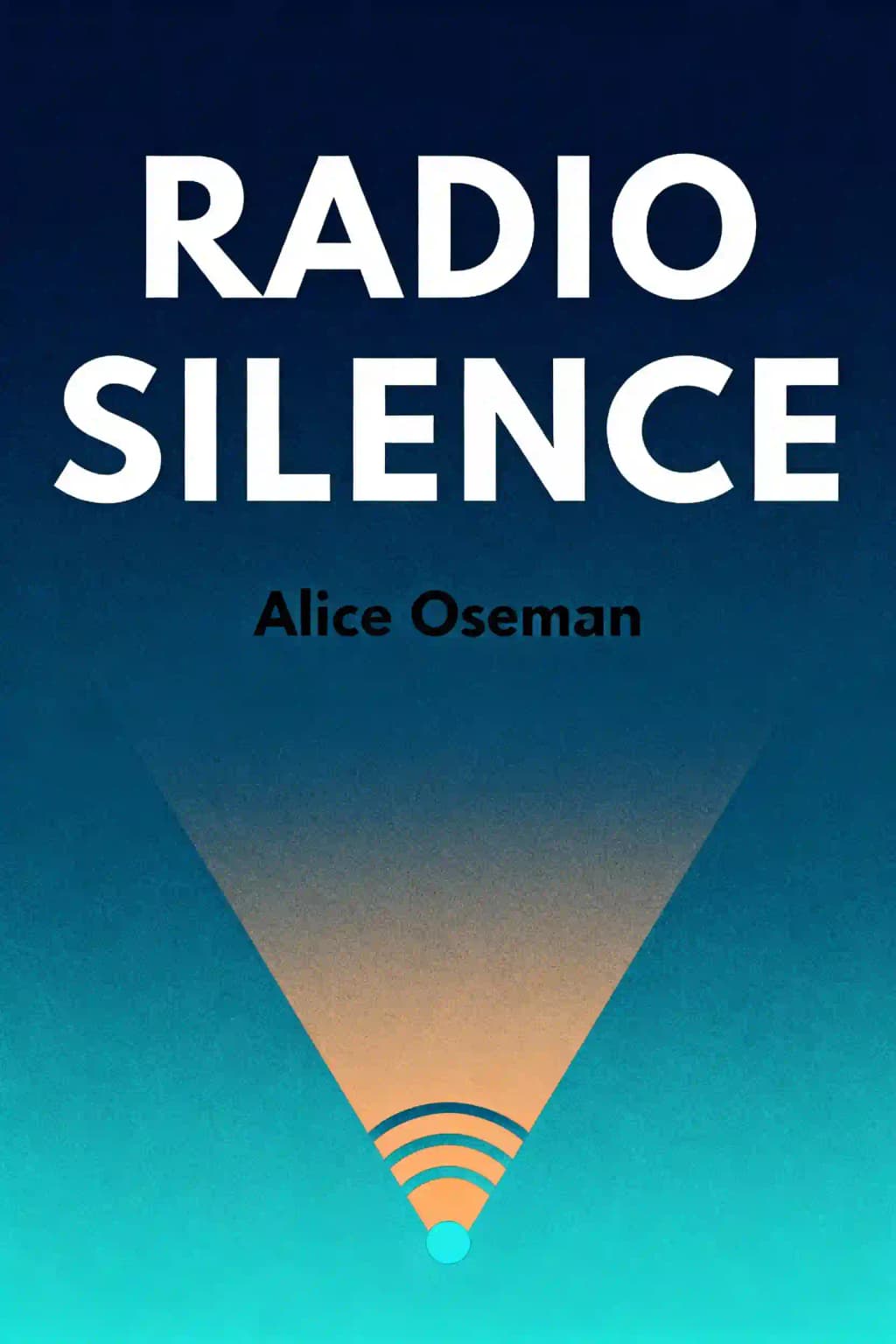
In an age of constant digital noise, Alice Oseman's "Radio Silence" strikes a rare chord of authenticity. This coming-of-age novel has quietly become a cult favorite among young adults searching for representation beyond traditional narratives. With over a million copies sold worldwide and passionate endorsements from celebrities like Florence Pugh, who called it "the book that changed how I saw myself," the novel has developed a devoted following. What makes "Radio Silence" particularly significant is how it explores identity beyond the confines of academic achievement-a revolutionary concept in young adult literature when it was published in 2016. As we navigate an increasingly achievement-obsessed culture, Oseman's exploration of finding one's authentic voice amid societal pressures feels more relevant than ever.
第 2 章
The Masks We Wear: School Frances vs. Real Frances
At seventeen, Frances Janvier appears to have it all figured out. She's head girl, consistently achieves top grades, and has her sights set on Cambridge University. Her teachers adore her, her peers envy her academic prowess, and her future seems predetermined: Cambridge, financial success, happiness. But beneath this carefully constructed facade lies a more complex reality. "I'm clever," Frances tells herself repeatedly, as though this single trait encompasses her entire identity.
The distinction between "School Frances" and "Real Frances" forms the novel's central identity conflict. School Frances is organized, studious, and focused solely on academic achievement. She's the version Frances presents to her teachers and most of her peers-a persona that feels increasingly hollow as the story progresses. Meanwhile, Real Frances remains hidden: a creative soul who spends hours creating fan art for her favorite podcast, Universe City, who wears quirky clothes with burger patterns, and who harbors secret passions that have nothing to do with her academic trajectory.
This duality becomes painfully apparent when Frances reflects on her school friendships: "They only like School Frances though. Not Real Frances." With her school friends, she's quiet and work-obsessed, perpetually "just stressed" rather than revealing her true feelings. They laugh off her excuses about being too busy to socialize as "Classic Frances," unaware that she's creating a different life with people who know her authentic self.
The pressure to maintain this divided identity takes its toll. Frances describes School Frances as having "barely a personality," making it increasingly difficult to maintain the facade. When her academic identity begins to crumble-first with losing her head girl position, then with her Cambridge rejection-Frances faces an existential crisis. Without her academic achievements, who is she? This question haunts her throughout the novel, forcing her to confront whether being "the cleverest girl in the class" is truly the foundation she wants to build her life upon.
第 3 章
Universe City: Finding Connection in Creative Spaces
Universe City, the mysterious podcast at the center of the novel, serves as both literal plot device and powerful metaphor for authentic self-expression. This fictional podcast about "a detective in a monster-infested university" captivates Frances with its enigmatic narrator's voice-"like someone stroking your hair in the least weird way possible." What begins as simple fandom evolves into something more profound when Radio Silence, the podcast's anonymous creator, reaches out to Frances about collaborating on visual elements for the show.
The podcast represents everything Frances's academic life doesn't: creativity without grades, expression without judgment, and community based on shared passion rather than achievement. When drawing Universe City characters, Frances experiences rare moments of genuine joy: "It's the only thing I genuinely enjoy besides studying, though I'm reluctant to admit how much it means to me." This reluctance speaks volumes about how Frances has been conditioned to value only activities that contribute to her academic success.
When Frances discovers that Aled Last-her quiet neighbor whom she barely knows-is Radio Silence, worlds collide in unexpected ways. Their shared secret creates an intimate bond as they collaborate on Universe City, with Frances finally finding someone who appreciates Real Frances rather than School Frances. Their creative partnership allows both to express parts of themselves they've kept hidden from others. For Aled, Universe City becomes a lifeline-"his soul in audio form" as Daniel later describes it-allowing him to process his feelings about his controlling mother and absent twin sister.
The podcast's growing popularity brings complications, particularly when Aled's identity is exposed against his will. The violation devastates him precisely because Universe City represented his safe space for authentic expression. When he tells Frances, "You've ruined the only good thing I had," he's not merely talking about a creative project but about his sanctuary from real-world pressures and expectations.
第 4 章
The Tyranny of Academic Success
"Radio Silence" offers a searing critique of education systems that reduce young people to their academic achievements. Throughout the novel, characters struggle under the weight of expectations about university-particularly prestigious institutions like Cambridge and Oxford. Frances has oriented her entire life around Cambridge admission, choosing subjects strategically and becoming head girl to strengthen her application. When she's rejected despite her perfect grades, her world collapses: "I was the cleverest girl in the class... and Cambridge was where clever people went. And I still hadn't got in."
This devastating moment forces Frances to confront how much of her identity she's invested in academic success. She cycles through shock, disappointment, anger, and self-loathing, feeling like she's "wasted a significant portion of her life" preparing for this moment. Everything she'd done-her A level subject choices, becoming head girl, maintaining perfect grades-suddenly seems meaningless.
Daniel Jun experiences similar pressure, confessing to Frances: "When I was thirteen, I thought I was special for getting the highest test scores at school, but now realizes I isn't special at all. This is the only special thing about me." His academic ability has become his entire identity, leaving him vulnerable when that foundation is threatened.
Most tragically, we see the damage of academic pressure through Aled and Carys Last. Their mother Carol believes "academic success is the only path to fulfillment" and would "rather we died than didn't do all of that." While Aled initially succeeds academically as the "golden child," Carys struggles with poor grades and is systematically punished by having "privileges and joys" removed. When Carys runs away after failing her GCSEs, Carol turns her controlling behavior toward Aled, forcing him into a university path he never wanted.
The novel ultimately challenges the notion that university-particularly elite institutions-represents the only valid path to success. When an art teacher expresses surprise that Frances isn't pursuing art at university, a seed is planted that eventually blossoms into Frances questioning her entire trajectory. By the novel's end, she makes the radical decision not to attend university at all, choosing instead to follow her creative passions.
第 5 章
The Cost of Silence: Mental Health and Authentic Expression
Throughout "Radio Silence," characters suffer when forced to remain silent about their true selves. Aled's deteriorating mental health at university provides the most stark example. Trapped in a program he never wanted, separated from his creative outlet after his mother threatens to cut off financial support if he continues Universe City, Aled spirals into depression. His room becomes "a demolition site," he stops attending lectures, and his physical appearance deteriorates dramatically.
The podcast itself becomes a barometer for Aled's mental state. Once meticulously crafted, Universe City episodes grow increasingly incoherent and disturbing as Aled's depression worsens. The final episode-twenty minutes of white noise titled "Goodbye"-represents his complete emotional shutdown. As Frances observes, "For someone who never allowed Universe City to be anything less than perfect, this decline signals something deeply wrong."
Carys's story similarly illustrates the damage of silencing one's authentic self. Under her mother's oppressive expectations, she feels unheard and undervalued. "Nobody listens to me," she laments to Frances in a flashback. Her eventual escape-running away and changing her identity to "February"-represents her desperate need to create a life where she can be herself.
Even Frances, who appears to function well on the surface, suffers from maintaining her dual identity. The constant pressure to be School Frances leads to sleepless nights, anxiety, and a profound sense of disconnection from her own desires. When she finally admits to her mother that she doesn't want to attend university, the confession brings immediate relief-the weight of silence finally lifted.
The novel suggests that mental health depends on finding spaces where authentic expression is possible. For these characters, healing begins when they can speak their truths: Aled admitting he hates university, Frances confessing she doesn't want to study English literature, Carys acknowledging her need for independence from her mother's control.
第 6 章
Found Family: Creating Your Own Support System
One of "Radio Silence's" most powerful themes is the creation of chosen family. Traditional family structures in the novel are often dysfunctional or absent. Aled and Carys suffer under their controlling mother's emotional abuse. Daniel's parents dismiss his academic ambitions, preferring he work in the family electronics shop. Even Frances, who has a loving relationship with her single mother, feels pressure to fulfill certain expectations.
In response, characters form their own support networks based on authentic connection rather than obligation. Frances and Aled's friendship becomes the novel's emotional core-a relationship explicitly established as platonic from the outset. "I want to clarify something," Frances tells the reader, "you might think Aled Last and I are going to fall in love. We don't. That's all." This deliberate choice by Oseman challenges the convention that opposite-sex relationships must be romantic, instead celebrating the profound importance of friendship.
Their bond forms because each recognizes the other's authentic self. Aled sees beyond School Frances to appreciate her creativity and quirky personality, while Frances understands Aled's need for self-expression through Universe City. Their friendship creates a safe space where both can be themselves without judgment. As Frances observes, "Everything with Aled was fun or good. I felt less embarrassed about my quirks-random singing, encyclopedic facts, or four-hour text conversations about cheese."
The novel culminates in a literal rescue mission when Frances, Carys, Raine, and Daniel drive six hours to save Aled from his university situation. This makeshift family unites despite their differences, bound by their shared concern for Aled. The climactic scene at the train station-where Frances jumps the barrier to stop Aled from leaving with his mother-symbolizes the power of chosen family to break cycles of control and abuse. When Frances promises Aled they could live together, work at the post office, and create Universe City, she offers him an alternative family structure based on mutual support and creative freedom.
第 7 章
Identity Beyond Labels: Exploring Sexuality and Gender
"Radio Silence" approaches sexuality and gender with refreshing nuance, presenting characters whose identities evolve naturally throughout the narrative. The novel stands out for its matter-of-fact treatment of diverse sexual orientations and gender expressions, weaving these elements seamlessly into the fabric of daily life. Frances casually mentions being bisexual - "The only person I've genuinely had a crush on was Carys Last - besides celebrities like Sebastian Stan or Kristen Stewart" - without making this revelation a dramatic plot point. Similarly, Aled eventually explains his demisexuality to Daniel in a quiet, intimate conversation, emphasizing how sexual orientation can be discussed without sensationalism or crisis.
The novel deliberately avoids treating LGBTQ+ identities as sources of conflict or trauma, instead positioning them as natural aspects of characters' personalities. This approach is exemplified when Carys casually mentions being gay during one of their train conversations, assuming Frances already knew. "I've never met any gay people before," Frances admits, almost adding "apart from me" but stopping herself. "You probably have," Carys replies knowingly, "you just didn't know they were gay." This exchange masterfully highlights how queer identities exist everywhere, often invisibly, while challenging common assumptions about visibility and representation.
The podcast Universe City serves as a creative vehicle for exploring gender fluidity, with Radio presented as an agender character who can speak in multiple voices. Aled's preference for "the medium, androgynous voice" as his favorite version of Radio reflects both his artistic vision and his personal comfort with gender ambiguity. The novel weaves smaller but significant details throughout - Aled confidently wearing shoes from the women's section, Frances naturally gravitating toward men's departments, characters using varying pronouns without fanfare - all of which normalize gender nonconformity without turning it into a source of conflict or special attention.
The evolution of Frances's feelings for Carys demonstrates the novel's sophisticated handling of romantic and platonic relationships. Her initial crush develops and changes organically over time, eventually resolving into a deep friendship. This transformation challenges conventional narratives about first loves and sexual awakening, showing how feelings can shift and mature. When Carys offers Frances an "apology kiss" near the novel's end, Frances's realization that her romantic feelings have faded marks a moment of emotional growth for both characters. This scene powerfully illustrates how relationships can evolve beyond initial attraction into meaningful friendship, free from the burden of unresolved romantic tension.
The novel's treatment of identity extends beyond individual characters to examine how society at large views and validates different forms of sexuality and gender expression. Through subtle interactions and everyday moments, it challenges readers to question their own assumptions about what constitutes "normal" in terms of gender presentation and sexual orientation. This approach makes "Radio Silence" particularly valuable in contemporary discussions about identity, showing how literature can normalize diverse experiences without reducing them to teaching moments or plot devices.
第 8 章
Breaking the Cycle: Confronting Abuse and Control
Carol Last stands as a chilling embodiment of the novel's exploration of parental control and emotional abuse. Her treatment of her children reveals a calculated pattern of domination - forcing relentless academic achievement at any cost, systematically destroying their personal belongings, and even having Aled's beloved dog put down without warning or explanation. What makes Carol particularly disturbing is her masterful manipulation of appearances, maintaining an impeccable public facade as a dedicated single mother while privately terrorizing her children through a campaign of psychological warfare and emotional devastation.
The novel deliberately frames Carol's actions as abuse, refusing to soften or excuse her behavior. When Carol "rearranges" Aled's bedroom, the act reveals itself as a calculated assault on his identity - methodically stripping away every personal touch, painting over his painstakingly created galaxy ceiling that took months to perfect, and allowing his carefully tended plants to wither and die. Frances, witnessing the aftermath, immediately recognizes this not as mere redecorating but as the systematic destruction of Aled's sanctuary. Similarly, Carys's revelation about her mother burning her charity shop clothes carries profound symbolism - the destruction of items representing Carys's attempt at self-expression, made more horrific by Carol's cold indifference when Carys burned her hands trying to rescue them from the flames.
Breaking free from this cycle of abuse requires both painful recognition and decisive action. For Carys, escape manifested in its most dramatic form - running away and completely reinventing herself under a new identity, choosing complete severance over continued subjugation. For Aled, freedom emerges through a more gradual process of awakening, culminating in the pivotal train station scene where he physically wrenches himself from his mother's grip - a moment that represents not just physical separation but emotional emancipation, choosing his authentic self despite years of psychological conditioning designed to crush his independence.
The novel emphasizes that confronting and escaping abuse rarely happens in isolation. Frances provides unwavering emotional support and validation of Aled's experiences, while Carys's return offers living proof that escape is possible. Daniel and Raine create a support network that shows Aled alternative ways of existing and relating to others. Frances's mother emerges as a powerful counterpoint to Carol's toxic parenting, demonstrating through her actions what genuine parental love looks like - particularly when she responds to Frances's decision against university with simple acceptance: "This decision is okay." This stark contrast illuminates the novel's central message about parenting: true parental love manifests in supporting children's authentic choices and development, not in forcing them down predetermined paths through manipulation and control.
The lasting impact of Carol's abuse echoes through both siblings' struggles with trust, self-worth, and relationships, highlighting how parental abuse creates ripples that extend far beyond childhood. However, the novel ultimately offers hope through its depiction of healing through connection, suggesting that while the scars of abuse may never fully fade, recovery becomes possible through understanding, support, and the courage to choose a different path.
第 9 章
Finding Your Voice: The Journey to Authenticity
"Radio Silence" ultimately celebrates the journey toward authentic self-expression, exploring how different characters navigate the complex path between societal expectations and genuine identity. For Frances, this means reconciling the stark divide between School Frances - the academic achiever who crafts perfect essays and maintains impeccable grades - with Real Frances, the passionate artist who spends hours creating fanart and immersing herself in online communities. Her eventual decision to attend art college rather than pursue English literature at a prestigious university represents more than just a career choice - it's a declaration of independence from the suffocating expectations that have shaped her entire academic life.
Aled's journey proves equally transformative but follows a different path. Universe City begins as his secret sanctuary, a creative space where he can express his deepest fears and imaginative ideas without judgment. However, when his mother discovers and attempts to suppress this outlet, it becomes clear that Universe City represents more than just a podcast - it's his authentic voice fighting to be heard. His triumphant return as Radio at the YouTube convention serves as the story's emotional crescendo. Dressed in his iconic outfit - pastel hair, three-piece suit, gloves - he reclaims his creative identity with the simple yet powerful words: "Hello. I hope somebody is listening..." This moment resonates deeply because it represents not just personal victory but artistic resurrection.
The novel's exploration of authenticity extends beyond its primary characters. Daniel's journey involves confronting his romantic feelings for Aled, challenging the comfortable but limiting boundaries of their friendship. His eventual honesty about his emotions demonstrates how authenticity often requires emotional courage. Carys, who initially seems to be living in her mother's shadow, finds her true calling in theater production at the National Theatre - proving that success can take many forms beyond traditional academic achievement. Even Raine, who Frances initially dismisses as a one-dimensional popular girl, reveals layers of complexity and unwavering loyalty that challenge stereotypical assumptions.
The story culminates in a powerful validation of authentic self-expression when Aled's live appearance generates over 1.5 million views. However, the true significance lies in Frances's pre-show encouragement: "It's your show. If you like it, then it is brilliant." This sentiment encapsulates the novel's core message - that genuine fulfillment stems not from external validation or societal benchmarks but from creating something that truly reflects your authentic self.
In an era dominated by carefully curated social media presence and increasing pressure for academic and professional achievement, "Radio Silence" offers a compelling counternarrative. The story suggests that our true worth isn't measured by grades, university admissions, or career trajectories, but by our ability to forge genuine connections and express our authentic selves. Through Frances's evolution, readers learn that finding one's voice often means questioning ingrained beliefs about success and identity - and sometimes the most profound act of courage is simply being true to oneself.
第 10 章
The Courage to Change Direction
Perhaps the most radical aspect of "Radio Silence" is its challenge to predetermined life paths. Throughout the novel, characters make brave choices to abandon trajectories that others have set for them. Frances's decision not to attend university after years of single-minded focus on Cambridge represents an enormous shift in her self-conception. Similarly, Aled's choice to leave university despite his academic success and his mother's expectations requires tremendous courage.
These pivotal moments don't come easily. When Frances admits during her Cambridge interview that she doesn't actually want to study English literature, she experiences a moment of terrifying clarity: everything she thought she wanted was actually what others expected of her. Later, when she tells her mother she doesn't want to go to university at all, she's taking an even bigger risk-stepping completely off the prescribed path of academic achievement.
The novel doesn't present these choices as simple rebellions or rejections of education itself. Rather, it suggests that true education means discovering what genuinely interests you rather than following predetermined tracks. Frances's acceptance to art college represents not an abandonment of learning but a redirection toward her authentic interests. Similarly, Aled's return to creating Universe City isn't a rejection of intellectual pursuits but a reclaiming of creative expression on his own terms.
By the novel's end, characters have learned that changing direction isn't failure-it's growth. As Frances reflects while listening to Universe City during their road trip to rescue Aled, there's "a strange peace" in following your own path, even when the destination remains uncertain. The courage to change direction, to listen to your own voice amid the radio silence of others' expectations-this is the novel's most enduring message and the source of its continued resonance with readers searching for their own authentic paths.