第 1 章
Breaking Free from Conventional Wisdom
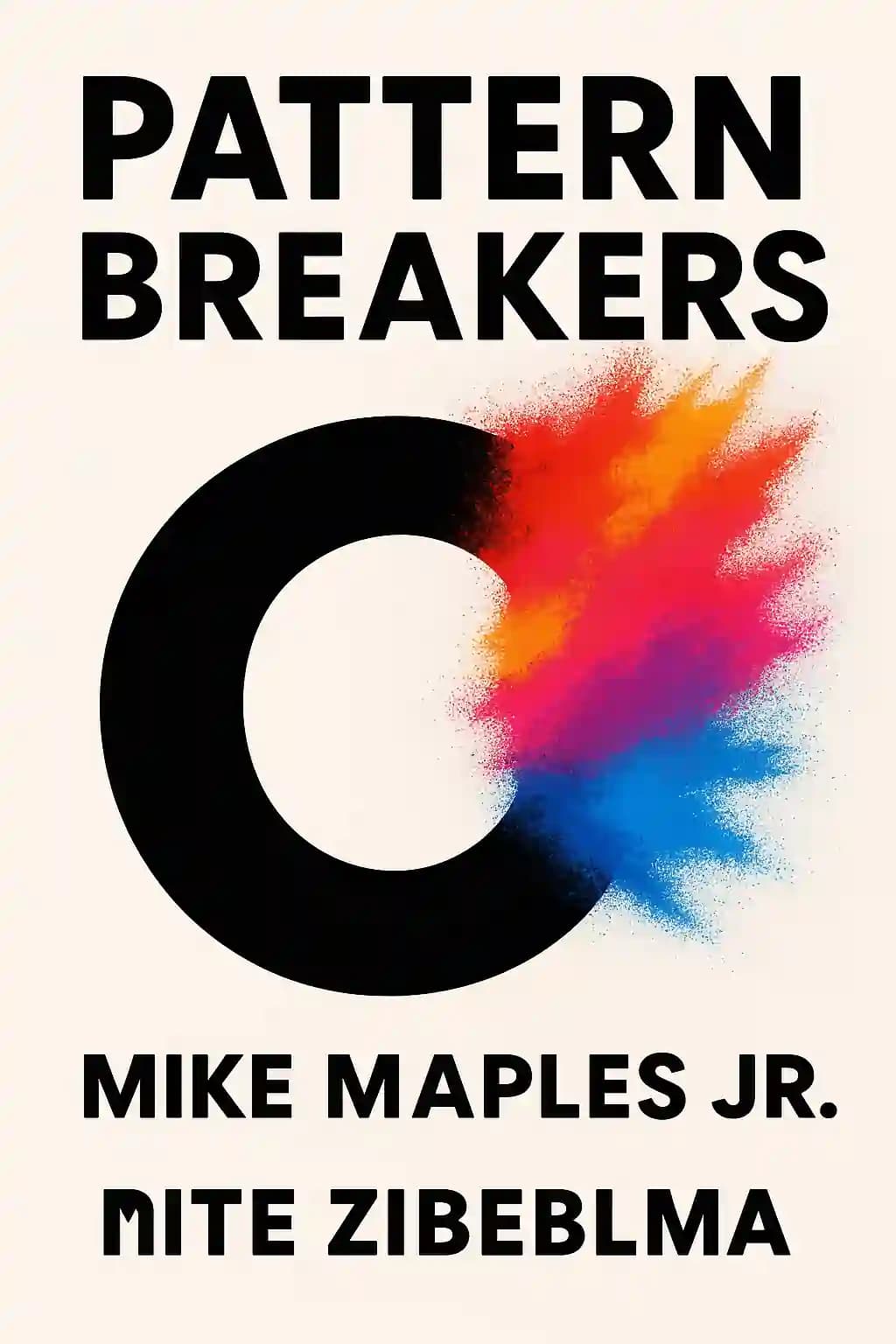
Have you ever wondered why some startups achieve extraordinary success while others following "best practices" fail? In August 2014, venture capitalist Mike Maples Jr. found himself puzzled by this very question after Twitch's unexpected acquisition by Amazon. The original idea he'd backed was Justin.tv, which had pivoted dramatically to become Twitch. This success stood in stark contrast with another founder who had done everything "right" yet failed. Looking deeper, Maples discovered that over 80% of impactful startups he'd worked with had pivoted significantly from their original ideas. This pattern-breaking approach to entrepreneurship forms the core of "Pattern Breakers," a book that has become required reading in entrepreneurship courses at Stanford, Harvard, and MIT. The book has garnered praise from tech luminaries like Marc Andreessen and Reid Hoffman, who call it "the new playbook for breakthrough entrepreneurship." Beyond Silicon Valley, its principles have been embraced by Fortune 500 executives seeking to foster innovation within established companies.
第 2 章
The Power of Pattern-Breaking Ideas
Humans are expert pattern matchers, with brains evolutionarily designed to recognize and categorize patterns in our environment. This innate ability helps us find order in chaos, streamline countless daily decisions, and make sense of complex situations. While this pattern-matching capability serves us well in navigating routine life, true breakthroughs and innovations require the opposite skill: pattern breaking. Notably, history shows that revolutionary ideas often come from outsiders rather than established experts, precisely because they're less constrained by conventional patterns of thinking.
The Wright brothers exemplify this phenomenon perfectly. As bicycle shop owners without formal aeronautics training, they achieved what leading scientists thought impossible. Just 69 days after the New York Times boldly predicted human flight might take "one million to ten million years," Orville and Wilbur Wright succeeded at Kitty Hawk. Their breakthrough emerged not from prestigious credentials or institutional support, but from raw curiosity, methodical tinkering, keen observation, and unwavering determination. They approached flight with fresh eyes, questioning fundamental assumptions that trapped more qualified experts.
The book introduces "inflection theory" - a framework explaining how powerful underlying forces drive breakthrough startups, similar to how ocean waves propel surfers. These forces prove more crucial than the initial idea itself, providing momentum that helps founders overcome seemingly insurmountable obstacles on their journey to extraordinary success. Understanding these forces allows entrepreneurs to align their efforts with emerging trends rather than fighting against them.
Inflection theory rests on three key elements: inflections, insights, and pattern-breaking ideas. Inflections are external events or developments that fundamentally alter how people think, feel, and act - like the introduction of embedded GPS in the iPhone 4s in 2011, which transformed location awareness. Insights represent the creative connections entrepreneurs make between these inflections and nonobvious ways to enhance human capabilities - such as Uber and Lyft recognizing that widespread GPS could enable efficient ridesharing. The pattern-breaking idea emerges as the specific product or service that manifests this insight in a practical, scalable way.
For truly transformative ideas to take hold and accomplish radical change, founders must build movements - passionate groups of people united by shared belief in a different future. These movements begin with provocative origin stories that define purposes far beyond merely selling products or services. Tesla, for instance, frames its mission around accelerating the world's transition to sustainable energy, while Airbnb envisions a world where anyone can belong anywhere. Such compelling narratives attract early adopters who become evangelists, helping overcome initial skepticism and resistance to change.
The most successful pattern breakers understand that technical innovation alone isn't enough - they must also craft powerful narratives that help others imagine and embrace a new future. This combination of technological insight and emotional resonance enables truly revolutionary changes in how people live, work, and interact.
第 3 章
Harnessing Inflections for Breakthrough Innovation
Inflections are turning points that change how people think, feel, and act - what they value, believe, can do, or are willing to do. While Andy Grove viewed strategic inflections as threats to established companies requiring vigilance and adaptability, Maples and Ziebelman see inflections as opportunities for startups to exploit and radically alter human behavior.
Lyft and Uber capitalized on two powerful inflections: GPS-enabled smartphones that tracked location for free, and Facebook Connect for sharing profile information. An inflection creates opportunity to alter competitive rules rather than merely improving existing products. Digital photography exemplifies this - improving exponentially from Apple's limited QuickTake 100 in 1994 to smartphone cameras with 8-megapixel resolution by 2012, the same year Kodak declared bankruptcy after failing to respond to the steep improvement curve despite being an inventor of digital photography.
Technology inflections have historically shaped political landscapes and business arenas. Notable examples include: the printing press (1450s) which spread ideas leading to the Protestant Reformation; the telegraph (nineteenth century) which altered diplomatic strategies; radio and television (twentieth century) which impacted political image; the Internet (late twentieth century) which transformed information access and communication; smartphones (twenty-first century) which put connected technology in billions of pockets; and artificial intelligence with large language models enhancing capabilities in text, brainstorming, and coding.
Inflections provide startups with their crucial unfair advantage against established companies. While incumbents benefit from existing resources and customer behavior patterns, startups must redefine these patterns - something that requires the powerful force of an inflection. Many founders fail because they focus on current trends or market gaps rather than identifying transformative inflections that can power fundamental breakthroughs.
When evaluating startup ideas, we should focus on three key questions: Have founders connected a powerful external change to new capabilities that were previously impossible? Who specifically would be empowered by these capabilities and why would they desperately want them? Under what circumstances might this inflection significantly change lives versus having minimal impact?
第 4 章
Timing Is Everything
Timing is perhaps the greatest entrepreneurial risk. While inflections can radically alter how people think and act, there's a narrow "Goldilocks" window for success - act too early and you've got a mere science project, too late and you're competing in a crowded field. The iPhone succeeded where General Magic failed a decade earlier because technology wasn't ready to deliver the right capabilities at the right price until that moment. Many General Magic employees later returned to Apple when the timing was finally right.
Conventional thinkers often dismiss ideas that previously failed, missing how inflections drive change. The critical question isn't whether an idea has been tried before - it probably has - but why now is the time it will work. What inflection has emerged that makes this attempt different? Every breakthrough will eventually happen; the question is when, not if. When venture capitalists ask "Why now?" they're really asking what inflections your idea harnesses and why this is the moment to capitalize on them.
Startups often benefit from inflections that occur after they start. Zimride, which began as a web-based hub for commuters to share rides, transformed into Lyft after the iPhone 4s introduced embedded GPS-locator chips. Similarly, the Facebook Connect APIs enabled people to confidently interact with strangers by viewing their social profiles - a key inflection that benefited companies like Airbnb and Zimride. When inflections emerge after launch, savvy founders pivot quickly to harness their potential.
The most dangerous ideas are plausibly good ones without underlying inflections - they generate positive feedback but lack transformative potential. Conversely, seemingly bad ideas can succeed when powered by the right inflections.
第 5 章
Living in the Future
William Gibson's insight that "the future is already here; it's just not evenly distributed" frames where breakthrough insights originate. Rather than coming from visionary foresight, they emerge from immersion in emerging technologies. Marc Andreessen, working at NCSA in 1992, lived at technology's frontier where he experienced firsthand the limitations of early internet software, leading him to create Mosaic, the first user-friendly browser. His breakthrough came not from disagreeing with conventional wisdom but from solving problems from an entirely different perspective.
Breakthrough insights don't come from having better ideas about the future but from living in it - directly experiencing and tinkering with emerging technologies. By immersing yourself in new technologies and interacting with others doing the same, you cultivate patterns of behavior different from the status quo, breaking free from constraints that shape present beliefs and expectations. This immersion reveals that the current world represents just one possibility among many.
Pattern breakers find breakthrough insights by solving problems that exist in the future before others encounter them. Success comes from falling in love with the problem, not the solution. Even if you're not in a cutting-edge lab, you can still identify future problems. Todd McKinnon and Freddy Kerrest at Okta saw that early cloud computing adopters struggled with managing multiple application logins - a problem that would eventually affect all businesses. Their vantage point at Salesforce gave them proprietary insight into the future and trust relationships with early adopters.
Living in the future fundamentally changes your starting point. While those in the present extrapolate forward, future-dwellers gain a superior vantage point that lets them develop insights earlier and avoid playing catch-up. Present-focused founders build incremental solutions for current problems, but pattern-breakers free themselves from conventional thinking to envision a world without present limitations.
By immersing in emerging technologies before others, you gain both visceral experience with new capabilities and a practical understanding of their limitations. This deep engagement helps you notice what's missing in the future - obstacles that prevent technologies from reaching their potential.
第 6 章
Testing Your Ideas Before Crossing the Rubicon
Richard Feynman's approach to scientific discovery - trying to prove ourselves wrong as quickly as possible - provides the foundation for implementing breakthrough ideas. Without powerful inflections and compelling insights, you risk pursuing incremental ideas that lead to a "local maximum" - like reaching the summit of a nearby mountain only to discover much higher peaks in the distance that you can now see but cannot easily reach.
By stress-testing your inflections and insights, you significantly increase your odds for breakthrough. The inflection stress test focuses on externalities - checking if you're harnessing massive change events. The insight stress test examines whether you've discovered something truly novel and surprising. Together, strong inflections make your idea powerful by empowering people in new ways, while fundamental insights make your idea unique, helping you escape competition.
An implementation prototype is a focused deliverable that helps identify the most important benefit and the most desperate customers. Unlike a minimum viable product (MVP), it's a step before creating your product - designed to validate whether specific customers will desperately want your concept.
Chegg's founders created "Textbookflix" when facing extinction after Facebook entered the college classifieds market. With only four months of cash remaining, they built a prototype that appeared to offer textbook rentals but intentionally crashed at checkout. This allowed them to test pricing between $35-$75 for $100 textbooks without damaging their reputation. The enthusiastic response proved students would pay significant amounts to rent textbooks, enabling them to secure funding.
Implementation prototypes are like concept cars at auto shows - they look real but aren't functional. They gauge audience excitement rather than presenting production-ready products. The approach should be tailored to your product and target customers.
Understanding customer surprises is crucial for startup success. As Scott Cook of Intuit demonstrated with his "follow-me-home" strategy, observing unexpected customer reactions reveals insights that questionnaires miss. When teams presented new product ideas, Cook always asked, "What was the biggest surprise you encountered?"
Since truly innovative ideas are non-consensus by nature, most people will initially dislike them. If everyone immediately loves your idea, it's probably not innovative enough. Positive surprises are particularly valuable - rather than addressing objections, founders should identify and double down on what generates unexpected enthusiasm, as this reveals the desperation that leads to success.
第 7 章
Building Your Team of Co-Conspirators
Breakthrough startups need true believers who share your provocative vision of the future. Unlike traditional businesses that operate like marching bands with sheet music and consistency, startups function more like improvisational jazz ensembles - creating unique performances through mutual understanding and creative freedom.
The specific people and skills needed for your startup depend on the future you're trying to create. Beyond standard hiring practices, pattern-breaking startups require specialized approaches to build a team of breakthrough co-conspirators who can help change the future.
Breakthrough startups must identify their biggest risks and gather people who can systematically eliminate them. If legal changes threaten your business, bring in someone who can navigate that. If you're building rockets like SpaceX, you need rocket engineers. For social media platforms, find someone obsessed with user distribution since scaling is your primary risk.
Deep trust among co-conspirators is vital, often stemming from long-term friendships or intense shared work experiences. Founder dating rarely works - founder disputes are among the top startup killers. Successful cofounders need chemistry to embrace conflict rather than avoid it, with clear roles that prevent territorial disputes.
Breakthrough startups need a "superbuilder" - someone with extraordinary technical flexibility who can build whatever unexpected thing comes next. Nate Blecharczyk was Airbnb's unsung superbuilder, creating critical tools like Google AdWords hacks and Craigslist integration without APIs. At Justin.tv, Kyle Vogt exemplified this role when NBC threatened to shut them down during the 2008 Olympics - the team built copyright monitoring software over a single weekend that saved the company.
Though every startup claims "it's all about the people," few hire as if their lives depend on it. The best founders devote 15-20% of their time to hiring, even without openings. Keith Rabois emphasizes finding great undiscovered talent because once someone's proven, they're hard to recruit.
Finding the right external co-conspirators - early customers and investors who genuinely believe in your future - is crucial for pattern breakers. Rather than pursuing quantity, you must carefully select believers who will form the heart of your movement, as the wrong ones will push you toward convention and waste your time.
第 8 章
Launching Your Movement
Ideas make radical change possible, but movements make radical change real. Creating potential for breakthrough isn't enough - you must convert that potential into actual change by shifting how people behave.
When you're standing alone in the future with a radical idea, you need to pull real people toward your vision. This isn't easy - you're facing entrenched incumbents with abundant resources, established ecosystems, and customers with ingrained habits. Meanwhile, you have no products, customers, or resources yet. The conventional approach of competing for market share keeps you playing by established rules that favor incumbents. Instead of competing directly, breakthrough founders change the rules entirely.
A movement is a group of people with a shared belief moving together toward a different future. Unlike special interest groups working for incremental change within systems, movements operate outside established systems to create radical change. Breakthrough startups are revolutionaries who turn the perceived strengths of the status quo into sources of discontent - forcing incumbents to apologize for their strengths rather than emphasizing them.
You can't create a movement alone - you need to be the catalyst. A movement starts with a provocative story that defines what's at stake and energizes specific people with calls to action. Your story must define a larger purpose that transcends products, like Tesla's mission to "Accelerate the world's transition to sustainable energy." It must also identify an enemy - not a specific company, but the status quo itself.
People often mistake starting a movement for crafting a "message" that "resonates" or finding the right slogan. In reality, movements require stories - something humans have used to move each other since our earliest days. Our brains are wired for stories, creating physical, involuntary responses. Compelling stories spread rapidly through word of mouth, accelerating idea dissemination without expensive marketing.
To craft a persuasive story, resist the urge to focus on taglines and acronyms. Instead, appeal to people's desire to achieve a purpose greater than themselves. Tesla exemplifies this approach with their mission statement: "Accelerate the world's transition to sustainable energy." They've never spent on advertising because their higher purpose message inspires people to spread it freely.
第 9 章
The Power of Disagreeableness
Being "disagreeable" in the context of the OCEAN personality model (Openness, Conscientiousness, Extraversion, Agreeableness, Neuroticism) can be a powerful asset for pattern-breaking founders. While some view disagreeableness negatively, it enables founders to pursue non-consensus ideas and take unconventional actions. The right amount of disagreeableness helps develop breakthrough ideas and form movements that make them real.
Founders of pattern-breaking startups benefit from a healthy dose of disagreeableness. This trait enables non-consensus ideas and unconventional actions. Consider Justin.tv's founders who auctioned their first startup on eBay for $258,000, or Airbnb's founders who funded themselves by selling $40 cereal boxes (that cost $4 to make) with Obama and McCain's faces during the 2008 election.
Pattern-breaking founders must know when to say no, even when it's uncomfortable. While conventional business wisdom says "the customer is always right" and team harmony is desirable, sometimes saying no protects breakthrough ideas. Okta's founders refused early customers who wanted them to integrate with legacy applications, keeping their product focused purely on cloud identity-management. This wasn't stubbornness but clarity of mission - they chose customers who shared their future vision over those who might provide short-term revenue but long-term regret.
Successful startups often face constant early rejection. When Drew Houston posted Dropbox's demo video on Hacker News, critics dismissed it: "Linux users can build this themselves," "You still need USB drives for connectivity problems," "Not viral or income-generating." Investors echoed: "Google will do this," "Online storage is a commodity," "This is a feature, not a company."
Disagreeableness defends against the conformity trap. In resource-constrained startups, the gravitational pull shouldn't be toward consensus or approval-seeking, but toward mission clarity and rapid execution. This doesn't mean neglecting the human dimension, but rather elevating mission objectives to a revered status. We're biologically hardwired to seek peer approval, but this can lead to the conformity trap that prevents pattern-breaking.
While conventional business wisdom prizes harmony and agreement, the most transformative leaders often stir the pot rather than calm waters. Bill Gates fostered a culture of confrontation at Microsoft, relentlessly pressing people with antagonistic questions that reflected his extraordinarily high standards. This confrontational leadership paradoxically motivated people to be their best.
第 10 章
Breaking Patterns in Established Companies
Can large corporations break patterns? Yes, but with a significant asterisk: transformational innovation is exceptionally difficult for well-run businesses.
Large corporations can harness inflection theory for transformational innovation, but face unique challenges. The real obstacle isn't complacency but the bias of existing success. Corporations build on what works, creating patterns that hinder fresh perspectives. This explains why pattern-breaking innovations often come from outsiders - ridesharing from Uber not Hertz, short-term rentals from Airbnb not Hilton.
Breaking free from incremental thinking is challenging but possible through three main strategies. Some companies capitalize on organic innovation, build something groundbreaking from scratch, acquire pattern-breaking companies, or form bold partnerships to explore new frontiers.
Beyond tech giants like Apple and Amazon, Lockheed's Skunk Works offers a powerful example of organic innovation. In 1943, they secretly developed a high-speed fighter jet in just 143 days, operating under tight constraints with a small team led by Kelly Johnson. Their approach is captured in eight principles: appoint one master, minimize team size, locate somewhere small, stay away from outsiders, document selectively, deliver early and continuously, involve everyone in the big picture, and reward performance not status.
M&A presents pattern-breaking opportunities beyond just enhancing core business. While some acquisitions integrate seamlessly into existing models (like Apple's acquisition of P.A. Semiconductor), others accelerate breakthrough opportunities that reimagine business models (like EMC's acquisition of VMware). Facebook's $1 billion Instagram purchase exemplifies this - combining Facebook's distribution engine with Instagram's mobile capabilities while maintaining autonomy resulted in a platform generating $43 billion in 2022 revenues.
In large companies, people naturally protect their careers by pursuing safer paths. To achieve pattern-breaking results, CEOs must commit to necessary risks. Jeff Bezos champions "successful failure" - the concept that calculated risks and failures are crucial for innovation. At Amazon, failures have led to tremendous successes: Amazon Auctions' failure led to zShops, which evolved into Amazon Marketplace, while the Fire Phone's commercial flop informed the successful Echo and Alexa products.
Richard Bach's "Jonathan Livingston Seagull" provides the perfect metaphor for breaking patterns. The book shows that our greatest limits are self-imposed through our minds, imagination, and actions. Creating breakthroughs requires unconventional thinking and the courage to be disliked. Most people prefer convention and belonging, making pushback inevitable when challenging the status quo.
Breakthroughs require answering undiscovered questions through unconventional thinking - asking if we're living in the future, exploring powerful inflections, or developing non-obvious insights about the future. To create meaningful change, you must have the courage to be disliked and break away from the flock.
Like Jonathan Livingston Seagull's quest for perfect flight, this journey has just begun. The authors see Pattern Breakers as the start of a conversation about achieving the extraordinary, to be judged by its usefulness to readers. They conclude with the powerful reminder: "The future does not happen to us. It happens because of us."