第 1 章
The Mind Under Siege: How Dangerous Ideas Threaten Our Freedom
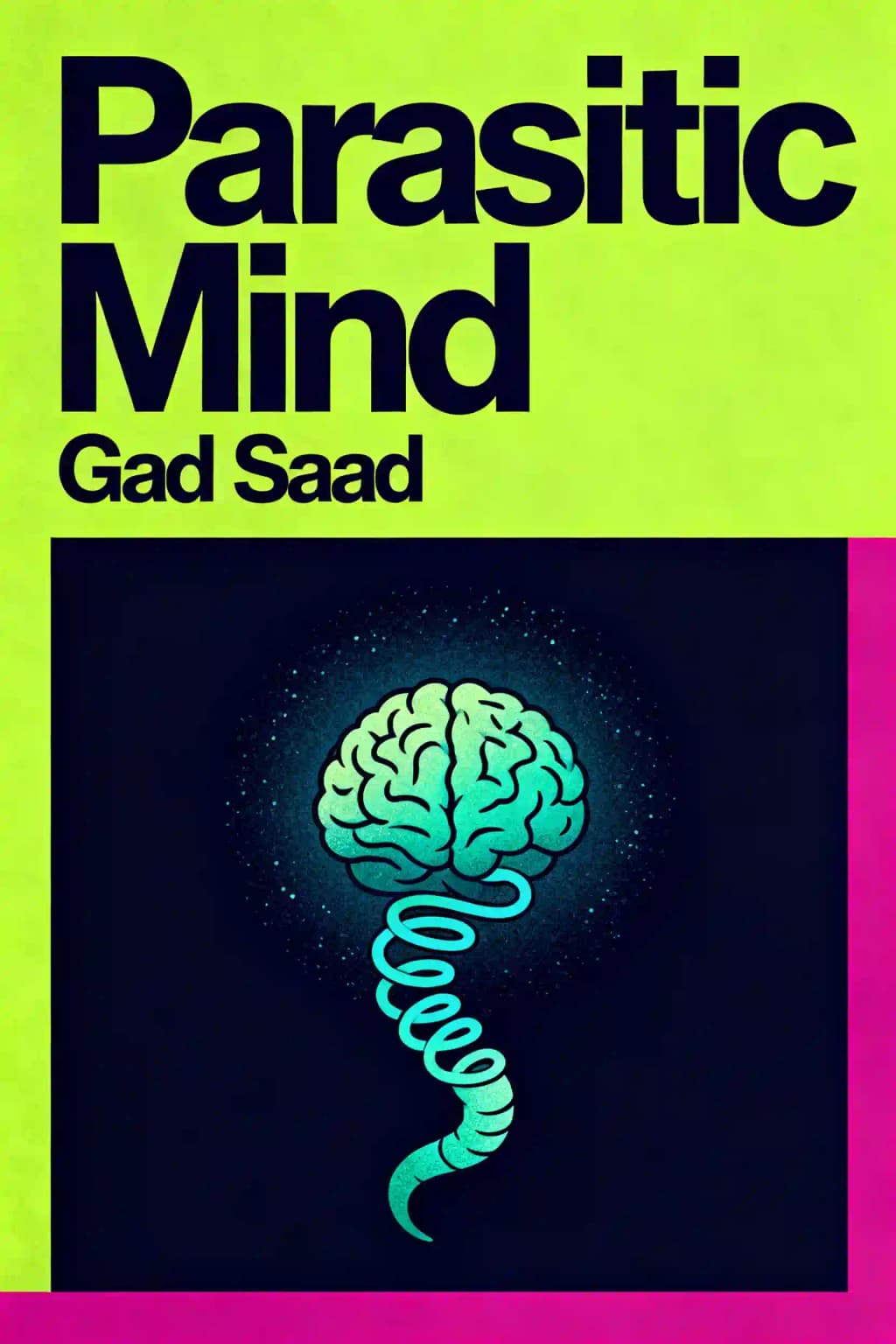
When was the last time you were afraid to speak your mind? Not because what you wanted to say was cruel or false, but because it might violate some unspoken social code? If you've experienced this creeping sense of intellectual paralysis, you're not alone. Dr. Gad Saad's "The Parasitic Mind" diagnoses a troubling epidemic sweeping through Western civilization - the spread of dangerous idea pathogens that undermine reason, science, and free expression. As a Lebanese-born Jewish academic who escaped civil war only to find a different kind of ideological warfare on university campuses, Saad brings unique credentials to this intellectual battlefield. The book has struck a chord with readers seeking to understand why rational discourse seems increasingly impossible, earning praise from figures like Jordan Peterson and becoming a Wall Street Journal bestseller. With unflinching clarity and often biting humor, Saad dissects how postmodernism, radical feminism, and identity politics have infected our institutions, and offers a prescription for reclaiming our intellectual freedom before it's too late.
第 2 章
From War Zones to Culture Wars: A Scholar's Journey
Growing up Jewish in Lebanon during the 1960s and early 1970s meant living with constant existential threat. When Egyptian president Nasser died in 1970, angry crowds chanted "Death to Jews" down my street - an indelible memory for a five-year-old child. Even in supposedly "progressive" Lebanon, antisemitism was endemic. I vividly recall a classmate announcing his ambition to become a "Jew killer" when he grew up, met with laughter and applause from others.
When civil war erupted in 1975, peaceful coexistence shattered completely. Death lurked at every corner - from indiscriminate shelling to militia checkpoints where your religious identity could mean instant execution. During one particularly terrifying incident, a service worker came to our door with sinister intentions, only thwarted by police intervention. He left with the chilling threat: "I'll be back for you."
Our family's escape from Lebanon involved armed PLO militia escorting us through gunfire to reach the airport. Upon leaving Lebanese airspace, my mother placed a Star of David around my neck, saying: "Now you can wear this, not hide your identity, and be proud of who you are." In Montreal, I faced the challenges of a new language and climate, thinking it better to face falling snow than falling bombs. The nightmare wasn't over - my parents were later kidnapped by Fatah during an imprudent return trip to Lebanon in 1980.
This early exposure to tribalism and religious dogma profoundly shaped my worldview, particularly my disdain for identity politics. I discovered that my life has been guided by two foundational ideals: freedom and truth. These weren't imposed by my parents but seem woven into my genetic makeup. My love of freedom emerged early - as a child being dragged to synagogue in Beirut, I found rote prayers and rituals alienating, my inquisitive nature stifled by religious dogma.
The pursuit of truth, my second life ideal, is inextricably linked with freedom. Without necessary freedoms, one cannot pursue truth, and truth itself sets you free. Unlike most people who worry about mundane matters, I stay awake fretting about injuries to truth. When confronted with intellectual dishonesty, I respond viscerally, like someone being punched in the face. Though typically jovial, I become combative when witnessing departures from reason stemming from willful ignorance or ideological duplicity.
During my doctoral studies at Cornell, I discovered both the elegance of evolutionary psychology and the nonsensical gibberish of postmodernism. I quickly realized much of social sciences lacked biological-based thinking, with human phenomena viewed primarily through social constructivism. After joining Concordia University, I lived two separate professional realities: natural scientists appreciated my attempts to "Darwinize" business school, while social scientists derided biological explanations as "reductionistic" and "sexist nonsense."
Universities serve as patient zero for dreadfully bad ideas, creating reward mechanisms that are upside down: herd mentality over innovation, narrow specialization over synthetic thinking, and leftist progressivism over meritocracy. If unchecked, these parasitic idea pathogens eventually infect every aspect of society.
第 3 章
When Feelings Trump Facts: The Emotional Assault on Reason
We are both thinking and feeling creatures. The challenge is knowing when to activate each system. Different products engage different systems - perfume commercials target emotions while mutual fund ads target cognition. Problems arise when we use the wrong sequence - like letting visceral hatred of a political candidate precede rational evaluation of policies. Despite traditional economic views of humans as hyper-rational agents, our emotions are fundamental to decision-making when applied appropriately.
Universities were founded on the pursuit of truth, not feelings. Harvard's motto is Veritas (truth) and Yale's is Lux et veritas (light and truth). Yet across Western institutions - universities, media, judicial systems, politics - truth increasingly takes a backseat to feelings.
A chilling example occurred in the Netherlands when Geert Wilders was charged with crimes for criticizing Islam. When he sought expert witnesses to validate his claims, prosecutors responded: "It is irrelevant whether Wilders's witnesses might prove Wilders's observations to be correct. What's relevant is that his observations are illegal." This Orwellian mindset - that telling the truth could be illegal - is increasingly prevalent in academia.
When asked on Joe Rogan's podcast if there was any research question too taboo to pursue, I answered "no." As long as questions are addressed honestly and objectively, nothing should be off-limits. When Rogan asked "What if that truth hurts your feelings?" I replied: "Fuck your feelings." Truth must prevail over emotional comfort.
The 2016 election of Donald Trump triggered mass hysteria among academics and my social circle. Predictions ranged from stock market collapse to abolished democracy to nuclear holocaust. I satirized this overreaction on my YouTube channel, pretending to hide from Trump's "Jew-hating death squads."
This irrational hysteria stems from Trump representing an aesthetic injury to ivory tower sensibilities. Unlike the polished, eloquent Barack Obama, Trump is a brash, cantankerous brawler. The "unhinged progressives" possess no theory of mind allowing them to understand the nearly 63 million Americans who voted for him.
In academia and public discourse, expressing certain scientific findings can lead to severe professional consequences if they challenge politically correct narratives. Lawrence Summers was forced to resign from Harvard for suggesting sex differences might explain female underrepresentation in STEM, despite scientific support for his position. James Damore was fired from Google for similar claims about innate sex differences, while physicist Alessandro Strumia faced condemnation for presenting bibliometric data questioning discrimination narratives in physics.
The pattern repeats with Nobel laureate Tim Hunt, who lost positions after making a joke about mixed-sex labs, and surgeon Lazar Greenfield, who resigned from leadership positions for humorously referencing research about semen and depression. Even astrophysicist Matt Taylor's historic comet landing achievement was overshadowed by outrage over his shirt depicting women. These cases reveal how emotional reactions and ideological conformity now trump scientific inquiry and humor, with many academics publishing anonymously for fear of reprisal.
第 4 章
Freedom's Non-Negotiable Foundations: Speech and Science
What essential features must a society possess to be truly liberal and modern? While Harvard historian Niall Ferguson proposed "Six Killer Apps" defining Western greatness (competition, scientific revolution, property rights, modern medicine, consumer society, and work ethic), I offer a more distilled view: the guaranteed right to debate any idea coupled with commitment to reason and science for testing competing ideas are what have made Western Civilization great.
Many Westerners misunderstand free speech in two key ways. First, some confuse personal boundaries (like blocking someone online) with censorship, failing to recognize that walking away from harassment isn't restricting speech but exercising one's own rights. Second, many mindlessly repeat that "social media companies aren't government" and can therefore restrict content freely. This position ignores the unprecedented global power that Google, YouTube, Facebook and Twitter now wield - collectively possessing more control over information than any other companies in history. These platforms routinely demonetize content (as happened to a third of my YouTube videos) and ban users from payment platforms like Patreon and PayPal for violating vague speech codes. Despite my libertarian leanings and preference for minimal government, these online companies must be regulated as utilities - just as electricity and phone companies can't shut off service based on your speech.
I've become a global confessor for academics and students suffering under campus political correctness. They share disturbing testimonies of required self-censorship to avoid punishment for violating progressive orthodoxy. Many professors who privately support classical liberal values beg me not to reveal their identities. Students report being unable to challenge social justice course content without being accused of disrupting "safe spaces." Academics describe losing research positions, having their names removed from publications, and being shut out of career opportunities for political reasons. Many wait until after securing tenure to express their true views. This isn't happening in North Korea or the Soviet Union - this ideological Stalinism is the daily reality on North American campuses, where most academics remain complicitly silent out of career self-preservation.
In August 2017, Ryerson University was scheduled to host an event titled "The Stifling of Free Speech on University Campuses" featuring myself, Jordan Peterson, Dr. Oren Amitay, and Faith Goldy. In Orwellian fashion, Antifa-like protesters shut down this free speech event, labeling us as Nazis and white supremacists despite our diverse backgrounds - I'm an olive-skinned Lebanese Jew who escaped execution, and Dr. Amitay is Jewish with Holocaust-surviving family. The university cited "security concerns" rather than defending free expression. This pattern is widespread - the Foundation for Individual Rights in Education documented 192 speaker disinvitation attempts at American universities from 2000-2014, with nearly three times more targeting right-leaning speakers.
Western society has increasingly embraced the notion that we shouldn't utter anything that might offend "minorities" or "progressives." The "I believe in free speech but" crowd fundamentally misunderstands that freedom exists precisely to protect offensive and disgusting speech, not beautiful compliments. Occasionally being offended is the price of living in a truly free society. While certain restrictions like inciting violence remain valid, opponents of free speech are contorting these commonsense limitations to suit their agenda.
Satire is my preferred weapon against idea pathogens. As Mary Wortley Montagu noted, effective satire should "wound with a touch that's scarcely felt or seen." Totalitarian rulers have always banned satire because truly veridical ideas should be anti-fragile enough to withstand ironic attacks. Great satirists throughout history - from Aristophanes to Voltaire to George Carlin - have recognized this power. The key point remains: free societies embrace satire, recognizing that all beliefs and ideologies must be fair game. Once we limit what can be satirized, we're no longer living in a free society.
第 5 章
The War on Reality: Anti-Science Movements and Their Consequences
The idea pathogens infecting universities include postmodernism (claiming all knowledge is relative), social constructivism (denying biological determinants of behavior), radical feminism (blaming gender roles on patriarchy), and transgender activism (viewing biological sex as fluid). These movements share a common thread: the desire to liberate people from reality itself.
The blank slate theory exemplifies this escape from reality, falsely claiming humans are born without biological blueprints or innate differences. John Watson, behaviorism's founder, absurdly claimed he could train any infant to become any specialist regardless of talents or heredity, declaring "there is no such thing as an inheritance of capacity, talent, temperament, mental constitution, and characteristics." Similarly, radical feminists deny evolutionarily-based sex differences, while the "trans" prefix magically transforms biological realities. Postmodernism serves as the ultimate epistemological liberator, freeing people from objective truth by celebrating "my truth" over reality.
In 2002, I experienced a prophetic encounter with postmodernist thinking when dining with my doctoral student and his date, a graduate student devoted to postmodernism and radical feminism. When I proposed that only women bear children as a human universal, she scoffed, claiming a Japanese tribe where men "spiritually" bear children. When I offered that sailors rely on the sun rising in the East and setting in the West as objective truth, she deconstructed my "arbitrary labels" of East, West, and sun, suggesting she might call the sun a "dancing hyena."
By 2016, such thinking had infected institutions when Jordan Peterson criticized Canadian legislation (Bill C-16) adding gender identity as a protected category. Harvard's Office of BGLTQ Student Life claimed gender identity could change daily and that acknowledging biological realities constituted "systemic violence." When I testified against Bill C-16 before the Canadian Senate, explaining how evolutionary psychology could violate the bill, progressive senators scoffed or accused me of supporting genocide.
This lunacy continues spreading. Misgendering is now being criminalized, with California lawmakers considering laws that would penalize "knowing and repeated" misgendering in care facilities, while similar laws already exist in New York City. The absurdity grows as people now claim men can menstruate (causing J.K. Rowling to face cancellation for questioning this), and Democratic politicians like Julian Castro advocate for "trans men" having abortion rights. The Canadian Cancer Society even used a biological male's image to represent those at risk for cervical cancer, while Elizabeth Warren proclaimed she'd have her education secretary nominee vetted by a nine-year-old transgender child. These aren't harmless fantasies but attacks on reason itself.
Postmodernism thrives in academia through deliberate obscurantism - the illusion that incomprehensibility equals profundity. Charlatans like Derrida, Lacan, and Foucault succeeded because people assume that if something is nearly impossible to understand, it must be deep. Foucault himself admitted to this strategy, telling philosopher John Searle: "In France, you gotta have ten percent incomprehensible, otherwise people won't think it's deep." He even criticized Derrida for pushing this too far through "obscurantisme terroriste."
The ultimate expose came in 2017 when James Lindsay, Peter Boghossian, and Helen Pluckrose wrote twenty nonsensical papers and submitted them to leading academic journals. Seven were accepted before they revealed the hoax, including papers examining "rape culture in dog parks" through black feminist criminology and a rewrite of Hitler's Mein Kampf using feminist buzzwords. Instead of being lauded for exposing fraudulent disciplines, Boghossian was investigated by his university for "ethical breaches." These accepted papers demonstrate why students should avoid wasting tuition money on fields like critical race theory, intersectional feminism, and postmodernism - disciplines rooted in liberating students from reality itself.
第 6 章
Campus Culture: The Rise of Victimhood and the Death of Debate
Social justice warriors (SJWs) may be a minority on campuses, but they rule through tyranny backed by progressive professors and administrators. They've created a stifling climate of political correctness through trigger warnings, safe spaces, and microaggression policing. In this environment, feelings trump truth, and empirical statements are judged not by accuracy but by whether they might offend someone.
The culture of offense has spawned a "victimhood hierarchy" where individuals compete in the "Oppression Olympics" using intersectional identities to establish their position. This resembles a collective Munchausen Syndrome - feigning or exaggerating conditions to garner sympathy. The ethos becomes "I am a victim therefore I am."
Yet even those with strong "victim" credentials aren't safe if they violate progressive orthodoxy. Ayaan Hirsi Ali (Somali woman), Dave Rubin (gay Jew), and Andy Ngo (gay Asian) all faced progressive backlash after criticizing Islam or the radical left. Liberal professors who questioned campus rape culture, transgenderism, or leftist activism similarly faced mob justice. When there are no conservative targets available, progressives turn against their less pure members - the radical snake eating its tail.
SJWs justify their intolerance by claiming opposing viewpoints constitute "violence" requiring protection, leading to the disinvitation of speakers and creating sterile ideological echo chambers. Our bodies and minds evolved to expect exposure to novel situations, yet universities are shutting down critical thinking faculties, producing graduates unable to debate because they've never been challenged intellectually.
Creating safe spaces extends beyond campuses to platforms like Twitter. Healthy humans are anti-fragile and need exposure to the full spectrum of social interactions to develop emotional resilience. Instead, we're raising a generation too brittle to handle opposing opinions, who collapse into victimhood when facing "microaggressions." Trigger warnings further infantilize students by assuming they lack psychological strength to face life's challenges. Despite my own traumatic war experiences in Lebanon, I've never required trigger warnings to navigate life. Research shows trigger warnings actually hinder emotional resilience and fail to help even those with prior trauma.
Universities should be institutions that optimize the creation and dissemination of knowledge. However, today's universities have shifted their optimization function - instead of maximizing intellectual growth constrained only by budgets, they now pursue a multi-objective optimization: maximizing intellectual growth while minimizing hurt feelings and maximizing social justice activism.
This reversal of priorities is exemplified by Palo Alto University (where Christine Blasey Ford taught), which lists "social justice, cultural competency, and diversity" as its first core value, with "high quality scientific research and scholarship" relegated to third place. This inversion reveals what's fundamentally wrong with higher education today.
Homeostasis - the maintenance of equilibrium in biological and man-made systems - helps explain the victimhood phenomenon sweeping through society. Just as thermostats maintain temperature and our bodies regulate physiological processes, psychological homeostasis drives us to maintain certain psychological states.
Most critically, the "prevalence-induced concept change effect" demonstrates that when instances of something decrease, people broaden their definition to maintain a consistent frequency. This explains the proliferation of victimhood narratives - when actual hate incidents decrease, definitions of "harm" expand to maintain the narrative that marginalized groups live in constant danger. This "concept creep" has pathologized everyday experiences while encouraging a sense of virtuous but impotent victimhood.
第 7 章
Ostrich Parasitic Syndrome: The Denial of Obvious Truths
This chapter examines how people deny obvious truths when they conflict with preferred ideologies or personal beliefs. I've coined "Ostrich Parasitic Syndrome" (OPS) to describe the rejection of clear realities in favor of constructed alternate worlds where evidence, science, logic, and common sense are abandoned for progressive platitudes delivered with "haughty moral superiority."
Humans possess remarkable capacity for deception and self-deception, possibly evolved to help us manipulate others successfully. I reference Freud's "ostrich policy" - our tendency to suppress unpleasant information, like an ostrich supposedly burying its head in sand (though real ostriches don't actually do this).
People infected with OPS construct illusory networks of causality between unrelated events. While many phenomena in our world are indeed interconnected (neural networks, social networks, biological systems), problems arise when people fabricate false causal relationships.
I cite Bill Nye linking 2015 Paris terrorist attacks to climate change through a convoluted chain: climate change caused Syrian water shortages, forcing farmers to cities, creating unemployment, leading to disaffected youth joining terrorist organizations. Such reasoning ignores why arid regions like Chile's Atacama Desert don't produce terrorists.
This faulty thinking stems from what Abraham Kaplan called the "law of instrument" - "Give a small boy a hammer, and he will find that everything he encounters needs pounding." People with ideological fixations see their preferred cause behind every problem: climate activists blame all calamities on climate change, radical feminists blame the patriarchy, and diversity advocates see lack of inclusion as the root of all problems.
The mantra that "Diversity Is Our Strength" represents classic Ostrich Logic destroying the West's future. While heterogeneous societies offer cultural enrichments like varied cuisines, not all cultural and religious values brought by immigrants strengthen Western societies - some sow hatred and divisiveness. Professor Salim Mansur, a practicing Muslim, testified that importing people from illiberal cultures into liberal democracies poses severe challenges when multiculturalism doesn't demand assimilation into founding liberal values.
Despite Islamic terrorists perpetrating over 35,000 attacks globally since 9/11 across countries varying in race, ethnicity, culture, religion, language, economics, and political systems, progressives insist these attacks have nothing to do with Islam. They employ fantastical euphemisms like "senseless acts of random violence," "workplace violence," or "man-made disasters" to avoid naming the obvious ideological motivation.
OPS sufferers employ numerous cognitive biases to reject honest criticism of Islam. They use euphemisms and qualifiers like "Islamism," "Jihadism," "Wahhabism," or "Radical Islam" to avoid directly criticizing Islam itself. This linguistic deflection ignores that there are no separate holy books for these supposed variants - Islamism is an integral element of the religion itself.
I've been detained at borders multiple times - by Israeli security as a Lebanese-born man and by American border agents while traveling with my family. These weren't acts of racism but rational security measures. Our brains evolved to detect statistical patterns; acting on probability isn't bigotry but fundamental to human cognition.
第 8 章
Finding Truth in a Post-Truth World: Building Networks of Evidence
In a free society, citizens have a duty to be informed on important issues, but this faces three major obstacles: humans are "cerebral misers" who form opinions with minimal mental effort; information varies widely in accuracy; and once committed to a position, people resist contrary evidence.
Leon Festinger and colleagues noted decades ago that someone with strong convictions will ingeniously defend them against all attacks, sometimes becoming even more convinced when presented with contradictory evidence. More recently, Sperber and Mercier's argumentative theory suggests our reasoning evolved not to seek truth but to win arguments.
Given our tendency toward motivated reasoning - processing information to protect existing beliefs - is objective truth-seeking possible? As an optimistic realist, I believe so, but intellectual courage ("testicular fortitude") alone isn't enough. You need both mastery of relevant information and critical thinking skills, using nomological networks of cumulative evidence to coherently synthesize information from multiple sources.
Philosophers have developed various frameworks for defining truth. Mathematical proofs represent axiomatic truths, while empirical truths emerge through the scientific method: proposing questions, developing hypotheses, collecting and analyzing data, testing hypotheses, and drawing conclusions. Scientific truths remain provisional and falsifiable, though scientists themselves are susceptible to motivated reasoning.
Darwin's masterpiece On the Origin of Species exemplifies the power of amassing evidence across multiple disciplines - from biogeography to paleontology - to build an unassailable scientific case. Like a careful prosecutor or jigsaw puzzle builder, Darwin collected data for decades before presenting his theory. This synthetic approach forms the basis of nomological networks of cumulative evidence, where findings from diverse sources converge to reveal clear patterns.
For example, to demonstrate the evolutionary basis of men's preference for hourglass figures, we can assemble evidence showing this figure's association with fertility and health, its consistent premium in escort services, its representation in art across millennia, its prevalence in modern beauty standards, and its cross-cultural appeal - even among congenitally blind men. Such comprehensive networks provide explanatory coherence, theoretical integration, and consilience that can withstand even the most determined ideological opposition.
Social constructivists argue that parents impose "arbitrarily sexist" gender roles through toy choices, but a nomological network of evidence thoroughly refutes this claim. Infants show sex-specific toy preferences before socialization could occur. Biological markers like digit ratios (reflecting prenatal testosterone exposure) correlate with masculinized play behaviors in young boys. Girls with congenital adrenal hyperplasia - a masculinizing condition - demonstrate more masculine toy preferences. Even non-human primates like vervet monkeys, rhesus monkeys, and chimpanzees show the same sex-specific toy preferences as humans. Most devastatingly, Sweden - ranked as the most gender-egalitarian nation - still shows robust sex-specific toy preferences despite decades of social engineering toward gender neutrality.
Humans exhibit universal sex differences in mating preferences rooted in evolutionary biology, not social construction. Across 37 distinct cultures spanning the globe, men consistently prefer younger mates and value physical attractiveness, while women prioritize financial prospects and ambition/industriousness. These preferences appear in folktales from 48 cultural settings, classic literature, cross-generational surveys, mail-order bride analyses, speed dating, online dating, personal ads, ethnographies of pre-industrial societies, and even medieval troubadour lyrics. Even psychiatric disorders reflect these patterns: women with erotomania fixate on high-status older men, while male erotomaniacs target beautiful young women.
第 9 章
Join the Battle for Reason: A Call to Action
Saad begins with a military metaphor: in the battle of ideas, a larger army defending core values is more likely to triumph against enemies of reason. Yet many who share these values remain silent, either too busy to notice idea pathogens or wrongly assuming they're unimportant. The slow, incremental intrusion of anti-science, anti-reason movements leads to "the inexorable death of the West by a thousand cuts." Today's campus lunacy will affect businesses tomorrow through HR departments and "progressive" regulations demanding adherence to diversity, inclusion, and equity.
People also hesitate to join the battle due to the "diffusion of responsibility" or "bystander effect" - the psychological tendency to assume someone else will act when many are present. Saad urges readers not to subcontract their voices to others or self-censor, as everyone has a stake in this battle. He insists the battle knows no boundaries: students should challenge professors spouting postmodern nonsense; alumni should withdraw donations from universities violating free speech; people should engage Facebook friends with alternative viewpoints without fearing lost friendships.
Despite Big Tech's efforts to silence certain voices, social media has democratized platforms that can grow exponentially. Saad cites several success stories: Mark Dawson self-published his way to becoming a bestselling thriller writer; Andy Weir's self-published "The Martian" became a blockbuster film; PewDiePie, a university dropout, built a YouTube empire with over 100 million subscribers earning $10+ million yearly; and college dropout Joe Rogan created the world's most popular podcast, earning $30 million annually through his willingness to engage diverse viewpoints - "the antithesis of an echo chamber." While not everyone will find a massive audience, every voice counts in the battle of ideas, even if your influence extends only to family and friends.
True friendships should withstand difficult conversations about sensitive topics. Saad argues that while idle chatter works for strangers, meaningful friendships require discussing important ideas. If friends can't accept differences of opinion on substantive issues, they're unworthy of friendship. He cites French wisdom: "Better to be alone than poorly accompanied" and "Tell me who your friends are, and I'll tell you who you are." Many avoid judging others due to religious teachings against judgment, but Saad argues these biblical passages condemn hypocrisy, not judgment itself.
After terrorist attacks, people engage in empty gestures like changing social media profile pictures or sharing hashtags, which Saad condemns as "cheap and costless self-aggrandizing." Using evolutionary biology principles, he explains that honest signals must be costly to differentiate between genuine and fake qualities. Just as the peacock's tail serves as an honest signal of genetic quality despite increasing predation risk, true virtue requires sacrifice.
Using soccer's penalty kick as a metaphor, Saad argues we all need courage to take metaphorical "shots" in the World Cup of Ideas. With a 70% success rate, penalty kicks create immense pressure but represent crucial opportunities to score. Similarly, we must cultivate "testicular fortitude" to defend reason when opportunities arise. He urges readers to be like those who intervene when seeing someone in danger, rather than those who pretend not to notice and walk away.
Saad advocates adopting the honey badger's fearless ferocity when confronting ideological bullies. He shares personal examples of refusing to back down when targeted on social media, including when someone tried getting him fired for criticizing Serena Williams. Saad explains how he uses his "royal flush of victimhood" (Lebanese Jew, war refugee, "person of size") against accusers, turning their own tactics against them. He condemns appeasement, citing Churchill and Gibson's Bakery's successful lawsuit against Oberlin College as examples of standing firm.
For decades, idea pathogens from universities have attacked science, reason, logic, and individual freedoms. Saad implores readers to defend these principles if they want their children to grow up in free societies. Drawing from his experience surviving Lebanon's Civil War and witnessing the erosion of common sense in academia, he calls readers to action. The cure, he argues, lies in pursuing and defending truth while recommitting to the virtues of the Western Scientific Revolution and Age of Enlightenment. "March on, soldiers of reason," he concludes. "Together we can win the battle of ideas."