第 1 章
When Economic Stories Go Viral: The Hidden Forces Behind Our Financial Decisions
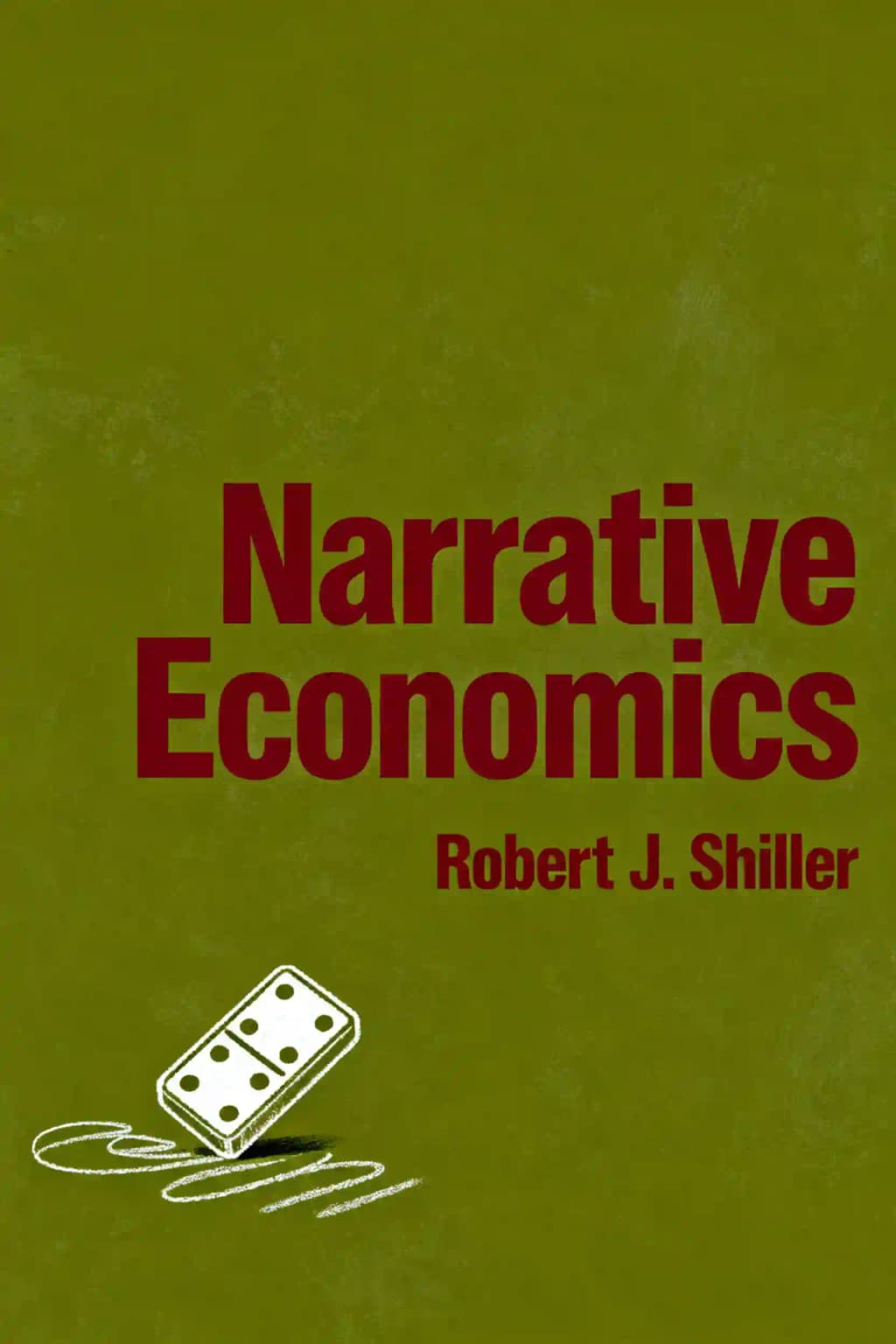
Have you ever wondered why Bitcoin suddenly skyrocketed in value despite having no intrinsic worth? Or why Americans rushed to buy homes before the 2008 financial crisis even as prices reached unsustainable heights? The answers lie not in traditional economic models but in the power of contagious narratives. In his groundbreaking book "Narrative Economics," Nobel Prize-winning economist Robert J. Shiller reveals how viral stories fundamentally shape our economic decisions and drive major financial events.
The book has become required reading at top business schools worldwide and counts influential figures like Ray Dalio and Nassim Nicholas Taleb among its admirers. Shiller's work represents a paradigm shift in economic thinking, challenging the field's traditional focus on mathematical models by demonstrating how human stories spread like epidemics and trigger booms, busts, and everything in between. As The Economist noted, "Shiller's most important insight is that we're all storytellers, and our narratives drive markets as much as markets drive our narratives."
第 2 章
The Bitcoin Phenomenon: How Stories Create Economic Value
The Bitcoin phenomenon perfectly illustrates narrative economics in action. This cryptocurrency, which reached a total value exceeding $300 billion despite having no intrinsic value, spread through contagious stories rather than practical utility. Bitcoin's narrative constellation combines several powerful elements: the mysterious creator Satoshi Nakamoto (who has never been seen), anarchist ideals of freedom from government control, and the promise of technological revolution. The timing of Bitcoin's emergence during the 2008 financial crisis added another compelling layer to its story - positioning it as an alternative to a failing traditional financial system.
Bitcoin enthusiasts embrace an updated version of the anarchist movement that began around 1880, resisting being "watched, inspected, spied upon, directed, law-driven, numbered, regulated, enrolled, indoctrinated, preached at, controlled, checked, estimated, valued, censured, commanded" by authorities. The Bitcoin.org website explicitly states that "Bitcoin was meant to function as a monetary weapon, as a cryptocurrency poised to undermine authority." This narrative particularly resonated in the aftermath of the global financial crisis, when trust in traditional banking institutions and government oversight reached historic lows. Early adopters were drawn to Bitcoin's promise of a decentralized financial system free from government manipulation and bank control.
What makes this narrative particularly contagious is its human interest element. Satoshi Nakamoto's mysterious disappearance in 2010 created an ongoing detective story that generates repeated publicity. Various theories about Nakamoto's identity - from individual cryptographers to government agencies - have fueled countless articles, documentaries, and investigations. The creator's anonymity adds an element of intrigue that keeps Bitcoin in the public consciousness. Meanwhile, the narrative connects to fears about economic inequality and technological unemployment, offering an imaginable hope of somehow mastering the computers that threaten livelihoods.
Most Bitcoin traders don't understand its complex underlying technology involving Merkle trees or Elliptic Curve Digital Signature Algorithms. Instead, they're drawn to the story of being part of "the future" - an exciting narrative about getting rich through cutting-edge awareness. The tales of early Bitcoin millionaires, like the famous pizza purchase worth millions in today's value, create powerful FOMO (fear of missing out) that drives new waves of investment. Bitcoin represents membership in global cosmopolitan culture rather than traditional nation-states, giving it democratic, international appeal that reinforces its own popularity through a perfect narrative feedback loop.
The cryptocurrency's volatility itself becomes part of its narrative appeal. Each dramatic price swing generates media coverage and public discussion, while true believers frame downturns as temporary setbacks in an inevitable march toward widespread adoption. The community has developed its own vocabulary - "hodl," "to the moon," "whale" - creating an insider culture that strengthens group identity and conviction. This combination of technological utopianism, anti-establishment sentiment, and get-rich-quick possibilities creates an extraordinarily sticky narrative that continues to attract new adherents despite Bitcoin's practical limitations as a currency.
第 3 章
The Science of Narrative Contagion: Why Some Stories Spread While Others Die
Understanding why certain economic narratives go viral while others fail requires insights from multiple disciplines - epidemiology, neuroscience, psychology, and social network theory. Like diseases, narratives spread through person-to-person contact, with contagion rates that must exceed recovery rates (losing interest or forgetting) for an epidemic to begin. Minor story details can make one narrative more contagious than another, just as small environmental or demographic factors might make a disease outbreak more severe in one town than another. The transmission mechanisms include both direct communication and digital sharing, with social media accelerating the spread of compelling narratives.
The human brain is fundamentally wired for storytelling, a trait that evolved over millennia of human social development. Neuroscientist Wilder Penfield's groundbreaking 1958 brain surgery experiments demonstrated that electrical stimulation of specific brain regions triggered patients to hear music or recall stories in chronological sequence. More recent research by Paul J. Zak found that narratives with a "dramatic arc" increase oxytocin and cortisol levels in listeners' bloodstreams, hormones that influence relationship-building and stress responses. These biochemical changes explain why emotional stories are particularly effective at changing beliefs and behaviors, especially in economic contexts where trust and risk assessment play crucial roles.
Visual elements significantly enhance a narrative's contagion potential by creating memorable anchors for complex ideas. The Laffer curve - showing the theoretical relationship between tax rates and government revenue - went viral largely through a colorful story about economist Arthur Laffer drawing the curve on a napkin during a 1974 dinner with Dick Cheney and Donald Rumsfeld. This physical artifact (now housed in the National Museum of American History) became iconic despite Laffer himself questioning the story's accuracy, noting that the restaurant used cloth napkins and his mother "raised me not to desecrate nice things." The simplicity of the visual representation helped spread a complex economic concept among non-economists and policymakers.
Celebrity involvement and authority figures amplify narrative contagion by lending credibility and expanding reach. Ronald Reagan's famous quip about government's approach to the economy ("If it moves, tax it. If it keeps moving, regulate it. And if it stops moving, subsidize it") built upon Walter Trohan's 1967 version but improved its poetic structure with consistent "if-then" statements and two-word commands. This rhetorical refinement, combined with Reagan's charismatic delivery and presidential platform, made the anti-tax sentiment more contagious and ultimately influenced economic policy throughout the 1980s and beyond. Similar patterns emerge when business leaders, celebrities, or influential academics endorse particular economic narratives, creating cascading effects through their social networks and followers.
The most successful economic narratives often combine multiple contagion factors: they're simple enough to understand quickly, include memorable visual elements or metaphors, carry emotional resonance, and receive amplification from influential voices. These elements work together to create "sticky" stories that persist in public consciousness and shape economic behavior and policy decisions.
第 4 章
From Panic to Confidence: How Narratives Shape Economic Crises
Since the early nineteenth century, narratives about confidence have profoundly influenced economic fluctuations. Financial panic narratives dominated discourse until the early twentieth century, with major events like the Panic of 1907 creating lasting impressions in the public consciousness. The 1907 crisis, triggered by a failed attempt to corner United Copper Company shares, led to widespread bank runs and a 50% decline in the New York Stock Exchange. After the Federal Reserve was established in 1913, the narrative gradually shifted from sudden panic to prolonged depression, with new emphasis on business confidence and later consumer confidence indicators as key economic metrics.
During the Great Depression, psychological concepts of crowd behavior gained tremendous influence in economic thinking. Charles Mackay's 1841 book "Memoirs of Extraordinary Popular Delusions" and Gustave Le Bon's 1895 bestseller "The Crowd" popularized ideas about mass behavior that peaked during the early 1930s. Le Bon's theories about crowd psychology - including how rational individuals become irrational in groups - heavily influenced economic thought and policy-making. Related concepts of suggestibility and autosuggestion-the idea that human behavior is subconsciously imitative and reactive to others-followed epidemic-like patterns, peaking around 1920 before gradually declining in academic discourse.
The autosuggestion movement gained widespread popularity in the early 1920s, led by French psychologist Emile Coue who toured America in 1922 promoting his famous affirmation: "Every day in every way I get better and better." His methods attracted thousands to lecture halls and influenced business leaders nationwide. This evolved from earlier hypnosis narratives and suggested that success came from believing in one's abilities. Napoleon Hill's books, including the 1937 bestseller "Think and Grow Rich," further promoted channeling subconscious powers to develop wealth-building attitudes. Hill's interviews with successful figures like Henry Ford and Thomas Edison helped legitimize the connection between positive thinking and financial success.
Scientific weather forecasting provided a powerful analogy for economic forecasting, fundamentally changing how people understood market predictions. By the 1890s, newspapers routinely published daily weather forecasts, creating strong epidemic potential for meteorology narratives. The success of the U.S. Weather Bureau in predicting storms and temperature changes led people to naturally draw parallels between meteorological and economic forecasting, likening changes in public confidence to shifting winds or air pressure-recovery or pessimism could be "in the air." This created expectations that economists should be able to forecast recessions with the same scientific precision that meteorologists forecast weather. The metaphor became so pervasive that terms like "economic climate" and "business atmosphere" entered common usage, while financial publications began featuring "market weather reports" alongside traditional analysis.
第 5 章
Frugality versus Conspicuous Consumption: The Moral Dimensions of Spending
Competing narratives about spending and saving have ancient roots, with frugality narratives promoting modest lifestyles and conspicuous consumption narratives encouraging displays of wealth as signs of achievement. During the Great Depression, frugality narratives gained particular strength amid widespread unemployment, partly as a reaction against the excesses of the 1920s. The phrase "keep up with the Joneses" grew rapidly during the 1930s as people increasingly criticized ostentatious spending.
The Great Depression transformed American social psychology, creating a moral imperative against conspicuous consumption. People managed family "spirits" while postponing purchases, as unemployment narratives spread through society. Despite hardship, some noted the Depression made Americans "nicer" and "more neighborly" - streets filled with apple sellers and panhandlers created visible reminders of suffering that discouraged luxury. Movies toned down displays of wealth, churches condemned extravagance, and "poverty chic" became fashionable.
Blue denim fabric transformed from mere workwear to fashion statement during the Depression. Though earlier figures like Governor "Blue Jeans Bill" Williams had worn denim as "a symbol of equality and democracy," the 1930s saw true popularization with Levi's creating the first women's jeans and adding the first fashion logo to back pockets. Vogue featured jeans on its cover, and women deliberately distressed new jeans for a worn look.
This frugality narrative eventually gave way to the American Dream, coined by James Truslow Adams in his 1931 bestseller. The term spread slowly at first, becoming increasingly powerful over decades. The American Dream evolved to justify consumer purchases by framing them as patriotic rather than selfish, inverting Thorstein Veblen's critique of conspicuous consumption. Over time, the phrase shifted from intellectual discussions to commercial applications, with more than half its newspaper appearances occurring in advertisements rather than articles.
第 6 章
Machines Taking Our Jobs: The Recurring Narrative of Technological Unemployment
Narratives about machines replacing workers and causing unemployment have an extremely long history and continue to reappear in modified forms today. These technology narratives have repeatedly gone epidemic and then faded, including during the Luddite event in 1811, the Swing Riots in 1830, the depression scares of 1873-79 and 1893-97, and the Great Depression of 1930-41.
Concerns about automation replacing human labor date back to ancient times. Homer's 8th century BCE "Iliad" described a driverless "automatic" vehicle called the tripod of Hephaestus. Around 350 BCE, Aristotle contemplated machines replacing humans, noting that if instruments could "accomplish their own work" like the mythical statues of Daedalus that could walk, "chief workmen would not want servants, nor masters slaves."
During the severe 1873-79 depression, labor-saving inventions became a central narrative blamed for unemployment across the United States and Europe. The 1876 Centennial Exhibition in Philadelphia, intended to celebrate American independence, instead showcased industrial machinery from twenty countries, including a massive 1400 horsepower Corliss engine and extensive agricultural machines. This display of technology sparked widespread fear about job displacement.
The narrative of a world without human labor grew more vivid with E.M. Forster's 1909 science fiction story "The Machine Stops," which depicted a future where machines do everything at the push of buttons - providing food, clothing, baths, literature, and communication. The story ends with catastrophe when the machine fails. The concept mutated again during the 1920-21 depression with Karel Capek's 1921 Czech play "R.U.R.: Rossum's Universal Robots," which introduced the word "robot" (from the Czech word for "worker").
After the 1929 crash, many attributed the economic collapse to technological surplus production. While fear of robots wasn't strong in most of the 1920s, it exploded in the 1930s. By the 1930s, news shifted to job-replacing innovations: dial telephones replacing switchboard operators, automated steel mills, automatic telegraphs, remote-controlled linotype machines, and sound movies replacing theater orchestras. With unemployment reaching 25% by 1933, these narratives of technological displacement became far more compelling and widespread.
第 7 章
The Gold Standard and Bitcoin: Monetary Narratives Across Time
The gold standard narrative remains surprisingly persistent despite the world abandoning it in 1971. Even President Trump advocated returning to it in 2017, calling it "wonderful" despite acknowledging implementation difficulties. Central banks continue holding gold reserves worth $1.4 trillion primarily due to "tradition," as Federal Reserve Chairman Bernanke candidly admitted. Gold narratives carry peculiar emotional resonance similar to modern cryptocurrency discussions, with mystique surrounding monetary theories that's difficult to explain rationally.
The United States effectively adopted the gold standard with the 1873 Coinage Act, abandoning the previous bimetallic system. The resulting deflation harmed debtors, especially farmers, leading critics to label it "the crime of 1873." Bimetallism advocates (called "Silverites") gained popularity in the 1890s, proposing a 16-to-1 silver-to-gold ratio that would effectively allow debtors to repay only half their debts in silver terms.
The 19th century enthusiasm for bimetallism mirrors today's Bitcoin excitement. Like Bitcoin, the monetary standard in the 1890s held mystery - people wondered how paper money maintained value despite rarely seeing actual gold coins. Bitcoin appeals particularly to young people who enjoy mastering its complexity, similar to how William Hope Harvey made his bimetallism advocate "Coin" a young man in his bestselling book. Both movements share an air of mystery and appeal to those who feel they've discovered hidden financial truths that older, established institutions fail to understand.
The gold standard debate took on religious dimensions, with William Jennings Bryan's famous "Cross of Gold" speech at the 1896 Democratic National Convention becoming one of the most inspiring American political speeches ever. Bryan borrowed imagery comparing the gold standard to Jesus's crucifixion, stretching his arms out like a cross while declaring "You shall not crucify mankind upon a cross of gold." This theatrical performance triggered nationwide near-hysteria.
第 8 章
Real Estate Booms and Busts: The Power of Housing Narratives
Real estate narratives about the tantalizing increase in value of land, housing, and homes rank among the most influential economic stories. A prime example was the talk leading to the 2007-9 Great Recession, which spread inflated housing value ideas worldwide. These narratives have evolved from ancient discussions of farmland prices through the Industrial Revolution to modern stories about urban property and metropolitan homes - all mutations of a perennial narrative about land scarcity and value.
Until the mid-twentieth century, homes weren't viewed as speculative investments. The term "home price" rarely appeared in speculative contexts, instead referring to domestic market prices or wealthy people's mansions. During the Florida land boom of the 1920s, speculation focused on empty lots rather than homes, driven by narratives about automobiles making Florida more accessible to northerners.
The emergence of home price indexes transformed real estate speculation narratives. The first median prices for existing homes appeared in 1957, with regular National Association of Realtors data beginning in 1974 and Case-Shiller indexes in 1991. These measures allowed media to regularly report on home price movements, creating concrete narratives about speculative trends that previously couldn't be easily tracked. Before these indexes, homes were viewed primarily as depreciating structures whose values tracked construction costs rather than as appreciating investments.
During the 1997-2006 housing boom, Daniel McGinn identified psychological factors he called "house lust" - emotional drives for status that pushed people toward irrational decisions. He described the "high-five effect" (celebrating others' real estate gains), the "Our House Is Our Retirement Plan" narrative (encouraging people to "stretch" to buy the biggest possible house), and the "It's So Easy to Peek in the Window" effect enabled by internet sites like Zillow. These social comparison processes fueled the housing bubble as people measured their success against neighbors of similar social rank.
The seeds of the 2007-9 financial crisis were planted decades earlier when a new speculative narrative emerged around "flipping." The term went viral in the 1970s-80s during the condominium conversion boom, when developers bought apartment buildings and sold units as condominiums. By the early 2000s housing boom, "flipping" became attached to people who bought homes, made minimal improvements, and sold them quickly. Even those not actively flipping houses began viewing their primary residences as "long-term flipping" investments, embracing the speculation narrative that lenders welcomed.
第 9 章
Stock Market Bubbles: Crashes, Morality Tales, and Celebrity Stories
The word "crash" became inextricably linked with the October 1929 stock market drop and the Great Depression that followed. This narrative implies a period of crazy optimism and reckless behavior preceding disaster. The 1920s speculation atmosphere was amplified by technological advancement-the Trans-Lux Movie Ticker that projected stock trades on large screens visible to crowds, creating a race-track-like thrill.
The 1929 crash remains puzzling to economists-both the dramatic market decline without significant news triggers and the preceding fivefold increase in stock values during the 1920s. Though commonly portrayed as a one or two-day event, the crash was actually a prolonged decline, with the S&P Composite Index dropping 86% from September 1929 to June 1932. Warning signs existed before the crash-high implied volatility in brokers' margin requirements and public speculation discussed openly on trains and in hotels-but many ignored these signals.
The 1929 crash's emotional impact was magnified by widespread stories of businesspeople committing suicide after being financially ruined. Though John Kenneth Galbraith later questioned whether suicide rates actually increased significantly, the narrative was powerful-ProQuest recorded twenty-eight suicide stories in November 1929 alone. These death narratives triggered the affect heuristic, making people temporarily more fearful about everything.
The 1929 crash narrative gained strength through moral framing. The 1920s had been characterized not only by economic abundance but also by perceived chicanery, selfishness, and sexual liberation. Critics who viewed these cultural changes negatively found in the crash a powerful moral argument. Sermons preached after the crash attributed it to moral transgressions, framing it as divine punishment. The term "Roaring Twenties" became common only in the 1930s as part of this moral narrative, portraying the crash as a dividing line between self-centered 1920s and the intellectually superior, albeit depressed, 1930s.
The shoeshine boy narrative exemplifies how celebrities became attached to the 1929 crash story. In this tale, a prominent figure (variously John D. Rockefeller, Bernard Baruch, or Joseph Kennedy Sr.) supposedly decided to sell stocks before the 1929 peak after receiving stock tips from a shoeshine boy. The moral: when ordinary people start giving investment advice, it signals market excess. Despite its popularity, evidence for this story is scarce in contemporary sources, with the earliest mention appearing in Baruch's 1957 memoirs.
第 10 章
The Future of Narrative Economics: Tracking Stories to Predict Crises
Understanding major economic events requires scientific methods for studying narratives, even if imperfect. Traditional economic research misses the stories people tell about their economic lives and thus overlooks valid explanations for major economic changes. When explaining recessions, economists typically focus on leading indicators like central bank policy or inventory levels without addressing what caused these indicators to change. The missing element is often changing narratives.
With modern technology, we can now analyze digitized texts to measure narrative strength, but more organized research is needed to forecast economic crises effectively. Economists must collect time-series data on narratives that extends beyond passive word collection to experiments revealing meaning and purpose. This data collection must be maintained consistently through decades to enable intertemporal comparisons.
Two essential data collection methods should be implemented: (1) regular focused interviews asking respondents to tell stories about their economic decisions, and (2) focus groups with different socioeconomic groups to observe actual narrative contagion. While focus groups are common in marketing, they're rarely used in economics-only 0.04% of economics articles mention them-despite their value for understanding popular motivations and the spread of economic ideas.
Research faces significant challenges in tracking and quantifying narratives, including dealing with conflicting narratives, random spread patterns, and evolving word meanings. The core difficulty lies in distinguishing between narratives that merely report economic behavior and those that actually cause changes in behavior. As research methods advance and social media data accumulate, textual analysis will become a stronger force in economics, moving us beyond 1930s-style models to better understand the patterns of human thinking that cause economies to boom or stagnate.
By adapting epidemiological models from disease transmission theory, economists can better understand how narratives spread through populations. The Kermack-McKendrick SIR model (Susceptible-Infected-Recovered) provides a mathematical framework where epidemics follow a predictable pattern: rising at first, then falling, without everyone becoming infected. Applied to narratives, this explains why some people may never hear of an important economic narrative yet it still significantly impacts economic activity.
Ultimately, understanding economic phenomena requires narrative economics-a promising frontier for serious future research that recognizes the fundamental truth that humans are storytellers first and rational calculators second. The stories we tell about money, markets, and economic life shape our collective decisions in ways that traditional economics has only begun to understand.