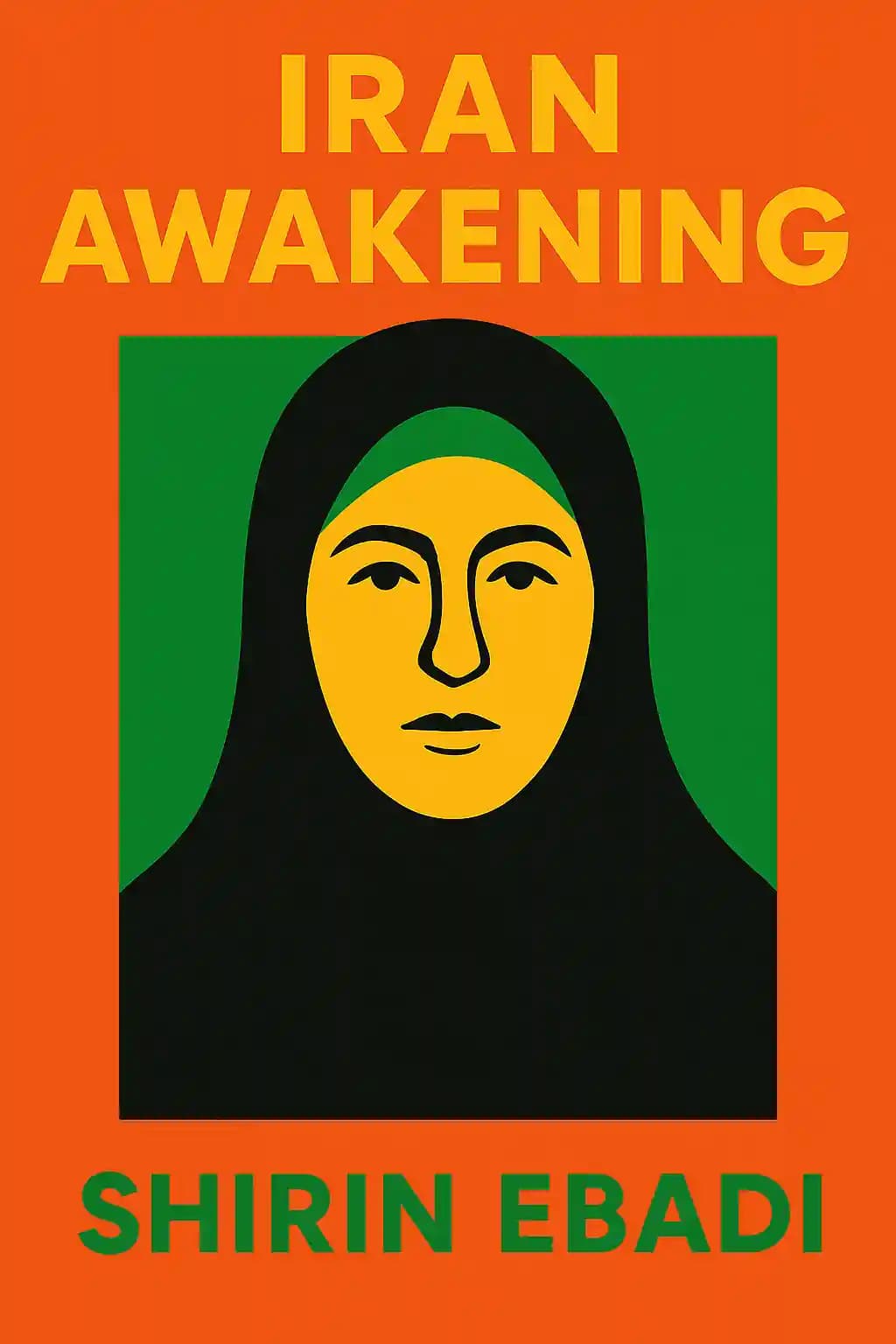
Nobel laureate Shirin Ebadi's memoir reveals Iran's turbulent revolution through a human rights champion's eyes. Co-written with Time correspondent Azadeh Moaveni, this groundbreaking narrative asks: How did one woman's courage inspire global movements while facing a regime determined to silence her?
Shirin Ebadi, acclaimed author of Iran Awakening: A Memoir of Revolution and Hope, is a trailblazing Iranian human rights lawyer, Nobel laureate, and advocate for democracy.
A former judge who became Iran’s first female chief magistrate in 1975, her career was upended by the 1979 Islamic Revolution, which barred women from judicial roles. Undeterred, she pivoted to defending dissidents and campaigning for gender equality, founding the Defenders of Human Rights Center.
Her memoir intertwines her personal journey with Iran’s turbulent political landscape, offering firsthand insights into grassroots activism and legal reform. Ebadi’s follow-up work, Until We Are Free, further chronicles her fight against systemic oppression.
Awarded the 2003 Nobel Peace Prize—the first Muslim woman to receive the honor—her writings have been translated into over 20 languages. Forced into exile in 2009, she remains a global symbol of resilience, blending legal rigor with unflinching storytelling to amplify Iran’s struggle for justice.
Iran Awakening is Shirin Ebadi’s memoir tracing her journey from Iran’s first female judge to a Nobel Peace Prize-winning human rights activist. It explores her fight for justice amid the 1979 Islamic Revolution’s oppressive policies, detailing systemic gender discrimination, legal corruption, and her advocacy for women’s education and legal reform. The book intertwines personal resilience with Iran’s turbulent political evolution.
This memoir is essential for readers interested in human rights, Middle Eastern politics, or feminist narratives. Activists, historians, and those studying Iran’s post-revolutionary society will gain insights into legal injustices and grassroots resistance. It’s also valuable for anyone seeking firsthand accounts of balancing professional ambition with societal constraints in authoritarian regimes.
Yes—it’s a compelling blend of personal courage and political critique. Ebadi’s vivid storytelling humanizes Iran’s modern history, offering rare insights into judicial corruption and women’s struggles. The memoir’s themes of resilience and dignity resonate globally, making it both educational and inspiring for diverse audiences.
The revolution serves as a turning point, shifting Iran from monarchy to theocracy and eroding women’s rights. Ebadi details its disillusioning aftermath, including purges of secular professionals and the rise of discriminatory laws. Her narrative exposes the contradiction between revolutionary ideals and repressive realities.
Ebadi reveals a corrupt judiciary where political loyalty and gender bias supersede justice. She shares cases of suppressed dissent, unfair trials, and the challenges of defending activists under threat. Her calls for transparency and rule of law underscore the memoir’s advocacy focus.
The title symbolizes Ebadi’s personal awakening to activism and Iran’s broader struggle for democratic reform. It reflects hope for societal transformation through grassroots movements and legal accountability, despite ongoing repression.
Winning the 2003 Nobel Prize amplified Ebadi’s global platform but intensified government persecution. The memoir discusses using the award to spotlight Iran’s human rights abuses while navigating increased surveillance and threats.
These lines distill Ebadi’s themes of equity and defiance.
Ebadi condemns theocratic governance for conflating religious dogma with state law, enabling abuses like arbitrary arrests and censorship. She advocates separating religion from politics to safeguard civil liberties—a stance that led to her exile.
Some scholars argue the memoir underplays divisions within Iran’s reform movement or overstates Western role in human rights progress. Others note its focus on elite perspectives, though Ebadi counters by emphasizing solidarity with marginalized groups.
Unlike Azar Nafisi’s Reading Lolita in Tehran, which focuses on literature’s solace, Ebadi’s work prioritizes legal activism. It shares themes with Marjane Satrapi’s Persepolis but offers a lawyer’s lens on systemic oppression rather than a personal coming-of-age story.
通过作者的声音感受这本书
将知识转化为引人入胜、富含实例的见解
快速捕捉核心观点,高效学习
以有趣互动的方式享受这本书
I am an Iranian, a lawyer, a Muslim, and a woman.
I had been stripped of all that I had struggled to achieve.
I could no longer tolerate the suffocating atmosphere.
I believe that the implementation of human rights is the best way to fight fanaticism and fundamentalism.
I am ready to defend freedom of expression.
将《Iran Awakening》的核心观点拆解为易于理解的要点,了解创新团队如何创造、协作和成长。
将《Iran Awakening》提炼为快速记忆要点,突出坦诚、团队合作和创造力的关键原则。

通过生动的故事体验《Iran Awakening》,将创新经验转化为令人难忘且可应用的精彩时刻。
随心提问,选择声音,共同创造真正与你产生共鸣的见解。

"Instead of endless scrolling, I just hit play on BeFreed. It saves me so much time."
"I never knew where to start with nonfiction—BeFreed’s book lists turned into podcasts gave me a clear path."
"Perfect balance between learning and entertainment. Finished ‘Thinking, Fast and Slow’ on my commute this week."
"Crazy how much I learned while walking the dog. BeFreed = small habits → big gains."
"Reading used to feel like a chore. Now it’s just part of my lifestyle."
"Feels effortless compared to reading. I’ve finished 6 books this month already."
"BeFreed turned my guilty doomscrolling into something that feels productive and inspiring."
"BeFreed turned my commute into learning time. 20-min podcasts are perfect for finishing books I never had time for."
"BeFreed replaced my podcast queue. Imagine Spotify for books — that’s it. 🙌"
"It is great for me to learn something from the book without reading it."
"The themed book list podcasts help me connect ideas across authors—like a guided audio journey."
"Makes me feel smarter every time before going to work"

免费获取《Iran Awakening》摘要的 PDF 或 EPUB 版本。可打印或随时离线阅读。
"The next person to be killed is Shirin Ebadi." Finding my name on an assassination list in 2000 was surreal - a chilling reward for defending victims of violence in Iran's courts for nearly a decade. The would-be assassin had requested permission to execute me, considering my blood "halal" as a religious duty. Only after returning home, showering for an hour to wash away the psychological filth, and ensuring my daughters were asleep did I tell my husband, beginning casually: "So, something interesting happened to me at work today." This moment captures the extraordinary journey of a woman who refused to abandon her principles despite living under constant threat. My story reflects Iran's complex evolution through revolution, war, and oppression - and shows how one voice can challenge an entire system.
