From Neolithic villages to modern farms, "Lesser Beasts" reveals how pigs - our biological doppelgangers - shaped human history. Did you know a 10-million-year-old pig tooth was once mistaken for a human fossil? Essig's snout-to-tail journey challenges our relationship with these misunderstood animals.
Mark Essig, author of Lesser Beasts: A Snout-to-Tail History of the Humble Pig, is an award-winning historian and journalist renowned for blending rigorous research with engaging storytelling. His expertise in uncovering overlooked cultural and historical narratives shines in this exploration of humanity’s complex relationship with pigs, spanning 10,000 years of domestication, symbolism, and culinary tradition. A Cornell University Ph.D. graduate, Essig has taught history and journalism at institutions like Cornell and Warren Wilson College, grounding his work in academic rigor.
He has contributed op-eds and reviews to the New York Times, Washington Post, and Los Angeles Times, establishing himself as a trusted voice in historical and food-writing circles. His debut book, Edison & the Electric Chair—named one of Discover Magazine’s top 20 science books of 2003—showcases his knack for dissecting technological and ethical turning points.
Lesser Beasts has been praised as “marvelous” (The Times of London) and “splendid” (The Guardian), cementing Essig’s reputation as a historian who transforms niche subjects into universal stories. Based in Asheville, North Carolina, he continues to write on food systems, environmental ethics, and cultural history.
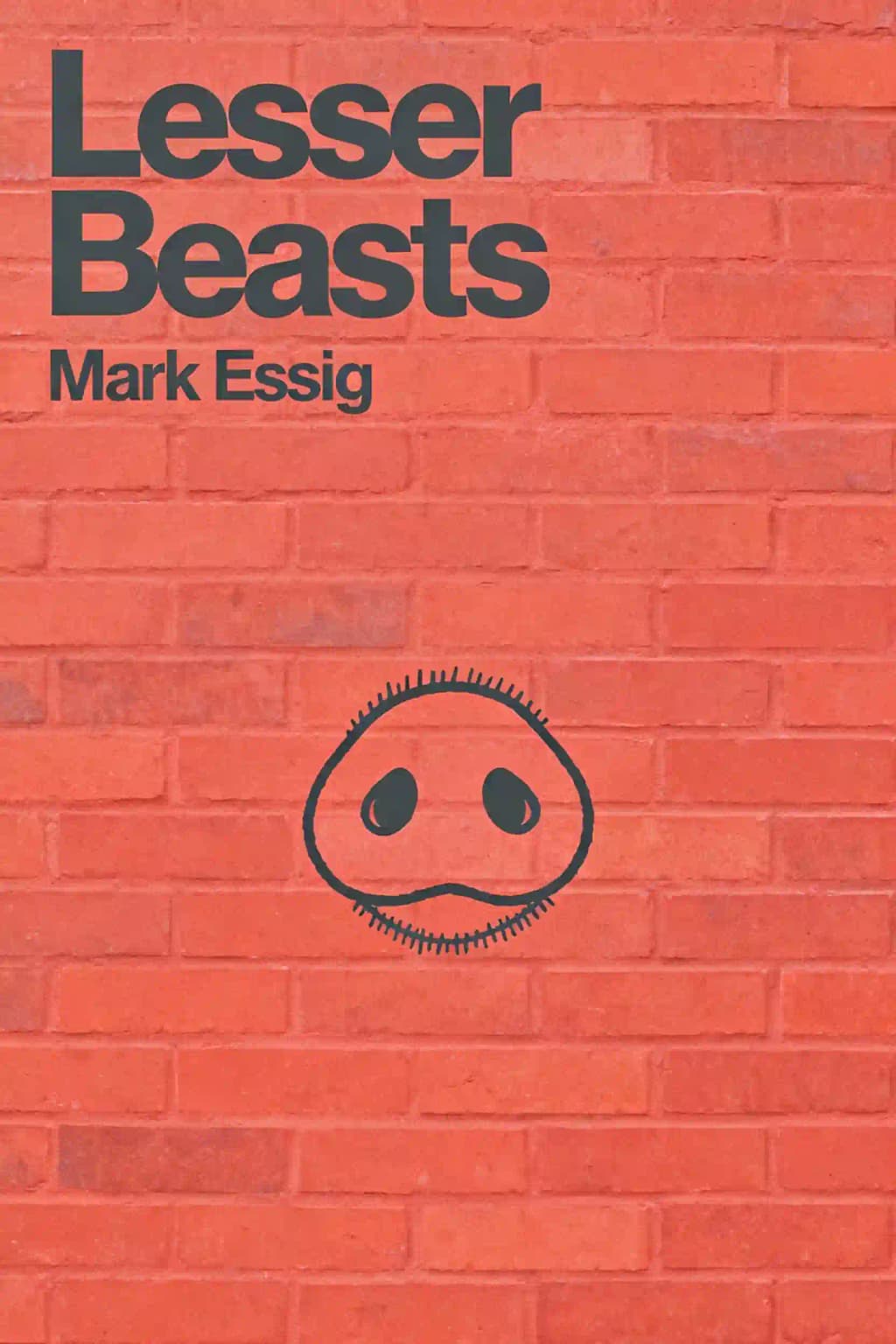
Lesser Beasts by Mark Essig explores the 10,000-year relationship between humans and pigs, tracing their role as both vital food sources and culturally maligned animals. The book challenges stereotypes about pigs’ “filthiness,” examining their contributions to ancient empires, colonial economies, and modern industrial farming while addressing ethical concerns like antibiotic overuse and environmental impacts of mass pork production.
This book is ideal for history enthusiasts, foodies, and anthropologists interested in how pigs shaped human civilization. Farmers and animal welfare advocates will also find insights into the evolution of hog farming, from Neolithic domestication to today’s factory systems.
Yes, Essig’s engaging blend of cultural history and ethical inquiry makes Lesser Beasts a standout. It balances witty anecdotes—like pigs’ role in medieval feasts—with critical analysis of modern meat production, offering a fresh perspective on an often-overlooked animal.
Key themes include the pig’s dual reputation as a symbol of abundance and disgust, its unmatched adaptability across civilizations, and the moral contradictions of industrial pork production. Essig also highlights how religious taboos (e.g., Jewish and Islamic pork bans) shaped global trade.
As a historian with a Cornell Ph.D., Essig combines rigorous research with accessible storytelling. His prior work on Edison & the Electric Chair reflects his knack for linking technical subjects to broader cultural narratives, a skill evident in his analysis of pork’s societal impact.
Essig critiques factory farming’s reliance on antibiotics, inhumane living conditions, and environmental degradation. He argues that cheap pork hides steep costs: antibiotic-resistant bacteria, polluted waterways, and ethical compromises in animal treatment.
Like Salt or Cod, Essig’s book uses a single subject to unpack human history but stands out by focusing on an animal central to both sustenance and stigma. It diverges by emphasizing ethical dilemmas absent in purely commodity-focused works.
The book spans from pig domestication in Neolithic villages to their role in Roman feasts, medieval Europe, and colonial America. Essig also details 20th-century innovations like concentrated animal feeding operations (CAFOs).
Essig analyzes pork’s taboo status in Judaism and Islam, linking it to pigs’ scavenging habits and cultural associations with disease. He contrasts this with Christianity’s embrace of pork, which fueled Europe’s economic reliance on swine.
Pigs were essential to settlers’ survival, providing cheap, durable meat. Their ability to forage reduced labor needs, but loose herds damaged Native American crops, exacerbating tensions. By the 1800s, pork became a profitable export, shaping Southern agriculture.
While not a cookbook, it highlights historical preparations, like Roman garum (fermented fish sauce) used to flavor pork and Native American cooking pits. Essig also critiques modern processed meats like SPAM as symbols of industrialized diets.
The book concludes by urging readers to reconsider pigs’ value beyond food. Essig advocates for sustainable farming practices and ethical treatment, framing pigs as intelligent animals deserving respect—not just commodities.
通过作者的声音感受这本书
将知识转化为引人入胜、富含实例的见解
快速捕捉核心观点,高效学习
以有趣互动的方式享受这本书
Pigs became living recycling systems, transforming human waste into valuable protein.
The pig's urban habits eventually led to its cultural devaluation.
Pigs remained important primarily to common people and those on society's margins.
The pig is impure because it makes the streets stink.
Pigs remained primarily food animals rather than work partners.
将《Lesser Beasts》的核心观点拆解为易于理解的要点,了解创新团队如何创造、协作和成长。
将《Lesser Beasts》提炼为快速记忆要点,突出坦诚、团队合作和创造力的关键原则。

通过生动的故事体验《Lesser Beasts》,将创新经验转化为令人难忘且可应用的精彩时刻。
随心提问,选择声音,共同创造真正与你产生共鸣的见解。

"Instead of endless scrolling, I just hit play on BeFreed. It saves me so much time."
"I never knew where to start with nonfiction—BeFreed’s book lists turned into podcasts gave me a clear path."
"Perfect balance between learning and entertainment. Finished ‘Thinking, Fast and Slow’ on my commute this week."
"Crazy how much I learned while walking the dog. BeFreed = small habits → big gains."
"Reading used to feel like a chore. Now it’s just part of my lifestyle."
"Feels effortless compared to reading. I’ve finished 6 books this month already."
"BeFreed turned my guilty doomscrolling into something that feels productive and inspiring."
"BeFreed turned my commute into learning time. 20-min podcasts are perfect for finishing books I never had time for."
"BeFreed replaced my podcast queue. Imagine Spotify for books — that’s it. 🙌"
"It is great for me to learn something from the book without reading it."
"The themed book list podcasts help me connect ideas across authors—like a guided audio journey."
"Makes me feel smarter every time before going to work"

免费获取《Lesser Beasts》摘要的 PDF 或 EPUB 版本。可打印或随时离线阅读。
There's a creature that has walked beside humanity for 10,000 years, transforming garbage into sustenance, thriving in every climate from tropical islands to frozen forests, and shaping the course of empires. Yet this same animal has been alternately worshipped, despised, legally executed, and used as a weapon of conquest. The pig's story isn't just about agriculture-it's a mirror reflecting how we've organized societies, justified wars, and decided who belongs and who doesn't. From ancient temples to modern factory farms, the humble pig has been there, revealing uncomfortable truths about human nature itself.