第 1 章
The Work Worth Doing: A Journey Through Meaningful Careers
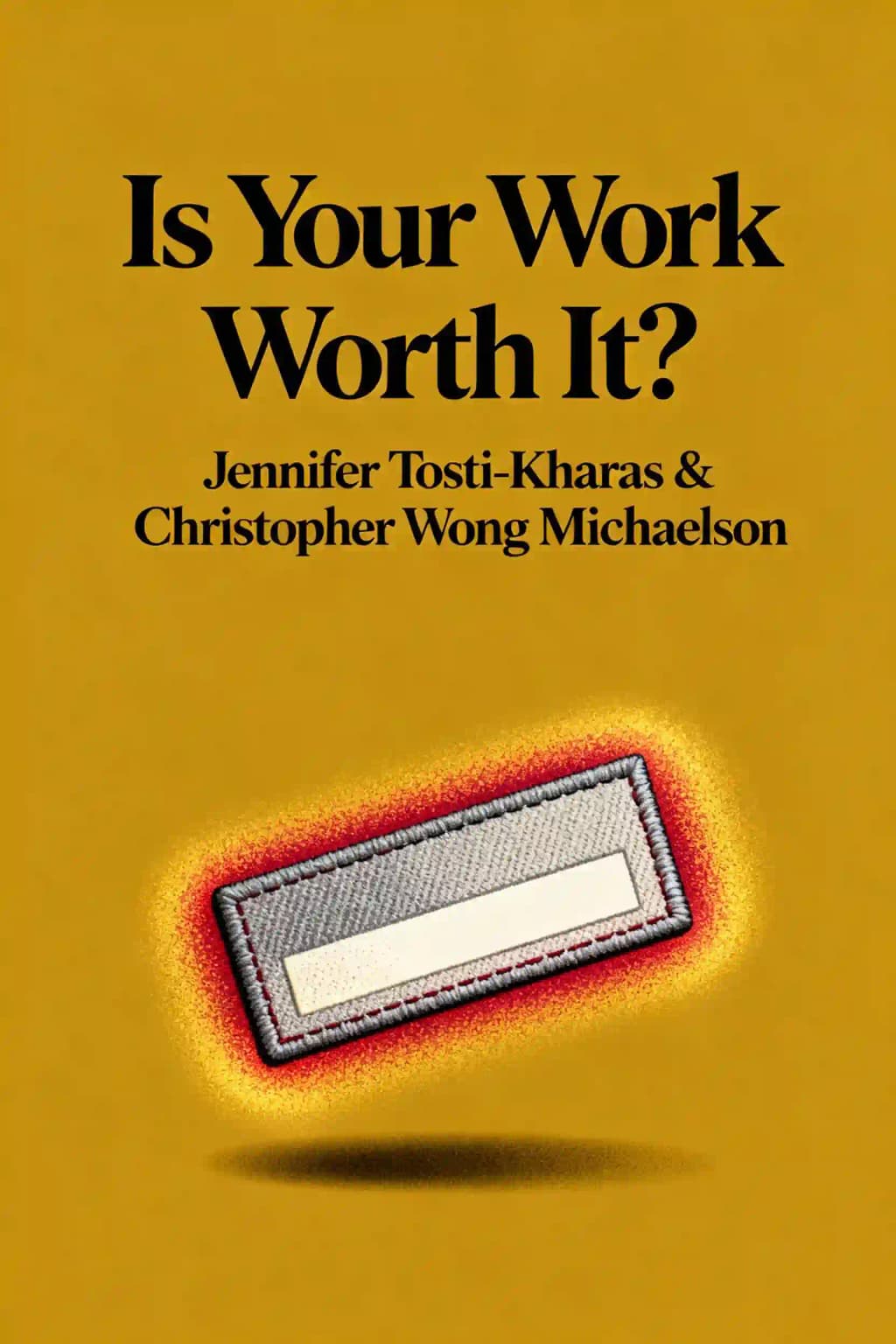
Have you ever found yourself wondering if your work is truly worth it? You're not alone. Jennifer Tosti-Kharas's groundbreaking exploration of meaningful work arrives at a critical moment when millions are questioning their relationship with work. This book has become required reading in MBA programs across the country, with business leaders like LinkedIn CEO Ryan Roslansky calling it "the essential guide for anyone navigating today's complex professional landscape." The timing couldn't be more perfect-arriving after the Great Resignation and amidst ongoing workplace transformations, it speaks to our collective search for purpose in our professional lives. Drawing from psychology, philosophy, and real-world examples, Tosti-Kharas creates a framework for evaluating whether your work is truly worth the time, energy, and life you invest in it.
第 2 章
What Makes Work "Work"? Defining Our Labor
What exactly constitutes "work"? The answer proves more complex than it might initially appear. Consider Wong Jun-Chow's remarkable journey from Chinese army general to struggling immigrant businessman in Brazil. Despite his business failures after fleeing communist China in 1949, Wong continued working well into retirement-not for pay, but as a family patriarch sharing wisdom and instilling Confucian values that the worthiest work helps others.
This personal story illuminates the three essential characteristics of work: it must be purposeful (worth doing), effortful (requiring mental or physical exertion), and recognized by society as work (often through compensation). Yet each of these elements contains contradictions. Modern capitalism includes what anthropologist David Graeber calls "bullshit jobs"-pointless employment where workers must pretend their role matters, typically white-collar positions offering respectability while adding nothing to society.
Work must also be effortful, as poet Marge Piercy celebrates those who "strain in the mud and muck to do what has to be done, again and again." Yet society simultaneously craves and criticizes seemingly effortless work. When critics claimed anyone could create Damien Hirst's shark suspended in formaldehyde, he replied simply: "But you didn't, did you?" The nature of work effort constantly evolves-from farms to factories to offices-creating new physical challenges with each transition.
Recognition as legitimate work remains socially constructed, creating a recursive cycle of devaluation: "an activity is not paid because it is not perceived as work, and it is not perceived as work because it is not paid." Housework exemplifies this problem-endless, necessary tasks that keep homes running but remain unpaid and untaxed. Despite Arlie Hochschild identifying the "second shift" decades ago, women still perform twice as much housework as men on average, even when earning equal or higher incomes.
What counts as work ultimately depends on who's counting-those in positions of power decide, influenced by historical, cultural, and economic forces. Western attitudes have evolved from ancient Greek contempt for manual labor to the Calvinist connection between honest work and spiritual purpose. Economic markets determine not just whether an activity counts as work, but also its worth-often creating a perverse relationship between compensation and societal value.
第 3 章
Why We Work: Beyond the Paycheck
If money is why we work, then higher pay should motivate harder work-yet both motivation theory and real-world examples challenge this simplistic view. Frederick Herzberg's two-factor theory distinguishes between extrinsic rewards (pay, benefits) that prevent dissatisfaction and intrinsic factors (achievement, recognition) that create satisfaction through "job enrichment."
Many fantasize about turning hobbies into careers, like Stephen Adams who found happiness as a sommelier, but the transition from hobby to profession involves significant challenges. Research shows monetary rewards can actually reduce motivation-Richard Titmuss found paying blood donors could decrease donations, and pay-for-performance can diminish intrinsic motivation. However, fairness remains crucial-J. Stacy Adams' equity theory shows we balance what we give versus what we get, comparing ourselves to peers.
Professor Amy Wrzesniewski's influential research identified three work orientations: job (means to an end), career (advancement within status hierarchy), or calling (meaningful end in itself). People across all occupations distribute evenly among these categories, showing that two people in identical roles could view their work entirely differently.
For those with job orientations, work serves purely as a means to an end. The defining characteristic is that job-oriented individuals would stop working if financially secure. A modern spin comes from entrepreneurs like Tim Ferriss, whose "4-Hour Workweek" promotes minimizing work time to maximize leisure.
Career orientation occupies the middle ground between job and calling. Careers suggest privilege and advancement opportunities-ladders to climb-typically associated with white-collar professionals. While mid-twentieth-century success meant upward mobility through corner offices and better furniture, today's career goals have shifted. Knowledge workers often value recognition within occupational peer groups over organizational advancement.
The calling orientation has received disproportionate attention from researchers and the press. Managers believe calling-oriented employees work harder, perform better, and deserve faster promotion-though research shows this "halo effect" is misplaced, as these employees don't actually differ on these dimensions.
What emerged from examining these orientations is that each can be self-oriented or other-oriented. None are inherently "wrong" answers to why we work. Rather than focusing on improving self-worth by moving up this hierarchy, we could consider what our work brings to others, not just ourselves.
第 4 章
When and How Much Should We Work?
Michelle Obama's memoir provides a compelling case study in work-life choices. As a junior associate at a prestigious law firm, Michelle believed "lawyers worked all the time" and that "we were only as good as the hours we billed." Her path represented ambition and the American dream-hard work leading to success.
In contrast stands her college friend Suzanne Alele, who "measured the value of her days purely by whether they were pleasurable." While Michelle wore patent leather pumps in dull meetings, Suzanne traveled the world eating curry in Cambodia and dancing at the Taj Mahal. Tragically, Suzanne died of cancer at just 26, leading Michelle to reflect: "Suzanne had lived in ways that I had not."
This stark contrast frames our fundamental choice: measure days by productivity like Michelle or pleasure like Suzanne? The FIRE movement (Financial Independence, Retire Early) represents a modern approach to this question. While originally conceived to promote environmental sustainability through reduced consumption, it gained popularity among Millennials seeking escape from demanding jobs that provide diminishing returns.
Aesop's fable of "The Ant and the Grasshopper" illustrates our dilemma: work diligently like the ant to secure our future, or live freely like the grasshopper, prioritizing present enjoyment over future security. Research on "affective forecasting" reveals we're poor at predicting our future emotional states-we may imagine being devastated by career setbacks or dramatically happier after quitting an unfulfilling job, when reality tends to be more moderate.
For millions of Americans working multiple jobs or living below the poverty line, the question isn't how much to work but whether they'll ever afford not to. Between 20-36% of people believe they'll never retire, and nearly half can't save for retirement. Many jobs dictate inflexible schedules, with employers free to change workers' hours while employees face rigid requirements.
Experiments with shorter workweeks have shown promise. Recent studies by sociologist Juliet Schor with 4 Day Week Global found unequivocal success with the "100-80-100" model (100% pay for 80% hours with 100% productivity). Companies reported increased revenue and reduced turnover, while employees experienced better health and work-life balance-so much that 70% would require significant raises to return to five-day weeks.
How much work is too much? In America, work has been almost a moral imperative, possibly stemming from the Protestant work ethic that views work as service to God. "Hustle culture" glorifies removing all barriers to working-food, sleep, human interaction-with social media slogans like "Rise and grind" and "Don't stop when you're tired, stop when you're done."
Yet overwork carries real costs. Research shows five hours is the maximum time we can maintain focus, and burnout affects 30-75% of workers. Workaholism-an addiction to work with persistent thoughts about it-correlates with negative outcomes for individuals and families without improving performance.
第 5 章
Love or Money: The Price of Our Labor
The chasm between highest and lowest-paid workers continues growing at an alarming rate, reaching 399-to-1 in 2021 compared to 59-to-1 in 1989. Extreme examples abound in corporate America: McDonald's CEO earning 2,251 times the average employee salary, Expedia's CEO making 2,897 times the average $100,000 employee salary, and Amazon's Andy Jassy earning 6,474 times the median worker's pay. These disparities reflect a fundamental shift in how corporations value different types of labor and raise questions about equity in modern capitalism.
Paradoxically, meaningful work typically pays less-a 2021 study found clergy members (the most meaningful profession) earned just $46,600 on average, while teachers, social workers, and nurses consistently rank high in job satisfaction but low in compensation. Jobs benefiting society often pay less because they serve those who can't afford services, and workers with intrinsic motivation accept lower compensation. In market economies, wages persist at whatever level people will accept, regardless of a job's true societal worth. This creates a troubling dynamic where essential workers often struggle financially while performing crucial societal functions.
The gender pay gap persists despite women's work being of comparable quality to men's. In 2020, women earned just 84 cents for each dollar men made-not due to differences in education or ability, but from occupational stereotypes, motherhood penalties, and workplace discrimination. The gap widens for women of color, with Black women earning 64 cents and Hispanic women earning 57 cents for every dollar earned by white men. Women's unpaid domestic labor, estimated at $10.9 trillion annually worldwide, remains economically worthless but societally invaluable, while the world's wealthiest people are all men.
Consider Kathleen Gluck's journey from teenage law clerk to accounting partner. Despite achieving her partnership dream, she discovered the darker side of success: constant pressure to perform, 80-hour work weeks, missed family events, and the myth that "individual partner revenue is a measure of personal value and worth." In firms like hers, "value" meant only money, with employees described as "assets" and poor performers as "liabilities." This commodification of human capital reflects a broader trend in corporate culture.
The term "compensation" itself implies work is a form of loss requiring payment-we sacrifice time, freedom, and often health. Elizabeth Anderson compares modern workplaces to dictatorships, with surveillance, dress codes, and restricted movement. Many companies now track keystrokes, monitor bathroom breaks, and require constant availability through digital devices. Kathleen eventually recognized during a major depressive episode that she "wasn't willing to die for this job," highlighting the human cost of prioritizing profit over wellbeing.
How can we measure the intangible value of work? Like a diamond ring-appraised, insured, yet worth far more emotionally than monetarily-work has value beyond its market price. Work offers more than compensation-it provides purpose, meaningful relationships, and participation in something larger than ourselves. Studies show that people who find meaning in their work report higher life satisfaction, better health outcomes, and stronger social connections. The market often pays more for miserable work (as Adam Smith noted) while the most fulfilling work pays least, creating a paradox where financial and personal fulfillment rarely align.
第 6 章
The Double-Edged Sword of Loving Your Work
Colin Huggins embodies the romantic ideal of work as calling-a conservatory-trained pianist who hauls a 900-pound Steinway to Washington Square Park daily, inviting listeners to lie underneath to experience classical music as a "wall of sound." Despite the physical demands and economic instability of busking, Huggins has pursued this path for fifteen years, making a living solely from handouts in expensive New York City.
The "culture of calling" has been criticized in books like Miya Tokumitsu's "Do What You Love and Other Lies About Success and Happiness" and Erin Cech's "The Trouble with Passion," which argue that the obsession with turning passions into careers drives capitalism's worst aspects: overwork, burnout, and inequality.
Despite millions of Americans playing musical instruments, only about a thousand classical orchestras exist in the US, with just a fraction offering living wages. The odds of securing a position in a world-class orchestra like the New York Philharmonic approach one in a million. Research by Shoshana "Shasa" Dobrow shows that people who view their work as a calling tend to be more satisfied, engaged, committed, and hardworking.
However, callings are double-edged swords: strongly called zookeepers sacrifice personal health and well-being for their animals, often earning lower incomes than less passionate colleagues. Similarly, ministers with strong callings work longer hours, struggle to detach psychologically from work, and suffer poor sleep. Studies even show employers feel justified paying passionate workers less because their passion "compensates" for pay.
Paul Gauguin exemplifies the dark side of pursuing a calling at all costs. The French postimpressionist abandoned his wife and five children to paint in the South Seas, where he fathered more children with underage girls. Though his paintings now sell for record prices, he died in obscurity, failing to support the family he left behind.
The consequences of following one's calling often yield ambiguous endings. Marcel Proust spent his final years writing feverishly in isolation, essentially forsaking his life while alive so his work would live on after death. Joan Didion doubled down on writing after losing her husband and daughter, using her craft to preserve their memories. Even in conventional professions, callings create complex outcomes-like PepsiCo CEO Indra Nooyi, who called her career "the honor of a lifetime" while regretting time not spent with her children.
第 7 章
Essential Work: What Society Cannot Function Without
When COVID-19 hit in March 2020, workers classified as "essential" continued working through the pandemic while others stayed home. Being designated essential was both an honor and a burden-it recognized the critical nature of certain jobs but also forced workers to risk their health to perform duties ranging from developing vaccines to operating cash registers. These workers included healthcare professionals, grocery store employees, delivery drivers, sanitation workers, and utility maintenance crews - people whose daily labor kept society functioning during unprecedented times.
The concept of "essential work" became mainstream during COVID-19, though similar terminology had been used during wartime and other crises. During World War II, for instance, certain civilian occupations were deemed critical to the war effort. While some COVID-era designations seemed obvious-healthcare workers, first responders, food workers-the definition proved politically charged and philosophically complex. Those in power defined what was "essential" according to their priorities, as when a meat-loving president ordered meatpackers to remain at work despite rampant virus spread. Similar debates arose around keeping schools open and designating teachers as essential workers.
The 9/11 Victim Compensation Fund highlighted society's uneven valuation of different forms of work. Awards ranging from $250,000 to over $7 million (averaging $2 million) revealed stark disparities between occupations. First responders, though undisputedly essential, received substantially less compensation-nearly $1 million less on average-than higher-earning financiers. This disparity sparked intense debate about how society values different types of work and whether market-based compensation truly reflects social worth.
This disconnect illustrates how the use value of essential work-its utility to society-is often greater than its exchange value in the market. Nurses, teachers, childcare workers, and sanitation staff perform crucial services yet typically earn modest wages. Meanwhile, some highly-paid roles in finance, entertainment, and technology, while profitable, may contribute less to society's basic functioning. The authors suggest that while the most socially valuable work needn't be the most lucrative, the least socially valuable certainly shouldn't command the highest pay.
Philosopher Norman Care posed a fundamental question: should we prioritize self-realization or service to others in our work? Ideally, we'd choose work enabling both personal fulfillment while serving others. But when forced to choose, Care argues that in a world of suffering and inequality, moral duty requires prioritizing service to others. This ethical framework challenges us to reconsider how we value and compensate different types of work, particularly those roles deemed essential to societal functioning. The pandemic brought this tension into sharp focus, revealing the often inverse relationship between a job's social importance and its financial rewards.
The COVID-19 crisis has prompted broader discussions about restructuring compensation systems to better reflect social value, implementing hazard pay for essential workers, and providing better protections and benefits for those performing society's most necessary tasks. These conversations continue to shape policy debates about minimum wage, worker safety, and labor rights.
第 8 章
Finding Purpose Beyond the Paycheck
Bess Hargreaves, driven to make the world better while living up to her father's successful legal career, began in high-paying corporate law before transitioning to nonprofit work helping women in poverty. Despite finding meaning in this "important work that needed to be done," twelve years of low pay, overwhelming caseloads of 60+ cases simultaneously, and a pervasive "cult of self-martyrdom" in the nonprofit sector eventually led to burnout. Her story exemplifies the complex relationship between meaningful work and personal sustainability.
Purpose in work can manifest in two primary ways: as an internal calling that emerges from personal passion, or as an external moral imperative driven by societal needs. Either path, however, holds the potential to make martyrs of us. A calling can become all-consuming, while moral imperatives can create crushing responsibility. Work that is truly full of purpose exists at what philosopher Susan Wolf calls the intersection of "subjective attraction and objective attractiveness" - it must both feel personally rewarding while being objectively worthy of reward. This balance is crucial yet elusive.
Like Mr. Incredible longing to return to superheroism while stuck processing insurance claims, many of us yearn for heroic work characterized by self-transcendence, selflessness, and courage. Research on heroic professions reveals complex motivations: firefighters report being drawn to the brotherhood and opportunity to serve, aid workers cite a desire to make tangible differences in crisis zones, and emergency room doctors describe the thrill of saving lives. Yet the daily reality rarely feels heroic - firefighters spend upwards of 90% of their time waiting and maintaining equipment, aid workers face depression rates three times the national average, and soldiers sacrifice personal autonomy for collective goals in ways that can feel stifling rather than noble.
Purpose at work is often visualized as the intersection of four fundamental questions: what you love doing (passion), what the market will pay for (profession), what you're good at (vocation), and what the world needs (mission). This framework has been attributed to both the Japanese concept of ikigai and Christian theologian Frederick Buechner's teachings on vocation. While these questions provide valuable guidance, finding work that fully satisfies all four simultaneously is extremely rare - studies suggest fewer than 20% of people report finding such perfect alignment.
Finding purpose at the intersection of all four questions is practically impossible at any single point in a career. Rather than seeking one perfect position, we might discover purpose across a portfolio of activities throughout our working lives. A software developer might find technical mastery in their day job, creative fulfillment in weekend projects, and social impact through volunteer work. Some contributions need not be heroic to be worthy - the teacher who inspires one student, the nurse who comforts one patient, the shopkeeper who builds community through small daily interactions. Others affirm that working for a higher purpose can indeed be heroic, even when the day-to-day experience feels ordinary.
第 9 章
What Remains: The Legacy of Our Work
Chad Sokolovsky's poetry collection "Prophecy Mechanic" captures his unusual upbringing in what he calls "an eschatological religious cult." Raised to become a minister with the belief that building a career was pointless with the end times approaching, Chad worked a drill press for $4.95 an hour in sweltering conditions.
After going through the motions of religious life, two experiences changed his path: junior college, which challenged his beliefs, and working at Costco. Starting as a cart-puller, he rose through the ranks to become a vice president over wine and spirits-a position unimaginable to his younger self. Despite working 50+ hours weekly in a demanding corporate role, Chad rises at 5 a.m. daily to write award-winning poetry, explaining that when "I've given... 150% of myself to my career... a little bit of my soul starts to disappear."
According to terror management theory, humans cope with death awareness through various mechanisms: having children, religious faith promising afterlife, identifying with transcendent causes, or creating enduring work. Kim Wade-Benzoni's research distinguishes between death anxiety (emotional response leading to panic) and death reflection (cognitive response prompting contemplation of meaning). While death anxiety harms work performance, death reflection can inspire prosocial behaviors like mentoring others or changing careers to serve future generations.
Clayton Christensen's approach to measuring life through business metrics has limitations. This framework treats time as a "resource," relationships as "investments," and lives as something to "measure"-applying cost-benefit analysis to determine good decisions. However, this utilitarian thinking faces two key problems: it requires measuring everything on the same scale, ignoring what philosopher Martha Nussbaum calls the "incommensurability" of values, and we cannot predict the future with certainty.
As literary scholar Jonathan Gottschall argues, humans are "the storytelling animal"-we make sense of experience through stories that structure our understanding of how the world is and ought to be. This explains why Clay Christensen measures a good life through individual encounters rather than statistics, why David Brooks notes eulogy virtues matter more than resume skills, and why Elizabeth Anderson sees worth as pluralistic rather than measurable in a single unit.
What will your legacy be? This book invites you to contemplate how you want to live and work's role in defining that legacy-considering what work is, what you work for, when you've done enough, what you love doing, what society needs, and how these factors align with marketplace value. Doing work that is worthy may be one of our most important opportunities to contribute something valuable to a world with endless work to be done.