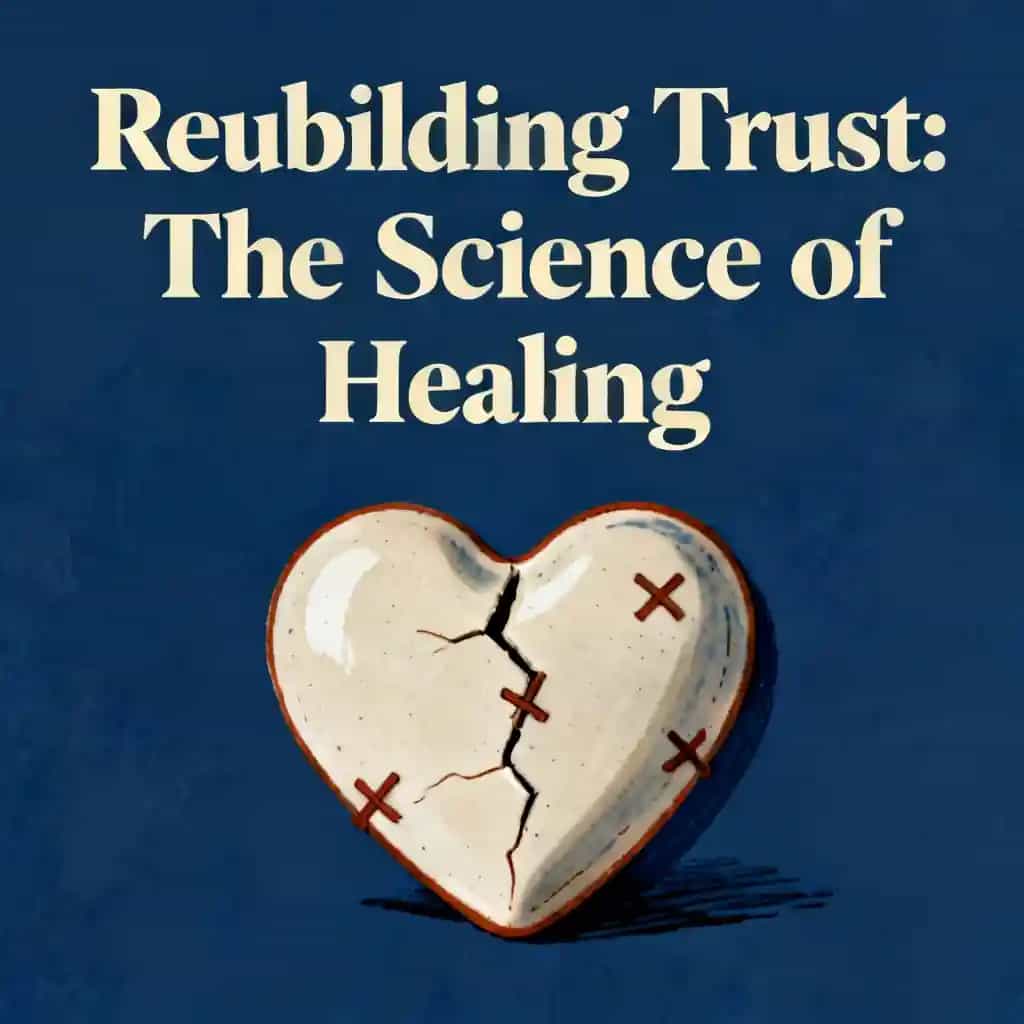
In "How Trust Works," USC professor Peter Kim shatters conventional wisdom: trust isn't always earned gradually. His award-winning research reveals why a single bad act outweighs lifetime goodness, and why apologies work for competence violations but not integrity breaches. Featured in NYT and NPR.
通过作者的声音感受这本书
将知识转化为引人入胜、富含实例的见解
快速捕捉核心观点,高效学习
以有趣互动的方式享受这本书
Think about the last time someone let you down. Maybe a friend broke a promise, or a company failed to deliver what they advertised. Your first instinct was probably to pull back, to protect yourself. Yet here's what's strange: despite living in an era where trust seems to be collapsing-where only 36% of Americans say they trust their fellow citizens-we still extend trust to strangers every single day. We hand our credit cards to waiters, share our deepest fears with therapists we've just met, and click "I agree" on terms we haven't read. This paradox lies at the heart of a fascinating truth: we're hardwired to trust, even when logic suggests we shouldn't. Research reveals something counterintuitive about how we approach new relationships. We don't start at zero and slowly build confidence. Instead, we begin with surprisingly high trust levels-often at the midpoint or above on trust scales. This isn't naivety; it's evolutionary wisdom. Three forces drive this tendency: the systems around us (laws, incentives, social norms) that make betrayal costly; our personality traits that predispose many of us toward optimism; and our lightning-fast assessments of others based on competence, integrity, fairness, and loyalty. These snap judgments happen before we have real evidence, relying on shortcuts like group membership, reputation, and even facial features. A person with a "trustworthy face" often receives more trust-and then, remarkably, lives up to it. When people feel trusted, they frequently rise to meet those expectations rather than exploit them. This baseline trust greases the wheels of society. Without it, every handshake would require a background check, every transaction a legal team. Countries with higher trust levels consistently outperform low-trust societies economically, precisely because trust reduces friction and enables cooperation. But when that trust shatters, we're remarkably bad at putting the pieces back together.
将《How Trust Works》的核心观点拆解为易于理解的要点,了解创新团队如何创造、协作和成长。
将《How Trust Works》提炼为快速记忆要点,突出坦诚、团队合作和创造力的关键原则。

通过生动的故事体验《How Trust Works》,将创新经验转化为令人难忘且可应用的精彩时刻。
随心提问,选择声音,共同创造真正与你产生共鸣的见解。

"Instead of endless scrolling, I just hit play on BeFreed. It saves me so much time."
"I never knew where to start with nonfiction—BeFreed’s book lists turned into podcasts gave me a clear path."
"Perfect balance between learning and entertainment. Finished ‘Thinking, Fast and Slow’ on my commute this week."
"Crazy how much I learned while walking the dog. BeFreed = small habits → big gains."
"Reading used to feel like a chore. Now it’s just part of my lifestyle."
"Feels effortless compared to reading. I’ve finished 6 books this month already."
"BeFreed turned my guilty doomscrolling into something that feels productive and inspiring."
"BeFreed turned my commute into learning time. 20-min podcasts are perfect for finishing books I never had time for."
"BeFreed replaced my podcast queue. Imagine Spotify for books — that’s it. 🙌"
"It is great for me to learn something from the book without reading it."
"The themed book list podcasts help me connect ideas across authors—like a guided audio journey."
"Makes me feel smarter every time before going to work"

免费获取《How Trust Works》摘要的 PDF 或 EPUB 版本。可打印或随时离线阅读。