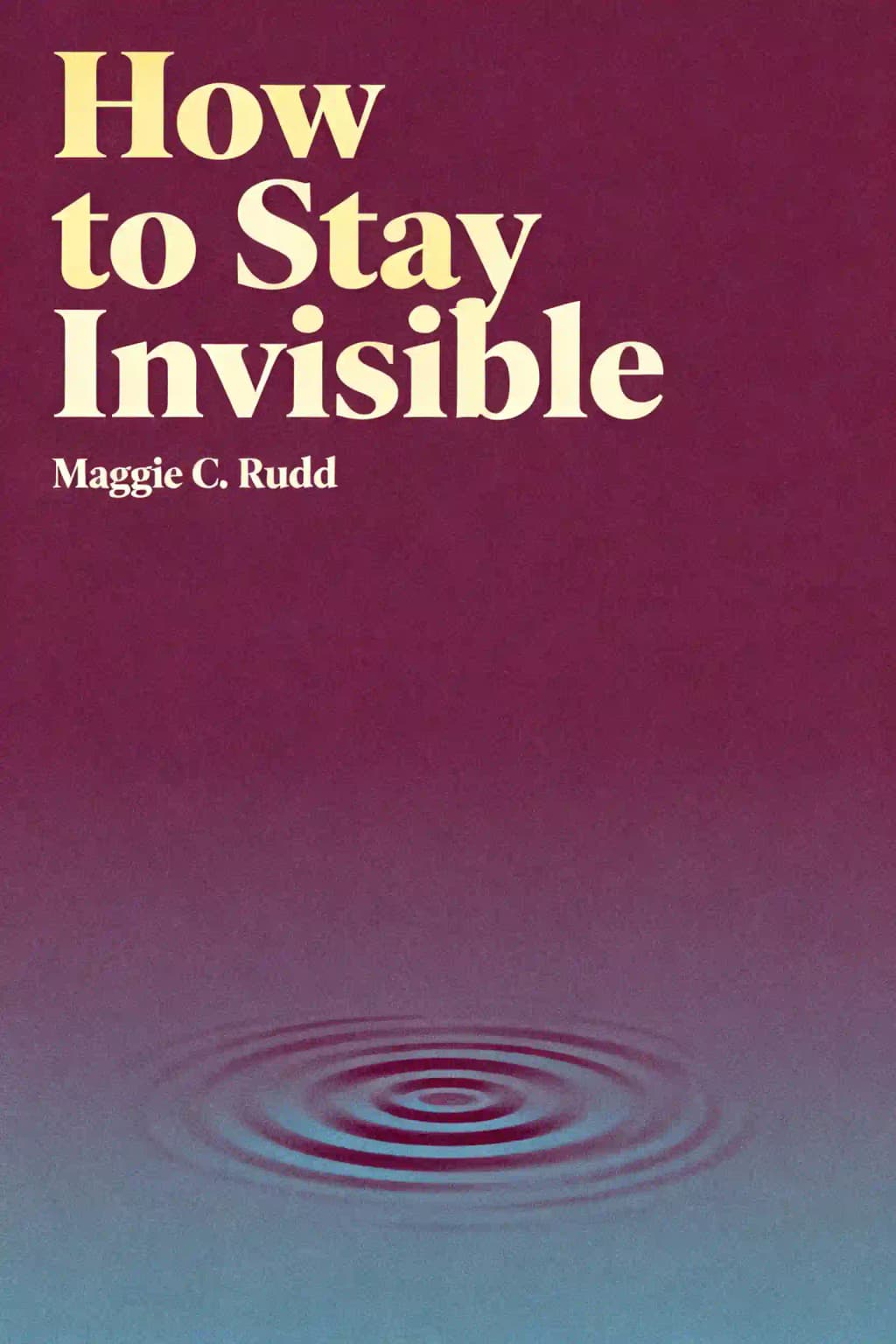
Wilderness survival meets raw adolescent struggle in "How to Stay Invisible" - a middle-grade masterpiece earning four starred reviews and hailed as "*The Outsiders* meets *Hatchet*." What makes this award-winning novel so compelling educators can't stop recommending it?
Maggie C. Rudd is the author of How to Stay Invisible, an award-winning middle-grade realistic fiction novel that tackles themes of homelessness, survival, and resilience. As a high school teacher in rural North Carolina, Rudd's firsthand experience working with vulnerable students shapes her authentic portrayal of children facing invisible struggles. The story was inspired by a fallen tree she discovered while walking through the woods behind her school—a moment that sparked the vision of a boy surviving alone in the wilderness.
Rudd has also written several picture books, including I'll Hold Your Hand, On the Fourth of July, and Sometimes It's Hard to Be Nice. How to Stay Invisible earned starred reviews from Publisher's Weekly and Kirkus Review, with Kirkus praising its "tightly written, understated narrative" and "intensely realistic atmosphere." The novel was selected for the prestigious Texas Bluebonnet Award list and received both the Teacher Favorites Award (2024) and Librarian Favorites Award (2023-2024), reflecting its widespread impact in classrooms and libraries nationwide.
How to Stay Invisible follows twelve-year-old Raymond Hurley, who is abandoned by his neglectful parents and forced to survive alone in the woods behind his middle school in North Carolina. With only his dog Rosie, a fishing pole, and a library survival guide, Raymond navigates homelessness while attending school and keeping his situation secret. The novel explores his journey from isolation to learning to trust friends, caring adults, and even a curious coyote as winter makes survival nearly impossible.
How to Stay Invisible is recommended for middle-grade readers ages 10-14, particularly those who enjoy survival stories and realistic fiction about resilience. The book appeals to fans of My Side of the Mountain and Hatchet, but offers a more grounded, contemporary perspective on homelessness and abandonment. Teachers and parents seeking heartfelt stories about found family, perseverance, and the importance of human connection will find this novel valuable for young readers.
How to Stay Invisible is absolutely worth reading, earning starred reviews from Horn Book, Publishers Weekly, and Kirkus Reviews. The novel has been nominated for the Beehive Children's Fiction Award and New York Charlotte Award, with critics praising its "finely drawn characters" and "intensely realistic atmosphere". Unlike romanticized wilderness survival stories, Rudd presents an unflinching yet uplifting portrayal of childhood homelessness that balances harsh realities with hope and human kindness.
Maggie C. Rudd is an author and high school teacher from rural North Carolina who writes middle-grade and picture books. Besides How to Stay Invisible, she has authored several picture books including I'll Hold Your Hand, On the Fourth of July, and On the Last Day of School. Rudd draws on her North Carolina roots and experiences working with young people to create authentic, emotionally resonant stories about childhood challenges and resilience.
Raymond survives by living in a hollowed-out tree behind River Mill Middle School, relying on resourcefulness and determination. He saves food from cafeteria lunches, scavenges from school dumpsters, fishes with his pole, and occasionally benefits from squirrels his dog Rosie catches. With a survival guide checked out from the library and sheer willpower, Raymond endures until winter's harsh conditions and an injury to Rosie force him to seek help from others.
The primary themes in How to Stay Invisible include survival, resilience, trust, and the necessity of human connection. The novel explores childhood homelessness and abandonment with unflinching honesty while emphasizing that true survival requires more than wilderness skills—it demands vulnerability and accepting help from others. Additional themes include the power of found family, the courage to be seen rather than invisible, and how caring adults and friendships can redeem difficult circumstances.
Beyond protagonist Raymond, key characters include Rosie, his loyal dog; Harlin, his best friend who chooses a sleeping bag for Raymond instead of NASCAR tickets at bingo; and Lexi, Raymond's first girlfriend. Stigs, a former army surgeon living in a nearby cabin, becomes a crucial mentor figure. Even a coyote Raymond names Hank plays an important role, along with various teachers who refuse to let Raymond remain invisible despite his efforts.
While How to Stay Invisible shares survival elements with My Side of the Mountain and Hatchet, it presents a more realistic, contemporary perspective on homelessness rather than romanticized wilderness adventure. Unlike Jean Craighead George's and Gary Paulsen's classics where isolation seems appealing, Rudd's novel shows how dire Raymond's situation truly is—living on dumpster scraps and facing genuine hunger. The comparison to The Outsiders is also apt, as both address harsh social realities facing vulnerable youth.
How to Stay Invisible distinguishes itself through its unflinching portrayal of childhood homelessness without cheap drama or fantasy elements. Rather than making survival seem romantic or fun like traditional wilderness tales, Rudd's "straightforward, meticulous prose" captures the genuine hardship of Raymond's daily routines. The novel uniquely balances typical middle school experiences—crushes, friendships, school projects—against Raymond's harrowing reality, creating a meditative survival read grounded in contemporary social issues.
How to Stay Invisible is appropriate for middle-grade readers ages 10-14, with some reviewers extending the range to age 15. The 240-page novel addresses serious themes like parental abandonment and homelessness but does so with age-appropriate sensitivity and hope. Teachers and librarians recommend it for upper elementary through middle school students, particularly where survival books and heartfelt realistic fiction are popular.
Critics universally praise How to Stay Invisible with starred reviews from major publications. Horn Book called it "a worthy match for My Side of the Mountain and Hatchet," highlighting Rudd's "straightforward, meticulous prose". Publishers Weekly praised the "uplifting tale of connection and found family," while Kirkus applauded the "tightly written, understated narrative" that tells its story through "finely drawn characters" and "intensely realistic atmosphere". The novel has earned award nominations and recognition for its refreshingly genuine approach to resilience.
How to Stay Invisible serves as a crucial eye-opener about homelessness and neglect that some students face while maintaining outward normalcy. The novel demonstrates how even caring adults—teachers who notice Raymond's declining grades and appearance—can miss critical signs that a child is living without adult support. This makes it valuable for classroom discussions about empathy, recognizing vulnerability in others, and understanding that some peers face unimaginable hardships while simply trying to attend school.
通过作者的声音感受这本书
将知识转化为引人入胜、富含实例的见解
快速捕捉核心观点,高效学习
以有趣互动的方式享受这本书
Raymond Hurley has perfected the art of invisibility.
This isn't the first time his parents have abandoned him.
His mantra becomes 'stay invisible.'
His pride in these accomplishments is touching.
What's most heartbreaking isn't just the abandonment itself, but Raymond's reaction.
将《How to Stay Invisible》的核心观点拆解为易于理解的要点,了解创新团队如何创造、协作和成长。
将《How to Stay Invisible》提炼为快速记忆要点,突出坦诚、团队合作和创造力的关键原则。

通过生动的故事体验《How to Stay Invisible》,将创新经验转化为令人难忘且可应用的精彩时刻。
随心提问,选择声音,共同创造真正与你产生共鸣的见解。

"Instead of endless scrolling, I just hit play on BeFreed. It saves me so much time."
"I never knew where to start with nonfiction—BeFreed’s book lists turned into podcasts gave me a clear path."
"Perfect balance between learning and entertainment. Finished ‘Thinking, Fast and Slow’ on my commute this week."
"Crazy how much I learned while walking the dog. BeFreed = small habits → big gains."
"Reading used to feel like a chore. Now it’s just part of my lifestyle."
"Feels effortless compared to reading. I’ve finished 6 books this month already."
"BeFreed turned my guilty doomscrolling into something that feels productive and inspiring."
"BeFreed turned my commute into learning time. 20-min podcasts are perfect for finishing books I never had time for."
"BeFreed replaced my podcast queue. Imagine Spotify for books — that’s it. 🙌"
"It is great for me to learn something from the book without reading it."
"The themed book list podcasts help me connect ideas across authors—like a guided audio journey."
"Makes me feel smarter every time before going to work"

免费获取《How to Stay Invisible》摘要的 PDF 或 EPUB 版本。可打印或随时离线阅读。
Imagine discovering your parents have abandoned you with nothing but a duffel bag and a dog. For Raymond Hurley, this isn't a nightmare - it's reality. In the quiet town of River Mill, this thirteen-year-old has perfected the art of disappearing - not as a magic trick, but as a survival strategy. When Raymond returns home to find his belongings packed outside their locked trailer, his parents gone without a trace, he doesn't collapse in despair. Instead, he shifts immediately into survival mode, his mind calculating shelter options and food sources with the practiced efficiency of someone who's weathered abandonment before. What's most heartbreaking isn't the abandonment itself, but Raymond's lack of surprise - this isn't his first abandonment, just the first time without shelter.