第 1 章
Between Two Worlds: A Cultural Odyssey of Laughter and Belonging
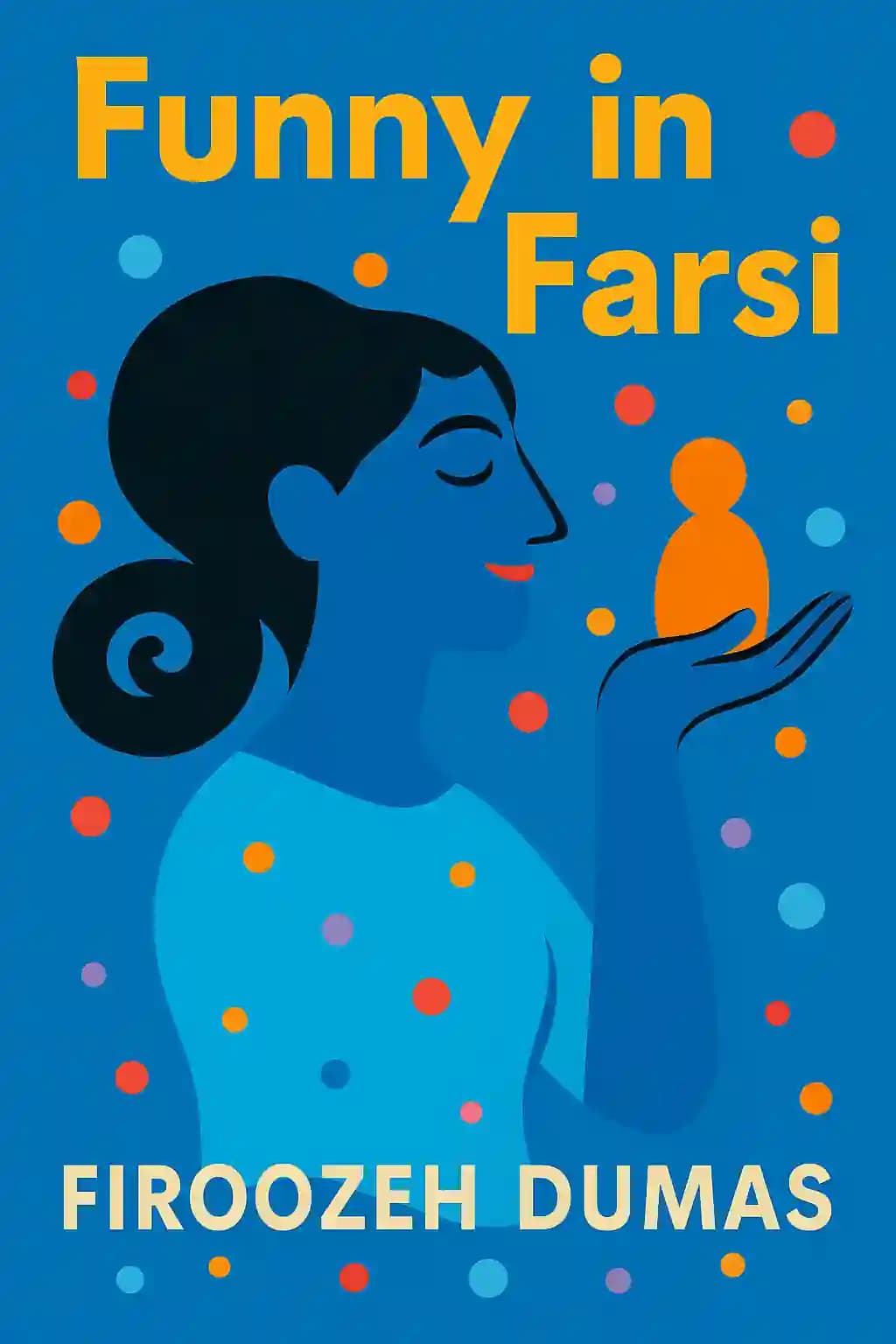
In 1972, a seven-year-old Iranian girl stepped off a plane in California, clutching her mother's hand and carrying dreams of Barbie dolls and American wonders. Little did Firoozeh Dumas know that her family's "temporary" move would become the foundation for one of the most beloved cross-cultural memoirs of the early 21st century. "Funny in Farsi" emerged as a New York Times bestseller and finalist for the PEN/USA Award, with former President Jimmy Carter praising it as "a humorous and introspective chronicle of a life filled with love." The book's universal themes of family, identity, and belonging resonated across cultural divides, offering readers a window into the immigrant experience through a lens of warmth and humor rather than political tension. Dumas's storytelling-compared by critics to David Sedaris and Erma Bombeck-transforms everyday cultural misunderstandings into moments of profound connection, making her work particularly meaningful in post-9/11 America when Iranian-American relations were at their most strained.
第 2 章
First Steps in the Promised Land: Navigating American Beginnings
When my family moved from Abadan, Iran, to Whittier, California, my father spoke of America as the Promised Land-a place of clean bathrooms, orderly traffic, and jumping whales at SeaWorld. For me, a seven-year-old with simple desires, it meant more Barbie outfits and the colorful cereal boxes I'd seen in magazines. Reality quickly tempered our expectations when my mother accompanied me to Leffingwell Elementary School, neither of us speaking a word of English beyond "hello" and "thank you."
The humiliation was immediate and profound. During an impromptu geography lesson, my mother couldn't locate Iran on the classroom map, her fingers trembling as they traced across continents while twenty-eight pairs of eyes followed her every move. The teacher's well-intentioned attempts to help only magnified our embarrassment, and I slunk deeper into my plastic chair, wishing I could disappear. After school, we got hopelessly lost walking home, wandering the identical suburban streets for hours, my patent leather shoes pinching with every step until a kind American girl and her mother helped us call my father to rescue us.
My father, it turned out, wasn't the cultural translator we'd counted on. His English skills, honed through watching Western movies and reading technical manuals, were far more limited than he'd led us to believe. Store clerks and waiters looked perpetually bewildered by his peculiar phrasing, like ordering "water without gas" instead of "still water," and his translations were highly suspect. This linguistic gap led us to avoid perfectly good foods like hot dogs (which he translated as "the meat of angry dogs"), mud pie (which sounded distinctly unappetizing when literally translated), and pot roast (which he insisted must be marijuana-related).
My mother took a different approach to language acquisition, learning English primarily from game shows like "The Price is Right" and "Family Feud." She developed an encyclopedic knowledge of American product prices but little practical vocabulary. She'd excitedly spot brands from television in grocery stores, often shouting "Bob Barker!" while pointing at household items, and recount the day's game show triumphs and losses with peculiar enthusiasm, complete with price quotes for everything from dish soap to living room sets.
I quickly became my mother's reluctant interpreter everywhere we went, from doctor's appointments to parent-teacher conferences. Americans lavished praise on my bilingual abilities, while my mother remained stubbornly resistant to proper English, speaking without verbs and with a thick accent that transformed "Whittier" into "Vee-tee-er" and "Walter Williams" into "Valter Villiams." She'd proudly announce "Me shopping" or "Yesterday, kitchen clean" with absolute conviction that she was mastering the language.
Despite these challenges, my father was right about one thing: America's bathrooms were indeed clean, and its people incredibly kind. Neighbors brought over casseroles we didn't know how to eat, teachers stayed late to help with homework, and complete strangers offered directions with patience and smiles. This kindness would become our anchor as we navigated the strange new world we now called home, complete with its mysterious customs, baffling idioms, and endless opportunities for cultural misunderstandings.
第 3 章
Family Bonds: The Unbreakable Thread of Persian Kinship
In Persian culture, family isn't just important-it's everything. While English has limited words for relatives, Persian has precise terms for every family connection, reflecting the intricate web of relationships that defines Iranian society. My father's brothers are "amoo," my mother's brother is "dye-yee," and aunts' husbands are "shohar ammeh" or "shohar khaleh" depending on which side of the family they belong to. These specific terms extend to cousins too - "pessar amoo" for a paternal uncle's son, "dokhtar khaleh" for a maternal aunt's daughter, creating a linguistic map of family connections that English simply cannot match.
My father's sister Sedigeh, my "ameh," was like a second mother to me in Abadan. She showered me with compliments and love, making me feel special in her home with its beautiful garden of fragrant jasmine, roses, and orange blossoms. Now in Southern California, she and my uncle Abdullah cultivate an impressive garden of figs, pomegranates, and herbs despite limited space, recreating a piece of Iran in their suburban yard. My uncle, in his seventies, works as a translator for the local Persian community and has discovered computers, though he mysteriously "loses" files that my software engineer husband must recover, leading to amusing family gatherings where technology and tradition collide.
The thread of kindness in our family has no beginning or end, woven through generations of mutual support and sacrifice. When my father was young and studying engineering in Tehran, he lived with relatives who treated him as their own son. Years later, when my cousin Darius needed a place to stay while studying in America, we welcomed him into our home without hesitation-the cycle continuing unbroken across generations and continents. This tradition of hospitality extends beyond immediate family; friends of relatives become "aunt" and "uncle," expanding our circle of care and connection.
My aunt Sedigeh was denied education beyond sixth grade despite being "the smartest one of all," a fact that still brings tears to my father's eyes decades later. Her natural intelligence and resourcefulness showed when she performed surgery on dying chickens, saving them by removing throat tumors with skills that amazed even local veterinarians. This injustice became a driving force in our family, fueling my father's insistence that I attend university, regardless of cost or circumstance. Her story became a testament to both the limitations placed on women of her generation and the determination to ensure better opportunities for the next.
Meanwhile, my uncle Muhammad became a doctor twice-first in Iran, then again in America at age 58 after the revolution forced him to restart his career from scratch. Such resilience runs through our family like a current, powering us through difficulties and transitions. He studied alongside students younger than his children, maintaining his dignity and determination through years of repeated training and certification.
My relatives gather for every occasion from birthdays to graduations, transforming simple events into elaborate celebrations with traditional Persian dishes and hours of storytelling. They've formed a genuine alliance that sustains them through difficulties, sharing resources, advice, and support without hesitation. They've even purchased burial plots together, with Uncle Muhammad selecting one with an ocean view, joking that he wants to enjoy the California sunset even in the afterlife. Without my relatives, I am but a thread; together, we form a colorful and elaborate Persian carpet that tells the story of generations, each strand strengthening the whole, creating a tapestry of love, resilience, and unbreakable bonds that span continents and centuries.
第 4 章
Navigating Identity: The Challenges of Being "Other" in America
Having a foreign name in America is a special kind of torture. My cousin Farbod ("Greatness") became "Farthead," my brother Farshid ("He Who Enlightens") became "Fartshit," and my friend Neggar ("Beloved") nearly incited riots with her name. Americans, with their preference for monosyllabic names like Bill and Sue, miss out on the rich guttural sounds of Persian names.
At twelve, after enduring fifth grade as "Ferocious," I decided to add an American middle name before starting at a new school in Newport Beach. My family mocked me, but I persisted. We considered names starting with F (my father suggested "Fifi") and settled on "Julie" for its simplicity.
Life became wonderfully simpler with people actually remembering my name. But during the Iranian Revolution, being known as Julie meant people assumed I was American and freely shared their prejudices about "damn I-raynians" with me. I felt like an impostor in my own skin.
In America, my "ethnic" face marks me as non-Scandinavian, though ironically, my mother and I had stood out in Abadan for being too pale. In Whittier, California, with its large Mexican population, we blended in visually until we spoke. When we moved to Newport Beach in 1976, we stood out dramatically among the blond sailing enthusiasts who often mistook us for Mexican domestic workers.
During a school scoliosis check, a nurse excitedly asked if I was Alaskan. When I explained I was Iranian, she called her colleague Bernice to come look at the exotic specimen. Another time, I prepared an elaborate presentation about Iran for a class, only to discover the teacher thought I was from Peru.
After the Iranian Revolution and hostage crisis, Americans became suspicious of all Iranians. People constantly asked our opinion on the hostages, surprised when we condemned the situation. My mother began claiming to be Russian or Turkish to avoid harassment. The unfairness of ethnic perception became clear when I met my future French husband Francois. Simply being French in America grants immediate cultural cachet-people assume he's sensitive, intellectual, and artistic, while they see me and think of hostages.
第 5 章
Treasured Memories: Finding Joy in Two Cultural Worlds
My father's favorite place on Earth was Las Vegas, and I endured countless "vacations" there during long weekends. Our ritual never varied: waking at 5:00 A.M., passing under a Koran held by my mother for safe travels, driving four hours through desert monotony with a mandatory Denny's breakfast stop. "America is a great country," my father would declare, impressed by their cleanliness.
At the Stardust Hotel, my father would ask for his "special friend" Al, who would miraculously find us a room despite the "No Vacancy" sign in exchange for a five-dollar handshake. My father would then head straight to the blackjack tables, where he developed elaborate superstitions-no hats allowed, redheaded women were good luck but redheaded men were bad, and foreigners brought bad luck (ironically, he was one himself).
The highlight was always the $3.99 all-you-can-eat buffet, where we felt we were "beating the system" by overeating. "These shrimp alone are worth at least five dollars!" my father would exclaim, as we stuffed ourselves until we ached.
These Las Vegas trips paled in comparison to our real vacations in Iran, where we'd visit the Caspian Sea, staying in company villas in Mahmood Abad. The beautiful two-day drive through lush landscapes and the Elburz Mountains, building sandcastles on warm beaches, and enjoying family movie nights made those vacations truly memorable.
Dr. Seuss's Grinch might have simply been Muslim like me-someone left out of Christmas festivities. In Iran, we were secular Muslims, like most Iranians. Religious studies taught us about all faiths, but practice wasn't mandatory. Women rarely wore the chador, preferring to dress like Jackie Kennedy or Elizabeth Taylor.
After moving to America, I loved school with Mrs. Sandberg, Girl Scouts, the library, and Butterfinger candy bars. Life seemed one long series of festivities-until Christmas, when suddenly everyone was having a party and I wasn't invited. In Iran, our biggest holiday was Nowruz (Persian New Year), celebrated by all Iranians with thorough house cleaning, new clothes, traditional pastries, and the symbolic haft-seen display.
Now married to a Catholic, I'm a card-carrying Christmas Club member. My Christmas kitchen smells of ginger, chocolate, and cinnamon, while my childhood Nowruz kitchen smelled of cardamom, pistachios, and rose water. Sometimes I yearn for simpler days when Christmas meant watching Bob Hope sing "White Christmas" with my parents in our Newport Beach home.
第 6 章
Cultural Clashes: When Worlds Collide
My father loves ham-not a problem for someone named Bob in Alabama, but challenging for Kazem in Abadan, Iran. During my childhood in Shah-ruled Iran, my father was a strong supporter of the monarchy, believing the Shah would modernize Iran. When the Shah visited Abadan for a petrochemical plant inauguration, my father cleverly took us to pose on the royal float the day before the actual parade.
In Abadan, stores catering to former British residents sold exotic foreign foods, including ham. My mother refused to touch it, but I was honored to be my father's shopping companion on ham-buying excursions. After purchasing it, we'd return home triumphant, and my father would prepare his meal while telling stories about America.
When I started learning about Islam in first grade, I was horrified to discover ham was forbidden. I tearfully told my father he was destined for eternal punishment. He explained gently that the Prophet Muhammad had forbidden ham because people didn't know how to cook it safely then, but circumstances had changed. "It's not what we eat or don't eat that makes us good people; it's how we treat one another," he said, adding that good and bad people exist in every religion.
When he was growing up in Ahwaz, one of my father's greatest joys was going to the movies. Tickets cost money he didn't have, especially during dry seasons when his father's wheat fields produced little income. While his risk-taking brother Muhammad would climb walls to watch movies for free, my cautious father rarely joined until one fateful night when he was caught, jumped from a wall, and severely injured his leg.
American Westerns and Tarzan were his favorites, but the 1934 Treasure Island changed his life, inspiring him to seek treasure. His real treasure came in the form of a Fulbright scholarship poster that led him to study in America at Texas A&M despite numerous obstacles. During his lonely year in Texas, he even met Albert Einstein during a trip with professors. The experience convinced my father that anything was possible in America, and he dreamed of returning someday with his children.
第 7 章
Dreams and Disappointments: The Immigrant's Journey
Every family has its daredevil, and in my father's family it was Uncle Nematollah, whose bold feat was selecting his own wives-three times. In my culture, marriage is about logic, not romance-if parents like each other, their children should marry. After his second divorce, Uncle Nematollah visited us in Whittier, settling in for what would be a seasonal stay rather than the brief visit Americans might expect.
Despite our cramped quarters, my father lived by "Room in the heart, room in the house." The brothers shared a passion for discovering American foods, daily hunting through supermarkets for new products. Coming from Iran where meal preparation took half a day using only fresh, seasonal ingredients, they were often disappointed by American convenience foods. After extensive sampling, they concluded only canned chili, ice cream, and Chips Ahoy cookies were worth buying.
Their exploration of fast food yielded better results-Kentucky Fried Chicken became our favorite, followed by Baskin-Robbins. This delighted my mother, who struggled cooking without Iranian ingredients. Soon Uncle Nematollah discovered his clothes no longer fit, launching him into a series of weight-loss schemes that provided endless family entertainment.
My father takes immense pride in many accomplishments-being the first in his family to study in America, winning a Fulbright scholarship, and settling permanently in America as the "Christopher Columbus" of the family. But nothing made him prouder than his role as the family swim instructor.
In Iran, most people, especially women, never learned to swim. My progressive father decided all his children, nieces and nephews would learn, and he had a perfect record-until me. His methodical, engineer's approach to teaching swimming worked wonderfully for my cousins, most of whom grew up to be engineers. I, however, needed emotional reassurance, not physics lessons.
After failing to teach me over multiple summers, my father resorted to yelling and insults: "You're like a rock! You're hopeless!" This only created two fears: fear of water and fear of being in water with my father. By age six, I had become his greatest failure. To save face, he developed a theory: "She's built like a rock. She just sinks."
第 8 章
Resilience Through Revolution: When Politics Becomes Personal
In 1977, when the Shah and his wife were scheduled to meet President Jimmy Carter, my family received an all-expense-paid invitation to Washington D.C. to welcome them. Despite my brothers' warnings about anti-Shah demonstrators, my father couldn't resist a free trip.
Upon arriving at our hotel, we found a threatening flyer under our door calling us "brainwashed cowards" and puppets of the "corrupt Shah." My father simply crumpled it and focused on finding the dinner buffet. The next day, buses took us to the White House lawn where we were given Iranian flags to wave. A lawyer warned us to photograph anyone who might attack us.
When the Shah arrived, announced by a twenty-one-gun salute, demonstrators suddenly crossed the road wielding nail-studded sticks. The lawn that had been covered with miniature Iranian flags was now strewn with injured Iranians. My parents and I fled, desperately seeking safety. We boarded an out-of-service bus, were turned away by an unhelpful police officer, and finally paid $21 to board a sightseeing tour bus that took us on a three-hour monument tour.
After the Iranian Revolution, my father's engineering career collapsed overnight. Companies that had eagerly hired Iranians now wouldn't return his calls. After the hostages were finally freed, my father found work with an American company as a senior engineer. Though his salary was half what it had been before the revolution, he was extremely grateful to have work. Throughout his ordeal, he never complained, remaining an Iranian who loved his native country while believing in American ideals.
In Abadan, we never worried about money because the National Iranian Oil Company provided everything-free furnished housing based on employment rank, maintenance services, schools, healthcare, and transportation. Coming to America required adjusting to paying for everything in dollars, which we constantly converted to Iranian currency. After the 1979 revolution, Iranian currency plummeted, making even basic items prohibitively expensive.
This financial strain transformed my already-thrifty father into a determined do-it-yourself handyman, armed with his engineering background and Time-Life repair books. His amateur repairs left our house with mismatched wallpaper, duct-taped walls, and reversed hot/cold faucets. Despite his frugality in America, in Iran he transforms into "Daddy Warbucks," staying in luxury hotels and generously helping the needy with his pension money that's nearly worthless in America but valuable there. As he says, "I'm a rich man in America, too. I just don't have a lot of money."
第 9 章
Finding Home: The Journey to Belonging in Two Cultures
My marriage began with Francois secretly dating me for six months before meeting my parents. Dating was a foreign concept to my Iranian parents, whose marriages were arranged. When they finally met Francois, they took him to an upscale Persian restaurant where he impressed them by enthusiastically devouring an enormous meal and knowledgeably questioning my mother about ingredients. Francois later explained he ate so much because "Middle Easterners love to feed people" and he wanted to make a good impression.
My mother had always hoped I would marry an Iranian doctor whose parents would adore me. Instead, she surprised me by embracing Francois, saying "He will be like a third son to me," becoming a pioneer who accepted her daughter choosing her own husband. My father was simply happy I was getting married, particularly pleased that Francois asked his permission.
Our wedding plans revealed stark family contrasts. Francois's side included just four family members, with numerous relatives declining to attend due to long-standing feuds. My Iranian family couldn't fathom excluding anyone-we invited 140 people, 163 accepted, and 181 showed up as guests brought additional houseguests.
We held both Catholic and traditional Persian ceremonies. The Persian ceremony (aqd) featured traditional elements including the sofreh (ceremonial cloth) with symbolic items like mirror, candles, sweets, nuts and honey. When asked if I wanted to marry Francois, I followed tradition by staying silent twice while family called out "She has gone to pick flowers" and "She has gone to bring rose water" before finally saying yes.
Every Thanksgiving, my extended family gathers at my cousin Morteza's house, blending Persian dishes like shrimp curry and baklava with traditional turkey and trimmings. After catching up on family gossip, we express gratitude for our lives in America and our fortune of living close to one another. My father gives thanks for living in a free country where he can vote, while I express gratitude for being able to pursue my dreams despite being female.
Since publishing "Funny in Farsi," I'm frequently asked how my family reacted to the book. My extended family mostly loved it, though with specific comments: my uncle Muhammad was upset I hadn't used my maiden name, my cousin's wife complained I mentioned only one of her sons, and uncle Nematollah asked to be left out of future books. My father, who unexpectedly became the book's main character, initially reacted with indifference-understandable given my history as a serial hobbyist. Even when I found an agent and a contract with Random House, they showed no reaction-until a month later when my father called, breathless with excitement, having just discovered how "HUGE" Random House actually was.
Through all the cultural clashes, misunderstandings, and challenges, I've learned that home isn't defined by geography but by love. My journey between Iran and America, between Firoozeh and Julie, has taught me that belonging comes not from fitting perfectly into one culture or another, but from embracing the beautiful complexity of being shaped by multiple worlds.