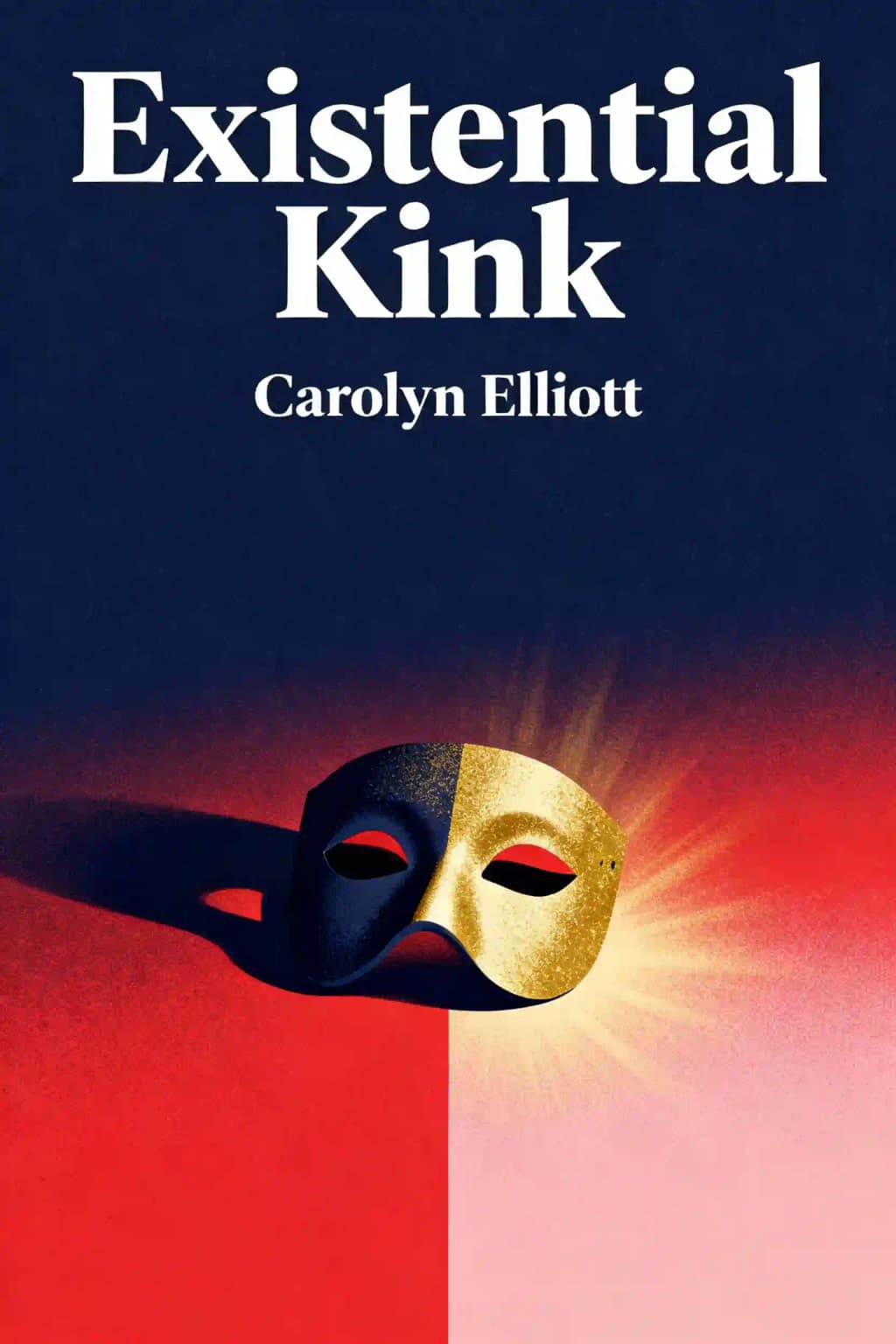
Existential Kink
Unmask Your Shadow and Embrace Your Power
《Existential Kink》概述
Existential Kink reveals how embracing your dark desires can free you from self-sabotage. Carolyn Elliott's Jungian-inspired method challenges traditional self-help by asking: What if pleasure in your problems is the key to solving them? A provocative approach to wholeness that's changing how we view shadow work.

《Existential Kink》核心主题
- shadow work
- unconscious desire
- radical self-responsibility
- transmuting suffering
- esoteric psychology
《Existential Kink》经典语录
Existential Kink (EK) is my pet name for the under-recognized shadow process of unconsciously attracting what consciously scares you.
EK is a method of intentionally turning toward what you secretly love about what disgusts you.
The first step in practicing EK is to make a list of everything that disgusts, scares, or enrages you about a specific situation.
The second step is to ask yourself, "What do I secretly love about this?"
Existential Kink is not about wallowing in negativity; it’s about radically accepting the totality of your experience, so that you can finally be free.
《Existential Kink》主要人物
- Carolyn ElliottAuthor and developer of the shadow work method
关于作者
《Existential Kink》作者介绍
Carolyn Elliott, PhD, is the author of Existential Kink: Unmask Your Shadow and Embrace Your Power and a leading voice in shadow integration and applied occult philosophy. A scholar with a doctorate in Critical and Cultural Studies from the University of Pittsburgh, Elliott blends academic rigor with mystical insight to help individuals transform self-sabotage into empowerment.
Her work explores themes of creativity, desire, and Jungian shadow work, rooted in her decades of experience as an intuitive counselor and founder of the Sleep Over Mystery School, an immersive occult training program.
She is also the author of the cult-favorite Awaken Your Genius: A Seven-Step Path to Freeing Your Creativity and Manifesting Your Dreams and maintains the popular blog Awesome Your Life, where she shares practical magic and personal growth strategies. Elliott’s unique approach—combining meditation, ritual, and psychological inquiry—has garnered a devoted following, with her online courses and coaching programs empowering thousands to unlock their potential. Existential Kink has become a staple in New Age and self-help circles, praised for its provocative yet actionable framework to reclaim power through embracing darkness.
下载《Existential Kink》摘要
免费获取《Existential Kink》摘要的 PDF 或 EPUB 版本。可打印或随时离线阅读。
关于本书的常见问题
Existential Kink explores embracing repressed desires and subconscious patterns to reclaim personal power. Drawing on Jungian shadow work, Carolyn Elliott argues that unconscious "kinks" for pain, struggle, or self-sabotage shape recurring life issues. By acknowledging and indulging these dark impulses consciously, readers dissolve their grip and manifest positive change. The book blends psychology, occult philosophy, and meditative practices to guide this transformative process.
This book suits individuals stuck in repetitive negative cycles (e.g., toxic relationships, financial struggles) seeking radical self-acceptance. It appeals to fans of shadow work, Jungian psychology, or occult spirituality. Those open to confronting taboo desires and unconventional self-help methods will find it particularly valuable.
Yes. Carolyn Elliott (PhD in Critical and Cultural Studies) combines academic rigor with occult expertise. As a practicing witch and founder of Sleep Over Mystery School, she bridges Jungian theory, storytelling, and ritual praxis. Her work has been recognized by the Ralph Waldo Emerson Society and praised in New Age circles.
For readers tired of superficial positivity, yes. Its unflinching approach to shadow integration offers a fresh alternative to mainstream self-help. Critics praise its actionable frameworks like the "Deepest Fear Inventory," though some find its eroticized tone provocative.
A core exercise where individuals document and vocalize hidden fears driving self-sabotage (e.g., "I’m unworthy of love"). By dramatizing these fears through ritual or writing, their emotional charge dissolves, freeing energy for positive change. Elliott links this to Carl Jung’s concept of "owning the shadow".
While both address self-liberation, Existential Kink rejects bypassing negativity. Instead of transcending darkness, Elliott urges readers to eroticize and integrate it. This contrasts with Tolle’s focus on present-moment awareness, offering a grittier path for those resonating with shadow archetypes.
- “We always get exactly what we want; often, what we most want is dark.”
- “Your power lies in the raw, tabooed parts you’ve disowned.”
These emphasize embracing unconscious desires to break destructive cycles.
Yes. Methods include:
- Shadow roleplay: Physically embodying repressed traits.
- Guilty pleasure journaling: Listing "taboo" satisfactions from pain patterns.
- Ritualized acceptance: Using breathwork to integrate dark desires.
Some readers argue its focus on "indulging" negativity risks glorifying suffering. Others note the occult themes may alienate secular audiences. However, proponents counter that it reframes—rather than encourages—self-destruction.
It challenges prevailing "toxic positivity" by validating darkness as a catalyst for growth. Its 2025 relevance lies in addressing burnout and authenticity crises, offering tools to alchemize societal or personal upheavals.
- All desires are valid.
- Pleasure erases shame.
- Shadow drives reality.
- Suffering signals unowned wants.
- Integration precedes healing.
- Power emerges from taboo.
- Playfulness dissolves resistance.
Yes. By examining unconscious attractions to unfulfilling jobs or toxic workplaces, readers identify and reframe "kinks" like martyrdom or fear of success. Case studies show improved boundary-setting and purposeful career shifts post-practice.