第 1 章
The Inner Battle: How Our Minds Shape Our Emotions
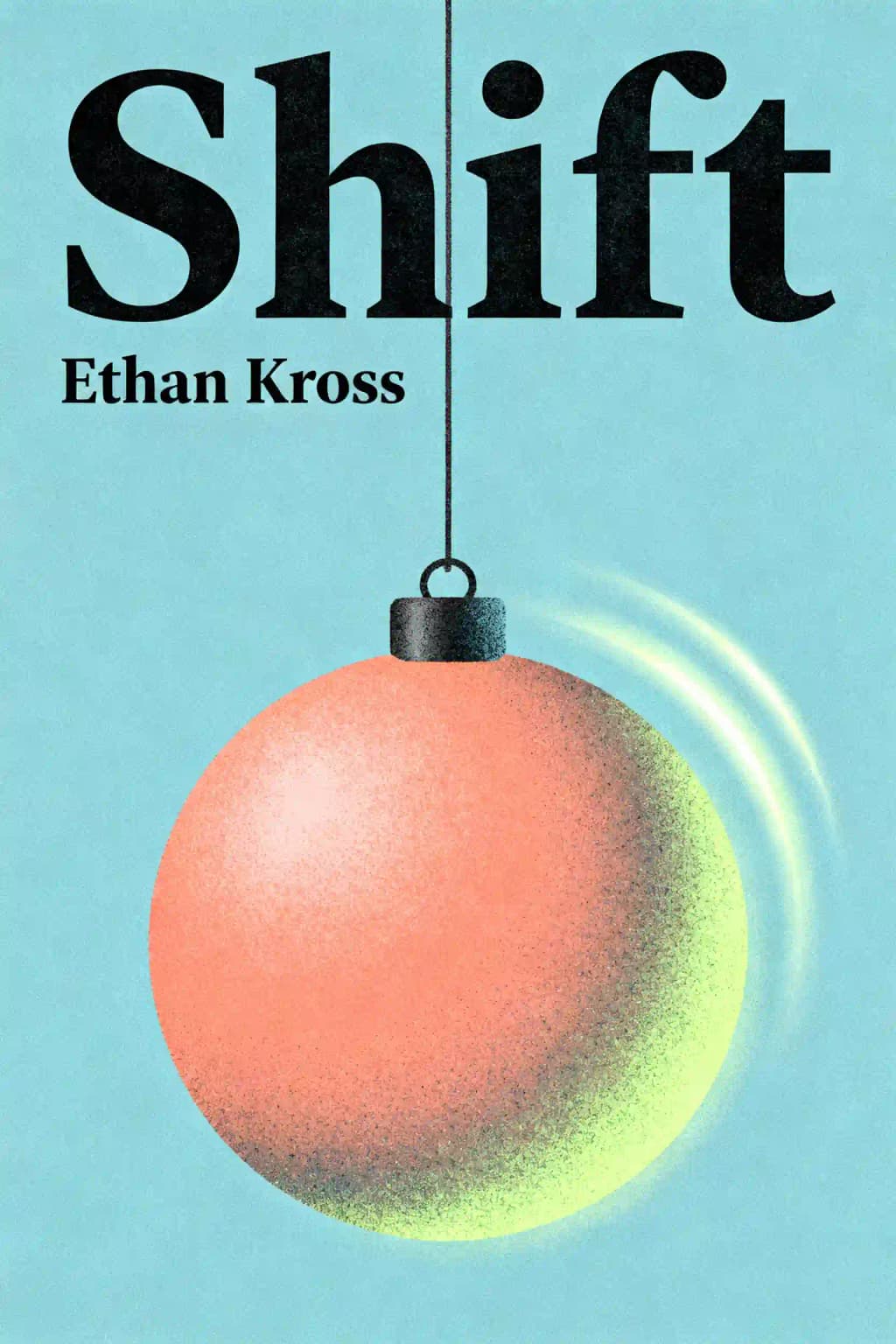
Have you ever caught yourself in a spiral of negative thoughts that seemed impossible to escape? You're not alone. In "Shift," Ethan Kross-the acclaimed psychologist behind the viral "Psychology and the Good Life" course that attracted a quarter of Yale's student body-reveals the science-backed tools to navigate our emotional landscape. This New York Times bestseller has garnered praise from Adam Grant and Daniel Pink, with Time Magazine hailing it as "essential reading for anyone seeking to live a more balanced life." Even LeBron James counts himself among Kross's devoted readers, applying these principles to maintain his mental edge during high-pressure NBA games. Drawing from his work directing Michigan's Emotion & Self-Control Laboratory, Kross offers a revolutionary framework that challenges conventional wisdom: sometimes looking away from emotions is better than confronting them, negative feelings can be beneficial, and living in the present isn't always the answer.
第 2 章
The Emotional Orchestra: Understanding Our Feelings
Emotions aren't simply feelings - they're sophisticated neurobiological systems involving intricate physiological reactions, cognitive processes, and behavioral responses working in harmonious concert. When Navy SEAL Matt Maasdam faced life-threatening situations during high-stakes missions, he couldn't simply turn off his fear response. Instead, he developed a nuanced approach to using fear as mission-critical intelligence, treating his emotions as an internal guidance system rather than obstacles to overcome. This same principle applied whether he was conducting underwater operations in complete darkness or leading tactical teams through hostile territory.
This represents a fundamental paradigm shift in how we understand emotional intelligence. Rather than seeing emotions as disruptive forces to be controlled or suppressed, we can view them as sophisticated instruments - like a priceless Stradivarius violin - that require dedication and practice to master. Just as a violinist spends years developing their craft, emotional mastery demands conscious attention and refined technique. We're all born with this emotional apparatus, but most of us rely on intuition and happenstance rather than developing genuine expertise in using it effectively.
Even negative emotions serve crucial evolutionary purposes that have ensured human survival across millennia. Anxiety sharpens our attention and prepares our bodies for potential threats, while sadness creates a necessary psychological space to process loss and attract social support. Envy, often maligned, can powerfully motivate achievement and social advancement. Regret serves as an internal learning mechanism, preventing us from repeating costly mistakes. Guilt prompts prosocial behavior and relationship repair, while anger mobilizes resources to address injustice and protect boundaries. Contemporary research from neuroscience labs at Stanford and Harvard shows that intentionally activating appropriate negative emotions in specific contexts leads to measurably better outcomes than attempting to suppress them.
However, when emotions become dysregulated - either too intense, poorly timed, or lasting beyond their useful duration - they can cause serious psychological and physical problems. The landmark Dunedin study in New Zealand, following 1,000 individuals over four decades, revealed that childhood emotion regulation ability predicts numerous life outcomes including educational attainment, career trajectory, financial stability, relationship success, and physical health - more powerfully than socioeconomic status or traditional measures of intelligence. Children who learned to regulate their emotions effectively were three times more likely to avoid major financial problems and twice as likely to maintain stable long-term relationships.
What's most encouraging about these findings is that emotional regulation isn't a fixed trait - it's a skill set we can actively develop throughout our lives. When we understand the neurological and psychological mechanisms behind our emotions, we gain access to practical tools that can transform our relationship with them. Through techniques like cognitive reframing, mindfulness practice, and behavioral modification, we can learn to navigate our emotional landscape with increasing sophistication. Rather than being at the mercy of our feelings, we can develop the expertise to conduct our emotional orchestra with skill and purpose.
第 3 章
The Control Paradox: What We Can and Cannot Change
When Luisa's daughter had a severe allergic reaction on an airplane, she handled the emergency calmly and effectively. Yet afterward, she became overwhelmed by intrusive thoughts about what could have happened, developing fears about countless potential dangers to her child. This common experience highlights a crucial distinction in emotional regulation: what we can and cannot control.
Nearly 40% of college students believe emotions cannot be controlled-an understandable position given how automatic many emotional responses feel. We can't prevent emotions from arising or stop intrusive thoughts from appearing. A 2014 study found that 94% of people across six continents experienced unwanted thoughts in a three-month period, from imagining driving off roads to dropping weights on strangers at the gym.
However, this represents only half the emotional equation. While we can't control the initial spark of emotion, we can influence its trajectory-like a fire that can either be extinguished or fueled. This control comes through our uniquely developed prefrontal cortex, which enables us to modulate automatic responses, think abstractly, and prioritize long-term goals over immediate impulses.
From the moment a negative thought enters awareness, we face decision points that determine the emotion's trajectory. Our belief in our ability to control emotions (self-efficacy) profoundly impacts our wellbeing. Albert Bandura's groundbreaking research demonstrated this when he helped people with debilitating snake phobias overcome their fears through gradual exposure therapy. Within just four hours, years of phobias disappeared, with benefits extending to other life challenges.
Self-efficacy-believing we can reach a goal-helps make that goal reality, with research showing it increases performance by 28%. Our beliefs about emotional control are malleable, and learning specific strategies allows us to step into and change our emotional trajectories. This knowledge forms the foundation for the emotional regulation tools we'll explore next.
第 4 章
The Power of Our Senses: Effortless Emotional Regulation
When Ethan Kross's daughter was feeling down before her soccer game, no parental pep talk could lift her spirits. But when Journey's "Don't Stop Believing" played on the car radio, her mood transformed completely. This small sensory experience completely reshaped her emotional state.
Despite teaching about emotions for over twenty years, Kross realized he hadn't purposefully used sensory tools to manage his own emotions. When he asked colleagues if they used music as a pick-me-up, they all confirmed they did-yet none knew of any mainstream emotion regulation frameworks that included sensation as a tool.
Our senses function like satellite dishes, collecting information that powerfully moves our emotions. The sensory cortex, one of the brain's oldest parts, integrates information across our five sensory modalities and connects directly to emotional networks. This sensory-emotion pathway evolved for survival-emotions supercharge sensory experiences to drive behavior (like avoiding danger).
These pathways offer a relatively effortless way to shift emotional states. They work quickly, even when we're distracted or under stress-unlike effortful regulation tools that require time and concentration. This is why sensory experiences like Michael Phelps listening to music before races can be so effective.
For graduate student Chayce Baldwin, bread baking creates an immersive sensory bundle that immediately grounds him when stressed-the feeling of dough, the smell, the taste all work together to shift his emotional state. People use sensory experiences to combat even profound emotions like loneliness: visiting ice cream shops for nostalgic scents, feeling ocean waves to gain perspective, or watching birds in flight.
The key is identifying which senses work best for you personally while considering their costs (like using food as a constant emotional regulator). Creating "sensory bundles" that combine multiple sensory channels can be particularly effective at shifting emotions. These sensory tools represent one of our most primitive yet powerful emotion regulation mechanisms.
第 5 章
The Myth of Always Confronting Emotions
When difficult emotions arise, should we confront them directly or look away? While prevailing wisdom suggests we must face negative emotions head-on to process them properly, research reveals a more nuanced reality that challenges this one-size-fits-all approach to emotional processing.
Psychologists Edna Foa and Michael Kozak developed a groundbreaking framework suggesting that fear occurs when we activate mental representations of threats - like memories of traumatic events that trigger distress when recalled. These representations function like difficult-to-watch mental videos that our brains keep replaying, complete with sensory details, emotional responses, and physical reactions. They advocated approaching these emotions systematically, arguing that avoidance allows them to linger and grow, while confronting fears repeatedly helps update mental representations and diminish emotional responses over time - a process called emotional habituation.
However, this "myth of universal approach" - the persistent belief that we should always confront difficult feelings - doesn't hold up to scrutiny. While chronic avoidance is indeed linked to anxiety and depression, emerging research shows that strategic disengagement can sometimes be remarkably effective. Studies in emotion regulation demonstrate that knowing when to disengage from negative emotions can be as crucial as knowing when to face them.
Consider the surprising parallel between basketball bad boy Dennis Rodman and Holocaust survivors. Both used strategic avoidance to process difficult emotions, though in vastly different contexts. Despite enduring genocide and forced migration, many Holocaust survivors compartmentalized their grief, discussing it selectively rather than avoiding it completely. They maintained strong family bonds, built successful careers, and lived fulfilled lives without formal therapy - demonstrating remarkable resilience through selective engagement with their trauma.
Our psychological immune system naturally helps emotions fade with time, much like physical wounds heal naturally. The ability to flexibly deploy both approach and avoidance strategies - as demonstrated in George Bonanno's landmark post-9/11 research - is actually the strongest predictor of resilience. After 9/11, Bonanno discovered that those who could toggle between approaching and avoiding emotions showed the greatest resilience - like athletes who can do both push-ups and pull-ups. This emotional flexibility allowed them to process trauma while still maintaining daily functioning and positive experiences.
Research in cognitive neuroscience supports this balanced approach. Just as we use attention flexibly for physical health - avoiding poison berries while approaching blueberries - our emotional lives require similar versatility rather than relying solely on approach strategies. Studies show that different emotional regulation strategies activate different neural networks, suggesting that having multiple tools for emotional processing is biologically advantageous.
The key isn't following universal rules but developing flexibility in how we direct our attention. This might mean confronting certain emotions while temporarily setting others aside, based on context, timing, and personal capacity. Successful emotional regulation often involves knowing when to engage, when to disengage, and how to maintain a dynamic balance between these strategies.
第 6 章
Gaining Distance: The Power of Perspective
When astronaut Jerry Linenger faced a life-threatening fire aboard the Mir space station in 1997, he couldn't simply shift his attention away from the problem-he had to confront it directly. This scenario illustrates situations where we must face challenges head-on, requiring a different emotional regulation tool: perspective shifting.
The A-B-C formula for emotional regulation explains that while we can't change Adverse events, changing our Beliefs about them can alter emotional Consequences. This reframing approach works like applying different filters to a camera-the subject remains the same, but how we see it changes.
Despite its logical appeal, reframing is often "easier said than done." Many people struggle to reframe adaptively and instead reframe negatively. When overwhelmed by negative feelings, we tend to narrowly focus on the problem, marked by increased use of first-person pronouns like "I," "me," and "my"-linguistic markers that predict breakups and depression.
The solution involves creating psychological distance-like swimming with frightened children in deep water, we need to keep panicky emotions at arm's length while soothing them. Getting too close to our problems by rehashing them repeatedly often makes things worse, while pulling back allows us to engage without becoming consumed.
Tennis champion Novak Djokovic demonstrated this technique at Wimbledon 2022, giving himself a pep talk using second-person pronouns ("You can do it") rather than first-person. This technique, called distanced self-talk, leverages Solomon's paradox-our ability to give better advice to others than ourselves. Using "you" or your own name creates psychological distance, allowing you to access the compassion and wisdom you'd offer someone else.
While mindfulness and present-moment awareness are valuable, mental time travel-our ability to recall the past and imagine the future-can also be powerful for emotion regulation. When facing crisis, we can fall back into the past (recalling similar experiences we've overcome) or project into the future (considering how we'll feel about current events later). These perspective shifts help us recognize impermanence and gain emotional distance from present struggles.
第 7 章
The Spaces We Inhabit: Environmental Influence on Emotions
Our environments shape our emotions in profound ways, both indirectly and directly. When Yale psychology professor Laurie Santos-creator of the wildly successful "Psychology and the Good Life" course and "The Happiness Lab" podcast-found herself overwhelmed to the point of breaking her laptop in frustration, she made a surprising decision: she left. Her sabbatical in Cambridge provided the clarity to see that stepping down from her Yale position was the solution she needed.
When we change spaces, we change the information coming in, shifting our sensory experience, attention, and perspective. While we can't always change environments when stressed, we have more control over our surroundings than we realize. We can modify our spaces to suit our emotional needs-removing temptations or adding positive elements.
Studies by Angela Duckworth show that students who use situation modification strategies perform better than those relying on willpower alone. Even small environmental tweaks-like displaying photos of loved ones, which research shows helps people recover from negative emotions-can significantly impact our emotional well-being.
The pervasive myth that self-control must be internal and difficult ignores how effectively we can manage emotions by controlling our environment first. When I host parties, I strategically distribute leftover tempting food to guests to avoid later temptation-a simple act of situation modification that demonstrates how self-control can begin externally.
To improve your emotional well-being through space, conduct a "spaces audit" of the places where you spend significant time. Consider what you can remove to reduce stress or anxiety, what you can add to increase calm and joy, and identify accessible "emotional oases" for regular restoration. Think of yourself as a marathon runner who needs refueling stations.
Meanwhile, our environments shape not just our emotions but our relationships-the "propinquity effect" explains how proximity determines who becomes important in our lives. The spaces we occupy profoundly influence both our emotional states and the people who enter our lives.
第 8 章
The Social Dimension: How Relationships Shape Our Feelings
Emotions spread rapidly between people like a virus. In a workshop I conducted, groups led by supportive "cheerleaders" became animated and collaborative, while those led by negative "assholes" fell silent with downcast faces. This emotional contagion happens through mimicry-we unconsciously mirror others' expressions and postures, triggering similar emotional states within ourselves.
When seeking emotional support from others, we need both empathy and perspective-shifting. Most people make the mistake of only venting or "co-ruminating," which feels good in the moment but can actually worsen our emotional state. Research shows we're biologically wired to seek support and find self-disclosure rewarding-our brains' reward pathways activate when talking about ourselves. But effective emotional support requires a two-step process: first getting validation and empathy, then receiving help to broaden perspective.
Social comparison, though often viewed negatively, isn't inherently toxic. It's actually a nuanced psychological tool that helps us make sense of ourselves when objective standards are unclear. The key is understanding how to harness comparisons productively. Comparing yourself to someone doing better can either inspire ("If they can achieve that, so can I") or deflate you. Similarly, comparing yourself to someone worse off can generate either gratitude or fear. Rather than trying to avoid all comparisons, which is impossible, we should use them intentionally and sparingly as perspective-shifting tools.
Research consistently shows that spending money on others makes us happier than spending it on ourselves. This giving impulse taps into something primal that works across both rich and poor populations. Evolution rewards us with joy when we help others because it helps perpetuate the species. Meta-analyses confirm that kind acts significantly enhance well-being, comparable to practicing mindfulness or gratitude. Even small gestures like helping a partner with chores or mowing an elderly neighbor's lawn tap into this ancient tradition of mutualism, offering a sense of belonging and purpose that naturally shifts our emotions.
第 9 章
The Cultural Blueprint: How Society Shapes Our Emotional Lives
Culture represents the most profound and foundational force in our emotional lives. Like Russian nesting dolls, our emotional shifters build upon each other-from internal sensation, attention and perspective shifts, to the spaces we inhabit, to our relationships, and finally to the cultural container that influences everything.
Culture encompasses both ever-changing trends and defining characteristics of groups. We encounter culture in families, schools, friend groups, and workplaces. Each consistent human gathering forms its own culture with unique emotional landscapes. Corporate cultures illustrate this-startups might embrace anxiety as necessary while established companies prioritize work-life balance.
Culture determines how we regulate emotions: in collectivist cultures like Japan, emotion suppression is viewed positively, while individualistic cultures like the United States value emotional expression. We navigate multiple cultures daily, from family breakfast to university meetings. Culture functions as a master switch, shaping what we think, how we act, and crucially, how we manage emotions.
Culture's emotional power stems from three core components: beliefs and values, norms, and practices. Alcoholics Anonymous exemplifies this through values like accountability, norms about avoiding relationships during early recovery, and practices like sponsor relationships that help newcomers stay on track.
When cultures harm our emotional well-being, we can either leave them or change them by targeting beliefs, norms, and practices. Changing culture requires checking foundations, rethinking norms, and customizing practices-as demonstrated by Uber's value shift to "build with heart" and "stand for safety," Google's emphasis on psychological safety norms, and Pippa Grange's transformation of England's football team through vulnerability practices.
When England's Football Association hired psychologist Pippa Grange in 2017, she targeted all three cultural levers: establishing trust and understanding as core values, creating norms around vulnerability and emotional sharing, and implementing specific practices-small group conversations where players discussed fears and insecurities, breaking the traditional stiff-upper-lip culture. Her success demonstrated that culture change requires not just declaring new values, but creating safe spaces to practice them and making the transformation process enjoyable.
第 10 章
From Knowledge to Action: Making Emotional Regulation Automatic
Matt Maasdam and his fellow Navy SEALs approach dangerous missions with meticulous preparation, using "if-then" scenarios to plan for every imaginable contingency. This preparation allows them to respond effectively even in life-threatening situations. We can apply a similar approach to emotional regulation.
Psychologist Gabriele Oettingen discovered that simply visualizing positive outcomes doesn't help achieve goals-it actually undermines effort by giving people a false sense of accomplishment. Similarly, dwelling exclusively on obstacles leads to discouragement. The breakthrough came when she found combining both approaches dramatically improved outcomes.
WOOP combines Oettingen's mental contrasting with Peter Gollwitzer's implementation intentions to create a powerful emotional regulation tool. The process involves identifying your WISH (what you specifically desire), visualizing the OUTCOME (the best result of achieving that wish), identifying the OBSTACLE (the main internal challenge), and creating a PLAN (if-then statements for overcoming the obstacle).
These implementation intentions-simple if-then plans-make following through almost automatic by connecting specific situations to specific actions. For example: "IF they are fighting, THEN I'll zoom out, remember they're kids still developing, and get their attention without yelling."
Studies show WOOP improves academic performance, emotional regulation, health behaviors, and relationships. Even first-graders who learned WOOP managed emotions better and maintained improved grades three years later. While we can't plan for every contingency, having practiced emotional tools makes us better prepared when unexpected challenges arise.
There are no one-size-fits-all solutions for emotion regulation. During the COVID pandemic, research revealed wild diversity in coping tools-some people used dozens daily while others used none, and effectiveness varied person to person and day to day. The key is experimenting with different shifters to find what works for you, then using WOOP to ensure you'll employ them when needed most.
Remember, the goal isn't eliminating emotional pain (which serves an important purpose) but responding to it healthily. Even small shifts can significantly impact our emotional experience, creating a safety net that catches us when we fall.
第 11 章
The Journey Forward: Building Your Emotional Toolkit
When I received a 5:07 a.m. text about my daughter's school closing due to shooting threats, my heart pounded with fear. Despite my research on school shootings and the proximity of a recent tragedy, I immediately employed my emotion regulation tools-zooming out to reframe the situation, distracting myself with work, avoiding excessive co-rumination in group texts, gaining perspective from a security expert friend, and taking sensory breaks through walks. These small shifts helped me manage my fear without eliminating it completely.
I wasn't always skilled at this. A decade ago, I would've spiraled into anxiety-inducing venting sessions. I succeeded this time because I've learned which emotion regulation tools work for me.
My grandmother, who survived the Holocaust, developed her own unique coping mechanisms-limiting self-reflection while embracing family support, houseplants, Jewish traditions and prayer. Her toolbox differed completely from mine, highlighting that there are no universal solutions for emotional management.
Despite learning about peristalsis in school-knowledge I've used exactly twice-I use emotional knowledge daily. Yet schools vary dramatically in teaching children about emotions, though this is changing as governments appoint well-being leaders and schools integrate emotion regulation into curricula.
We've progressed from primitive trepanation and lobotomies to sophisticated understanding of emotions, but must better apply this knowledge. Talk to your children, normalize these conversations at work, and support mental health policies. How we handle emotions shapes everything from our individual days to global conflicts.
My grandmother used to say, "E-tan, darling, don't ask 'why.' Why is a crooked letter." She meant some questions have no answers, and searching for them only creates suffering. But I've discovered that asking "why" about our emotions isn't a crooked letter but the beginning of learning how to shift our lives and help those we love. Understanding our emotional operating system-the shifters that help us move between emotional states-gives us the power to navigate life's challenges with greater resilience and wisdom.