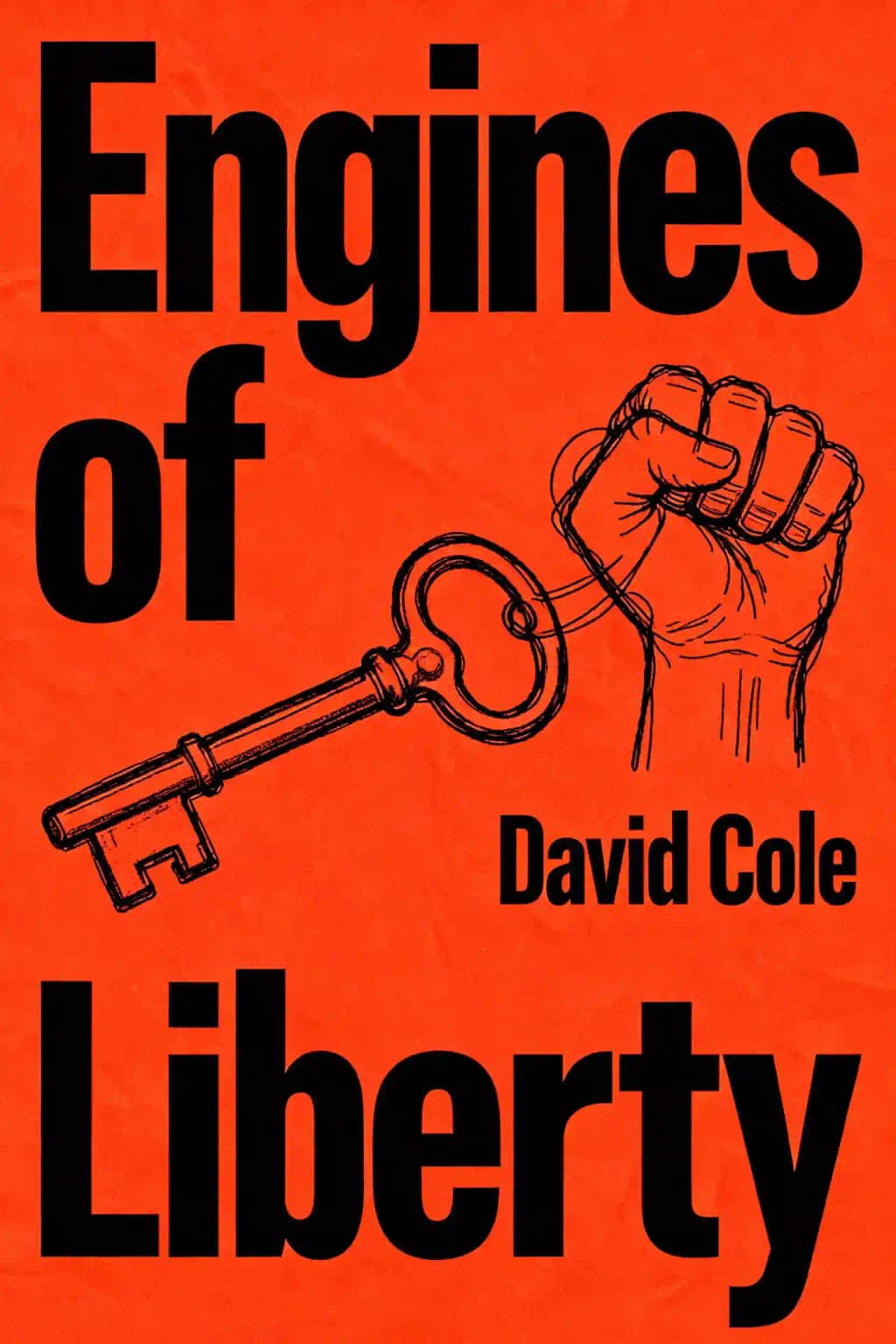
How citizen activists - not just courts - shape constitutional law. Named a Washington Post Notable Book, "Engines of Liberty" reveals the hidden forces behind marriage equality, gun rights, and post-9/11 civil liberties. Even NRA's president called Cole's analysis "the most accurate I've ever read."
David Cole is the National Legal Director of the American Civil Liberties Union (ACLU) and author of Engines of Liberty, a pivotal exploration of civil liberties, constitutional law, and grassroots activism.
A constitutional law expert, Cole has shaped national discourse through his roles as a legal affairs correspondent for The Nation and a commentator on NPR’s All Things Considered, where he analyzes pressing issues from a progressive perspective. His writing frequently appears in The New York Review of Books, blending rigorous legal analysis with advocacy for democratic values.
Cole’s work is informed by decades of litigation and advocacy, including landmark cases defending free speech and challenging government overreach. He received the William J. Brennan Award for free expression and the ACLU’s Norman Dorsen Presidential Prize for advancing civil liberties.
Engines of Liberty reflects his commitment to empowering citizens and institutions to safeguard fundamental rights, cementing his reputation as a leading voice in American jurisprudence.
Engines of Liberty argues that citizen activists—not judges—drive transformative constitutional change in the U.S. through grassroots campaigns. David Cole examines three case studies: marriage equality, gun rights expansion, and post-9/11 civil liberties reforms, showing how advocacy, public persuasion, and state-level strategies reshape constitutional interpretation.
This book is ideal for activists, legal scholars, and politically engaged readers interested in constitutional law’s real-world dynamics. It offers actionable insights for those advocating social change and appeals to history enthusiasts exploring how movements like LGBTQ+ rights and gun advocacy alter legal landscapes.
Yes—Cole’s blend of narrative storytelling and legal analysis provides a fresh perspective on constitutional evolution. Its focus on citizen-led campaigns makes it a compelling read for understanding modern rights struggles, though critics note its U.S.-centric focus.
Cole argues the Court often legitimizes—rather than initiates—rights expansions. Grassroots movements first shift cultural and political norms, creating conditions for judicial rulings (e.g., Obergefell v. Hodges).
Key tactics include:
Unlike purely doctrinal analyses, Cole emphasizes activism’s practical role. It complements works like Flagrant Conduct (marriage rights history) but stands out for linking legal theory to real-world campaigns.
Some scholars note Cole overlooks judicial leadership in certain reforms and underplays global constitutional movements. However, his citizen-centric framework remains influential for understanding U.S. legal shifts.
As a Georgetown law professor and ACLU attorney, Cole combines academic rigor with firsthand experience in civil liberties battles, lending credibility to his activism-focused thesis.
Its lessons on grassroots organizing remain critical amid debates over voting rights, AI regulation, and climate policy. Cole’s framework helps activists navigate modern challenges like digital advocacy and globalized human rights.
通过作者的声音感受这本书
将知识转化为引人入胜、富含实例的见解
快速捕捉核心观点,高效学习
以有趣互动的方式享受这本书
Liberty lies in the hearts of men and women.
Constitutional rights aren't simply handed down from robed judges on high.
The defense of liberty isn't something that happens automatically.
Marriage equality transformed from a seemingly impossible dream to constitutional reality?
The real engines driving constitutional change are civil society organizations.
将《Engines of Liberty》的核心观点拆解为易于理解的要点,了解创新团队如何创造、协作和成长。
将《Engines of Liberty》提炼为快速记忆要点,突出坦诚、团队合作和创造力的关键原则。

通过生动的故事体验《Engines of Liberty》,将创新经验转化为令人难忘且可应用的精彩时刻。
随心提问,选择声音,共同创造真正与你产生共鸣的见解。

"Instead of endless scrolling, I just hit play on BeFreed. It saves me so much time."
"I never knew where to start with nonfiction—BeFreed’s book lists turned into podcasts gave me a clear path."
"Perfect balance between learning and entertainment. Finished ‘Thinking, Fast and Slow’ on my commute this week."
"Crazy how much I learned while walking the dog. BeFreed = small habits → big gains."
"Reading used to feel like a chore. Now it’s just part of my lifestyle."
"Feels effortless compared to reading. I’ve finished 6 books this month already."
"BeFreed turned my guilty doomscrolling into something that feels productive and inspiring."
"BeFreed turned my commute into learning time. 20-min podcasts are perfect for finishing books I never had time for."
"BeFreed replaced my podcast queue. Imagine Spotify for books — that’s it. 🙌"
"It is great for me to learn something from the book without reading it."
"The themed book list podcasts help me connect ideas across authors—like a guided audio journey."
"Makes me feel smarter every time before going to work"

免费获取《Engines of Liberty》摘要的 PDF 或 EPUB 版本。可打印或随时离线阅读。
What happens when the people sworn to protect our freedoms become the very ones threatening them? After 9/11, the Bush administration declared entire zones "law-free." During Trump's campaign, promises to jail opponents and ban religious groups sent chills through constitutional scholars. Yet history reveals something remarkable: even when power seems absolute, ordinary citizens have repeatedly bent the arc of constitutional law toward justice. The real question isn't whether courts will save us-it's whether we're willing to organize and fight. Through three seemingly unrelated battles-marriage equality, gun rights, and human rights after 9/11-a pattern emerges. Constitutional change doesn't flow down from marble courtrooms. It rises up from kitchen tables, state legislatures, and relentless organizing across decades. The victories belong not to lone heroes in black robes but to networks of determined citizens who refused to accept that fundamental rights were beyond reach. Picture Evan Wolfson in the 1980s, a law student so convinced that gay couples deserved marriage rights that he wrote a 141-page manifesto-yet couldn't find a single constitutional law professor willing to supervise it. Consider Marion Hammer, the NRA's first female president, transforming gun rights from fringe theory into constitutional doctrine. Think of Michael Ratner, filing what he called a "completely hopeless" lawsuit to challenge Guantanamo detentions when the entire legal establishment said prisoners had no rights.