Discover how KIND Snacks founder Daniel Lubetzky transformed business through kindness - a philosophy endorsed by Arianna Huffington and Dr. Oz. Can compassion and profit coexist? This Holocaust survivor's son proves that "AND" thinking creates both successful companies and meaningful impact.
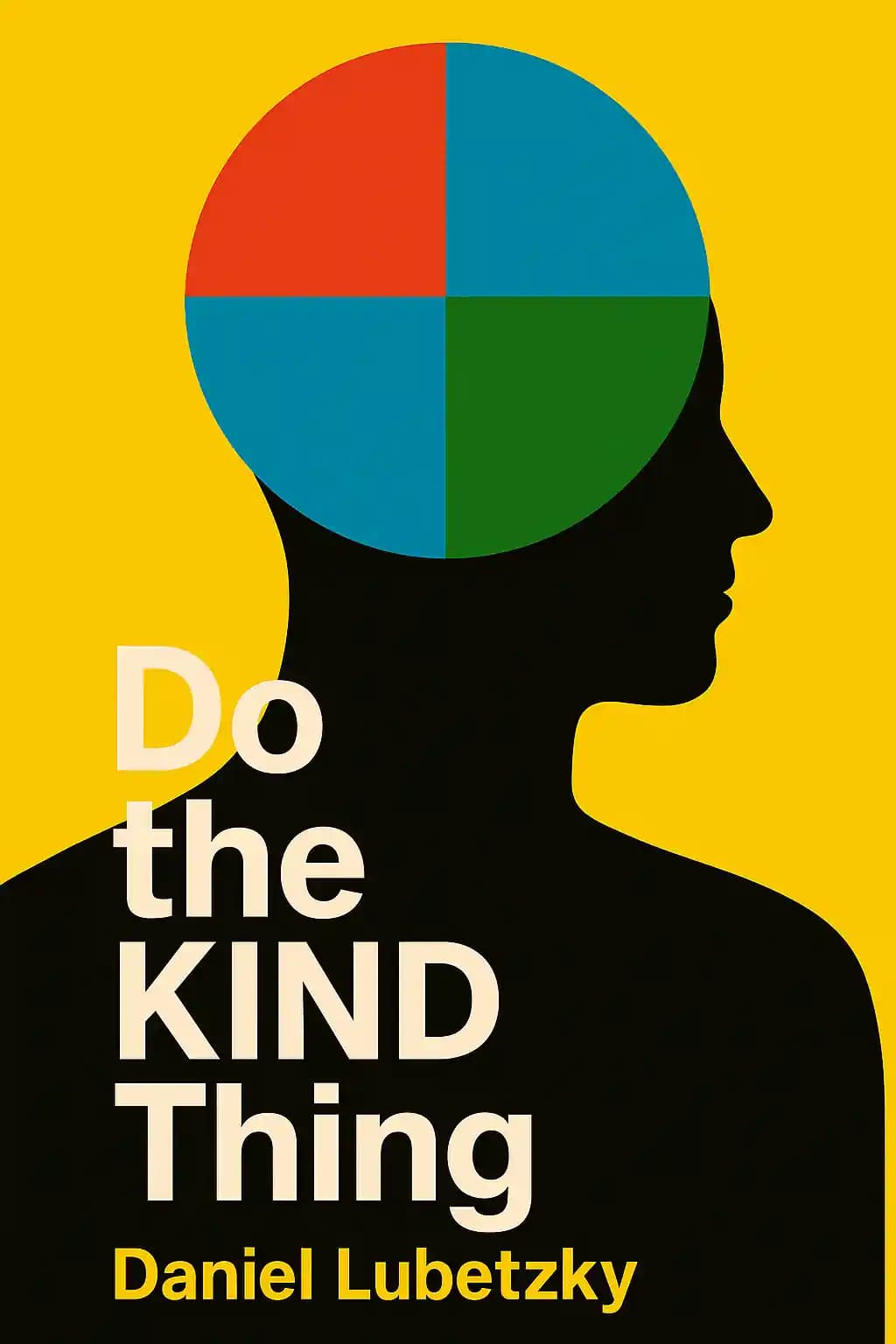
Daniel Lubetzky is the New York Times bestselling author of Do the KIND Thing and a pioneering social entrepreneur best known as the founder of KIND Snacks, a multibillion-dollar health food brand that redefined better-for-you snacking. Born in Mexico City in 1968 and shaped by his father’s Holocaust survival story, Lubetzky combines memoir and business strategy in this work, emphasizing values-driven leadership and conflict resolution.
A Stanford Law graduate, he merges his expertise in economics and international relations with social advocacy, co-founding initiatives like the OneVoice Movement for Middle East peace and Starts With Us to combat political divisiveness.
A frequent speaker on ethical entrepreneurship, Lubetzky has been honored with the Ellis Island Medal of Honor and The Muhammad Ali Humanitarian Award. His insights have been featured on ABC’s Shark Tank, where he serves as an investor, and in platforms like TED Talks and The New York Times. Do the KIND Thing has been translated into over 15 languages and is widely cited in business curricula for its fusion of profit and purpose. The book’s principles underpin his investment firm Camino Partners, which backs mission-driven ventures like SOMOS Foods.
Do the KIND Thing outlines Daniel Lubetzky’s journey founding KIND Snacks while advocating for businesses to balance profit and purpose. The book shares principles like the "AND philosophy"—profiting and helping society—and emphasizes empathy-driven leadership. Lubetzky details his experiences building bridges in conflict zones and lessons from his father, a Holocaust survivor, to argue that kindness and pragmatism can coexist in entrepreneurship.
Aspiring entrepreneurs, business leaders, and socially conscious readers will gain value from this book. It’s particularly relevant for those interested in social entrepreneurship, ethical business models, or navigating challenges like scaling startups while maintaining integrity. Lubetzky’s blend of memoir and actionable advice appeals to fans of Shark Tank and purpose-driven success stories.
Key concepts include:
Lubetzky explains how KIND’s founding principles—like using simple, wholesome ingredients—mirror its ethical business practices. The book reveals how transparency and values like “radical empathy” helped KIND disrupt the snack industry, emphasizing that mission-driven branding resonates with modern consumers.
As the son of a Holocaust survivor, Lubetzky highlights the importance of preventing dehumanization through economic collaboration. His immigrant journey from Mexico to the U.S. and early ventures (e.g., Da’Leky Times watches) underscore resilience and cross-cultural problem-solving themes central to the book.
Some readers note the book focuses more on entrepreneurial philosophy than step-by-step business guidance. Others argue Lubetzky’s privileged background (Stanford JD, McKinsey experience) may oversimplify startup challenges. However, its emphasis on ethics over profit maximization is widely praised.
Lubetzky advocates using business to tackle societal divides, citing KIND’s support for immigration reform and Empatico (a platform connecting classrooms globally). The book argues corporations have a duty to address systemic issues, not just donate profits.
While direct quotes aren’t excerpted in search results, key themes include:
Unlike purely tactical guides (e.g., The Lean Startup), Lubetzky merges memoir with ethical frameworks, aligning more with Simon Sinek’s Start With Why. It uniquely integrates conflict-resolution strategies from Middle East peacebuilding into business contexts.
With rising demand for ESG (Environmental, Social, Governance)-focused businesses, Lubetzky’s blueprint for balancing profit and purpose remains timely. The book’s lessons on combating polarization through empathy resonate amid global political and social divides.
Explore KIND Snacks’ sustainability initiatives, the Kind Foundation’s Empatico project, or his nonprofit Starts With Us. Lubetzky’s 2024 Shark Tank appearances and TED Talks on “competitive kindness” expand on the book’s ideas.
通过作者的声音感受这本书
将知识转化为引人入胜、富含实例的见解
快速捕捉核心观点,高效学习
以有趣互动的方式享受这本书
I've built my career on challenging these assumptions.
We never do good to improve sales; we do good to do good.
将《Do the kind thing》的核心观点拆解为易于理解的要点,了解创新团队如何创造、协作和成长。
将《Do the kind thing》提炼为快速记忆要点,突出坦诚、团队合作和创造力的关键原则。

通过生动的故事体验《Do the kind thing》,将创新经验转化为令人难忘且可应用的精彩时刻。
随心提问,选择声音,共同创造真正与你产生共鸣的见解。

"Instead of endless scrolling, I just hit play on BeFreed. It saves me so much time."
"I never knew where to start with nonfiction—BeFreed’s book lists turned into podcasts gave me a clear path."
"Perfect balance between learning and entertainment. Finished ‘Thinking, Fast and Slow’ on my commute this week."
"Crazy how much I learned while walking the dog. BeFreed = small habits → big gains."
"Reading used to feel like a chore. Now it’s just part of my lifestyle."
"Feels effortless compared to reading. I’ve finished 6 books this month already."
"BeFreed turned my guilty doomscrolling into something that feels productive and inspiring."
"BeFreed turned my commute into learning time. 20-min podcasts are perfect for finishing books I never had time for."
"BeFreed replaced my podcast queue. Imagine Spotify for books — that’s it. 🙌"
"It is great for me to learn something from the book without reading it."
"The themed book list podcasts help me connect ideas across authors—like a guided audio journey."
"Makes me feel smarter every time before going to work"

免费获取《Do the kind thing》摘要的 PDF 或 EPUB 版本。可打印或随时离线阅读。
Picture Daniel Lubetzky in 2003, exhausted from yet another business trip, rummaging through airport convenience stores for something-anything-both healthy and edible. The choices were dismal: chalky protein bars masquerading as food, or candy bars pretending to be nutrition. In that moment of frustration, an idea crystallized. What if you could create a snack that didn't ask you to choose between health and taste? What if the ingredients were so good, you'd want to see them through the wrapper? This simple insight would birth KIND, a company that has now sold over a billion bars and sparked something far bigger than a successful business-a genuine movement challenging how we think about food, profit, and kindness itself. The journey from that airport epiphany to Oprah's "favorite things" list wasn't just about building a snack company. It was about proving that refusing to accept false choices could transform an entire industry. Being the son of a Holocaust survivor marked Lubetzky in ways that never fully healed. His father Roman survived because of kindness-a porter who had been treated with respect by his grandfather spared their family during the Nazi occupation, saying simply, "I don't want you to die, because you are a good man." That single act of compassion in the midst of genocide shaped everything Lubetzky would later build, infusing his business philosophy with a profound understanding that kindness isn't weakness-it's survival.