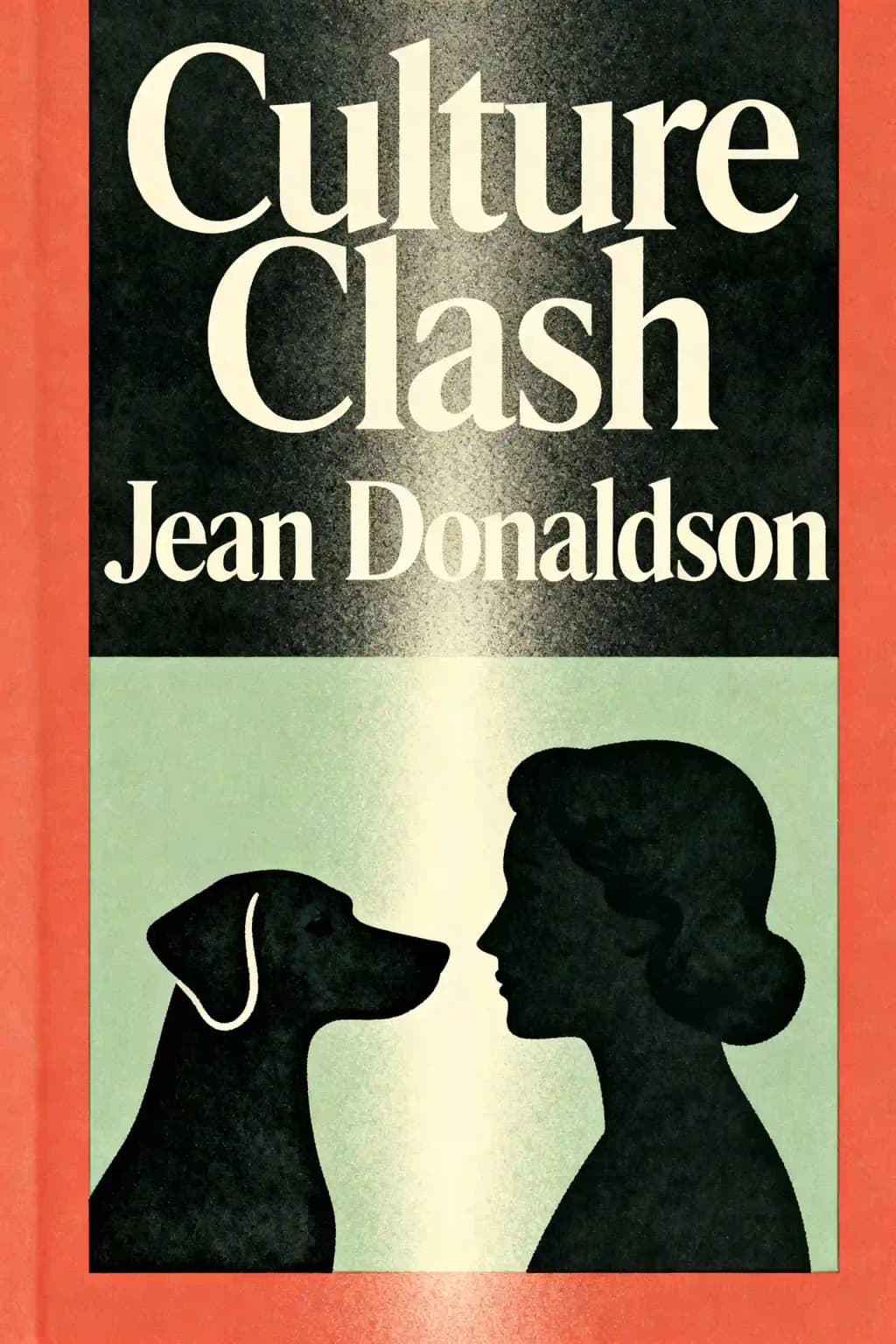
"Culture Clash" revolutionized dog training by debunking wolf-pack myths and championing positive reinforcement. Winner of the Maxwell Award, Jean Donaldson's game-changing manifesto sparked controversy while inspiring an entire generation of trainers. What if understanding your dog requires seeing the world through their eyes?
通过作者的声音感受这本书
将知识转化为引人入胜、富含实例的见解
快速捕捉核心观点,高效学习
以有趣互动的方式享受这本书
Picture your dog's face after destroying your favorite shoes-head lowered, eyes averted, body crouched. Guilt, right? Actually, no. That "guilty look" is simply your dog reading your angry body language and offering appeasement signals. Dogs don't understand morality. They can't feel guilty about chewing shoes any more than a toddler feels guilty about gravity when they drop a glass. This misunderstanding-believing dogs think like small, furry humans-creates most of the friction in our relationships with them. We tell ourselves comforting stories about dogs. They want to please us. They feel remorse. They understand when they've been "bad." These beliefs feel good, but they're profoundly wrong-and that wrongness has real consequences for dog welfare. Consider the "desire to please" myth. When your dog watches you intently during training, you might think it's devotion. In reality, your dog is calculating probabilities: "When the human makes that sound and does that gesture, food appears." Dogs aren't interested in our internal emotional states except for how they predict outcomes relevant to survival and comfort. The dominance myth causes even more damage. Behaviors like pulling on leash or rushing through doorways get labeled "dominance problems," justifying harsh corrections. But a dog who bolts through the door isn't staging a coup-they're excited about what's outside and haven't been taught to wait. When a dog doesn't come when called, it's not defiance; competing motivations simply outrank your recall cue at that moment. Entire training philosophies built on "establishing dominance" miss the point entirely: dogs learn through consequences and associations, not power struggles. Understanding this distinction transforms how we approach training-from a battle of wills to a partnership based on clear communication.
将《Culture Clash》的核心观点拆解为易于理解的要点,了解创新团队如何创造、协作和成长。
将《Culture Clash》提炼为快速记忆要点,突出坦诚、团队合作和创造力的关键原则。

通过生动的故事体验《Culture Clash》,将创新经验转化为令人难忘且可应用的精彩时刻。
随心提问,选择声音,共同创造真正与你产生共鸣的见解。

"Instead of endless scrolling, I just hit play on BeFreed. It saves me so much time."
"I never knew where to start with nonfiction—BeFreed’s book lists turned into podcasts gave me a clear path."
"Perfect balance between learning and entertainment. Finished ‘Thinking, Fast and Slow’ on my commute this week."
"Crazy how much I learned while walking the dog. BeFreed = small habits → big gains."
"Reading used to feel like a chore. Now it’s just part of my lifestyle."
"Feels effortless compared to reading. I’ve finished 6 books this month already."
"BeFreed turned my guilty doomscrolling into something that feels productive and inspiring."
"BeFreed turned my commute into learning time. 20-min podcasts are perfect for finishing books I never had time for."
"BeFreed replaced my podcast queue. Imagine Spotify for books — that’s it. 🙌"
"It is great for me to learn something from the book without reading it."
"The themed book list podcasts help me connect ideas across authors—like a guided audio journey."
"Makes me feel smarter every time before going to work"

免费获取《Culture Clash》摘要的 PDF 或 EPUB 版本。可打印或随时离线阅读。