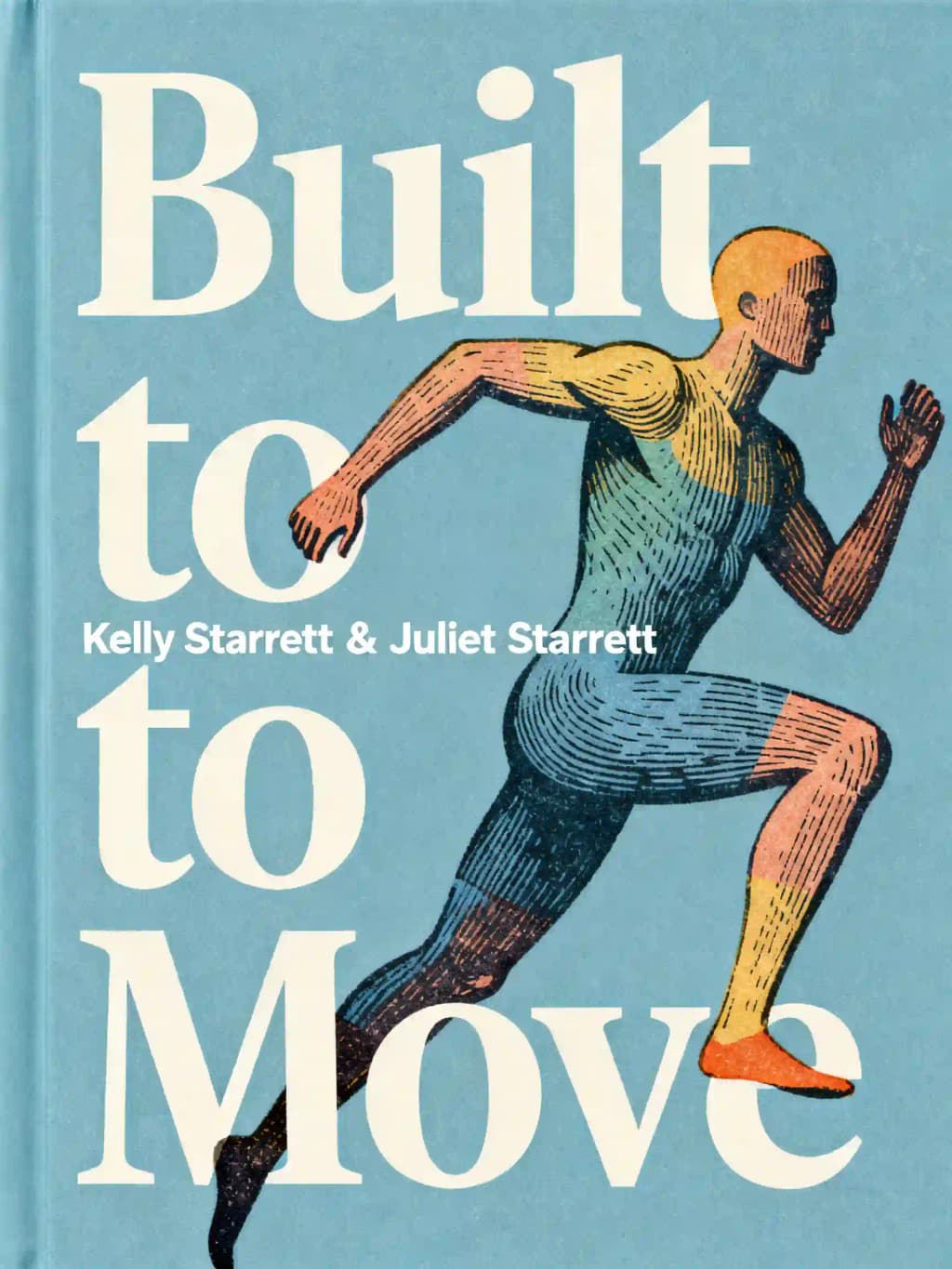
In "Built to Move," mobility experts Kelly and Juliet Starrett reveal ten essential habits transforming how we live in our bodies. Endorsed by Whole30's Melissa Urban as "revolutionary," this guide offers a 21-day roadmap to freedom from pain that Olympic athletes swear by. What's your mobility score?
Kelly Starrett and Juliet Starrett, mobility pioneers and co-founders of The Ready State, are the bestselling authors of Built to Move: The Ten Essential Habits to Help You Move Freely and Live Fully. With decades of experience coaching elite athletes, military personnel, and everyday individuals, the Starretts combine Kelly’s doctorate in physical therapy with Juliet’s background as a world-champion whitewater racer and attorney to redefine fitness through accessible mobility practices. Their work has been featured in the Wall Street Journal and endorsed by thought leaders like David Epstein and organizations ranging from the Navy SEALs to tech giants like Google.
Previously, they co-authored Deskbound: Standing Up to a Sitting World, a guide to combating sedentary lifestyles, and host The Ready State Podcast, which distills complex movement science into actionable advice.
Built to Move distills their signature approach into 10 tests and 10 daily practices designed to improve durability across all ages and fitness levels. The book became an instant Wall Street Journal bestseller, cementing their reputation as leaders in evidence-based mobility education.
Built to Move provides 10 essential habits and mobility tests to improve fitness, breathing, sleep, and nutrition, emphasizing practical strategies for lifelong physical health. It combines actionable practices like mobilization exercises, stress-management breathing techniques, and lifestyle adjustments to help anyone — from athletes to sedentary individuals — move freely and reduce chronic pain.
This book is ideal for adults seeking to counteract sedentary habits, office workers, aging individuals, athletes, and fitness enthusiasts. Its no-nonsense approach benefits both exercisers and nonexercisers, offering scalable solutions for mobility, injury prevention, and overall well-being.
Yes, its evidence-based methods — like the 21-day schedule for implementing habits — provide clear, incremental steps to enhance daily movement and health. Critics praise its balance of theory and practice, making it a valuable resource for long-term physical resilience.
The 10 Vital Signs include benchmarks like sitting/standing without using hands, breathing efficiency, hip mobility, and spinal rotation. Each corresponds to a chapter with targeted exercises (e.g., floor transitions, hip flexor stretches) to diagnose and improve functional movement.
The book prioritizes foundational movements (e.g., squatting, rolling) and daily mobility “snacks” (short exercises) to counteract sedentary lifestyles. It emphasizes joint health, tissue resilience, and integrating activity into routines — such as walking breaks or minimalist footwear.
Yes, it advocates for minimalist footwear to strengthen foot muscles and improve gait. The authors argue modern shoes restrict natural movement, contributing to foot pain and poor posture.
It outlines strategies for better sleep hygiene, including reducing blue light exposure, optimizing bedroom temperature, and aligning sleep schedules with natural circadian rhythms. These practices aim to enhance recovery and energy levels.
The book provides simple guidelines like prioritizing whole foods, staying hydrated, and avoiding processed sugars. It avoids restrictive diets, focusing instead on sustainable habits to fuel activity and reduce inflammation.
Some may find its rigorous self-assessments (e.g., floor-to-stand test) challenging for beginners. However, the authors offer modifications, ensuring accessibility regardless of fitness level.
Unlike Becoming a Supple Leopard (focused on athletes), Built to Move targets everyday movement for all audiences. It simplifies mobility concepts and integrates holistic health practices beyond physical therapy.
Absolutely. It includes desk-friendly stretches, posture corrections, and strategies to break up prolonged sitting — such as “movement snacks” every 30 minutes. These practices reduce stiffness and boost productivity.
The authors stress that consistent, small efforts — like daily mobility exercises and mindful breathing — compound into lasting health benefits. Their formula (“10 tests + 10 practices”) empowers readers to reclaim physical freedom at any age.
通过作者的声音感受这本书
将知识转化为引人入胜、富含实例的见解
快速捕捉核心观点,高效学习
以有趣互动的方式享受这本书
Whatever you think it is, it ain't.
Our bodies aren't fixed machines but adaptable systems.
Limited hip mobility leads to compensatory movement patterns.
We've normalized these problems as inevitable aspects of aging.
Modern life has engineered movement out of our existence.
将《Built to Move》的核心观点拆解为易于理解的要点,了解创新团队如何创造、协作和成长。
通过生动的故事体验《Built to Move》,将创新经验转化为令人难忘且可应用的精彩时刻。
随时提问,选择你的学习方式,共创真正适合你的洞察。

"Instead of endless scrolling, I just hit play on BeFreed. It saves me so much time."
"I never knew where to start with nonfiction—BeFreed’s book lists turned into podcasts gave me a clear path."
"Perfect balance between learning and entertainment. Finished ‘Thinking, Fast and Slow’ on my commute this week."
"Crazy how much I learned while walking the dog. BeFreed = small habits → big gains."
"Reading used to feel like a chore. Now it’s just part of my lifestyle."
"Feels effortless compared to reading. I’ve finished 6 books this month already."
"BeFreed turned my guilty doomscrolling into something that feels productive and inspiring."
"BeFreed turned my commute into learning time. 20-min podcasts are perfect for finishing books I never had time for."
"BeFreed replaced my podcast queue. Imagine Spotify for books — that’s it. 🙌"
"It is great for me to learn something from the book without reading it."
"The themed book list podcasts help me connect ideas across authors—like a guided audio journey."
"Makes me feel smarter every time before going to work"

免费获取《Built to Move》摘要的 PDF 或 EPUB 版本。可打印或随时离线阅读。
Your body is literally built to move, yet modern life has you functioning at a fraction of your potential. Think about it - when was the last time you sat cross-legged on the floor, or squatted comfortably? These fundamental human positions have largely vanished from Western life, with devastating consequences for our health and longevity. Physical therapists Kelly and Juliet Starrett discovered this truth dramatically during the 2000 World Rafting Championships in Chile. When Kelly's team flipped their raft in dangerous rapids due to poor preparation, they were rescued by Juliet's better-prepared women's team - a powerful lesson that you can't bypass the basics, whether in rafting or maintaining your body. Through decades working with Olympic athletes, military personnel, and everyday people suffering from pain, the Starretts uncovered something remarkable: the key to resolving chronic pain, improving energy, and extending healthy lifespan isn't found in complex workout regimens or expensive supplements. It's in reclaiming the fundamental movement patterns we've abandoned.
What if we measured health not just by vital signs like blood pressure, but by how well we move? The Starretts' ten "movement vital signs" reveal whether we're truly living, not merely surviving. These vital signs address fundamental movement patterns supporting all physical activities - from elite sports to aging well. The approach is straightforward: 10 tests + 10 physical practices = 10 ways to improve how your body functions. What's revolutionary is how this bridges specialized fitness and everyday movement. Even elite athletes are limited by poor movement patterns, while mobility practices benefiting Olympians prove equally valuable for office workers with back pain. This isn't about compensating for sedentary living with intense workouts - it's about restoring basic movement health that supports everything else. Children naturally move with perfect form until modern life trains it out of them. These vital signs help us reclaim our birthright of fluid, pain-free movement.
When was the last time you sat on the floor? This question highlights a significant disconnect in modern Western culture. While we've largely abandoned floor sitting, many non-Western cultures maintain this practice throughout life, experiencing 80-90% less arthritic hip pain in old age. The Sit-and-Rise Test (sitting cross-legged and standing without using hands) strongly predicts longevity. Our bodies evolved with regular ground contact-sitting, sleeping, and toileting on the earth. Abandoning floor sitting costs us crucial hip mobility and creates compensatory patterns that cause pain. Chair sitting forces unnatural positions where femurs remain fixed without proper pelvic stability. Our weight rests incorrectly on hamstrings and femurs instead of the ischial tuberosities (sit bones), disrupting the stability relationship between pelvis and femurs. The solution isn't eliminating chairs but incorporating more floor time-just 30 cumulative minutes daily in positions like Cross-Legged, 90/90, Long Sitting, and One-Leg-Up can restore natural hip function.
How you breathe directly impacts your movement quality, injury risk, and chronic pain. Good breathing involves three key components: breathing spaciously (engaging the diaphragm to expand the belly, ribs, and chest), breathing slowly through the nose, and maximizing CO2 tolerance. Nose breathing delivers more oxygen to cells than mouth breathing by filtering bacteria, humidifying air, and releasing nitric oxide, which increases oxygen flow to cells by 18%. Mouth breathing triggers fight-or-flight responses and is associated with insomnia, sleep apnea, higher blood pressure, and musculoskeletal issues. Breathing into your entire trunk creates stabilizing pressure around your spine. While many people instinctively hold their breath during exertion, this limits performance - Olympic weightlifter Wes Kitts set an American record after mastering diaphragmatic breathing. Athletes Laird Hamilton and Gabrielle Reece developed underwater breathing exercises, finding that regular exposure to challenging breathing situations improves stress management skills that extend to all areas of life.
Our bodies are designed for hip extension-moving our legs behind our midline-but modern life has eliminated this fundamental movement. Prolonged sitting shortens tissues in the front of our hips, while activities like cycling reinforce this flexed position. The problem appears as stiffness in the hip capsule, shortened quadriceps, or neurological blind spots where our brain restricts positions we're physically capable of achieving. Limited hip extension creates a cascade of problems: stiff hip flexors pull on the spine, creating a "banana back" posture that strains the lower back, restricts breathing, and destabilizes the pelvis. This affects walking mechanics, causing duck-walking that stresses knees and ankles, and even compromises big toe function. Your glutes-the largest muscles in your body-are crucial for hip extension and pelvic control. Research links glute weakness to knee injuries, chronic lower back pain, and falls in the elderly. The Couch Stretch, a cornerstone mobility exercise, deliberately positions your hips into extension and works out stiffness in surrounding tissues. This simple practice can dramatically improve hip function when done consistently.
Walking counteracts the biomechanical problems caused by prolonged sitting by extending the hips, lengthening shortened tissues, and restoring balance. The impact is significant: a woman walking 8,000 steps daily burns twice the extra calories annually (101,608) as someone running three times weekly (51,480). Walking develops resilient feet through loading and sensory input, with foot receptors sending crucial information to the brain for balance and safety. It enhances both blood circulation and lymphatic flow-the latter system depending on muscle contractions to clear cellular waste and circulate immune cells. Just ten minutes of walking increases creativity by 60% compared to sitting. Despite these benefits, most Americans average only 5,117 steps daily, far below countries like Australia (9,695) and Japan (7,168) with lower obesity rates. The recommendation is 8,000-10,000 steps daily, with consistency being as important as quantity.
Creating a movement-rich environment means integrating more movement into our tech-dependent lives, not abandoning technology. Our bodies need frequent position changes, yet Americans sit 6-10 hours daily, with research showing sitting more than six hours significantly increases mortality rates. The solution isn't standing all day but reducing fixed positions through standing desks, frequent breaks, or working at counters. Call center workers with sit-stand desks showed 53% higher productivity after six months, and even movement while seated can increase energy expenditure by 20%. Sleep is crucial for recovery, yet 35% of people sleep less than seven hours nightly, with sleep deficiency linked to seven of the fifteen leading causes of death. When perfect routines aren't possible, follow one principle: "Never Do Nothing." Even minimal efforts like kettlebell work or hill walking make a difference. In a world selling wellness in pills and mindfulness in apps, we've forgotten the most powerful medicine: movement. Your body isn't just a brain vehicle - it's why your brain exists. Floor sitting, proper breathing, hip extension, walking, and consistent movement aren't just exercises - they're fundamental patterns that make us human. By restoring these patterns, you're reclaiming the joy of inhabiting a body built to move through this world with grace and power. The revolution begins with a single step, a deeper breath, or simply sitting on the floor.