第 1 章
When Evolution Meets the Modern World: Navigating Our Hyper-Novel Environment
In 1994, evolutionary biologists Heather Heying and Bret Weinstein nearly lost their lives while swimming in Costa Rica's Rio Sarapiqui. A local man urgently warned them about "rain in the mountains," a phrase that initially confused them. Moments later, they watched in shock as the river violently transformed before their eyes-rising dramatically and carrying dangerous debris. This stranger's warning, rooted in essential local knowledge, saved their lives and illustrated a profound truth: modern humans have become dangerously disconnected from the evolutionary wisdom that kept our ancestors safe. The book has become a favorite among intellectual leaders like Jordan Peterson and Joe Rogan, who praise its clear-eyed approach to understanding human behavior in our rapidly changing world. Since its 2021 publication, it has sparked conversations across disciplines about how evolutionary thinking can address modern challenges from mental health to political polarization.
第 2 章
The Evolutionary Mismatch: Our Ancient Bodies in a Modern World
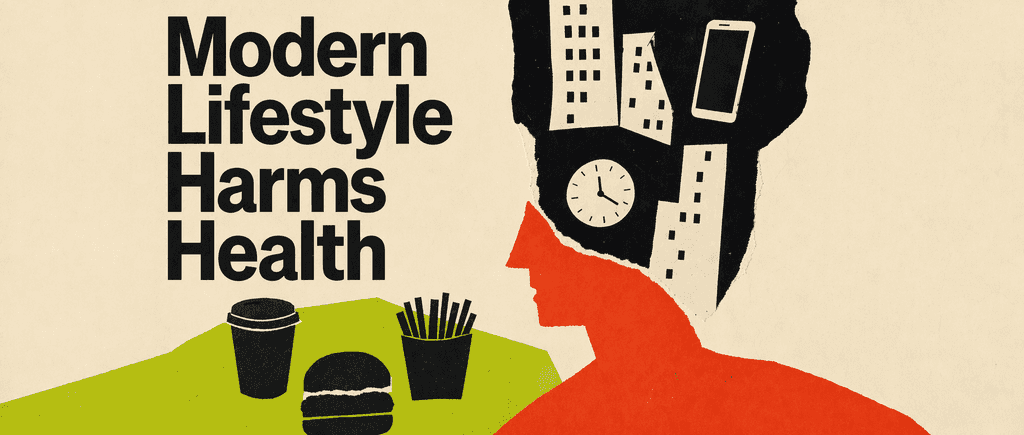
Humans face an unprecedented disconnect between our evolved biology and our current environment. We inhabit what Heying and Weinstein call a "hyper-novel world"-one changing so rapidly that our brains, bodies, and social systems remain perpetually out of sync. While humans are remarkably adaptable, the current pace of technological and social change outstrips our capacity to adjust.
This mismatch creates profound consequences. We move frequently, rely on complex global systems we barely understand, and maintain illusions of safety until they suddenly crumble-through dangerous products, failing healthcare, economic downturns, or social unrest. The cognitive dissonance between our evolutionary programming and modern reality is literally killing us.
Our species carries evolutionary baggage from multiple environments of evolutionary adaptedness-not just as hunter-gatherers on African grasslands, but as early tetrapods, mammals, primates, agriculturalists, and now post-industrialists. Each stage has left its mark on our biology and behavior.
Humans have achieved something remarkable in evolutionary terms: we've become "jacks of nearly every trade" while simultaneously "mastering nearly every habitat on Earth." This defies the fundamental evolutionary principle that specialization is necessary for dominance. Our exceptional adaptability without sacrificing specialization marks a unique evolutionary path.
The campfire emerges as a crucial element in this story. Beyond providing light, warmth, and protection, campfires created spaces where humans shared experiences, discussed challenges, and deliberated solutions. This linking of minds around the fire became fundamental to humanity's success, allowing us to transcend individual limitations through specialized labor and collective problem-solving.
Around these fires, humans oscillated between two dominant modes: consciousness for problem-solving and culture for execution. When facing unfamiliar challenges, we engaged in shared consciousness-proposing hypotheses and parallel processing until reaching solutions. Once tested, these solutions became culture-automatic knowledge passed between generations. This dynamic suggests people should be conservative when times are good but more progressive during difficult periods.
第 3 章
Our Evolutionary Heritage: From Single Cells to Modern Humans
Our evolutionary story begins with universal human traits-characteristics all humans share regardless of culture. We all use language, distinguish self from other, employ facial expressions, use tools to make tools, live in shelter and groups, establish status hierarchies, engage in division of labor, practice reciprocity, and trade. Understanding this deep history reveals why rapid change isn't always beneficial.
Life emerged approximately 3.5 billion years ago with simple single-celled organisms. Our lineage has maintained sexual reproduction for at least 500 million years, with most vertebrates developing bilateral symmetry, centralized nervous systems, and eventually internal skeletons. Despite our current form, we remain fundamentally "nucleate, heterotrophic, vertebral, brainy, bony fish."
About 380 million years ago, some fish ventured into shallow waters near land, evolving into tetrapods with fins that gradually resembled limbs. Moving onto land presented enormous challenges-from supporting body weight against gravity to adapting sensory systems for air. By 300 million years ago, the amniotic egg evolved, allowing reptiles to move farther from water sources.
Mammals evolved distinctive traits about 200 million years ago, including mammary glands, fur, and three small bones in the middle ear. Our early mammalian ancestors were small, nocturnal creatures with enhanced hearing and smell. The mammalian brain developed split cerebral hemispheres connected by the corpus callosum, allowing specialized functions on each side.
Primates emerged during the dinosaur era, developing opposable thumbs, replacing claws with nails, and gaining exceptional climbing abilities. They became more visual and less reliant on smell, with larger brains and extended parental investment. As monkeys, we became diurnal with even larger eyes and produced singletons rather than litters.
Apes evolved from monkeys 25-30 million years ago, developing brachiation-the ability to swing through trees. Over six million years ago, our ancestors split from those of chimps and bonobos, our closest living relatives. Humans share traits with both chimps (who tend toward war) and bonobos (who favor peace), suggesting our nature encompasses both tendencies.
By 200,000 years ago, anatomically modern humans emerged with bodies and brains indistinguishable from ours today. These hunter-gatherers lived in fission-fusion groups across Africa, gathering plants, hunting animals, and fishing. By 40,000 years ago, humans were creating art, burying their dead, and using personal ornamentation.
第 4 章
The Wisdom of Evolutionary Adaptations
Many traits we might consider vestigial or unnecessary actually serve important functions. The human appendix passes the three-part test for adaptation: it's complex with immune tissue, requires energy to maintain, and has persisted for over fifty million years in mammals. Recent hypotheses suggest it serves as a "safe house" for beneficial gut flora after gastrointestinal illness.
While appendicitis affects over 5% of people in Western countries with 50% mortality without treatment, it's almost unknown in non-industrialized societies except where Western lifestyles have been adopted. Like many allergies and autoimmune disorders explained by the hygiene hypothesis, appendicitis appears to be a disorder of modern, overly-clean environments.
This illustrates "Chesterton's fence" principle-the idea that we shouldn't remove systems we don't fully understand. Traits that have persisted likely have hidden benefits worth discovering before elimination.
Trade-offs exist between any two traits in organisms. Allocation trade-offs occur when finite resources must be distributed-a deer growing larger antlers must sacrifice elsewhere. Design constraint trade-offs can't be solved with more resources-birds must choose between speed and agility. Humans evade some trade-offs through extended phenotypes (like horses for speed and castles for protection) but can't escape all of them.
Our perception of smell demonstrates how subjective experiences vary widely across cultures. Modern readers face a disadvantage in understanding our ancestors' relationship with food-most have never experienced true hunger. Throughout evolutionary history, populations typically oscillated around carrying capacity, meaning most ancestors regularly experienced food scarcity.
Food preservation techniques like cheese-making, smoking, salting, and fermentation weren't primarily about taste but about detoxifying foods, enhancing nutrition, and protecting food from microbial competitors. Cultural transmission helps us distinguish beneficial "controlled rot" from dangerous spoilage.
第 5 章
Medicine Through an Evolutionary Lens
Modern medicine often treats symptoms with drugs rather than identifying root causes. When Heather experienced recurring laryngitis, medical professionals simply recommended pharmaceuticals without proper diagnosis. This exemplifies a problematic approach-treating symptoms rather than understanding underlying problems.
Medicine's reductionist approach often leaves patients feeling unseen and dismissed. Complex systems like our bodies cannot be reduced to easily measurable parts without consequences. We create categories and measurements, then mistake these proxies for complete understanding.
This engineer's approach to human health vastly underestimates our complexity and variation between individuals. Laura Delano's case illustrates this problem-prescribed nineteen different psychiatric medications over a few years, none relieving her despair. We are not "finely calibrated machines" but embodied beings with complex feedback systems.
Single molecules isolated from complex natural substances often fail to replicate the full effects of the original. Vanillin lacks vanilla's richness; THC without CBD creates unbalanced cannabis effects. We mistake our understanding of an effect for the effect itself.
Our hubris and technical capacity lead us to repeat this error constantly. Fluoridated drinking water, introduced to prevent cavities, uses industrial by-products with concerning links to neurotoxicity and hypothyroidism. The quest for magic bullets and universally applicable solutions is fundamentally misguided-if such simple solutions existed, evolution would likely have found them.
Evolution, the central unifying theory of biology, is often overlooked in medicine. Ernst Mayr distinguished between proximate explanations (how questions) and ultimate explanations (why questions), with medicine focusing too heavily on mechanism rather than evolutionary purpose. This reductionist approach has led to narrow medical thinking.
Rather than "trusting the science" without question, we should develop flexible, logic-based evolutionary thinking. The COVID-19 mask controversy exemplifies this problem: early in the pandemic, health organizations claimed masks weren't helpful, contradicting basic logic and later reversing course, damaging public trust.
第 6 章
Food: From Hunting and Gathering to Modern Diets
The question of optimal human diet preoccupies many Westerners, who often try diets claiming to reflect ancestral eating patterns. However, these approaches frequently suffer from reductionist thinking. Popular diets like raw food regimens mistakenly assume cooking is a modern corruption, when it's actually ancient and crucial for extracting calories.
Humans have been using tools to extract food since before our split from chimpanzee-like ancestors over six million years ago. By 3.3 million years ago, our ancestors were using stone tools, and by 2.5 million years ago, they were butchering animals and extracting marrow. The control of fire-possibly dating back 1.5 million years-transformed human evolution.
As Richard Wrangham hypothesizes, cooking made us human by making food safer, detoxifying plants, reducing spoilage, and critically, increasing caloric extraction. Without cooking, humans would need to chew for five hours daily to obtain sufficient calories from raw food. Every known human society has used fire and cooked food, freeing time for storytelling, cultural development, and exploration.
Unlike fire, which is abiotic and indifferent to humans, food is biotic with evolutionary interests of its own. Only milk, fruit, and nectar evolved specifically to be consumed-milk to nourish mammalian young, fruit to entice animals to disperse seeds, and nectar to encourage pollination. Seeds, leaves, and animal flesh don't "want" to be eaten.
Yet humans have persuaded many wild foods to team up with us through domestication, creating relationships where we coevolve. Domesticated species like corn, potatoes, wheat, cattle, and chickens have benefited evolutionarily through their association with us, becoming more widespread and abundant than their wild counterparts.
Agriculture emerged independently around twelve thousand years ago, yet the Natufians were making bread from wild einkorn and tubers four thousand years before farming. These flatbreads offered advantages of being lightweight, nutritious, transportable, and long-lasting. Agriculture transformed human culture, creating permanent settlements, specialized labor, expanded commerce, formalized politics, wealth disparities, and changed gender roles.
第 7 章
Sleep: The Evolutionary Importance of Rest
Sleep initially appears mysterious-a daily coma-like state filled with hallucinations-but would be familiar to any advanced aliens visiting Earth, as all animals sleep. Sleep evolved from a simple trade-off: eyes cannot be optimized for both day and night vision. As diurnal creatures with a long evolutionary history of daytime activity, humans sleep to conserve energy during periods when our vision is ineffective.
Our dream state mirrors symptoms of schizophrenia-seeing things that aren't there, hearing nonexistent sounds, believing falsehoods with certainty, and experiencing paralysis. Dreams provide crucial context between our days, allowing us to grow and process experiences during unconscious non-REM sleep and the more creative, exploratory REM sleep that follows.
In the Mayan ruins of Tikal, dusk transforms the rainforest as diurnal creatures wind down while nocturnal and crepuscular animals emerge. During this twilight, spider monkeys in the canopy perform their nighttime rituals, communicating with each other as they establish protective sleeping arrangements with sentries positioned to watch for nocturnal predators.
Our ancestors similarly gathered around fires at night, exchanging stories, singing and dancing before sleeping-a communal transition from dinner to sleep that allowed them to fall asleep easily without the difficulties many modern humans experience.
Our relationship with sleep suffers from modern novelties-electric lights, air travel, noise pollution, and the 24-hour economy. The suprachiasmatic nucleus in our brains tracks photoperiod, not clock time, yet we've extended our productive hours with artificial light without considering the consequences.
Indoor lighting is brighter than moonlight but not as bright as daylight, and bluer than firelight-disrupting our circadian rhythms. While we've evolved to handle fire's red-spectrum light at night, blue-spectrum light is demonstrably unhealthy after dark. Many who suffer insomnia at home find it vanishes when camping under natural light cycles.
第 8 章
Sex and Gender Through an Evolutionary Lens
Sexual reproduction has ancient origins, dating back at least 500 million years and possibly up to two billion years. Despite its costs-finding mates, convincing them of your value, seasonal timing constraints, parental responsibilities, and the 50% genetic "hit" compared to cloning-sexual reproduction persists because it creates genetic diversity that helps offspring adapt to changing environments.
In mammals, sex determination is chromosomal (XX for females, XY for males), with the Y chromosome's SRY gene triggering masculinization processes. Unlike some organisms like clownfish, mammals never naturally change sex. Sex differences extend far beyond reproduction to disease risks, brain structure, personality traits, and work preferences, explaining why every human culture distinguishes between male and female.
Sexual selection shapes many distinctive traits across species. In humans, several features reveal sexual selection's influence. Women's breasts, which persist throughout life rather than only during lactation (unlike other primates), serve not just to feed babies but as advertisements to men. Concealed ovulation in humans is another sexually selected trait; unlike most mammals that advertise fertility physiologically, humans remain sexually receptive year-round, enabling non-reproductive sex for pleasure and bonding.
Division of labor between sexes has been fundamental to human societies, possibly even making us human. From the earliest hunter-gatherer societies, men typically hunted large game while women gathered plants and smaller animals. Women spent most of their reproductive years pregnant or breastfeeding, with the latter providing natural birth control through lactational amenorrhea.
The agricultural revolution changed these dynamics dramatically. Sedentary lifestyles and grain stores allowed for supplemental feeding of children, reducing breastfeeding frequency and shortening birth intervals. This increased fertility tied women more firmly to domestic roles.
Human reproduction requires significant investment, with mandatory high maternal investment but negotiable paternal involvement. This fundamental asymmetry shapes mating preferences across cultures. Women universally prefer mates with high earning potential, while men prioritize youth and physical attractiveness in partners-proxies for fertility.
第 9 章
Parenthood, Love, and Human Connection
Love-the emotional state that causes one to prioritize someone or something external as an extension of self-evolved as a powerful force enabling human persistence. It originated between mothers and children before expanding to partners, extended family, friends, comrades, and eventually to abstractions like country, God, honor, and justice.
Love's evolutionary roots trace back nearly 200 million years to the mammalian divergence from reptiles. While egg-laying species can survive without parental care, mammals developed a revolutionary adaptation: milk production. This guaranteed mother-baby contact created the conditions for emotional bonding, especially valuable when mothers needed to protect defenseless offspring.
Maternal love represents the most fundamental form of love, with all true love being an elaboration on this concept. When parents feed and protect offspring, young can evolve toward helplessness (altriciality), opening the door to extraordinary developmental advantages. This helplessness enables major brain programming through cultural transmission-far faster than genetic change.
Sexual dimorphism reveals much about mating systems: monogamous species like swans show minimal differences between sexes, while polygynous species like elephant seals display dramatic size differences. Humans fall between these extremes-men averaging 15% larger than women suggests our ancestors were somewhat polygynous.
Though humans have been evolving toward monogamy since diverging from other great apes, monogamy remains fragile in mammals. Nevertheless, it represents the superior system, offering greatest potential for cooperation, fairness in child-rearing, and correlating with larger relative brain size in primates.
Monogamy creates sexual selectivity in both sexes, reduces male violence by eliminating competition for harems, and ensures nearly everyone has a mate. Pair-bonding enables division of labor, allows fathers to contribute to offspring care, facilitates friendship formation, and creates genetic full siblings with twice the basis for cooperation as half-siblings.
Despite humanity's quest to conquer aging, extending lifespan presents profound challenges. Humans have evolved a superior solution to mortality: cultural transmission through descendants. Our extended childhood and uniquely long lifespan enable crucial intergenerational knowledge transfer.
第 10 章
Childhood: The Foundation of Human Adaptability
Childhood represents humanity's greatest period of exploration and learning-a time to discover rules, break them, and create new ones. Humans possess the "blankest slates" and longest childhoods of any organism on Earth. We arrive with unprecedented neural plasticity-our software (the interplay of experience and knowledge with capacity) matters more than in any other species.
Our brains begin with surplus capacity-like our ability to learn any human language-that narrows over time as we optimize for our specific environment. This initial exploration mode allows us to adapt to whatever world we encounter without prior knowledge.
Species that share three key traits-social living, long lifespans, and generational overlap-invariably develop extended childhoods. From dolphins choreographing complex hunts to crows sharing information to elephants grieving their dead, these species demonstrate emotional depth and cognitive complexity comparable to humans.
These extended childhoods serve a crucial purpose: they allow young animals to learn about their environments through exploration and play. When we deprive children of this essential developmental period-by over-scheduling their activities, shielding them from risk, or sedating them with screens-we prevent their "software" from properly refining their biological hardware.
Learning physical skills like backflips requires risk, failure, and perseverance-not lectures or instruction. This mirrors how children naturally learn: through observation and experience rather than direct teaching. While Western cultures increasingly emphasize formal instruction, many traditional societies deliberately avoid teaching children directly.
Children learn most effectively from parents, siblings, and peers. When allowed unstructured play without adult intervention, they develop crucial social skills, creating and enforcing their own rules. Modern parenting has swung too far toward protection, with adults constantly supervising and arbitrating children's interactions.
Humans are antifragile-we grow stronger through exposure to manageable risks and boundary-pushing. Our development follows a continuum from extreme fragility as zygotes to increasing resilience as we mature. The goal isn't merely to become "unfragile" but truly antifragile.
第 11 章
Education: Rethinking How We Learn
School is evolutionarily brand-new-newer than agriculture or written language. While humans, like other social species with long childhoods, need to learn how to be adults, formal teaching is surprisingly rare in human history.
Some species demonstrate teaching behaviors: ants guide inexperienced foragers, meerkats gradually introduce pups to increasingly challenging live prey, and some dolphins use exaggerated movements when foraging with calves present.
Strikingly, many human cultures actively avoid teaching. Japanese abalone divers, Siberian Yukaghir hunters, and Guatemalan Maya loom operators traditionally learn without direct instruction. The Western approach of outsourcing most learning to schools is unique among both human cultures and other species.
School can be understood as commodified parenting, focused on easily quantifiable metrics rather than wisdom. Modern schooling emphasizes reading, multiplication, and memorization while neglecting critical thinking, creativity, and self-discovery.
School should help young people answer: "Who am I, and what am I going to do about it?" Instead, it often teaches conformity. Schools should encourage exploration of fringe positions, as paradigm shifts emerge from seemingly impossible ideas. They should help children understand and hack their own incentive structures, pushing them off comfortable "peaks" into valleys from which they can climb to greater heights.
Children today face a perfect storm of harmful factors: overprescribed pharmaceuticals, helicopter parenting, ubiquitous screens, and underfunded schools obsessed with testing. By teaching children that order is always better than chaos and prioritizing easily countable achievements, we create adults who resist the unexpected.
Intellectual tools are more valuable than facts because they're harder won and more powerful. Teaching how to think rather than what to think requires breaking traditional educational paradigms: eliminating competition between students by removing grading curves, and extending learning beyond the classroom.
True education creates productive discomfort-a delicious unease at confronting the vast unknown. When people grow too comfortable with what they know, they become vulnerable to manipulation and anger when the world doesn't match their expectations.
第 12 章
Becoming Adults in a Hyper-Novel World
Rites of passage mark critical life transitions across cultures, from birth to adulthood to death. While traditional societies have clear rituals like vision quests or ceremonial cleansings, Western cultures have less defined markers, contributing to confusion about what constitutes adulthood.
The absence of clear rites of passage has created widespread confusion-thirty-year-olds behaving like children and eight-year-olds granted adult-like decision-making authority. True adults regularly self-examine: taking responsibility, avoiding closed-mindedness, thinking independently rather than adopting ideologies, managing emotions, and fulfilling responsibilities without excuses.
Each person is essentially an "anecdote of one"-a unique complex system with individual wiring distinct from others. While universal hazards affect everyone, modern humans each develop dysfunction in uniquely individual ways.
The puzzle of modernity compounds this problem exponentially. Our hyper-plasticity combined with our ultra-noisy environment creates an independent landscape of dysfunction for each person. Consequently, even well-intentioned advice that works for one person may fail for another.
Many modern educated people have come to believe reality itself is merely socially constructed. While postmodernist ideas contain kernels of truth about biases and power structures, they've "jumped the shark" by infiltrating systems beyond academia.
People who regularly engage with the physical world-carpenters, sailors, athletes-understand that reality isn't merely subjective. Physical actions have physical consequences regardless of opinion. The more we move and physically engage with the world, the more integrated and accurate our understanding becomes.
Being an adult means not abdicating responsibility, especially when others depend on you. It also requires engaging in various forms of cooperation: kin selection, direct reciprocity, and indirect reciprocity. Group stability affects our commitment to others-we rally together during threats, but bonds fray during easy times.
第 13 章
Finding Balance Between Culture and Consciousness
Around a campfire on Orcas Island, students share music, ideas, and research questions-a gathering where reputation earned over a lifetime matters, where claims can be evaluated based on known strengths and history.
The virtual "campfires" of our information age promise connection but lack the structures that made ancestral gatherings valuable. Online, we don't truly know each other, histories are misleading, anonymity prevails, and hidden agendas abound.
When ancient peoples like the Nez Perce moved into new territories with unfamiliar plants like nutritious camas and toxic death camas, they reached the limits of ancestral wisdom and needed consciousness to innovate. Through trial and error, they developed nearly perfect systems for distinguishing these visually similar plants.
When humans exploit well-understood opportunities, culture reigns supreme. But when novelty renders ancestral wisdom inadequate, we must shift to consciousness-the collective parallel processing of multiple human minds solving problems our ancestors couldn't imagine.
Solomon Asch's classic 1951 experiment revealed our susceptibility to social pressure. When confronted with confederates giving obviously wrong answers about line lengths, only 25% of participants consistently resisted conforming, while the majority sometimes yielded to group pressure.
Cultural beliefs often contain hidden wisdom despite being literally false. Consider Guatemalan farmers who plant and harvest only during full moons, claiming it strengthens crops and prevents insect damage. The moon itself doesn't protect crops, but this belief synchronizes farming activities across the region, effectively satiating predators who cannot consume everyone's harvest during these brief concentrated periods.
Culture stands in tension with consciousness just as the sacred opposes the shamanistic. The sacred represents religious wisdom that has stood the test of time-changing infrequently, resistant to corruption, and insulated from secular influences. The shamanistic, by contrast, embraces high risk and creativity with frequent mutations and a high error rate.
第 14 章
The Fourth Frontier: Building a Sustainable Future
Civilization is becoming incoherent around us, headed for collapse through a process analogous to biological senescence. Just as organisms develop traits that provide early benefits despite late-life costs (antagonistic pleiotropy), our economic and political systems favor short-term benefits that obscure long-term costs.
The key to building a system resistant to senescence is to avoid optimizing for any single value (which causes all other parameters to collapse), create and continually revise prototypes rather than assuming we know the final form, and recognize that the fourth frontier is inherently a steady state.
The Maya thrived for over 2,500 years across Mesoamerica, building stone pyramids and temples that still stand today. Despite farming poor tropical soils, they maintained fertility through sophisticated land management including terracing systems and complex water reservoirs.
The Maya may have flattened the boom-bust population cycle by channeling excess resources into monumental public works rather than population growth. During abundant years, they built temples and pyramids, creating glorious public spaces that required no nourishment during lean times, allowing the population to withstand scarcity.
Multiple forces block our path to the fourth frontier: persistent trade-offs, obsession with growth, and regulatory challenges. No society can maximize both freedom and justice simultaneously-they exist in trade-off relationship. While many societies could improve both before reaching the efficient frontier, we must recognize that utopia-a world without trade-offs-is impossible and dangerous to pursue.
Our evolutionary instinct craves growth-it's what winning feels like in evolutionary terms. But the expectation of perpetual growth is as misguided as the pursuit of perpetual happiness. Our growth-obsessed economy has created a "throughput society" where civilization's health is measured by consumption.
We need collective maturity to abandon utopianism and embrace a practical path forward. Rather than precisely describing an ideal future, we must agree on core characteristics of a desirable world, then prototype, evaluate, and iterate. We cannot wait for universal agreement on the hazards-by then it will be too late.
The evolutionary dynamics that brought humanity to ecological dominance now threaten our existence through population scale, technological power, and system interconnectedness. Understanding human software is urgent-both the problem and solution are evolutionary.