第 1 章
The Healing Path: Trauma Recovery on Your Terms
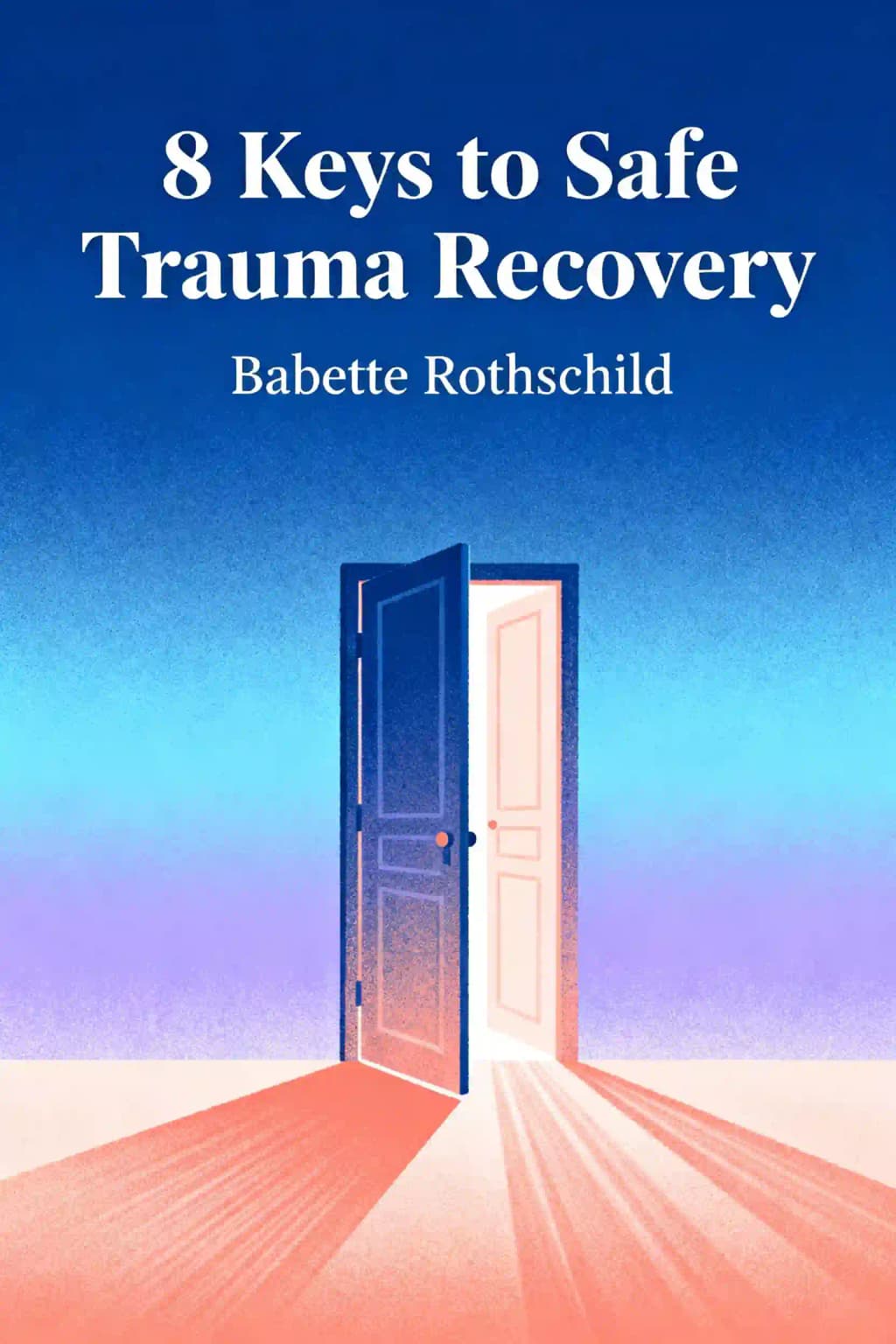
Have you ever wondered why trauma recovery feels like a battle against yourself? Why healing often seems to require revisiting the very pain you're trying to escape? Babette Rothschild challenges this conventional wisdom in her groundbreaking work on trauma recovery. Drawing from decades of clinical experience and her own personal journey through PTSD, Rothschild offers a revolutionary perspective: trauma recovery doesn't have to hurt more than the trauma itself. This refreshingly common-sense approach has made the book a favorite among therapists and survivors alike, with Oprah Winfrey once recommending it as essential reading for anyone working through past wounds. Unlike many trauma resources that prescribe a one-size-fits-all approach, Rothschild's framework puts you-not a methodology-at the center of your healing journey. Her work has transformed trauma treatment across clinical settings, offering hope to those who previously found traditional approaches overwhelming or ineffective.
第 2 章
Mindfulness: Your Personal Navigation System
Imagine having an internal compass that could guide you through the often confusing landscape of trauma recovery. That's exactly what mindfulness provides-a way to tune into your body's wisdom and make informed choices about your healing journey. Though rooted in Buddhism and Eastern philosophy, mindfulness has become a cornerstone of effective trauma treatment, helping survivors reconnect with their bodies and regain a sense of agency.
The challenge for trauma survivors is that their nervous systems often remain dysregulated, making them vulnerable to trying any solution offered, regardless of whether it's right for them. Consider Martha, who spent seven fruitless months in an inpatient program trying to recover memories, only to end up more distressed than when she began. Had she been equipped with mindfulness skills, she might have recognized early on that this approach wasn't working for her.
Or take Janice, who was molested by her father throughout her childhood. As an adult, she found herself caught in a painful paradox-desperately needing physical connection while simultaneously dissociating whenever touched. Through mindfulness, Janice learned to identify her personal "gauges"-her heart rate, stomach sensations, and a mental image of a rabbit-that helped her determine which forms of touch she could tolerate without dissociating.
The science behind this approach connects to what neuroscientist Antonio Damasio calls "somatic markers"-bodily sensations that guide our decision-making. These markers can be triggered by any sense and typically operate below our conscious awareness. By developing mindfulness, we make these markers conscious, allowing us to evaluate our responses and make informed decisions about recovery strategies.
To develop your own mindful gauge, start with low-risk decisions like food choices or clothing options. Notice how your body responds to different possibilities-perhaps your breathing changes, your muscles tense, or you visualize certain images. With practice, these gauges become more reliable and accessible, even during challenging moments. The beauty of this approach is that your gauge is uniquely yours-what works for someone else might not work for you, and that's perfectly fine.
Remember, mindfulness isn't about forcing yourself to relax or think positive thoughts. It's about honest awareness of what's happening in your body and mind right now. This awareness gives you the power to plot your own course through recovery, choosing which approaches feel right and which don't serve you. You might even use your gauge to decide which chapters of this book to read first-there's no rule saying you must follow them in order.
第 3 章
You Survived: Beginning With Your Epilogue
"I can't get away!" These words haunted Stephanie for over thirty years after a traumatic wasp attack at age 11. Despite being rescued by her father and treated at a hospital, her nervous system remained trapped in that moment of terror. Now 42, she watched her children play in the backyard from inside the house, unable to join them because of her paralyzing fear of flying insects.
This illustrates a fundamental truth about trauma: survivors often remain stuck in the past, with their nervous systems behaving as if the traumatic event is still happening or about to recur. The key to breaking this pattern lies in recognizing and internalizing a simple fact-you survived. You made it. The trauma has ended.
The neuroscience explains why this recognition is so powerful. During traumatic events, high stress hormone levels can impair the hippocampus, the brain structure responsible for recording factual information and temporal sequences. Without the hippocampus properly registering that the trauma ended, the amygdala (which directs emotional responses) continues to sound the alarm, creating a self-perpetuating cycle of fear responses and physical sensations.
For Stephanie, breakthrough came during an exposure exercise in a park when her therapist firmly stated, "You did get away!" after she collapsed in panic when a bee flew by. This simple truth-that she must have survived because she was there in the park as an adult-helped her hippocampus properly place the memory in her timeline. By writing an epilogue to her trauma story, documenting all the events that had happened since the wasp attack, Stephanie created a clear separation between past trauma and present reality.
Creating your own epilogue can be equally transformative. Start with a personal mantra like "I know I survived because I am here now at age [your current age]." Make it specific with details that resonate for you. Then write your epilogue-either starting with the present and working backward, or beginning after the trauma and moving forward. Include milestones like graduations, relationships, or career achievements that prove you survived. Even mention present-day details that emphasize the time difference, such as technology that didn't exist when your trauma occurred.
Consider celebrating your survival through a meaningful ritual-perhaps buying a gift, preparing a special meal, or creating art that reinforces this truth. One survivor found a small purple heart pin that symbolized both her survival and her evolving self-compassion.
This approach works best when your traumatic incidents have genuinely ended. If you sometimes feel your trauma is still happening, these exercises may help, provided the actual events are in the past. However, if you're currently living with ongoing trauma, such as domestic violence or in a war zone, this key isn't appropriate yet. Safety must come first.
第 4 章
The Freedom of Not Remembering
"You must process your trauma memories to heal"-this common assumption has guided trauma treatment for decades. But what if it isn't true for everyone? What if some people actually become further disabled by focusing on traumatic memories? The reality, often overlooked in trauma literature, is that most people recover from trauma without formally reviewing their past experiences.
Dr. Pierre Janet, a pioneer in trauma treatment from the late 1800s, outlined a three-phase approach that remains remarkably relevant today. Phase I establishes safety and stabilization. Phase II involves processing trauma memories. Phase III focuses on integration. Janet insisted that one should not move to Phase II until achieving stability in Phase I-a principle often agreed with but rarely followed in practice.
Consider Stuart, who experienced flashbacks and panic attacks after surviving a terrorist bombing. Rather than forcing him to remember the bombing-which he found overwhelming-his recovery focused on mindful observation of his physical sensations, emotions, and daily activities. Through this approach, Stuart discovered that every panic attack was preceded by caffeine consumption. Having been drinking espresso during the bombing, the combination of coffee taste and increased heart rate had become associated with mortal danger. By eliminating caffeine, Stuart gained control over his symptoms without having to process the traumatic memories. His quality of life improved dramatically, demonstrating that memory processing isn't always necessary for recovery.
Before deciding whether to focus on stabilization or memory processing, honestly evaluate your current stability and safety. Stability requires access to basic necessities, control over memories and symptoms, and ability to manage normal daily activities. Safety means the trauma threat has been eliminated-accidents repaired, legal residence secured for refugees, protection from perpetrators established, or abusive relationships ended.
Even if you meet stabilization criteria, consider three crucial questions before proceeding to memory work: Do you actually want to revisit traumatic memories? Do you lose connection with the present when focusing on the past? And might you become worse from attention to your past?
Never let anyone pressure you into reviewing trauma if you don't want to-it could worsen your condition. If focusing on the past disconnects you from present life, consider putting memories aside until you can maintain better balance. For some people, especially those with multiple traumas who become overwhelmed when thinking about any single incident, memory processing may actually be counterproductive.
Janice exemplifies the "multiple trauma, unstable" survivor. With years of paternal incest, school bullying, and three car accidents, she was initially chaotic-often late or missing sessions, becoming overwhelmed when exploring her past, and frequently dissociating. Through stabilization work (managing touch, strength training, assertiveness training), she developed reliable friendships, job consistency, and symptom control tools. Her thinking stabilized enough that she could eventually focus on single incidents without being overwhelmed, making her eligible for memory work-though she chose not to pursue it, satisfied with her improved daily functioning.
Remember that memory processing should only be undertaken when there's something useful to be gained-clarifying what happened, recognizing meaning, preventing similar events, changing negative self-perceptions, or reclaiming lost resources. The benefits must outweigh the pain involved.
第 5 章
Breaking the Flashback Cycle
"It's happening again," "I just heard the bomb go off," "He is here in the room"-these present-tense descriptions reveal how flashbacks blur the line between past and present. During flashbacks, survivors are drawn back into the traumatic situation as if it's happening again, triggering the same stress hormones and bodily reactions as the original trauma. For flashbacks to be dampened or eliminated, they must be accurately categorized as memories, not repetitions of past events.
Liam, raped by a priest at age 8, continued living as if the trauma was recurring even at age 32. Though his wife was understanding and accommodated his need for reassurance and control, Liam's stability deteriorated as their son approached the age Liam was during his trauma. In therapy, I noticed Liam consistently used present tense verbs when referencing the rape. When I pointed this out, he was startled, replying, "I guess that is because it feels like it is happening now"-perfectly describing the flashback experience.
The neuroscience explains this phenomenon. During trauma, the hippocampus becomes overwhelmed by stress hormones, preventing it from properly time-stamping traumatic memories with a beginning, middle, and-crucially-an end. Without these temporal markers, the brain and body continue perceiving the trauma as ongoing or recurring. Speaking of past events as if they're happening now reinforces this confusion.
Additionally, trauma survivors often reverse the normal relationship between internal and external reality. Typically, we use external senses to evaluate our environment and internal senses to assess our bodily states. However, trauma survivors often judge external reality based on internal sensations-deciding a situation is dangerous because they feel anxious rather than observing actual environmental cues. This reversal makes flashbacks particularly disorienting, as frightening sensory stimuli generated internally from traumatic memories are mistaken for current external threats.
When Liam experienced a flashback in my office, speaking of his rape as if it were happening in the present, I firmly intervened: "Stop, Liam. It is not happening now. What you're perceiving is a memory of what happened when you were 8 years old." After several repetitions, he began saying "I am remembering," initially as a question, then with increasing certainty as his agitation decreased. Eventually he asked, "That's a memory? Is that what I've been suffering from all this time?" When I confirmed this, he sobbed-grieving for the first time.
You can apply this approach through a simple but powerful mantra: "This is a memory, not reality. It happened in the past and is not happening now." Though it may seem simplistic, accuracy is powerful. During a flashback, remind yourself through clear words (spoken, recorded, or written) that it's a memory and not happening now. If you can't do this during the flashback, do it immediately after.
For more comprehensive support, consider implementing a flashback protocol: identify internal sensations, name emotions, recognize the experience as memory, shift attention to external senses, affirm today's date, evaluate current safety, acknowledge the flashback while recognizing present safety, and seek safety if needed. This protocol can be adapted to individual needs and even taught to friends or family members who can provide coaching during flashbacks.
第 6 章
Healing Through Self-Forgiveness and Shared Shame
Even celebrated heroes struggle with self-forgiveness after traumatic events. Captain "Sully" Sullenberger, who successfully landed a disabled plane on the Hudson River saving all 155 people aboard, later questioned whether he could have done more. This universal challenge of self-forgiveness is particularly acute for trauma survivors, who often blame themselves for what happened or how they responded.
Trauma fundamentally involves loss of control. Survivors struggle with guilt because they couldn't prevent what happened, for various reasons: insufficient strength or age, lack of help, natural disasters, absence of warnings, being lied to or coerced, inadequate information, or experiencing freeze responses. Helen's story demonstrates how difficult self-forgiveness can be even when logically not at fault-she blamed herself for exposing her family to the 2004 Indian Ocean tsunami until her son's outburst helped her realize she couldn't have predicted the disaster.
Understanding the neurobiology of trauma responses can help survivors forgive their limitations. The amygdala rapidly evaluates threats and directs the body toward flight, fight, or freeze responses without conscious deliberation. It makes decisions based on physical condition, past responses, and likelihood of successful escape or defense. This survival mechanism bypasses the cortex (the thinking brain) to enable immediate reaction.
Josh, a 40-year-old gay man, became severely depressed after a hate crime attack where he and his friends were beaten. While his friends fought back, Josh experienced a freeze response. His depression stemmed not from the attack itself but from deep shame that he couldn't fight back to protect himself and his loved ones. Learning that his freeze response was an unconscious survival mechanism provided Josh enormous relief. Understanding that his limbic system made the decision without his conscious input helped him forgive himself.
The freeze response serves vital survival functions: predators often lose interest in "dead" prey, attackers may back off when victims disengage, time perception slows allowing possible strategizing, and pain and horror sensations become dulled. Understanding that freezing is a protective mechanism-not cowardice or submission-is essential for self-forgiveness.
Beyond self-forgiveness, addressing shame is equally important. Shame is a necessary emotion for survival that signals something is amiss, though resolving it can be the most difficult aspect of trauma recovery. For trauma survivors, shame often stems from feeling unable to protect oneself, with sexual traumas particularly prone to debilitating shame.
Unlike other emotions that can be discharged through crying or physical activity, shame doesn't release the same way. Instead, it dissipates through understanding and acknowledgment from supportive others. As a social emotion that requires the presence of others to make its impact, shame similarly requires social interaction for healing.
Eileen grew up in a deeply dysfunctional family with a tyrannical father who controlled his wife and four children completely. As his "favorite," Eileen was spared beatings but subjected to sexual abuse throughout her teens. Her healing came through several steps: first understanding that her shame actually confirmed the wrongness of her father's actions, then separating her shame from his shameful acts by creating two columns listing each person's shameful behaviors. She was stunned to realize her shame stemmed entirely from his actions. Writing a letter (which she chose not to send) helped her return the shame to her father where it belonged. Finally, sharing an outline of her experience with a trusted friend whose horror validated Eileen's innocence helped dissipate her shame.
When sharing your own shame experiences, approach carefully. Before revealing your shame, ask others if they've ever felt ashamed to establish common ground. Importantly, never dive directly into discussing shame without first ensuring the timing is right-ask "Is this a good time?" or "Do you have half an hour?" This protects you from potential rejection if the other person is distracted or dealing with their own issues.
第 7 章
The Power of Small Steps
When recovering from trauma, it's common to be daunted by the healing process or to push too fast, wanting to speed your way out of pain. However, attempting steps that are too large often leads to frustration and relapse. The wisdom of taking smaller, manageable steps-"bird by bird" as Anne Lamott's father advised-proves more effective. Success builds on success, while attempting goals beyond reach can trigger setbacks.
Just as nonswimmers shouldn't begin in the deep end, trauma recovery requires starting with manageable challenges. When Lilly's 4-year-old son Meco was terrified of the swimming pool, breaking down the process into tiny increments-first sitting at the edge with just his feet in the water, then gradually progressing to deeper immersion-allowed him to overcome his fear. What initially seemed ridiculously slow to his mother ultimately led to success while preserving their relationship.
Sometimes reducing steps means temporarily avoiding certain triggers. Thirty-year-old Rosa, who had panic attacks and cut herself to feel her body after dissociating, was terrified of showers but took them daily because she had no bathtub. Rather than exploring why she feared showers, we focused on her present needs by suggesting she try sponge bathing at the sink. This temporary avoidance significantly reduced her fear levels, decreased dissociation episodes, and consequently reduced her cutting behavior. When she eventually returned to showering, her fear had diminished considerably.
Gary's story further illustrates this principle. His fear of elevators and heights prevented him from visiting my 18th floor office. We began with phone sessions, then progressed through carefully measured steps: meeting at the 8th floor coffee shop, gradually venturing to my office with closed blinds for brief periods, eventually staying longer, and finally conquering his fear enough to look out the windows. By breaking down his challenge into manageable increments, Gary overcame lifelong phobias and gained confidence to face his wife's impending death.
To apply this approach to your own recovery, start by breaking down one of your goals into the smallest possible steps. For example, if returning to work feels overwhelming, you might begin by updating your resume, then researching companies online, then applying to one position per week. If even these steps feel too large, break them down further-perhaps starting with just opening a document to begin your resume, or spending five minutes on a job search website.
For unavoidable activities that cause distress, find alternative approaches that reduce stress. If taking the subway triggers panic, consider walking, busing, or taking a taxi temporarily. If sleep is difficult, try sleeping with a light on or in a different room. The goal is to increase your sense of control over distressing circumstances and symptoms.
Remember that while insurance restrictions and quick-fix promises in self-help literature often create pressure to recover quickly, with trauma, less is truly more. As Aesop's fable teaches us, slow and steady wins the race-or in trauma healing, makes for a much better chance of recovery.
第 8 章
Movement as Medicine
Physical activity is crucial for trauma recovery, as firefighters, police, and military personnel already know. Their high-stress professions require fitness to counteract strain and upset. In our increasingly sedentary society, exercise benefits not only physical health but can significantly relieve trauma and PTSD symptoms.
Jack, a frail young man in his early 20s still suffering from childhood trauma, transformed through weight training. As his physical strength increased, his psychological state stabilized, his courage grew, and he eventually secured a better-paying job. Though not miraculous, Jack's improvement came through dedicated restructuring of his life around physical improvement. While his childhood problems weren't solved, his relationship to them changed as his current life improved.
Moving and exercise offer three key benefits for trauma recovery: countering persistent freeze responses, increasing containment and self-control through improved muscle tone, and dissipating stress hormones to regulate ongoing stress levels. When trauma victims become fixated on their bodies and symptoms, they often withdraw and reduce activity. Physical movement reinforces that the trauma is over by sending nonverbal signals to both body and mind.
For Kate, who remained housebound after a burglary, simple exercise like walking on a treadmill and gardening helped break her chronic freeze response. Eventually, even her recurring nightmares transformed; instead of being frozen in bed during the burglary, she dreamed of actively confronting the robbers with a shovel.
While relaxation is often recommended for stress, many trauma survivors actually become more anxious when relaxing. Muscle tension, often underrated, is necessary for standing, walking, and basic functioning. For trauma survivors like Jack and Kate, increasing muscle tone rather than relaxing proved more beneficial. This counterintuitive approach helped them gain emotional strength alongside physical strength.
The author shares her personal experience with PTSD stemming from childhood incidents that manifested fully in her early 30s. As her condition worsened with anxiety, panic attacks, and developing agoraphobia, she found her life increasingly restricted. She developed her own graduated exercise program starting with minimal, non-aerobic movement to avoid triggering panic. Using graph paper to track progress, she began with just three repetitions of simple exercises like bicep curls, leg lifts, and wall push-ups, increasing by one repetition every session. Though progress seemed painfully slow, she found her stress levels decreased and breathing improved immediately after exercising. Over approximately a year, this approach helped her return to normal activities.
What type of movement will help you? Use mindfulness to find what works for your body, mind, and situation-whether walking, Pilates, weights, or jogging. Create a routine that becomes self-rewarding, as regular manageable activity quickly builds momentum. Before starting, consider your desire (don't just follow expert advice), health (get doctor approval), time commitment, financial costs, and preferred location. Finding an exercise buddy can provide both accountability and companionship, supporting your recovery journey. If you struggle with consistency, reduce your goals to something manageable-even if it's just one repetition. Remember that the author started with merely three repetitions of basic exercises.
第 9 章
Finding Meaning and Making Lemonade
When life gives you lemons, make lemonade-turn adversity into benefit for yourself or others. This principle means rising above trauma and helping others despite your circumstances. Those who help others generally fare better long-term than those who don't, but forcing this step prematurely could be harmful.
Francine, a gray-haired bank employee nearing retirement, witnessed a violent robbery where her coworkers were shot while she was spared because "we don't hurt grandmothers." Though physically unharmed, she was emotionally devastated, never returning to work. The trauma isolated her as she withdrew from previous pleasures like her dance club, feeling her friends couldn't relate to her experience.
Research clearly shows that developing a sense of purpose has a significant positive effect on trauma recovery. When combined with a sense of control, the impact becomes even more powerful. After 9/11, therapists volunteered in droves for trauma hotlines, instinctively knowing that helping others would help them cope too. Those who remained isolated fared worst, while those who connected with others and found ways to help showed better recovery outcomes. The reciprocal nature of helping creates a two-way benefit-the helper often gains as much or more than the person being helped.
Despite Francine's withdrawal, she became animated when complaining about bored local youths. This emotional spark provided an opening. When asked what might change their destiny, Francine suggested education could prevent crime born of boredom. Given her math skills, she began tutoring a 12-year-old neighborhood girl. Within weeks, her emotional state improved dramatically as she found companionship and purpose through helping. Their relationship grew, with Francine becoming a safe harbor for the girl while helping improve her grades.
Brainstorming ways to help others-even before you feel fully ready-can prepare you with options. Often, trauma survivors become increasingly paralyzed while waiting for change. Taking action for someone else's benefit can be transformative for your own recovery. Your mindful gauge can help determine when you're ready, though sometimes you may need a gentle push to take that first small step.
Look for opportunities to help in your immediate environment-perhaps visiting a lonely elderly person, tutoring a child, or walking an invalid's dog. Start with one small helpful act and evaluate how it affects you. If the response is positive, continue; if negative, reconsider the task or timing. Don't be discouraged by rejection; simply offer help elsewhere.
Consider what you've learned from your trauma that could help others. Many abuse survivors become determined to protect children and intervene when they witness mistreatment. You might caution loved ones about potential dangers, support friends through similar challenges, or volunteer with organizations that address trauma like yours.
The timing for implementing this key depends entirely on your situation; some may help others immediately after shared trauma (like natural disasters), while others might need complete recovery first. Determining readiness requires mindful self-assessment. Consider your energy levels, ability to focus, strategies for managing anxiety, time management, confidence in the task, available support systems, and whether your first step is small enough to ensure success.
第 10 章
Measuring Your Recovery Journey
How do you know if you're making progress? The strategies in this book aim to reduce the pressure of traumatic stress-much like safely releasing pressure from a cooker before opening it. Evaluating your day-to-day functioning provides a baseline for measuring improvement. The Subjective Units of Distress Scale (SUDS) offers a simple 1-10 rating system for tracking changes in calmness, focus, mood stability, and flashback severity. Beyond these subjective measures, look for objective changes like improved sleep or work attendance.
A crucial recovery indicator is how quickly you return to baseline after being triggered. Early in recovery, small disturbances might affect you for weeks. As healing progresses, these recovery intervals typically shorten. Many clients fear they're regressing when triggered, but often don't recognize that their recovery time has significantly decreased-a clear sign of progress. Complete freedom from trauma reminders isn't realistic; the goal is maintaining balance when they occur.
What will be your next steps? If you find your quality of life and stability improved, you may decide to put trauma behind you and focus on your future. Some may want to use their newfound stability to delve into trauma memories. Others may still need additional help. Use your mindful gauge and common sense to guide your continued healing journey.
While self-help can be an effective approach to trauma recovery-as most people throughout history have healed without professional intervention-human contact remains crucial for healing. Use your mindful gauge to determine if and with whom to share your recovery journey. When sharing, avoid graphic details, stick to headlines of what happened, and always check if it's a good time for the listener.
If you're working with a therapist, choose one based on your connection rather than a particular method, preferably someone trained in multiple approaches. Be skeptical of claims about single techniques with "evidence bases"-like antibiotics, no single trauma therapy works for everyone. Trust your mindful gauge and common sense, remembering you're the expert on yourself while respecting your therapist's boundaries about potentially harmful approaches.
The most important lesson from this journey is that you are the ultimate authority on your recovery. While experts, books, and loved ones can offer guidance, only you can determine what approaches feel right and beneficial for your unique situation. By combining mindfulness, common sense, and the specific keys that resonate with you, you can create a personalized path toward healing-one that honors both your past experiences and your future possibilities.