第 1 章
The Healing Journey: Embracing Life's Transformative Potential
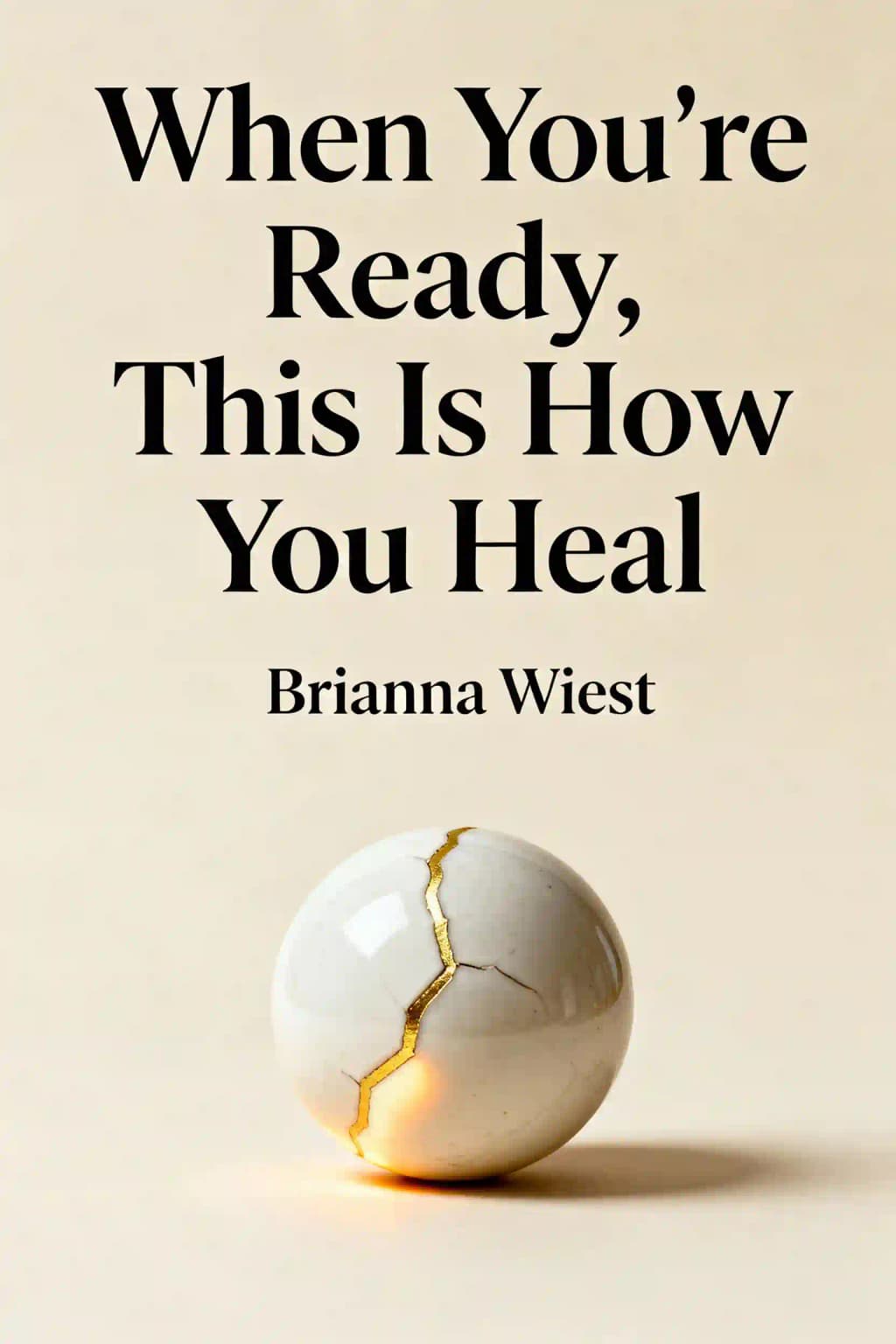
When Brianna Wiest's "When You're Ready, This Is How You Heal" first hit shelves, it quickly became a lifeline for those navigating personal transformation. The book has garnered a devoted following among celebrities like Taylor Swift and Selena Gomez, who have referenced its wisdom in interviews about their own healing journeys. What makes this work so powerful is how it speaks to universal human experiences while feeling deeply personal-like a conversation with a wise friend who sees your struggles with compassion rather than judgment. In a culture obsessed with quick fixes and toxic positivity, Wiest offers something different: a nuanced roadmap for authentic healing that acknowledges both the pain and possibility in our most difficult moments. Her work has sparked countless book clubs, social media discussions, and therapy conversations, proving that true healing resonates across demographics when approached with honesty and heart.
第 2 章
The Subtle Signals of Necessary Change
That persistent, dull feeling in your gut isn't something to rationalize away by taking inventory of your accomplishments. It's not a sign that something is wrong-it's a signal that you're finally safe enough to feel what you've been carrying all along. Those unprocessed emotions from your past remain like unmetabolized food, waiting for you to create the safety to focus on these tensions.
Healing begins when you allow forgotten memories to surface. You'll need to cry for your younger self, mourn losses, and retroactively insert your adult wisdom into painful memories. Your body needs to release tension-through movement, through sweat, even through shaking-surrendering to vulnerability instead of guarding against it.
Through this process, your world transforms. You'll exit relationships and begin others. You'll find new inspirations and return to your authentic self by burning away emotional blockages. You'll learn to process experiences in real-time: crying when sad, expressing frustration, speaking your truth.
Consider how often you've felt that something was "off" but couldn't quite name it. Perhaps you've experienced this as restlessness, as a vague dissatisfaction despite having everything you thought you wanted. These feelings aren't random-they're your deepest self saying: Keep going. There is more to life than this. Your soul was never lost-just hidden beneath protective layers that once served you but now constrain you.
What if those uncomfortable feelings aren't problems to solve but gateways to a more authentic life? What if your perceived inadequacies are actually redirecting you toward what truly matters? The courage to keep trying despite closed doors might be the very process that builds your character and faith.
第 3 章
Releasing Those Who Cannot Love You Fully
The most difficult yet essential act of self-preservation is ceasing to give your love to those unwilling to reciprocate. This means stopping your investment in people who resist change, show indifference to your presence, or treat you as optional in their lives.
Your most precious resource isn't time but energy. What you give your energy to creates more of the same in your life. One-sided relationships aren't love but attachment. Making your life a sanctuary means welcoming only those capable of genuine connection.
Think about the relationships in your life where you consistently feel drained, where your efforts go unacknowledged, where you're always the one reaching out. These patterns reveal important truths about what you believe you deserve. When you continue pouring yourself into these dynamics, you're unconsciously reinforcing the belief that partial love is all you're worthy of receiving.
You aren't responsible for saving others or convincing them they want to be saved. Stop showing up out of obligation, pity, or fear of not being liked. Recognize that you're accepting the love you believe you deserve.
Imagine what might happen if you decided you're worthy of authentic friendship and complete love with healthy, thriving people. What if you waited in the darkness briefly... and watched how quickly everything transformed? The space you create by stepping back from one-sided relationships becomes room for reciprocal connections to enter.
This isn't about dramatic exits or ultimatums. It's about quietly redirecting your energy toward people and activities that reflect your worth back to you. It's about recognizing that sometimes the most loving thing you can do-both for yourself and others-is to stop trying to force connections that aren't naturally flowing.
第 4 章
Daily Practices for Micro-Healing
Healing doesn't always require grand gestures or major life overhauls. Small daily actions can create profound transformation over time. Consider doing something your future self will thank you for-perhaps drinking more water, taking a brief walk, or simply breathing deeply when stress arises.
Harness momentum by starting with tiny tasks that build confidence. Allow yourself to feel authentically rather than forcing positivity when it isn't genuine. Find healthy distractions when your mind needs redirection from obsessive thoughts.
Your digital environment profoundly impacts your mental state. Try unfollowing anyone who consistently makes you feel inadequate or triggers comparison. See discomfort not as something to avoid but as your subconscious signaling your capacity for growth. Journal honestly without forcing positivity-sometimes acknowledging the darkness is the first step toward finding light.
Give yourself something to anticipate-a small pleasure, a meaningful conversation, a creative project. Question your thoughts and feelings rather than automatically trusting them as truth. Get to know yourself better each day by noticing patterns in what brings you joy versus what depletes you.
Practice generosity without expectation, but also protect your energy by disengaging when needed. Notice what comes effortlessly (your future), what interests you deeply (your purpose), and what challenges you most persistently (what you're here to heal).
Learn healthy self-advocacy. Use your irritations with others as mirrors for self-healing-often what bothers us most in others reflects unacknowledged aspects of ourselves. Embrace joy when it appears without questioning whether you deserve it. Create vision boards that represent not just material goals but emotional states you wish to cultivate.
Name your feelings with specific language rather than vague terms. Question negative thoughts by asking: "Is this absolutely true? Would I say this to someone I love?" Rest when your body signals the need without labeling it as laziness. Prioritize ruthlessly, recognizing that saying yes to everything means saying no to what matters most.
Reflect regularly on your progress and resilience. Practice genuine gratitude not just for what's going well but for lessons embedded in challenges. Aim for neutral feelings when positivity feels impossible. Honor your body's signals about hunger, rest, and intuition. Pause before reacting to give yourself space to respond thoughtfully. And perhaps most importantly, remember your mortality as a way to savor each moment rather than postponing joy for some future achievement.
第 5 章
Reclaiming Your Authentic Self
Infinite versions of you exist across time and in the minds of everyone you've encountered. When we feel stuck, we're often trying to piece together a singular identity from others' perceptions, becoming lost in the process of trying to be who we think we should be rather than who we are.
Your life contains more positive experiences than you remember during moments of doubt. You've seen more beauty, felt more happiness, and succeeded more times than your critical mind acknowledges. You've been more accepted, appreciated, and wanted than you believe. Those closest to you often see your greatness more clearly than you see yourself.
Your impact extends further than you realize-hearts you've soothed, minds you've inspired, ripple effects of kindness spreading globally in ways you'll never fully know. You have more potential than you currently understand or allow yourself to claim.
We tend to define ourselves by our perceived gaps rather than recognizing these as simply the contrast between who we are and who we were never meant to be. Experience encompasses both contraction and expansion, beauty and heartbreak-all part of the complete picture of a life fully lived.
Nobody is thinking about you more than you think about yourself. Everyone is too busy worrying about their own perception to judge yours as harshly as you judge yourself. To some, you're the beauty standard; to others, overlooked. To some, a genius; to others, irrelevant. The only perception that truly matters is the one you tell yourself.
When you begin to see yourself through your own compassionate eyes rather than through the imagined criticism of others, something remarkable happens. You reclaim the authority to define your worth. You recognize that there is more goodness within you than you've ever allowed yourself to believe. This knowing can free you from the prison of others' expectations and return you to the truth of who you've always been.
第 6 章
Starting Over Without Changing Everything
When it's time to start over, it won't feel like an exciting beginning but an overwhelming end. Something you were deeply attached to has halted, leaving you feeling defeated and wondering how to move forward. You can measure what you'll lose but not what you'll gain.
Often, we don't realize we need to let go-only that our current path isn't working. What seemed like sudden disruption was likely a situation that hadn't been working for a long time, hidden behind denial and comfortable delusions.
Starting over means reconciling what wasn't working and what those things were masking-our own dissatisfaction. Whether it's a relationship ending, a career path failing, or needing to move, the underlying issues are often about our relationship with ourselves.
You must learn to be alone, to mend your sense of unworthiness, to work with what you have, to build a home wherever you are. There's nowhere to escape from yourself-the common denominator in all your circumstances.
Start by weeding out what's dead in your life-relationships, habits, beliefs that no longer serve you. Nourish your soul with practices that bring you genuine joy. Begin with what you have rather than waiting for perfect conditions. Stand on what you've built so far, recognizing that even difficult experiences have given you valuable wisdom. Close the gaps in your foundation by addressing neglected areas of self-care and growth.
We can start over right where we are by changing how we see ourselves. Healing isn't about changing what we show up to, but how we show up. Our lives reflect ourselves, and no matter where we go, we're always with us. The point was never to make everything around you perfect, but to adjust how you see until you realize it's enough-and always has been.
This perspective shift doesn't mean ignoring genuine problems or staying in harmful situations. Rather, it means recognizing that meaningful change often happens internally first, creating space for external circumstances to transform in response to your new way of being.
第 7 章
Finding Healing in Ordinary Moments
When beginning your healing journey, you'll search for epiphanies-life-changing truths and drastic changes that transform everything at once. Yet the most profound healing often happens in ordinary ways that might initially seem too simple to matter.
It starts with setting an intention to heal-writing it down somewhere visible, making a statement to the universe about your commitment. It's about allowing yourself deep rest, recognizing your body knows what to do while you support it with patience and care.
Healing involves changing your environment, both significantly and subtly-perhaps moving to a new location or simply cleansing your space of past relics that keep you tethered to old stories. Create at least one corner of peace in your home, understanding that "home" exists within your heart more than in any physical location.
The practical matters are vital-budgeting, medical appointments, planning, exercise routines-elements often neglected when we're hurting but essential for creating stability. Finding appropriate support-whether a trainer, therapist, or coach-is essential for your unique journey, as healing rarely happens in isolation.
Rediscovering life's small joys-warm baths, engaging novels, quiet mornings, clean sheets, stargazing-reveals they were the big things all along. These aren't trivial pleasures but profound connections to the present moment. Healing means affirming what you want to be true, visualizing your future self, and developing deeper self-awareness about your patterns and needs.
Your trauma tries to prevent you from living fully, attempting to keep you safe by locking you down in familiar patterns. But there's no greater failure than an unlived life, no greater pain than an unloved heart or unseen soul.
Choose not to give energy to things that won't grow into experiences you want. Construct new dreams that excite you rather than goals you think you should have. Release who you are in small ways, realizing the ordinary things are often the most defining, saving, and real. The cup of tea savored slowly, the conversation where you finally speak your truth, the moment you choose compassion for yourself instead of criticism-these seemingly small acts accumulate into profound transformation.
第 8 章
The Transformation Process: Eight Distinct Phases
Transformation begins with a catalytic event-sometimes massive, sometimes subtle. For many, it's losing a relationship, job, or loved one, removing our sense of safety and predictability. Other times, it's more subtle: a seed of doubt planted when seeing an old friend thriving, watching others move forward while you feel stuck, or simply realizing your current routine is unsustainable.
Life rarely changes without a disruptor that makes us question our status quo. Next comes forced acknowledgment that what we lost wasn't working for a long time-relationships end because they weren't fulfilling; jobs are lost because they weren't the right fit. This recognition, though painful, creates space for something new to emerge.
The process continues through emotional waves of anger and fear as we process old memories and buried feelings. We might find ourselves cycling through denial, bargaining, and depression before acceptance begins to take root. During this phase, we're not just grieving what we've lost but also our illusions about what it was.
Eventually, we glimpse a better path-a new possibility that wasn't visible before. Small adjustments lead to the courage to take a big leap-changing jobs, moving to a new city, or transforming something once thought immovable. These steps might feel tentative at first, but each successful change builds confidence for the next.
Finally, we see purpose in the pain, understanding that discomfort pushed us toward our destiny. Our emotions weren't enemies but catalysts clearing the way for the life we'd been dreaming of all along. What seemed like destruction was actually necessary clearing, making space for new growth.
This transformation cycle isn't a one-time experience but a recurring pattern throughout life. Each time we move through it, we develop greater resilience and wisdom. We learn to trust the process even when we can't see the outcome, knowing that our deepest growth often emerges from our greatest challenges.
第 9 章
Psychological Barriers to Personal Growth
Growth is terrifying because it demands honest self-examination, abandoning the familiar, and suspending ourselves in uncertainty. Without intentional growth, we become products of our environment rather than authentic expressions of ourselves.
Several unconscious biases prevent our evolution. First, we become comfortable being uncomfortable-hitting our "upper limit" where we self-sabotage positive changes because they exceed our happiness tolerance. Any change, even positive, feels uncomfortable until it becomes familiar, causing us to retreat to known territory even when it doesn't serve us.
Second, our minds cannot predict what we haven't experienced. Real growth requires exploration and admitting we might not know what we want or who we could become. This limitation makes us cling to familiar paths even when they lead nowhere good.
Third, negativity bias makes us believe negative outcomes are more likely than positive ones, causing us to take fewer chances and stay within restrictive comfort zones. We remember criticism more vividly than praise and anticipate problems more readily than opportunities.
Fourth, the sinking cost fallacy keeps us loyal to investments that no longer serve us. We resist abandoning what we've put time into, even when it's clearly not working. This applies to relationships, careers, and beliefs-we stay because we've already invested so much, failing to recognize that continuing only compounds the loss.
We also tend to prioritize whatever we first learned or experienced, making it difficult to change course even when better options appear. Your first approach to career prospects, relationships, or self-concept anchors what you believe possible today, potentially blinding you to better options.
Another barrier is making long-term assessments based on short-term experiences. When you declare you'll never find love after a breakup, or feel fundamentally unattractive because of today's outfit, you're mistaking a moment for your entire life. This extrapolation prevents you from seeing temporary challenges as just that-temporary.
Finally, many use self-reflection as an escape mechanism rather than a catalyst for change. The high of having epiphanies and life-changing realizations can sometimes eclipse their actual implementation. While pursuing what's right brings more peace and fulfillment, you'll still have down days and moments of doubt. It's often more exciting to decide to uproot and start again than to stick with the path day-in and day-out.
Recognizing these psychological barriers is the first step toward overcoming them. When we understand how our minds naturally resist growth, we can develop strategies to move forward despite these ingrained tendencies.
第 10 章
Finding What's Truly Right For You
Everything meant for you feels like a deep exhale, like returning home to a forgotten place. What's truly right for you brings a sense of steady calm-not sweeping you off your feet, but grounding you through them. These things feel simple, obvious, comfortable in a way that's hard to articulate but unmistakable when experienced.
They choose you as quickly as you choose them, arriving serendipitously yet feeling certain. Unlike things that provoke big emotions like anxiety or desperate attachment, what's truly right gives us deeper emotions-love as a steady presence rather than heart-pumping lust or drama. These things don't require forcing or endless questioning; they don't leave us on hold or feeling we must grab them before they vanish.
Think about the people, places, and activities that have felt this way in your life. Perhaps it was a friendship that formed effortlessly, a job that challenged you in all the right ways, or a home that immediately felt like yours. Though these connections might have been subtle at first, they grew stronger over time as you stayed the course and allowed life to magnetize what's meant to be yours.
This doesn't mean what's right for you will always feel easy or never present challenges. Growth and comfort rarely coexist. But there's a fundamental difference between productive challenge and forcing something that fundamentally doesn't fit. The former energizes you despite difficulties; the latter depletes you no matter how much you try to make it work.
Learning to distinguish between these feelings requires developing trust in your own intuition. It means paying attention to how your body responds to different situations and people-where do you feel expansion versus contraction? Where do you feel peace versus anxiety? These subtle internal signals often know what's right for you long before your logical mind catches up.
第 11 章
The Practice of Letting Go
We often assume that if something isn't right for us, it will simply be pulled away in time. We cling to what's clearly not a match, waiting for the universe to do the difficult work of separation. But letting go isn't a last resort-it's a practice we develop with small things so we're prepared for the big ones.
We must learn to release thoughts that don't serve us, moments that have passed, acquaintances who drain us, others' opinions about our lives, and petty arguments that lead nowhere. Letting go is as effortless as an exhale-something we do all the time without thinking. We've already released thousands of things throughout our lives, clinging to only a few.
Sometimes letting go is an action, sometimes a decision, often simply a matter of distraction and redirection of focus. We move on not when we've analyzed what used to be to death, but when we begin imagining what to build in its place. We aren't really letting go-we're accepting what's already gone, releasing ideas about who we were or how the future would unfold.
Consider how many things you've already naturally released throughout your life-childhood friendships that served their purpose, interests that evolved into new passions, beliefs that no longer fit your expanding worldview. You didn't force these transitions; they happened organically as you grew.
The same natural process can apply to more difficult attachments when we stop resisting it. When we fill our lives with new experiences, connections, and purposes, we create less space for dwelling on what's behind us. We don't forget what mattered to us, but it no longer occupies the center of our emotional universe.
This practice isn't about coldly discarding people or experiences but about honoring what was while creating space for what could be. It's recognizing that some things are meant to be seasons rather than lifetimes, and that their impermanence doesn't diminish their value or impact on our journey.
第 12 章
Finding Confidence to Pursue Your Passions
This message speaks to everyone facing their dreams with doubt-those whose thoughts echo with the world's imagined criticism: "Who are you to do this?" The key isn't comparing yourself to idols, but looking beside you at peers who are creating and thriving. Today's world makes possible what was impossible years ago. Success doesn't require extraordinary talent, but consistent showing up.
Your worth comes from authenticity, not perfection. People want stories that reflect their own experiences, art that makes them feel understood, products that solve real problems. To pursue what you love, you must deconstruct external expectations, become a perpetual student, start where you are, and be willing to reinvent yourself as you learn and grow.
Think about what you would create if no one would ever see it, if there were no possibility of criticism or praise. That's often where your truest passion lies. The confidence you seek won't arrive until you begin-not from mental gymnastics or affirmations, but from risking everything to live truthfully. You don't need confidence first; you just need to start.
Recognize that passion and obsession are entryways to one another, requiring balance between caring deeply and knowing when to step back. When you're truly aligned with your purpose, you'll find energy you didn't know you had, but you'll also need to establish boundaries to prevent burnout.
Every creator you admire started somewhere-often with work they'd now find embarrassing. They improved not by waiting for permission or perfect conditions, but by producing consistently and learning from each iteration. Your first attempts won't be your best, but they're necessary steps toward mastery.
The world needs your unique voice and perspective. There are people waiting for exactly what only you can create, even if you can't imagine them yet. By honoring your creative impulses and sharing your work, you become part of a conversation larger than yourself-one that has the potential to connect, heal, and inspire others in ways you might never fully know.