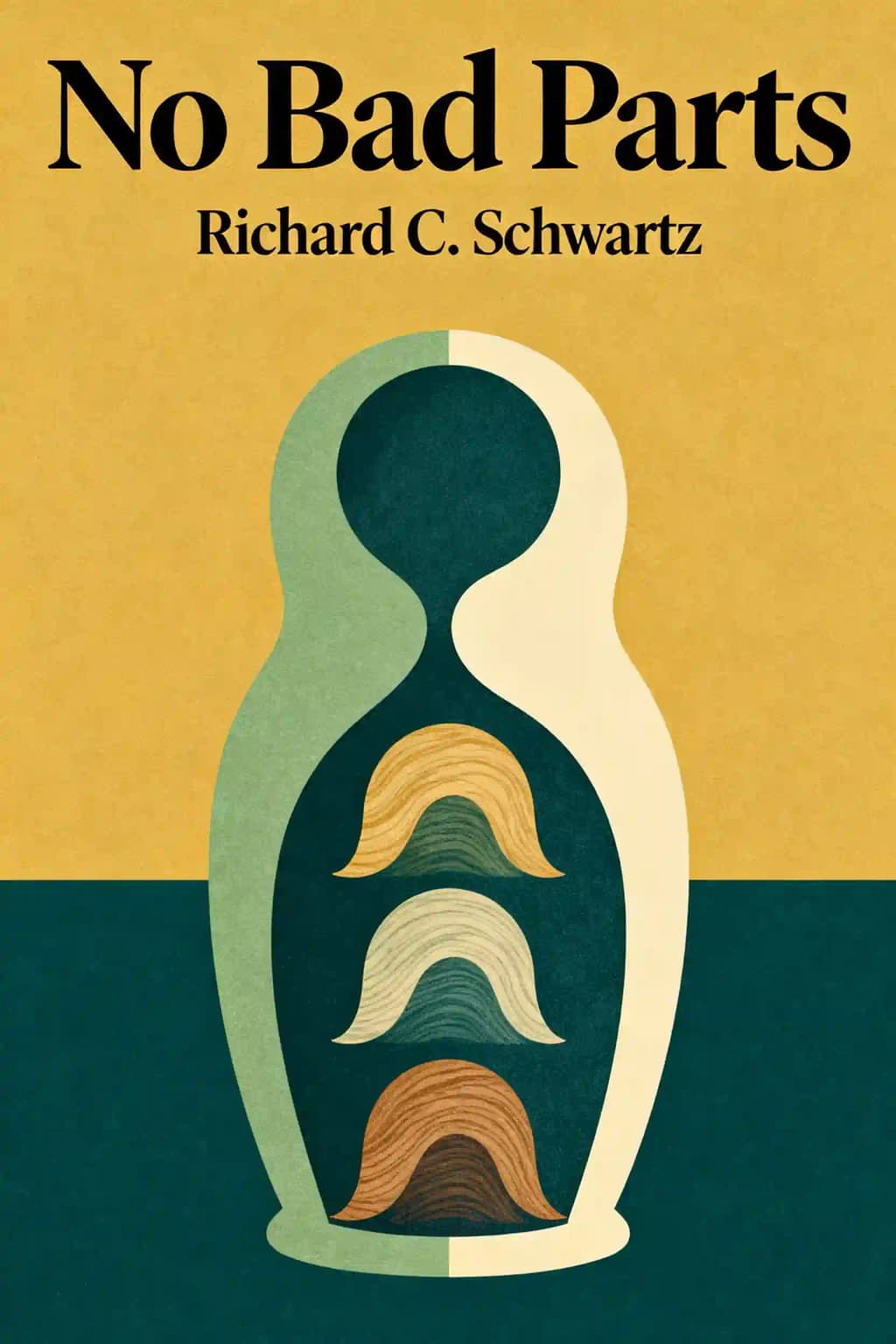
Discover your internal family of "parts" in this groundbreaking psychological framework endorsed by Alanis Morissette. What if your anxiety, anger, and shame aren't enemies but protectors? Schwartz's IFS model transforms trauma healing by revealing the revolutionary truth: there are no bad parts - only misunderstood ones.
通过作者的声音感受这本书
将知识转化为引人入胜、富含实例的见解
快速捕捉核心观点,高效学习
以有趣互动的方式享受这本书
There are no bad parts.
将《No Bad Parts》的核心观点拆解为易于理解的要点,了解创新团队如何创造、协作和成长。
将《No Bad Parts》提炼为快速记忆要点,突出坦诚、团队合作和创造力的关键原则。

通过生动的故事体验《No Bad Parts》,将创新经验转化为令人难忘且可应用的精彩时刻。
随心提问,选择声音,共同创造真正与你产生共鸣的见解。

"Instead of endless scrolling, I just hit play on BeFreed. It saves me so much time."
"I never knew where to start with nonfiction—BeFreed’s book lists turned into podcasts gave me a clear path."
"Perfect balance between learning and entertainment. Finished ‘Thinking, Fast and Slow’ on my commute this week."
"Crazy how much I learned while walking the dog. BeFreed = small habits → big gains."
"Reading used to feel like a chore. Now it’s just part of my lifestyle."
"Feels effortless compared to reading. I’ve finished 6 books this month already."
"BeFreed turned my guilty doomscrolling into something that feels productive and inspiring."
"BeFreed turned my commute into learning time. 20-min podcasts are perfect for finishing books I never had time for."
"BeFreed replaced my podcast queue. Imagine Spotify for books — that’s it. 🙌"
"It is great for me to learn something from the book without reading it."
"The themed book list podcasts help me connect ideas across authors—like a guided audio journey."
"Makes me feel smarter every time before going to work"

免费获取《No Bad Parts》摘要的 PDF 或 EPUB 版本。可打印或随时离线阅读。
Have you ever snapped at someone you love, then immediately wondered, "Why did I do that?" Or perhaps you've committed to a diet in the morning only to find yourself raiding the refrigerator by evening. This inner conflict isn't a sign of weakness - it's evidence of our fundamental multiplicity. According to Dr. Richard Schwartz's groundbreaking Internal Family Systems (IFS) approach, we all contain various "parts" that interact like members of an inner family. This isn't pathological - it's the natural state of being human. The problem isn't our multiplicity but our culture's insistence on a unified "mono-mind," which leaves us feeling defective when we can't control our thoughts and emotions through sheer willpower. Our Western psychological tradition, influenced by Calvinist notions of "total depravity" and Freudian theories of dark impulses lurking beneath civility, has taught us to fear our inner diversity rather than embrace it. What if those troublesome parts aren't enemies to be conquered but allies playing protective roles they don't actually want? What if there are no bad parts within us - only parts doing the best they can with the burdens they carry?