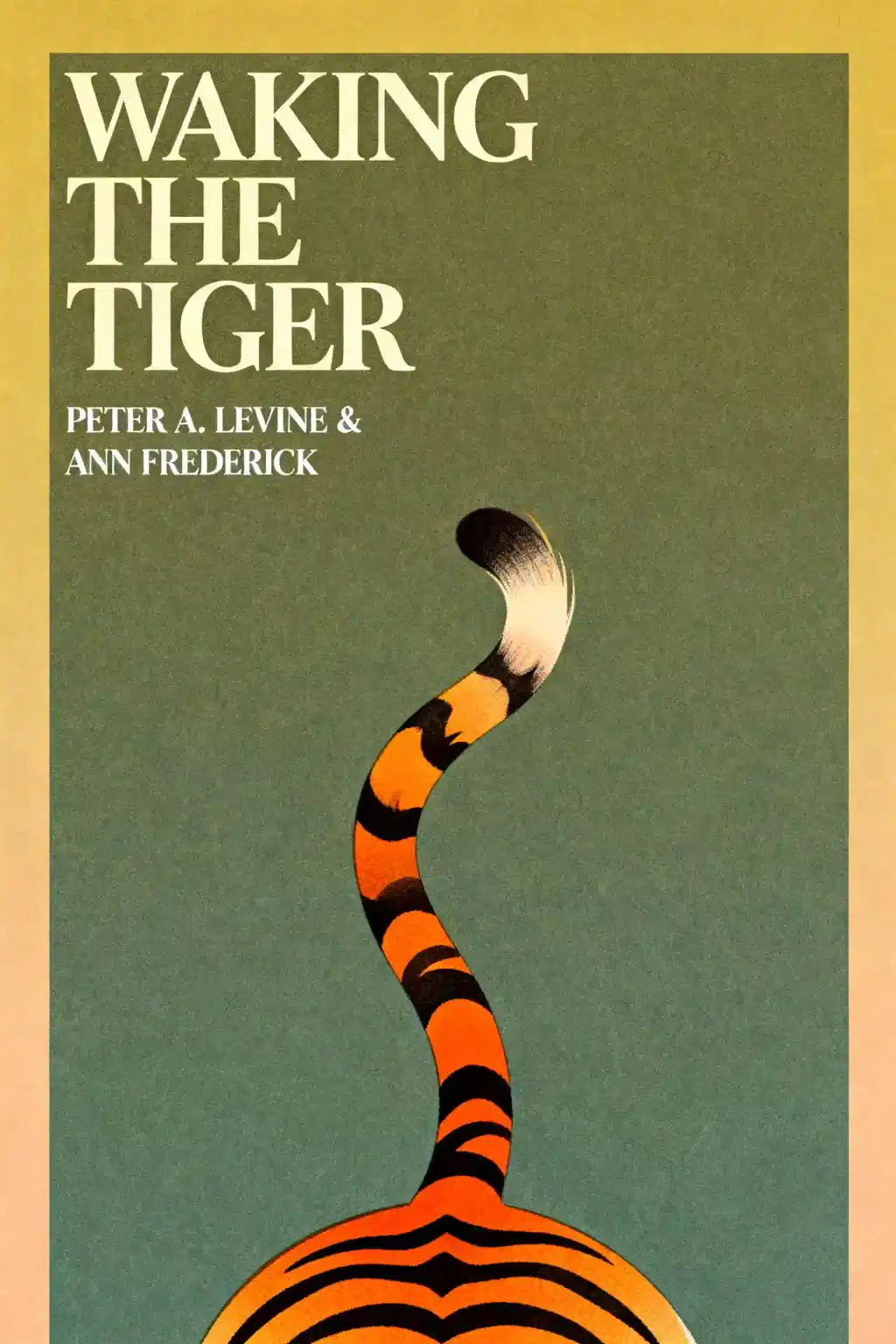
Discover Peter Levine's revolutionary approach that learns from animals in the wild - healing trauma through the body's natural wisdom rather than just talking through it.

Trauma is not about what happens in our minds, but about what happens in our bodies afterward. Healing is the process of learning to listen to our body's own wisdom to complete what trauma interrupts.
Создано выпускниками Колумбийского университета в Сан-Франциско
"Instead of endless scrolling, I just hit play on BeFreed. It saves me so much time."
"I never knew where to start with nonfiction—BeFreed’s book lists turned into podcasts gave me a clear path."
"Perfect balance between learning and entertainment. Finished ‘Thinking, Fast and Slow’ on my commute this week."
"Crazy how much I learned while walking the dog. BeFreed = small habits → big gains."
"Reading used to feel like a chore. Now it’s just part of my lifestyle."
"Feels effortless compared to reading. I’ve finished 6 books this month already."
"BeFreed turned my guilty doomscrolling into something that feels productive and inspiring."
"BeFreed turned my commute into learning time. 20-min podcasts are perfect for finishing books I never had time for."
"BeFreed replaced my podcast queue. Imagine Spotify for books — that’s it. 🙌"
"It is great for me to learn something from the book without reading it."
"The themed book list podcasts help me connect ideas across authors—like a guided audio journey."
"Makes me feel smarter every time before going to work"
Создано выпускниками Колумбийского университета в Сан-Франциско

Lena: Miles, I have to tell you something that completely shifted how I think about healing. You know how we're always told to "talk through" our trauma, to process it mentally?
Miles: Right, that's like the gold standard approach, isn't it? Get it all out, analyze it, understand it cognitively.
Lena: Exactly! But here's what blew my mind about Peter Levine's work in "Waking the Tiger" - he discovered something by watching animals in the wild that changes everything. Animals face life-threatening situations constantly, right? They're chased by predators, fight for survival...
Miles: Oh absolutely. I mean, it's literally life or death for them every day.
Lena: But here's the thing - they don't get traumatized the way humans do. And Levine figured out why. It's not about what happens in their minds, it's about what happens in their bodies afterward.
Miles: That's fascinating. So you're saying the secret isn't in our thoughts at all?
Lena: Right! It's in learning to listen to our body's own wisdom to complete what trauma interrupts. So let's explore how this revolutionary approach actually works.
Miles: So what exactly happens when trauma gets stuck in our system? Because I think most people understand trauma as this psychological wound that needs mental processing.
Lena: That's exactly the misconception Levine challenges. He explains that when we face a life-threatening situation, our nervous system activates one of three responses: fight, flight, or freeze. It's completely automatic.
Miles: Right, the classic survival responses we've all heard about.
Lena: But here's where it gets interesting. In the wild, when a gazelle escapes a cheetah, it doesn't just walk away calmly. It literally shakes and trembles for several minutes, then returns to grazing like nothing happened. That shaking? It's discharging all the survival energy that was mobilized during the chase.
Miles: So the animal's body is literally completing the stress cycle?
Lena: Exactly! But humans—we've been socialized to suppress those natural responses. Someone has a car accident, and what do we tell them? "Calm down, don't shake, you're safe now." We interrupt the body's natural healing process.
Miles: That's incredible. So we're essentially trapping that survival energy in our system?
Lena: That's precisely what Levine discovered. When we can't complete those natural responses—whether it's because we were physically restrained, socially conditioned to "keep it together," or the threat was ongoing—that energy gets locked in our nervous system. And that's where symptoms come from.
Miles: What kind of symptoms are we talking about?
Lena: The whole range of what we typically call PTSD—hypervigilance, flashbacks, panic attacks, depression, even chronic pain. But Levine reframes these not as disorders, but as the body's intelligent attempt to manage unresolved survival energy.
Miles: So when someone has a panic attack, their body is still trying to complete that original fight-or-flight response?
Lena: You've hit the nail on the head. The nervous system is still saying "there's danger, we need to run!" even when the person is sitting safely in their living room. The body never got the message that the threat is over because it never completed the cycle.
Miles: This completely changes how we think about healing, doesn't it? Instead of just talking about what happened, we need to help the body finish what it started.
Lena: Absolutely. And what's beautiful about Levine's approach is that it's so gentle. You don't have to relive the trauma or even remember all the details. You're working with the body's present-moment sensations and its innate wisdom to heal.
Lena: Now, here's where Levine's work gets really revolutionary. He talks about something called the "felt sense"—and I have to say, when I first encountered this concept, it was like someone had given me a new language for my own body.
Miles: The felt sense—that sounds almost mystical. What exactly is it?
Lena: It's actually beautifully practical. The felt sense is your body's way of communicating the totality of your experience in any moment. It's that subtle awareness of "something feels off" or "this feels right" before your mind can even articulate why.
Miles: Oh, like when you walk into a room and immediately sense the tension, even though no one's said anything?
Lena: Perfect example! Or when you meet someone and get an instant gut feeling about them. That's your felt sense giving you information that goes way beyond what your conscious mind is processing.
Miles: So in trauma healing, how does this felt sense actually work?
Lena: Well, instead of diving straight into the traumatic story, Somatic Experiencing teaches you to tune into what's happening in your body right now. You might notice tension in your shoulders, a flutter in your chest, or warmth in your hands. These sensations carry information about your nervous system state.
Miles: That's fascinating. So you're essentially learning to have a conversation with your own body?
Lena: Exactly! And what Levine discovered is that the body has its own intelligence about healing. When you learn to follow these sensations with curiosity instead of fear, they often shift and change on their own. That tight feeling in your chest might soften, or that shakiness in your legs might complete itself naturally.
Miles: This sounds like it requires a lot of patience and trust in the process.
Lena: It does, and that's actually part of what makes it so powerful. We live in such a rush-to-fix culture, but the felt sense teaches you to slow down and listen. Levine often says that healing happens in "felt time," not clock time.
Miles: What do you mean by felt time?
Lena: Well, you know how sometimes a minute can feel like an hour when you're anxious, or an hour can feel like a minute when you're absorbed in something you love? Felt time is about honoring the body's natural rhythms rather than forcing healing to happen on our mental timeline.
Miles: So someone working with their felt sense might spend twenty minutes just noticing the sensation of their feet on the ground?
Lena: Absolutely! And that might be exactly what their nervous system needs to start feeling safe again. It's not about dramatic breakthroughs—it's about these subtle shifts that accumulate over time into profound transformation.
Miles: I love how this honors the body's own wisdom rather than imposing some external technique on it.
Lena: That's exactly right. And what's beautiful is that everyone's felt sense is unique. Your body will guide you toward exactly what it needs for healing, if you learn to listen.
Miles: You know, something that really strikes me about this approach is how it explains those patterns we see in trauma survivors—like why someone might keep ending up in similar dangerous situations.
Lena: Oh, you're talking about what Levine calls "re-enactment." This was such an eye-opener for me. He explains that when we can't complete our natural survival responses, we unconsciously seek opportunities to try again.
Miles: So it's not that someone is self-destructive or making bad choices—their nervous system is literally trying to finish something?
Lena: Exactly! The body has this incredible drive toward completion. If you couldn't fight back during an assault, part of your system might keep creating situations where you get into conflicts, trying to discharge that thwarted fighting energy.
Miles: That's profound. It reframes so much of what we might judge as self-sabotage.
Lena: Right. Or someone who froze during a car accident might find themselves repeatedly in situations where they feel trapped or powerless. Their system is saying, "This time, maybe I can get out. This time, maybe I can complete the escape."
Miles: So how does Somatic Experiencing help break these cycles?
Lena: Well, instead of acting out these incomplete responses in potentially dangerous ways, you learn to complete them safely in your body. You might discover that your arms want to push something away, or your legs want to run, or your voice wants to say "no."
Miles: And you can do this without having to relive the original trauma?
Lena: That's the beauty of it. You're working with what's alive in your system right now. Maybe you notice tension in your jaw, and as you pay attention to it, you realize your jaw wants to bite down or your voice wants to roar. You can let that happen in a controlled, safe way.
Miles: So someone might literally shake or tremble during a session?
Lena: Absolutely. And rather than stopping it or being afraid of it, the practitioner helps you stay present with it and let it complete naturally. It's like finally letting your nervous system finish the conversation it's been trying to have for years.
Miles: I imagine this can be pretty intense emotionally.
Lena: It can be, but Levine emphasizes what he calls "titration"—working with small amounts of activation at a time. You might only work with the trembling for thirty seconds before grounding yourself again. It's about building tolerance gradually.
Miles: So you're not flooding the system, you're gently increasing its capacity to handle activation?
Lena: Exactly. And what happens over time is that these incomplete responses finally get to finish, and the compulsive re-enactment patterns start to fade. The nervous system doesn't need to keep seeking completion because it's found it.
Miles: This explains so much about why traditional talk therapy sometimes isn't enough, doesn't it?
Lena: It really does. You can understand your patterns intellectually, but until the body completes what it needs to complete, those patterns tend to persist. The body has its own logic that goes deeper than our thinking mind.
Lena: Now, what really fascinated me about Levine's work is how it connects with cutting-edge neuroscience. He talks about how our nervous system is constantly scanning for safety or threat—even when we're not consciously aware of it.
Miles: This sounds like it goes way beyond our conscious awareness, right?
Lena: Absolutely. Stephen Porges' research on the polyvagal theory really supports what Levine observed. Our autonomic nervous system has these ancient pathways that are constantly evaluating: "Am I safe? Am I in danger? Am I about to die?"
Miles: And this is happening below the level of our thinking mind?
Lena: Exactly. Your nervous system might detect a threat—maybe someone's tone of voice, or the way light is filtering through a window—and trigger a survival response before you even know why you suddenly feel anxious or want to leave the room.
Miles: So when someone says "I don't know why I'm having a panic attack, nothing bad is happening," their body might actually be responding to something real?
Lena: Right! Their nervous system might be picking up on some subtle cue that reminds it of the original trauma. It could be a sound, a smell, the time of day, or even someone's posture. The body remembers everything.
Miles: This is where the felt sense becomes so important, isn't it? Learning to tune into what your body is actually responding to?
Lena: Exactly. Instead of dismissing these responses as "irrational," you start to get curious about what your nervous system is trying to tell you. Maybe your shoulders are hunching because your body is preparing to protect itself from something it senses.
Miles: And in Somatic Experiencing, you would explore that shoulder tension rather than trying to make it go away?
Lena: Right. You might ask your shoulders what they need, or notice what happens when you exaggerate the hunching slightly. Often, the body will show you exactly what it's trying to do—maybe those shoulders want to curl forward to protect your heart, or maybe they want to pull back to create more space.
Miles: It's like becoming fluent in your own body's language.
Lena: That's a beautiful way to put it. And what Levine found is that when you honor these responses instead of overriding them, the nervous system starts to trust that you're listening. It doesn't have to shout so loudly to get your attention.
Miles: So someone might find that their anxiety actually decreases when they stop fighting their body's protective responses?
Lena: Absolutely. There's this paradox where accepting and working with the activation often allows it to settle more than trying to force it to calm down. The nervous system relaxes when it feels heard and understood.
Miles: This seems like it would be especially important for people who've experienced betrayal trauma or situations where they couldn't trust their own perceptions.
Lena: You've touched on something crucial there. When someone's been gaslit or told their feelings aren't valid, learning to trust their felt sense again is profound healing work. It's reclaiming their own inner authority about their experience.
Miles: So we've talked about how trauma gets stuck and how the felt sense works, but I'm really curious about the actual healing process. What does it look like to "renegotiate" trauma, as Levine calls it?
Lena: This is where his approach gets really elegant. Instead of reliving the trauma, you're essentially giving your nervous system a chance to have a different experience—one where it gets to complete what it couldn't complete before.
Miles: Can you give us a concrete example of how this might work?
Lena: Sure. Let's say someone was in a car accident where they couldn't swerve to avoid the collision. Their body prepared to take evasive action, but there wasn't time or space. In a Somatic Experiencing session, they might notice that their arms still want to turn the steering wheel, or their foot wants to press the brake.
Miles: So they would actually let their body make those movements?
Lena: Exactly, but very slowly and with full awareness. They might sit in a chair and let their hands slowly turn an imaginary steering wheel, really feeling the strength in their arms, the ability to steer away from danger. Their nervous system gets to experience: "I can take action. I'm not helpless."
Miles: That's incredible. So you're not changing what happened, but you're changing how the nervous system holds the experience?
Lena: Precisely! You're adding resources to the memory. Instead of just "I was helpless and couldn't escape," the body now also knows "I have strength, I can take action, I can protect myself."
Miles: This seems like it would be especially powerful for people who froze during their trauma.
Lena: Absolutely. The freeze response often comes with so much shame because people feel like they "should have" fought back or run away. But when you understand that freezing is actually an intelligent survival strategy—it's what prey animals do to avoid triggering a predator's chase response—it removes that self-blame.
Miles: And then they can work with whatever their body wanted to do but couldn't?
Lena: Right. Maybe their legs want to run, or their arms want to push away, or their voice wants to scream "no!" They can let these responses happen in a safe, controlled environment, and their nervous system finally gets to experience its own power.
Miles: I imagine this process requires a lot of skill from the practitioner to create that sense of safety.
Lena: It absolutely does. Levine emphasizes that the therapeutic relationship itself needs to provide what he calls "earned security." The practitioner has to be exquisitely attuned to the client's nervous system state and never push them beyond what they can handle.
Miles: What does that attunement look like in practice?
Lena: It's about reading all the subtle cues—changes in breathing, skin color, muscle tension, even the quality of someone's voice. If a client starts to get overwhelmed, the practitioner might have them feel their feet on the ground or look around the room to reorient to safety.
Miles: So it's this delicate dance between activation and settling?
Lena: Exactly. Levine calls it "pendulation"—gently moving between states of activation and calm, building the nervous system's capacity to handle intensity without getting overwhelmed. It's like gradually expanding someone's window of tolerance.
Miles: This approach seems like it would work even for people who don't have clear memories of their trauma.
Lena: That's one of its great strengths. You're working with what's alive in the body right now, not with narrative memory. The body holds the imprints of experience even when the mind doesn't have access to the story.
Lena: You know, Miles, there's something really profound about how Levine reframes what we typically think of as trauma symptoms. Instead of seeing them as pathology, he sees them as incomplete healing responses.
Miles: That's such a different way to think about it. So hypervigilance isn't a disorder—it's an unfinished protective response?
Lena: Exactly! Your nervous system is still scanning for danger because it never got the message that the threat is over. It's actually trying to keep you safe, even though the original danger has passed.
Miles: And panic attacks?
Lena: Those might be your body's attempt to complete a thwarted flight response. All that energy that got mobilized to run away but couldn't be used—it's still there, trying to discharge itself.
Miles: This completely changes how someone might relate to their own symptoms, doesn't it?
Lena: It's revolutionary. Instead of "there's something wrong with me," it becomes "my body is incredibly intelligent and it's trying to finish something important." There's such compassion in that shift.
Miles: I'm thinking about chronic pain too. How does that fit into this framework?
Lena: Levine talks about how the body can literally contract and hold itself in defensive postures. If you couldn't physically protect yourself during trauma, your muscles might still be braced for impact years later. That chronic tension creates pain, but it's the body's attempt to be ready for the next threat.
Miles: So healing would involve helping those muscles finally relax their guard?
Lena: Right, but you can't just tell them to relax. You have to help the nervous system feel safe enough to let go of that protection. Sometimes that means first acknowledging and honoring why the tension is there.
Miles: It's like thanking your body for trying to protect you, even when that protection is no longer needed?
Lena: That's beautiful, and it's exactly right. There's such wisdom in recognizing that every symptom served a purpose, even if it's outlived its usefulness.
Miles: This makes me think about addiction too. Could that be an incomplete response?
Lena: Absolutely. Substances often help people manage the overwhelm of unresolved trauma energy. It's the nervous system's attempt to find regulation when it doesn't know how to settle naturally. The addiction isn't the problem—it's a solution to the problem of a dysregulated nervous system.
Miles: So treating addiction would need to include helping the nervous system find other ways to regulate?
Lena: Exactly. And this is where Somatic Experiencing can be so valuable as part of addiction recovery. When someone's nervous system learns to settle and regulate naturally, the compulsive need for external regulation often diminishes.
Miles: It's like giving the body what it was really seeking all along.
Lena: Right. The body was seeking regulation, safety, and completion. The substance was just the best option it could find at the time. When you provide better options through somatic healing, the addiction often loses its grip naturally.
Miles: This perspective is so much more hopeful than the traditional disease model of addiction.
Lena: It really is. It sees the person as fundamentally whole and wise, just stuck in patterns that once served them but no longer do. There's such dignity in that understanding.
Miles: Okay, so we've talked about the theory behind all this, but I know our listeners are probably wondering: what can I actually do with this information? What are some practical tools people can start using right away?
Lena: That's such an important question, Miles. The beautiful thing about Somatic Experiencing principles is that there are simple practices anyone can begin with, even without formal training.
Miles: Let's start with something really basic. What's the most foundational tool?
Lena: Learning to orient. This is something Levine emphasizes constantly. When you feel activated or overwhelmed, slowly look around your environment. Let your eyes track from one object to another, really taking in what you see.
Miles: Why is that so powerful?
Lena: It activates what's called the social engagement system—the part of your nervous system that helps you assess safety. When your eyes can move freely and take in your surroundings, it sends a message to your brain that you're not trapped or in immediate danger.
Miles: So if someone's having a panic attack, they could look around the room and really notice what they see?
Lena: Exactly. Notice colors, textures, shapes. Maybe count five things you can see, four things you can touch, three things you can hear. It brings you back to present-moment awareness instead of being caught in the trauma response.
Miles: What about grounding? I hear that term a lot.
Lena: Grounding is huge. Feel your feet on the floor, your body in the chair, your back against the wall. The nervous system needs to know where you are in space to feel safe. You can even press your hands against a wall or tree and feel that solid support.
Miles: These seem so simple, but I imagine they're quite powerful when your nervous system is activated.
Lena: They are, because they work with your body's natural regulatory mechanisms rather than against them. Another key tool is what Levine calls "tracking sensation." Instead of trying to make feelings go away, you get curious about them.
Miles: How would someone do that?
Lena: Say you notice anxiety in your chest. Instead of "I hate this feeling, make it stop," you might ask: "What does this actually feel like? Is it tight? Fluttery? Hot? Cold? Does it have a shape or color?" You become a curious observer of your own experience.
Miles: And that changes the experience somehow?
Lena: It does, because you're engaging your prefrontal cortex—the thinking, observing part of your brain—which helps regulate the emotional centers. Plus, when you really pay attention to sensations, they often shift and change naturally.
Miles: What about breathing? Everyone talks about deep breathing for anxiety.
Lena: This is interesting—Levine actually cautions against forcing deep breaths when someone is highly activated. If your nervous system is in fight-or-flight, forcing slow breathing can sometimes increase the sense of panic.
Miles: Really? That's counterintuitive.
Lena: Instead, he suggests following your breath rather than controlling it. Notice how you're breathing right now, without trying to change it. Sometimes the body needs to breathe quickly for a while before it's ready to slow down.
Miles: So it's about working with your nervous system rather than imposing something on it?
Lena: Exactly. And here's another powerful one: gentle movement. If you're feeling stuck or frozen, you might slowly roll your shoulders, or gently turn your head from side to side, or stretch your arms up toward the ceiling.
Miles: Just small, conscious movements?
Lena: Right. You're not trying to exercise away the feelings—you're helping your nervous system remember that you can move, that you're not trapped. Sometimes just wiggling your fingers or toes can start to shift a freeze response.
Miles: These tools seem like they could be helpful for anyone, not just trauma survivors.
Lena: Absolutely. We all have nervous systems that get activated by daily stress. Learning these basic regulation skills is like learning emotional first aid for yourself.
Miles: Lena, one thing that really struck me in the research is how much emphasis there is on the relational aspect of healing. It's not just about individual techniques, is it?
Lena: Oh, that's such a crucial point, Miles. Trauma often happens in relationship—whether it's betrayal, abuse, or just not having our needs met as children. And healing happens in relationship too.
Miles: So even though we're talking about body-based approaches, it's not something you do in isolation?
Lena: Exactly. Levine talks about how mammals are wired for co-regulation. Think about how a mother animal calms her distressed offspring—it's not through talking, it's through presence, touch, and nervous system attunement.
Miles: That makes so much sense. We literally regulate each other's nervous systems just by being present?
Lena: We do. When you're with someone who's calm and grounded, their nervous system can actually help yours settle. It's why being around certain people feels so soothing, even if you can't put your finger on why.
Miles: And the opposite is true too, right? Some people's activation can be contagious?
Lena: Absolutely. If you've ever walked into a room where people were arguing and immediately felt your own stress level spike, that's nervous system contagion. We're constantly influencing each other's states.
Miles: So in trauma healing, having a skilled practitioner or supportive community becomes really important?
Lena: It's essential. The therapeutic relationship itself becomes a laboratory for learning new patterns of connection. Maybe someone learned that relationships are dangerous or unpredictable. Working with a skilled practitioner, they can experience something different—safety, attunement, respect for their boundaries.
Miles: This is where that concept of "earned security" comes in, right?
Lena: Yes! Even if someone didn't have secure attachment as a child, they can develop it through healing relationships as an adult. The nervous system is remarkably plastic—it can learn new patterns of safety and connection at any age.
Miles: What does this look like practically in someone's life?
Lena: Well, it might mean choosing relationships more consciously—noticing how you feel in your body around different people. Do you feel more expansive and relaxed, or more contracted and guarded?
Miles: So your felt sense becomes a guide for relationships too?
Lena: Exactly. And it might mean being more intentional about creating safety in your relationships. Maybe that's having conversations about boundaries, or asking for what you need, or learning to repair when there are ruptures.
Miles: I imagine this is especially important for people whose trauma happened in family systems.
Lena: Absolutely. Family trauma is particularly complex because it often involves the very people who were supposed to keep us safe. Healing might involve learning to have healthy relationships with some family members while maintaining boundaries with others.
Miles: And sometimes people need to find their "chosen family"—people who can provide the safety and attunement they didn't get originally?
Lena: That's beautifully put. Trauma can feel so isolating, but healing happens when we find our people—whether that's in therapy, support groups, spiritual communities, or friendships where we can be authentically ourselves.
Miles: It sounds like community isn't just nice to have—it's actually essential for nervous system healing.
Lena: It really is. We're social creatures at our core. The nervous system that was wounded in relationship needs relationship to heal. And when that happens, it's not just individual healing—it ripples out into families and communities.
Lena: Miles, as we start to wrap up our exploration today, I'm really struck by how Levine's work bridges ancient wisdom and cutting-edge neuroscience. It's not like he invented something completely new—he rediscovered something we always knew.
Miles: That's such a beautiful point. Indigenous cultures have always understood the connection between body, mind, and spirit in healing, haven't they?
Lena: Absolutely. Traditional healing practices around the world include movement, ritual, community support, and attention to the body's wisdom. Somatic Experiencing is really a modern articulation of these ancient understandings.
Miles: And now we have the neuroscience to explain why these approaches work?
Lena: Right. We can see on brain scans how trauma affects the nervous system, and we can measure how somatic interventions help restore balance. It's this beautiful marriage of ancient wisdom and modern validation.
Miles: This makes me think about how we've gotten so disconnected from our bodies in modern culture.
Lena: We really have. We live so much in our heads, sitting at computers, rushing from one thing to the next. We've lost touch with the subtle signals our bodies are constantly sending us.
Miles: And that disconnection might make us more vulnerable to trauma getting stuck in our systems?
Lena: I think so. When we're not in relationship with our felt sense, we miss the early warning signals that something isn't right. We override our body's wisdom instead of listening to it.
Miles: So learning these somatic approaches isn't just about healing trauma—it's about reclaiming a more integrated way of being human?
Lena: That's exactly right. It's about remembering that we're not just thinking beings—we're embodied beings. Our bodies hold incredible intelligence about safety, connection, and healing.
Miles: And this has implications beyond individual therapy, doesn't it? For how we structure our communities, our schools, our workplaces?
Lena: Absolutely. What if we designed environments that supported nervous system regulation? What if we taught children about their felt sense alongside reading and math? What if workplaces understood the importance of psychological safety for actual productivity and wellbeing?
Miles: It's a whole different paradigm for thinking about human flourishing.
Lena: It really is. Instead of just treating symptoms after people break down, we could create conditions that support resilience and prevent trauma from getting stuck in the first place.
Miles: And for our listeners who are dealing with their own trauma, what's the most important thing to remember as they consider this approach?
Lena: I think it's that healing is possible, and your body is your ally in that process. You don't have to relive your trauma to heal from it. You don't have to be broken forever. Your nervous system has an incredible capacity to learn new patterns of safety and connection.
Miles: And that this kind of healing often happens slowly, in small steps?
Lena: Yes, and that's actually a strength, not a limitation. Quick fixes often don't last because they don't address the deeper patterns. But when healing happens at the pace your nervous system can integrate, it tends to be lasting and transformative.
Miles: So to everyone listening, if this conversation has resonated with you, trust that curiosity. Your body's wisdom is already guiding you toward what you need for healing. And remember, you don't have to do this alone—seeking support is actually part of the healing process.
Lena: Beautifully said, Miles. Thank you for joining us on this exploration of how trauma lives in the body and how the body knows how to heal. We'd love to hear how these ideas land with you, so please feel free to reach out and share your thoughts. Until next time, be gentle with yourselves and trust your body's wisdom.
Miles: Thanks for listening, everyone. Take care of yourselves out there.