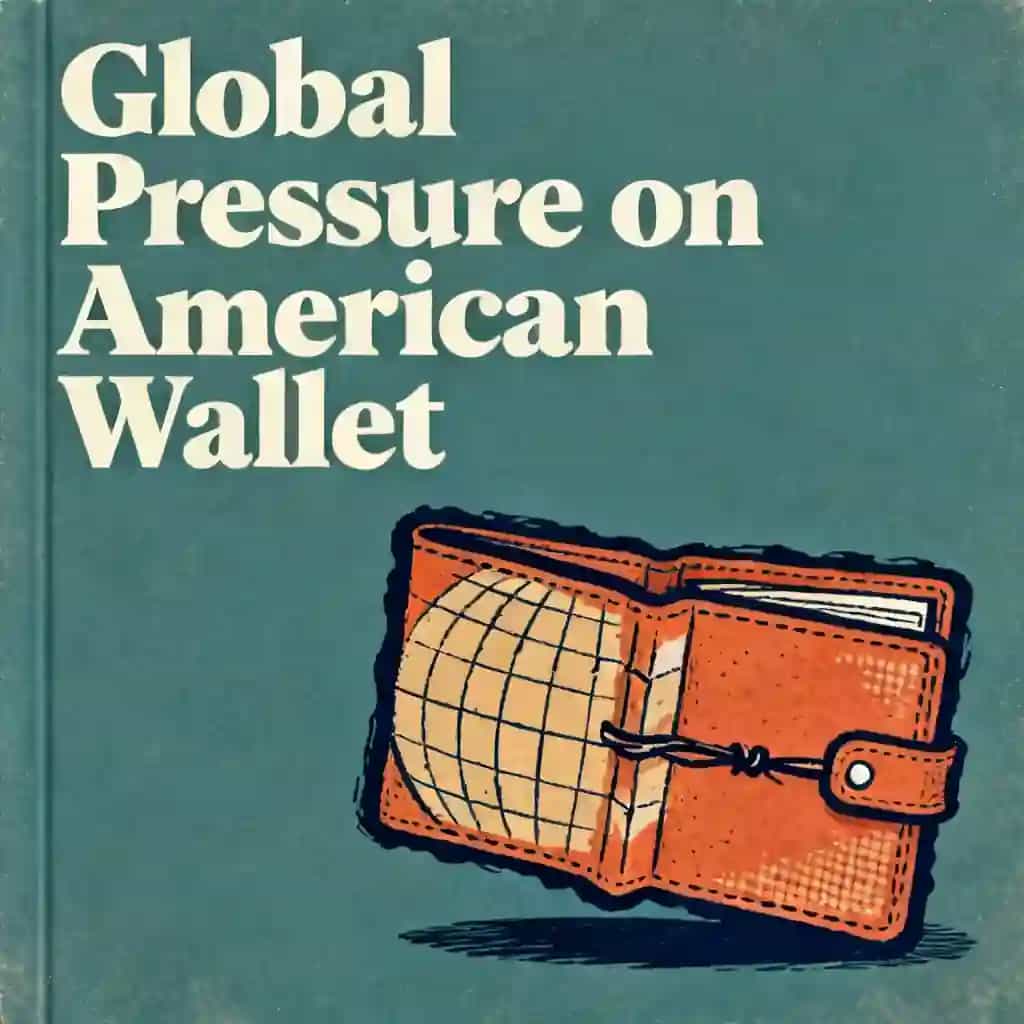
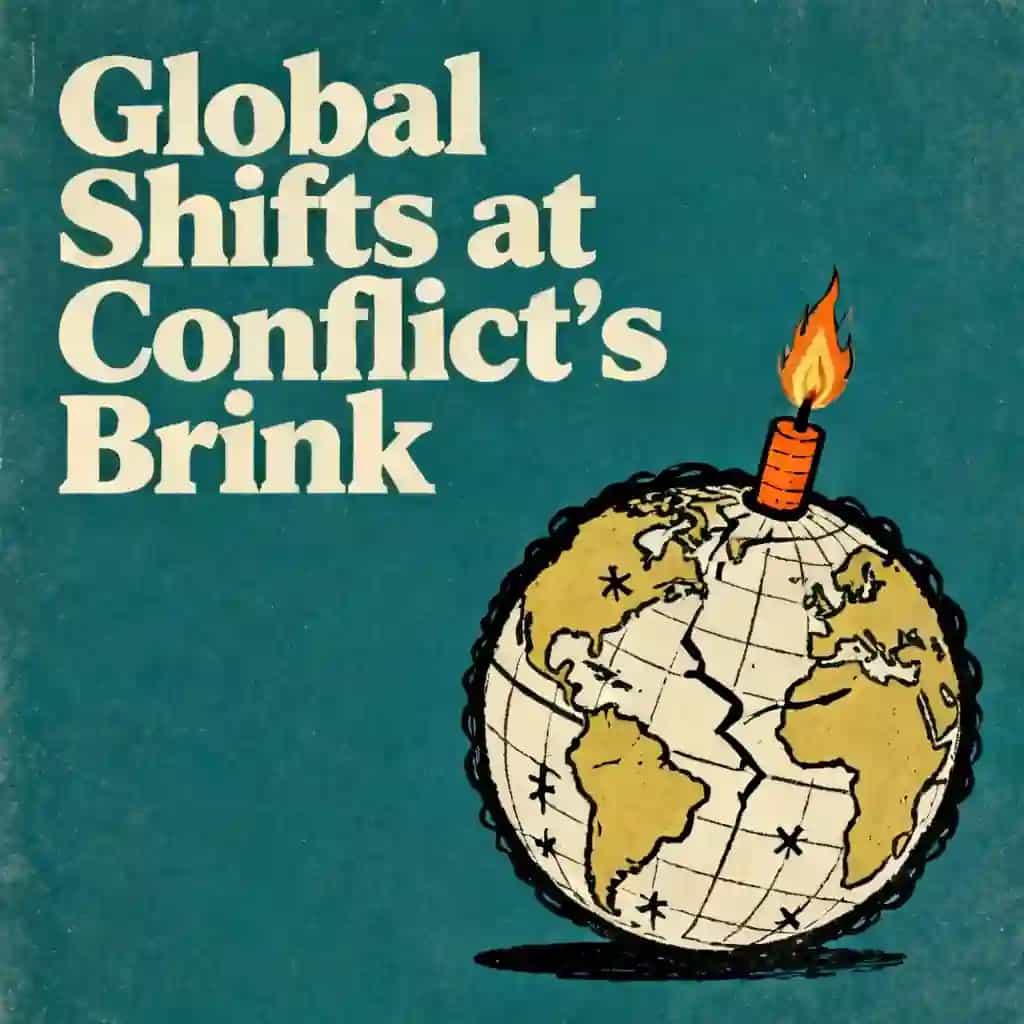
The 2025 National Security Strategy moves the U.S. from being a global 'universal architect' to a 'hemispheric guardian,' prioritizing economic security and reciprocity over the promotion of liberal ideology. It is a calculated wager that rebuilding the domestic industrial base and securing the Western Hemisphere is more vital to national survival than maintaining a global military footprint.
Создано выпускниками Колумбийского университета в Сан-Франциско
"Instead of endless scrolling, I just hit play on BeFreed. It saves me so much time."
"I never knew where to start with nonfiction—BeFreed’s book lists turned into podcasts gave me a clear path."
"Perfect balance between learning and entertainment. Finished ‘Thinking, Fast and Slow’ on my commute this week."
"Crazy how much I learned while walking the dog. BeFreed = small habits → big gains."
"Reading used to feel like a chore. Now it’s just part of my lifestyle."
"Feels effortless compared to reading. I’ve finished 6 books this month already."
"BeFreed turned my guilty doomscrolling into something that feels productive and inspiring."
"BeFreed turned my commute into learning time. 20-min podcasts are perfect for finishing books I never had time for."
"BeFreed replaced my podcast queue. Imagine Spotify for books — that’s it. 🙌"
"It is great for me to learn something from the book without reading it."
"The themed book list podcasts help me connect ideas across authors—like a guided audio journey."
"Makes me feel smarter every time before going to work"
Создано выпускниками Колумбийского университета в Сан-Франциско

Lena: I was just looking at the calendar, Miles, and it’s wild to think we are already well into 2026. But looking at the headlines, it feels like the world is shifting faster than we can keep up with. I mean, did you see that oil prices just topped $100 because of the war with Iran?
Miles: It’s intense. We’re seeing coordinated strikes that began back in February, and now there’s this massive "geoeconomic firestorm" affecting everything from fertilizer to microchips. It really highlights the central tension of our time: is the U.S. protecting its core interests through this "resolute global leadership," or are we repeating the same historical mistake of overestimating what military power can actually solve?
Lena: Right, and that’s the big debate. On one hand, you have the new National Security Strategy calling for a "necessary correction" away from globalism, but on the other, we’re seeing aggressive territorial claims and new military interventions.
Miles: Exactly. It’s a high-stakes geopolitical bet. Let's explore how these shifts are redefining America’s role on the global stage.
Miles: You know, Lena, to really get a handle on why the 2025 National Security Strategy feels like such a massive pivot, we have to look at the "bet" the U.S. has been placing for the last few decades. Since the Cold War ended, the grand strategy was basically "Liberal Hegemony." The idea was that if the U.S. remained the "indispensable nation"—using that classic phrase from the nineties—it could stitch the whole world into a single, democratic, free-market quilt.
Lena: And the assumption there was that everyone actually *wanted* to be part of that quilt, right? That market capitalism and democracy were just the inevitable destination for every nation on Earth.
Miles: Exactly. It was a beautiful vision—Pax Americana. No more big wars because everyone’s too busy trading at McDonald’s. But the 2025 strategy basically walks into the room and says, "That bet failed." It argues that instead of a global community, we got "beggar-thy-neighbor" policies where other countries exploited American openness. It’s a move from what scholars call "deep engagement" to something much more "minimalist" and "transactional."
Lena: It’s like the U.S. is looking at its bank account—both financial and military—and saying, "We can’t be the world's landlord anymore if the tenants aren't paying rent and are actually trying to kick down the front door." But isn't there a risk in just pulling back? If you stop being the "architect" of the order, doesn't the whole building just fall down?
Miles: That’s the trillion-dollar question. The new strategy frames this not as "isolationism"—which is a word people love to throw around—but as "Reciprocity." Oren Cass, who’s been really influential in this thinking, argues that the U.S. should only engage with countries that meet it halfway. It’s moving away from an "Empire" and back toward a "Republic." It’s about asking: "If everyone acted like you, would this alliance even work?"
Lena: So, it’s less about "universal values" and more about "show me the receipts." But that feels so cold compared to the old "Arsenal of Democracy" rhetoric. Are we saying that human rights and spreading freedom are just... off the table now?
Miles: The strategy calls it "Post-Ideological Pragmatism." It’s a mouthful, but it basically means the U.S. is done "hectoring" nations—like the Gulf monarchies—about their internal politics as long as the oil flows and the security cooperation is tight. It’s a "flexible realism" that accepts the world as it is, not as we wish it would be.
Lena: Which sounds great for stability in the short term, but doesn't that leave a huge "values vacuum"? If America isn't championing democracy, then who is? Or does the 2025 strategy think that doesn't actually matter for national security?
Miles: It argues that *economic* security is the only real foundation for national security. It’s a total inversion. Instead of using the economy to support our global military footprint, we’re supposed to use our power to rebuild the industrial base at home. They’re calling it "Strategic Minimalism." Do less globally so you can do more for your own workers and industries.
Lena: It’s a massive gamble, Miles. It assumes that the rest of the world will just wait for us to get our house in order without filling the gaps we leave behind. I want to dig into how this actually looks on the ground—especially in our own backyard.
Miles: If you want to see the most radical part of this new "America First" architecture, you have to look south. We’re seeing the birth of what’s being called the "Trump Corollary" to the Monroe Doctrine—or even the "Donroe Doctrine." It’s this idea that the U.S. is essentially "contracting" its focus from being a global hegemon to a hemispheric one.
Lena: Right, the 2025 National Security Strategy makes the Western Hemisphere the absolute "paramount priority." It’s like the U.S. is saying, "We’re going to be the boss of our own neighborhood again, and everyone else needs to stay out." But we haven't really been the "boss" there in a long time, have we?
Miles: Not really. China has made massive inroads—building ports, investing in minerals, setting up infrastructure. The 2025 strategy calls that "one of the greatest strategic mistakes" of the last few decades. So now, the directive is "Enlist and Expand." The U.S. is enlisting "regional champions" to stop migration and neutralize cartels, but with a very heavy hand.
Lena: And by "heavy hand," we’re talking about the potential use of "lethal force" against cartels and making aid totally contingent on "winding down adversarial outside influence." That sounds like a "patron-client" relationship more than a partnership. It’s basically telling Latin American countries, "You can’t do business with China if you want to do business with us."
Miles: Precisely. The strategy actually says that agreements with countries that depend on the U.S. should be "sole-source contracts for American companies." It’s "commercial statecraft" on steroids. It’s using the U.S. market as a carrot and a very big stick to force China out of the Americas.
Lena: But isn't that a direct contradiction of the "non-interventionist" vibe we were just talking about? The strategy says it won't interfere in the traditions of Middle Eastern monarchies, but then it turns around and demands "sole-source contracts" and "asset screening" in South America.
Miles: That’s one of the core contradictions analysts are pointing out. It’s "flexible realism" for the rest of the world, but "Hemispheric Primacy" for the Americas. It’s about creating a secure "production sphere." If we’re "re-shoring" and "near-shoring" our industry to protect against a conflict in the Pacific, we need the Western Hemisphere to be an American-led fortress.
Lena: So, it’s not just about security—it’s about building a giant, integrated factory that China can’t touch. But imagine being a leader in Brazil or Argentina. You’re being told to walk away from your biggest trading partner—China—to satisfy Washington's new doctrine. That’s going to cause some massive "sovereignty conflicts," don't you think?
Miles: Oh, absolutely. It’s already happening. Critics call it "Imperial Expansionism." But the U.S. calculation is that these countries need the American financial system and technology more than they need Chinese infrastructure loans, which the 2025 strategy frames as "debt traps."
Lena: It’s a "sphere of influence" game, plain and simple. We’re going back to the 19th-century playbook but with 21st-century tech like AI and quantum computing as the new territories to defend. It makes you wonder if we’re actually making the neighborhood safer or just more tense.
Miles: Well, the strategy is clear: the U.S. must be "preeminent" as a condition for its own survival. It’s a defensive perimeter. But as we’ve seen in the past, when you build a wall, the people on the other side might start looking for new friends.
Lena: Let's shift the focus across the Atlantic, Miles. Because if the Western Hemisphere is the new "priority one," Europe feels like it’s being given a very blunt "wake-up call." I was reading about the "Hague Commitment"—this new demand that NATO members spend five percent of their GDP on defense. Five percent! Most of them were struggling to even hit two percent!
Miles: It’s a massive leap. And it’s not just a suggestion anymore. The 2025 strategy frames this as a "requirement" for continued American protection. It’s part of that "Grand Strategy of Reciprocity" Oren Cass talks about. The U.S. is saying, "We’ve been your security patron for eighty years, while you guys built generous social safety nets and took advantage of our military spending. Those days are over."
Lena: It’s "burden-shifting" on an epic scale. But there’s a real "deterrence gap" here, isn't there? If the U.S. starts pulling back its 80,000 troops from Germany to "re-center" in the Americas, and the Europeans haven't built up their own forces yet... doesn't that just invite Russia to take another swing?
Miles: That is exactly the "near-term risk" the experts are worried about. The strategy acknowledges this—it says there’s a "critical vulnerability" during the transition. But the U.S. position is basically "tough love." They believe that as long as the U.S. keeps "cajoling" without actually leaving, Europe will never take its own defense seriously.
Lena: But it’s not just about the money, Miles. The 2025 document gets... weirdly personal with Europe. It critiques their "cratering birthrates," their "loss of national identities," even the way the EU "undermines sovereignty." It reads more like a "civilizational critique" than a diplomatic strategy.
Miles: It’s a "Post-Ideological" approach that is actually quite ideological in its own way. It’s "Nationalist Realism." It’s basically saying, "We only want to be allies with nations that are strong, confident, and self-sufficient." If Europe is "unrecognizable in twenty years"—to use the strategy's own words—then the U.S. doesn't see them as "reliable allies" anymore.
Lena: That’s got to be incredibly alienating for our oldest partners. Imagine being a diplomat in Paris or Berlin hearing that Washington thinks your country is on a path to "civilizational erasure." Does this transactional approach actually lead to a stronger alliance, or are we just pushing Europe to find its own "strategic autonomy"?
Miles: A bit of both. You’re seeing leaders like Friedrich Merz in Germany conceding that they’ve been "free-riders." But at the same time, if the U.S. is using tariffs against European cars while demanding they spend five percent on defense... that’s a "coercion" problem. It’s hard to build a "coalition of the willing" when you’re leaning so hard on the "coercion" part.
Lena: It’s the "Reciprocity Trap." We need their $35 trillion in collective economic power to compete with China, but we’re treating them like "clients" who need to be disciplined. If they decide the cost of the "American Umbrella" is too high—especially with all the cultural "hectoring" coming from Washington now—they might just decide to do their own thing.
Miles: And "doing their own thing" might mean making their own deals with China or Russia. The 2025 strategy bets that they *can't*—that they’re too dependent on U.S. tech and finance. But it’s a high-stakes game of chicken with the most successful alliance in human history.
Lena: It feels like we’re trades-ing the "Liberal Order" for a "Hierarchy of Interests." And in that hierarchy, if you aren't providing immediate, material value to the U.S., you're moving to the "peripheral" tier.
Miles: Exactly. "Tier 3" interests—like "spreading liberal ideology"—are basically being mothballed. It’s "Pragmatic without being pragmatist," as the document says. But for the people living in those "peripheral" zones, it feels like the world just got a lot more dangerous.
Miles: You know, Lena, we keep coming back to this, but the real "engine room" of this entire strategy isn't the Pentagon—it’s the Treasury and the Commerce Department. The 2025 National Security Strategy basically says that "Economic security IS national security." It’s a complete rejection of the old "globalization" bet.
Lena: Right, the old bet was that "free trade" makes everyone richer and more peaceful. The new bet is that "unfettered flows of goods and capital" actually "devastated American industry" and gave China the fuel to "outcompete us in industrial power." So, the answer is "Re-industrialization" and "Energy Dominance."
Miles: It’s "Hamiltonian" in a way. The idea that you can’t be a superpower if you can’t make your own stuff. The strategy calls for "Supply Chain Sovereignty." We’re talking about "re-shoring" everything from raw materials to finished tech. They even use the phrase "National Mobilization" to innovate defenses at low cost.
Lena: It’s like we’re trying to build a "Fortress Economy." But Miles, we’ve been "designed in California, made in China" for thirty years. You can’t just flip a switch and bring all those factories back, right? The document mentions "capacity bottlenecks" and "labor supply" issues. This sounds like a decades-long project, but the strategy talks like we need it done by... well, yesterday.
Miles: That’s the "Central Contradiction." We need this massive "re-industrialization" to have the "strategic depth" to face China, but the process of "decoupling" from China is going to make everything more expensive in the short term. It’s going to require "reductions in consumption." Are Americans actually ready to pay more for... well, everything... to win this economic war?
Lena: And it’s not just about the prices at the store. It’s about "Standards Dominance." The U.S. is trying to make sure that *our* standards for AI, biotech, and quantum computing "drive the world forward." It’s why the President was in the Gulf in May 2025, winning support for "American superior AI tech."
Miles: It’s "Technology-Centered Partnership." You can do business in the Chinese sphere or the American sphere, but not both. It’s "Conscious Uncoupling." But here’s the kicker: the strategy admits that China "adapted" to the 2017 tariffs by "strengthening its hold on supply chains." So now, the U.S. has to use even "more powerful tools"—aggressive tariffs, quotas, and "sole-source contracts."
Lena: It feels like a return to "Mercantilism," doesn't it? Where trade is a "zero-sum game." If China wins a contract in Africa or Latin America, the U.S. sees that as a direct loss to our national security. It’s "Commercial Statecraft" where every diplomat is basically a salesperson for American industry.
Miles: "Every U.S. official... must understand that part of their job is to help American companies compete and succeed." That’s a direct quote! It’s a total shift in the "culture" of the State Department. We’re moving from "Diplomacy of Values" to "Diplomacy of Deals."
Lena: But what happens when "the deal" conflicts with "the security"? Like, if we need a certain country to help us monitor a terrorist group, but we’re also hitting them with tariffs to "rebalance trade"? Which one wins?
Miles: The 2025 strategy says the "economy" wins because it’s the "foundation." Without the $40 trillion economy they’re aiming for by the 2030s, they argue we won’t have the "military overmatch" to deter anybody. It’s a "long game" strategy. But the "short game" looks incredibly messy.
Lena: It’s like trying to rebuild the plane while you’re flying it—and also trying to kick the other pilot out of the cockpit. It’s ambitious, Miles, I’ll give it that. But the "implementation gap" feels like a mile wide.
Lena: Let's talk about the Middle East, Miles, because the 2025 strategy basically says, "The days of this region dominating our brain space are over." It’s only getting eight percent of the "resource priority" now. Eight percent! After twenty years of "forever wars"!
Miles: It’s a massive "de-prioritization." The strategy calls it "dropping America's misguided experiment with hectoring." We’re done trying to "spread democracy" in the desert. It’s "Flexible Realism"—accepting the "leaders and nations as they are." Basically, "We don't care how you run your country as long as the oil keeps moving and you help us against Iran and the cartels."
Lena: But isn't that just "Realism" with a fresh coat of paint? We’ve tried the "supporting dictators for stability" thing before, and it usually ends with a revolution or a "backlash among foreign populations with long memories," as David Schmitz puts it. Are we really just going back to "coddling dictators"?
Miles: The strategy argues that "spreading liberal ideology" was a "costly and diffuse project" that didn't actually work. They’re pointing to the "failed post-Cold War approaches" that mired the U.S. in Afghanistan and Iraq. By being "post-ideological," they think they can build more "stable" transactional relationships.
Lena: But look at the Iran situation right now. We’re in a "geoeconomic firestorm" because of it. If we "de-prioritize" the region, but Iran is still "setting the terms for peace"—or war—then how is that "minimalism" actually working? It feels like we’re trying to walk away from a fire that’s still burning.
Miles: Well, the strategy says we still have "critical interests" there—preventing "adversarial domination of energy supplies" and ensuring "freedom of navigation" through the Strait of Hormuz. But they want the *regional* partners to do the heavy lifting. It’s about "enlisting" them to be the "local cops" while we focus on the "Western Hemisphere."
Lena: It’s the "Hub and Spoke" model, but the "hub"—the U.S.—is getting a lot smaller. And here’s the catch: the strategy admits that "non-interference" doesn't apply to "adversarial outside influence." So, if Saudi Arabia or the UAE starts doing too many "AI deals" with China, does the "flexible realism" disappear?
Miles: Absolutely. The "China Out" demand is non-negotiable. So, it’s not "true" non-interference. It’s "We won't judge your human rights record, but we WILL judge your 5G provider." It’s a "transactional cage." You’re free to be an autocrat, but you aren't free to be an autocrat who likes Huawei.
Lena: That seems like a very "brittle" foundation for an alliance. If it’s purely transactional, then as soon as China offers a "better deal"—or as soon as the U.S. isn't "indispensable" for security—those partners are gone. We’re trading "shared values" for "shared interests," but interests change a lot faster than values do.
Miles: Exactly. That’s the "Values Deficit" contradiction. Without that "psychological bond" of democracy or freedom, why should a Gulf monarchy or a North African state stick with the U.S. when things get "unbalanced"? The strategy bets that "American technology" and "standards" will be the new "glue."
Lena: AI as the new "Democracy." That’s a wild thought. But if the "standards" are the only thing holding us together, we’re essentially just a "tech company" with a military. It’s a far cry from the "Leader of the Free World" title we used to wear.
Miles: It’s a "calculated redefinition." But as we see with the current Iran conflict, "ignoring" a region doesn't mean the region ignores you. The "Strategic Triage" might leave us with some very nasty "peripheral" problems that don't stay in their tier.
Miles: We have to talk about the "darker" side of this "Pragmatic" shift, Lena. Because if we’re moving away from "sermons" and toward "supply chains," the way we use intelligence and "covert action" is changing too. The National Security Act of 1947 is still the backbone, but the *goals* have shifted to "economic strength" and "technological superiority."
Lena: Right, and "counterintelligence" is now a "tool of national security" specifically focused on "trade secrets." We’re talking about protecting "American industry" from "economic competitors." It’s like the CIA is becoming a wing of the "Fortress Economy" we discussed.
Miles: It’s "Offensive Counterintelligence." Recruiting foreign agents not just to stop a bomb, but to stop "IP theft." And then there’s the "covert action" piece. The strategy still sees it as "essential" to prevent the "proliferation of weapons of mass destruction," but also to "disrupt illegal activities" like narco-trafficking in our own hemisphere.
Lena: But this is where the "Public Image" problem gets really thorny. We’ve got a history here, Miles. Operation Ajax in Iran, the 1954 coup in Guatemala, the "Jakarta Method" in Indonesia... the sources are very clear that these "covert involvements in regime change" have left a lot of "long memories."
Miles: And the 2025 strategy doesn't really seem to care about the "bad optics" as much as previous administrations did. It’s "Muscular without being hawkish." It’s about "what works for America." If a covert action in a Latin American country "secures the border" or "defeats a cartel," the strategy frames that as a "vital interest" win, regardless of the "interference" critique.
Lena: But look at the "historical success rate" of this stuff. Most studies—like the one by Abraham Lowenthal—say these "attempts to export democracy" or "influence conditions" have been "negligible" or even "counterproductive." Are we just repeating the "Cold War" mistake of "coddling tyrants" because they’re "our" tyrants?
Miles: The 2025 strategy would argue that we’re NOT trying to "export democracy" anymore. We’re just trying to "protect the homeland." It’s a "Strategic Minimalism" that uses "Covert Action" as a "surgical tool" rather than a "missionary" one. But the "Central Contradiction" is still there: we’re preaching "non-interference" while potentially "kidnapping cartels" or "disrupting factions."
Lena: It’s the "Hemispheric Enforcement" versus "Global Non-Intervention" tension again. We want to be "pragmatic" and "post-ideological," but we’re also "utilizing U.S. leverage in finance and technology to induce countries to reject" Chinese assistance. That "inducement" can get very "covert" and very "coercive" very quickly.
Miles: And the "Global Opinion" reflects that. A 2025 Pew report shows trust in the U.S. president is plummeting in high-income countries—down to 22 percent. People see the "Superpower" conducting itself as a "Superpower," to use Stephen Miller’s phrase, and it makes them nervous.
Lena: It’s the "Empire" versus "Republic" struggle. If we use "covert action" to protect "business interests," are we still a "Liberal Governance" state? Or have we just become the "Imperialist and Expansionist" power that critics in the Americas claim we are?
Miles: The strategy bets that "Success" will justify the "Methods." If the cartels are defeated and the "Near-Shoring" works, they think the "Public Image" will take care of itself because America will be "Prosperous and Secure." But as history shows, the "hidden costs" of covert action usually have a way of coming home to roost.
Lena: It’s a "High-Stakes Geopolitical Bet" on every level. We’re playing a game where the "Rules" are whatever the "Interests" say they are.
Lena: So, Miles, we’ve covered a lot of ground—from "Fortress America" to "Civilizational Critiques" of Europe. If I’m a listener trying to make sense of how this actually affects *me* in 2026, what’s the "bottom line"?
Miles: The first thing is to understand that "Globalization" is essentially on life support. For the average person, this means the era of "cheap stuff from everywhere" is ending. We’re moving toward "Resiliency over Efficiency." That means potentially higher prices, but also—if the strategy works—a "re-industrialized" economy with more stable "blue-collar jobs" right here.
Lena: So, keep an eye on "Supply Chain Sovereignty." If you’re in a business that relies on foreign components, especially from China, the "playbook" is clear: "Unwind or be Undone." The U.S. government is making it very difficult—and very expensive through tariffs—to stay "entangled."
Miles: Exactly. And for the "security" side of things, we’re looking at a "Hierarchy of Interests." If you’re traveling or doing business in "Tier 3" zones—places like parts of Africa or non-vital Middle Eastern regions—don't expect the "American Umbrella" to be as big or as protective as it used to be. The U.S. is "triaging" its resources.
Lena: It’s about "Self-Reliance." That’s the big takeaway for our allies, and it’s the takeaway for the private sector too. The 2025 strategy expects you to "align your export controls" with Washington's. It’s a "Transactional" world. You have to ask yourself: "What value am I bringing to the 'America First' priority list?"
Miles: And watch the "AI and Standards" space. This is the new "territory." Whether it’s your data, your software, or your infrastructure, the U.S. is trying to build a "walled garden" of "American standards." If you’re choosing between tech providers, "Geopolitics" is now a more important feature than "Price" or "Performance."
Lena: It’s "Commercial Statecraft." Every business decision is now a "national security" decision. It’s a lot of pressure! But it also means there are "major business opportunities" if you’re helping with "re-shoring" or "energy dominance." The U.S. is "offering incentives" to "partner companies" that help protect the "Hemisphere."
Miles: And finally, be prepared for "Deterrence Ambiguity." The world might feel more "unpredictable" because the U.S. is "selective" about where it intervenes. The "Red Lines" are being redrawn, and they’re much closer to home now.
Lena: It’s a "Humbler and More Realistic" strategy, according to Oren Cass. But "humble" doesn't mean "quiet." It means a "muscular" focus on a smaller area. For everyone listening, that means the "Global" part of "Global Citizen" is getting a lot more complicated.
Miles: It’s about "Reciprocity." Give and take. If you’re not "giving" to the core U.S. interests, don't expect to "take" from the U.S. bounty. It’s a "new settlement," and we’re all living in the first few chapters of it.
Lena: You know, Miles, as we wrap this up, I keep thinking about that phrase "Pragmatic without being pragmatist." It’s such a fine line to walk. We’re trying to be "Principled without being idealistic"—and it feels like the "Principles" are being redefined in real-time.
Miles: It’s a "Calculated Rupture" with the last eighty years. We’re moving from the "Universal Architect" to the "Hemispheric Guardian." And while that might make the U.S. more "secure" and "prosperous" in the long run, it’s a much "lonelier" version of leadership.
Lena: It is. We’re moving from "Sermons" to "Supply Chains." And as we’ve discussed, that "Values Vacuum" is a big risk. If we stop being the "Arsenal of Democracy," we’re betting that "Economic Depth" is enough to keep the world from falling into chaos.
Miles: It’s the ultimate "Post-Hegemonic" wager. Will an "America First" strategy actually lead to a more stable world, or are we just creating "Power Vacuums" that our adversaries are all too happy to fill?
Lena: I think the big question for all of us to reflect on is this: Can a "Republic" survive and thrive in a "Multipolar World" by only looking out for its own "reciprocal interests"? Or is the "Liberal Order" something we’re going to miss once it’s truly gone?
Miles: It’s a lot to chew on. But one thing is for sure: the "wait and see" era is over. The "Donroe Doctrine," the "Hague Commitment," the "China Out" mandate—these are the new "pillars" of our world.
Lena: Thanks for diving deep with me on this, Miles. It’s been fascinating to peel back the layers of this "new architecture."
Miles: Absolutely, Lena. It’s a world in transition, and we’re right in the thick of it.
Lena: And to everyone listening, thanks for joining us on this journey through the shifting sands of U.S. foreign policy. We hope this gives you a clearer lens to view those headlines that seem to be coming at us faster than ever. Take a moment to reflect on how these "geopolitical bets" might show up in your own life or work. It’s a new era, and we’re all part of the story. Thank you for listening.