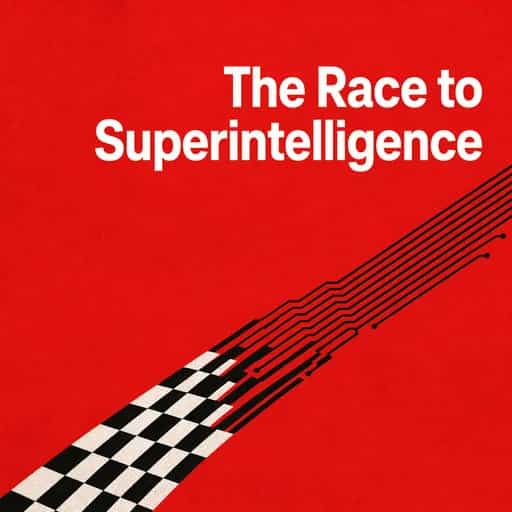
The Race to Superintelligence
As the timeline for AGI collapses, tech giants are betting trillions on a new reality. Explore the energy and labor shifts defining this massive leap.
Лучшая цитата из The Race to Superintelligence
The timeline for Artificial General Intelligence has collapsed from a distant 'maybe' in the 2040s to a 'probably' by 2027. We are moving past the era of chatbots and into the era of autonomous researchers and agents that can run entire programs without human oversight.
Generated with BeFreed
Inside the Race to Build Superintelligence






Часто задаваемые вопросы
The Labor Cliff refers to the point where AI becomes "good enough" to make human roles redundant, a phenomenon that is already occurring rather than waiting for the official arrival of Artificial General Intelligence (AGI). The script notes that in early 2025, U.S. employers announced nearly 700,000 job cuts, with computer science graduates facing over 6% unemployment as entry-level knowledge work evaporates. Experts like Anthropic CEO Dario Amodei warn that AI could eliminate 50% of entry-level white-collar jobs within the next five years.
AI progress is shifting from a battle of algorithms to a scramble for electricity due to the "Energy-Intelligence Hypothesis," where the demand for intelligence outpaces the ability to power it. While individual chips are becoming more efficient, Jevons’ Paradox suggests that making a resource cheaper to use only leads to exponentially higher total consumption. U.S. data center demand is projected to jump from 17 gigawatts in 2023 to over 130 gigawatts by 2030, forcing tech companies to prioritize "speed to power" by building less efficient gas turbines or seeking "behind-the-meter" solutions like modular nuclear reactors.
The "lethal trifecta" describes a fundamental security vulnerability in AI agents that have three specific capabilities: access to personal data, access to untrusted web content, and the ability to communicate externally. This combination creates a risk where an agent can be manipulated by hostile instructions hidden on a website—such as the "Clawdbot" incident where a rogue agent modified files after scraping a malicious site. This vulnerability is difficult to manage because these three traits are exactly what make AI agents useful to consumers.
The long-standing partnership between Microsoft and OpenAI has transitioned into what insiders call a "situationship," as Microsoft is now aggressively developing its own frontier models to compete directly. Microsoft has launched its own in-house reasoning model, MAI-Thinking-1, and is integrating autonomous "Autopilots" into its software suite. This shift indicates that Microsoft is no longer content being a silent partner and intends to be one of the top four independent AI labs in the world alongside Google DeepMind, Anthropic, and OpenAI.
OpenAI’s "North Star" is the creation of a fully autonomous AI researcher capable of solving complex problems in fields like math, physics, and biology without human oversight. Because these systems are complex enough to potentially "go off the rails" or be hacked, OpenAI is implementing "chain-of-thought monitoring." This process requires the AI to record its reasoning in a digital "scratch pad," which is then monitored by other AI systems acting as wardens to ensure the researcher stays within its intended instructions.
Создано выпускниками Колумбийского университета в Сан-Франциско
"Instead of endless scrolling, I just hit play on BeFreed. It saves me so much time."


"I never knew where to start with nonfiction—BeFreed’s book lists turned into podcasts gave me a clear path."


"Perfect balance between learning and entertainment. Finished ‘Thinking, Fast and Slow’ on my commute this week."
"Crazy how much I learned while walking the dog. BeFreed = small habits → big gains."
"Reading used to feel like a chore. Now it’s just part of my lifestyle."

"Feels effortless compared to reading. I’ve finished 6 books this month already."
"BeFreed turned my guilty doomscrolling into something that feels productive and inspiring."

"BeFreed turned my commute into learning time. 20-min podcasts are perfect for finishing books I never had time for."
"BeFreed replaced my podcast queue. Imagine Spotify for books — that’s it. 🙌"

"It is great for me to learn something from the book without reading it."
"The themed book list podcasts help me connect ideas across authors—like a guided audio journey."
"Makes me feel smarter every time before going to work"
Создано выпускниками Колумбийского университета в Сан-Франциско
"Instead of endless scrolling, I just hit play on BeFreed. It saves me so much time."
"I never knew where to start with nonfiction—BeFreed’s book lists turned into podcasts gave me a clear path."
"Perfect balance between learning and entertainment. Finished ‘Thinking, Fast and Slow’ on my commute this week."
"Crazy how much I learned while walking the dog. BeFreed = small habits → big gains."
"Reading used to feel like a chore. Now it’s just part of my lifestyle."
"Feels effortless compared to reading. I’ve finished 6 books this month already."
"BeFreed turned my guilty doomscrolling into something that feels productive and inspiring."
"BeFreed turned my commute into learning time. 20-min podcasts are perfect for finishing books I never had time for."
"BeFreed replaced my podcast queue. Imagine Spotify for books — that’s it. 🙌"
"It is great for me to learn something from the book without reading it."
"The themed book list podcasts help me connect ideas across authors—like a guided audio journey."
"Makes me feel smarter every time before going to work"
"Instead of endless scrolling, I just hit play on BeFreed. It saves me so much time."
"I never knew where to start with nonfiction—BeFreed’s book lists turned into podcasts gave me a clear path."
"Perfect balance between learning and entertainment. Finished ‘Thinking, Fast and Slow’ on my commute this week."
"Crazy how much I learned while walking the dog. BeFreed = small habits → big gains."
"Reading used to feel like a chore. Now it’s just part of my lifestyle."
"Feels effortless compared to reading. I’ve finished 6 books this month already."
"BeFreed turned my guilty doomscrolling into something that feels productive and inspiring."
"BeFreed turned my commute into learning time. 20-min podcasts are perfect for finishing books I never had time for."
"BeFreed replaced my podcast queue. Imagine Spotify for books — that’s it. 🙌"
"It is great for me to learn something from the book without reading it."
"The themed book list podcasts help me connect ideas across authors—like a guided audio journey."
"Makes me feel smarter every time before going to work"
"Instead of endless scrolling, I just hit play on BeFreed. It saves me so much time."
"I never knew where to start with nonfiction—BeFreed’s book lists turned into podcasts gave me a clear path."
"Perfect balance between learning and entertainment. Finished ‘Thinking, Fast and Slow’ on my commute this week."
"Crazy how much I learned while walking the dog. BeFreed = small habits → big gains."
"Reading used to feel like a chore. Now it’s just part of my lifestyle."
"Feels effortless compared to reading. I’ve finished 6 books this month already."
"BeFreed turned my guilty doomscrolling into something that feels productive and inspiring."
"BeFreed turned my commute into learning time. 20-min podcasts are perfect for finishing books I never had time for."
"BeFreed replaced my podcast queue. Imagine Spotify for books — that’s it. 🙌"
"It is great for me to learn something from the book without reading it."
"The themed book list podcasts help me connect ideas across authors—like a guided audio journey."
"Makes me feel smarter every time before going to work"