BeFreed
    Categories>History & Society>The Lessons of History: Understanding Human Nature and Behavior

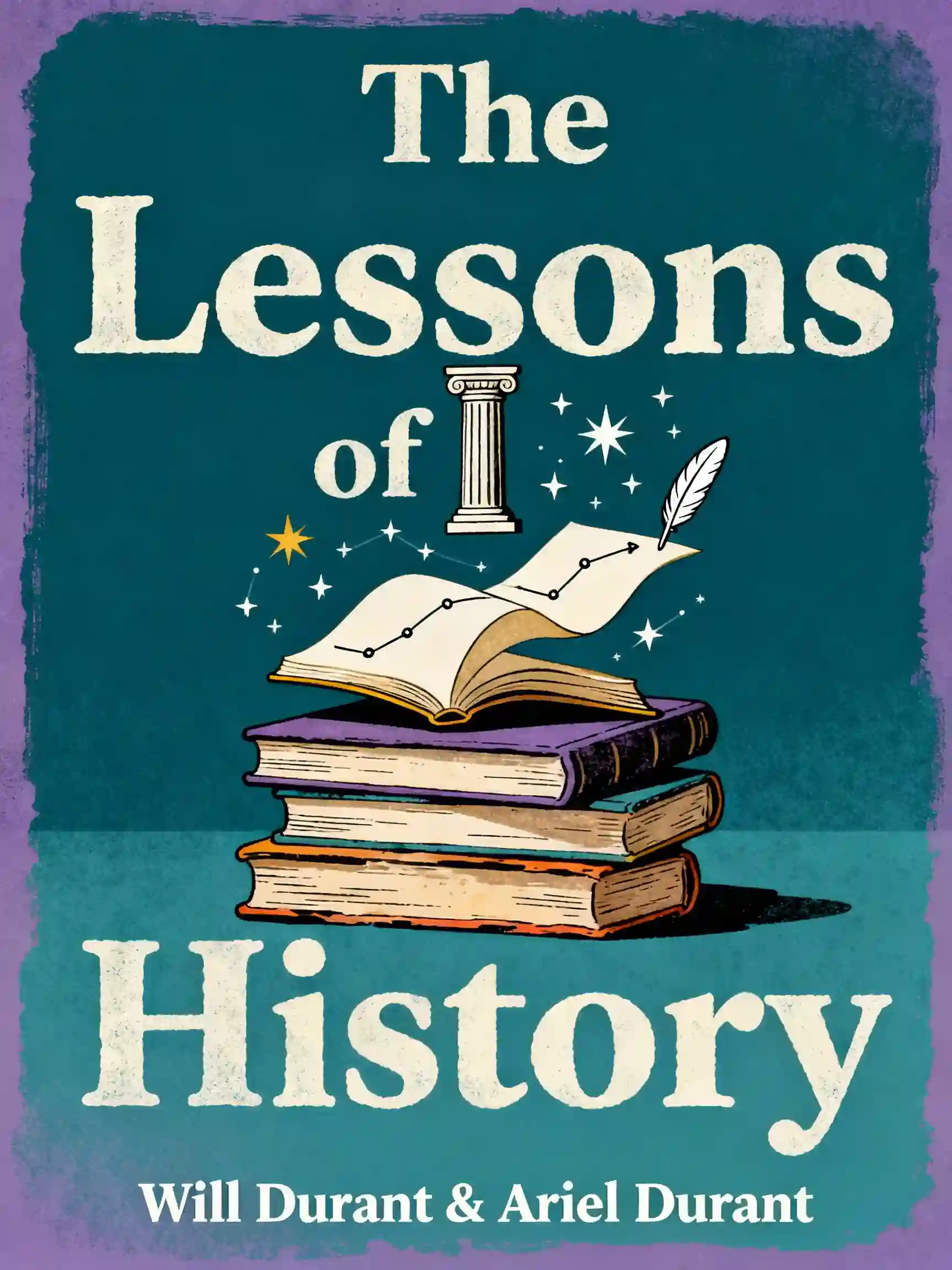
    The Lessons of History: Understanding Human Nature and Behavior

    30 min
    |
    |
    1 июл. 2026 г.
    • History & Society
    • Philosophy & Spirituality

    Explore The Lessons of History to understand how human nature remains unchanged despite technological shifts. Learn to use historical patterns to navigate the present.

    The Lessons of History: Understanding Human Nature and Behavior
    0:00 / 0:00
    Выберите способ подачи

    Один эпизод. Множество способов его услышать.

    Те же идеи из The Lessons of History: Understanding Human Nature and Behavior. Выберите подходящие вам голос, глубину и темп. Меняйте в любой момент.

    Расшифровка и главы

    Глава 1

    The Map of Human Nature

    History is often taught as a series of accidents—a stray bullet, a sudden storm, a charismatic leader who changes everything. We look at the past as a collection of chaotic events, a sequence of "one damn thing after another." But if you look closely at the long arc of human activity, you start to see something else entirely. You see that while our tools change, the hands that hold them do not. We often mistake the speed of our inventions for a change in who we are, but the reality is that human behavior has changed significantly over the millennia while human nature has remained virtually untouched for at least two thousand years. We have faster cars, but the road rage is the same. We have global communication, but the tribalism is identical.

    This isn't just a bit of trivia to be tucked away in a textbook. It is a superpower for navigating your own life. When you understand the underlying patterns of human character, you stop being surprised by the crimes and absurdities of the world and start recognizing the map that has been laid out by those who came before us. History is the most reliable path for you to understand the present and anticipate the problems you will face tomorrow. It is the study of how we have behaved, which is the only real indicator of how we might behave next. If you know how a human being reacts under pressure in the first century, you have a very good idea of how they will react in the twenty-first.

    Today, we are going to look at the work of Will and Ariel Durant, who spent decades distilling the entire history of civilization into a set of fundamental laws. They spent their lives sifting through the ruins of empires to find the common threads that bind us all. We will explore the biological floor that supports every society, the eternal tug-of-war between liberty and equality, the way geography and technology shift the seats of power, and the role of religion as the glue that keeps us from falling apart. By the end, you should see that your society is the sum total of every previous event rolled into the present, driven by forces like genetics, culture, environment, and technology. Let’s peel back the layers of the new and look at the ancient mechanisms actually driving the gears of your world.

    Глава 2

    The Biological Floor of History

    Before we can talk about kings, presidents, or software engineers, we have to talk about biology. It is the fundamental floor upon which all history is built. Human history is just a brief spot in space, a tiny flicker in the cosmic timeline, and its first lesson is one of deep modesty. We are, at our core, organisms subject to the same trials of evolution as any other species. The laws of biology double as the fundamental lessons of history because we are constantly engaged in a struggle for existence. We are not exempt from the laws of the jungle just because we wear suits and sit in air-conditioned offices.

    The most basic of these lessons is that life is competition. We like to think of ourselves as more refined than the animal kingdom, but the reality is that competition is the trade of life. It is the pulse of the world. When resources like food, or in our modern case, status and capital, are abundant, that competition is peaceful—it looks like a career ladder or a sporting event. When they are scarce, it becomes violent. Even our most noble acts of cooperation are, in a historical sense, sophisticated forms of competition. We cooperate within our groups—our families, our companies, our nations—primarily to make our group more powerful in its competition with other groups. We are social animals, but we are social largely so that we can be more effective competitors.

    Nature does not care about our modern declarations of equality. She loves difference because difference is the raw material for selection. From nature's standpoint, you were born unfree and unequal. You were endowed with a unique set of physical and psychological traits that may or may not be suited for the specific environment you find yourself in. This biological reality leads to a recurring pattern: as a society becomes more complex, it puts an even higher premium on superior ability. This inevitably leads to a concentration of wealth and power. In a simple society, the gap between the strongest hunter and the weakest is small. In a digital society, the gap between the most talented engineer and the least is astronomical.

    Nature seems to have a passion for quantity as a prerequisite for quality. She favors large litters and the struggle that picks the surviving few. It is a harsh truth, but history shows that the fertile inherit the earth. Any advance in food production is eventually met by an increase in the number of mouths to feed. This is the Malthusian trap that haunted our ancestors for millennia. Every civilization we have ever built is essentially a short chapter in the history of biology. When you look at history through this lens, you start to see that the crimes of humanity are often just the relics of our rise—the biological instincts of aggression and acquisitiveness that helped us survive the hunting stage, still firing in a world that now demands social cooperation. We are predatory animals trying to learn the rules of a polite dinner party.

    Учитесь дальше с этим эпизодом

    Изучите идеи этого эпизода глубже с помощью направленного обучения в BeFreed.

    Глава 3

    The Tension Between Freedom and Equality

    If you have ever felt frustrated by the political divide in your own country, you are feeling the tension of a historical law that has never been broken: freedom and equality are sworn enemies. They are the two great ideals of the modern world, yet they are mathematically and biologically incompatible. If you leave people free, their natural inequalities will multiply. Think about it—if everyone starts at the same line but possesses different levels of health, intelligence, or ambition, the gap between the most successful and the least successful will only grow over time. To check that growth of inequality, you have to sacrifice liberty. You have to use the power of the state to restrain the strong and lift the weak.

    You see this play out in the grand experiments of history. In nineteenth-century England and America, where liberty was prioritized and the "laissez-faire" approach reigned, inequality skyrocketed. The industrial titans grew unimaginably wealthy while the working class struggled. In Russia after 1917, where equality was the stated goal, liberty had to be suppressed to force that equality into existence. The reality is that only those who feel they are below the average in ability truly desire equality of outcome, while those who feel they are above average desire freedom to exercise their advantages. This creates a permanent class struggle that no government has ever fully resolved.

    But this isn't just about money; it’s about the very structure of society. The first condition of freedom is actually its limitation. If you have absolute freedom, you have chaos—the "war of all against all." And in chaos, freedom dies because the strongest individual will eventually enslave the others. That is why the primary task of any government is to establish order. You need a center of power to prevent disruptive force from staying in private hands. It is a delicate balance, a tightrope walk across history. If social order is too strong, your creative liberty is crushed, and the society becomes a stagnant tomb. If it is too low, you lose the cooperation necessary to build a civilization, and the society dissolves into a mob.

    A society that allows its potential abilities to develop and function will have a better chance of surviving the competition between groups. But we must also face the fact that the concentration of wealth is a natural and inevitable pattern that repeats itself throughout history because the most valuable skills are often confined to a few individuals. This leads to what historians call the slow heartbeat of the social organism—a cycle where wealth concentrates and is then periodically redistributed, either through peaceful legislation or violent revolution. You aren't just seeing a temporary political disagreement today; you are seeing the latest iteration of this eternal struggle between the desire for freedom and the necessity of order. It is the breathing of a giant that has been alive for five thousand years.

    Глава 4

    The Geography of Power

    For most of human history, the ground beneath your feet determined your destiny. Geography was the matrix of history, the nourishing mother that dictated which nations would rise and which would fall. If you lived on the coast, you inevitably became an addict of the sea. You had to learn to build ships, to navigate by the stars, and to trade with distant cultures. This is why Great Britain, a small island, took to the water and became the finest naval power in history. For centuries, if you controlled the waterways—the Mediterranean, the Atlantic, the English Channel—you controlled trade. This is why nations like Greece and Italy rose to such prominence; they were the piers of the ancient world.

    But then, something shifted. Man began to fashion tools, and as technology grew, the influence of geographic factors began to diminish. This is what we call the technological wild gamble. Think about the invention of the airplane. Suddenly, the power dynamic of the entire world changed. Trade routes no longer had to follow rivers and seas; they could fly directly to their goals over mountains and deserts that were once impassable. This shifted the advantage from nations with long shorelines to those with massive land masses, like the United States, Russia, and China. Technology didn't eliminate geography, but it rewrote its rules.

    We are now living in a time where our technology is allowing us to overpower the natural world in ways our ancestors couldn't have imagined. We can survive outside the earth’s atmosphere, transcending the boundaries of oxygen. We can turn deserts into gardens with desalination and irrigation. We are even moving toward a world where we might control earthquakes or hurricanes. But here is the catch: while we have enlarged our instruments, we have not necessarily enlarged our purpose. We are using incredibly complex, modern means to achieve the same old ends—food, security, status, and power. We build a global internet, an incredible feat of engineering, and use it to argue about the same tribal grievances that occupied people in the Bronze Age.

    Technology has accelerated the pace of life, but it hasn't changed the fundamental human instincts that drive us. In fact, technology is the second way we are trying to overpower the role of accident in our lives. The first was culture—education and the passing down of knowledge so that each generation didn't have to reinvent the wheel. Now, technology can help someone survive and thrive even if they were dealt a poor genetic hand. Yet, despite this progress, the environment remains the master. We are still transient guests of the earth, destined to become fossils in its soil, no matter how many airplanes we build. A single solar flare or a shift in the climate can still bring the most advanced civilization to its knees. It’s worth asking yourself: as your life becomes increasingly digital, how much of your behavior is still being dictated by the ancient geography of your biology?

    Учитесь дальше с этим эпизодом

    Изучите идеи этого эпизода глубже с помощью направленного обучения в BeFreed.

    Глава 5

    Religion as the Social Glue

    Why is it that every civilization we know of has had some form of religion? From the smallest tribe in the Amazon to the largest empire in history, the presence of the divine is a constant. History suggests that religion is the propitiatory worship of hidden forces—the fear of the ocean, the wind, and the sky. It begins as a way to negotiate with a terrifying and unpredictable world. But it becomes something more when leaders use those rituals to support morality and law. It tells people that their local code of conduct isn't just a human invention, but something dictated by the gods. It moves the source of authority from the king's sword to the creator's will.

    This is a crucial piece of the puzzle because human nature is essentially uncivilized. Our individual instincts are millions of years old, forged in the hunting stage where violence and greed were survival mechanisms. Our social instincts, the ones that tell us to be kind to strangers and obey laws, are only about seventy thousand years old. To get a group of people to override their deep individual instincts and cooperate, you need powerful ideas—like religion, law, or capitalism. Religion has been the primary tool for maintaining social order by giving people a reason to tolerate the difficulties of life and a belief system that unifies them. It provides a supernatural sanction for the moral code, making the cost of "sin" much higher than the cost of just breaking a law.

    In fact, there is no significant example in history of a society successfully maintaining a moral life among the masses without the aid of religion as a binding force. You can have a few philosophers who are moral without a god, but for the majority of people throughout history, the fear of the divine has been the only thing standing between order and anarchy. But notice what happens as education and science spread. Theologies begin to lose their credence. We start to see the human origins of our moral codes, and the divine surveillance that once kept people in line starts to fade. This creates a dangerous moment for any civilization—a period of "moral interregnum" where the old reasons for being good are gone, but new ones haven't taken hold.

    When the old gods die, we don't necessarily become more rational. We often just find new things to worship—political ideologies, technological progress, or consumerism. We replace the cathedral with the stadium or the shopping mall. But these new religions often lack the long-term stability and the deep moral weight of the old ones. The tension between the skeptic and the believer is another one of those historical heartbeats. The skeptic helps to clear away superstition and progress the mind, preventing the society from becoming a stagnant theocracy. But the believer provides the social cohesion and the shared myths that allow the skeptic to exist in the first place. Without the believer, the society dissolves; without the skeptic, it stops growing.

    Глава 6

    The Rise and Fall of Economies

    Economics is often treated as a dry subject of spreadsheets and interest rates, but in history, it is the study of the heartbeat of a civilization. Every economic system is eventually a reflection of human nature. We see that the motivation for work is usually the desire for gain, and the primary engine of progress is the pursuit of profit. While this can lead to incredible innovation and wealth, it also leads to the inevitable concentration of wealth we discussed earlier. We have tried different systems—communism, socialism, feudalism—but they all eventually have to reckon with the fact that humans are motivated by self-interest and that talent is not distributed equally.

    Think of wealth concentration like a physical law of gravity. In every society, wealth flows toward the most capable. This isn't necessarily a moral judgment; it's a functional reality. The people with the most valuable skills—whether they are hunters in a tribe, traders on the Silk Road, or software engineers in Silicon Valley—will always accumulate more than those without those skills. Success breeds success; wealth provides the tools to create more wealth. But there is a limit to how much inequality a society can handle. When the gap between the rich and the poor becomes too wide, the social fabric begins to tear. The poor feel they have no stake in the system, and the rich become defensive and isolated.

    Historically, there are only two ways this gap is closed: through legislation or through revolution. There is no third way. In ancient Athens, a leader named Solon managed to redistribute wealth through peaceful reform, canceling debts and devaluing the currency to save the city from a violent uprising. He realized that the rich must give up some of their wealth to keep the rest. In eighteenth-century France, the ruling class refused to bend, and the redistribution happened through the guillotine. The pattern is always the same: wealth concentrates until the pressure becomes unbearable, and then it is redistributed. It is a violent or peaceful reset of the economic clock.

    This cycle is not a sign of failure; it is the way societies breathe. It is the mechanism by which a civilization prevents itself from becoming a permanent caste system. The challenge for any civilization is to find a way to allow for the concentration of wealth that drives progress—the incentives that make people build and invent—while also ensuring a level of redistribution that maintains social stability. We see this today in the global debates over tax policy, social safety nets, and the role of the state. These aren't new problems; they are the same problems that faced the Romans and the Aztecs. The names of the currencies change, and the methods of accounting become more complex, but the underlying economic tension remains the same.

    Учитесь дальше с этим эпизодом

    Изучите идеи этого эпизода глубже с помощью направленного обучения в BeFreed.

    Глава 7

    The Role of Government and Power

    If you look at the history of government, you see a constant movement between different forms of power. We often think of democracy as the final destination of political evolution, the "end of history," but history suggests it is just one phase in a recurring cycle. Most societies begin with some form of monarchy or strong-man rule. In a time of chaos or early development, a single powerful leader provides the order and security necessary to build a civilization. This is the stage of the warlord or the founding king. Over time, this often evolves into an aristocracy—rule by a small group of elite families who have accumulated enough wealth and power to check the king's authority.

    Aristocracies are often the most stable and culturally productive periods of a civilization. Because they don't have to worry about the next election or a sudden coup, they have the resources to patronize the arts and the long-term perspective to build lasting institutions like universities and cathedrals. They provide a sense of continuity. But eventually, aristocracies tend to become stagnant and self-serving. They begin to see their privilege as a birthright rather than a responsibility. They lose touch with the needs of the people, which leads to a push for democracy—rule by the many.

    Democracy is a powerful way to tap into the collective intelligence and energy of a population. It allows for more freedom and more equality than either monarchy or aristocracy. It gives every person a voice and a stake in the future. But democracy also has its own set of problems that have been recognized since the time of Plato. It can lead to a focus on short-term gains over long-term stability, as politicians promise whatever is necessary to win the next vote. It can be easily manipulated by demagogues—those who know how to play on the emotions and fears of the crowd. Historically, democracies often end in a state of chaos or extreme polarization, which leads people to crave order once again—bringing back the strong-man or the monarch who promises to fix everything.

    The lesson here isn't that democracy is doomed, but that it is fragile. It is a high-maintenance form of government. It requires a high level of education, a strong middle class, and a shared sense of purpose among the citizens to function. When those things fade—when the education system fails, when the middle class shrinks, or when the people become divided into warring tribes—the cycle begins again. We see this in the way political power shifts today. The tension between the need for strong, decisive leadership and the desire for popular representation is a fundamental part of the human experience. We are always searching for the perfect balance, and we always seem to overcorrect.

    Глава 8

    The Moral Compass of History

    We like to think that we are more moral than our ancestors. We look back at things like slavery, public executions, and the lack of women's rights with horror. We feel a sense of moral superiority, believing that we have finally seen the light. And it is true that our social codes have changed dramatically. But a difficult question remains: have we actually become better people, or have our circumstances just changed? Have our hearts evolved, or has our environment simply made certain vices unnecessary and certain virtues easier?

    History suggests that morality is often a function of economics. It is a tool for survival. In the hunting stage of human history, being aggressive, greedy, and suspicious of outsiders was a survival trait. The person who didn't fight for their share died. In the agricultural stage, those same traits became vices. To live in a village and farm the land, you needed a different set of virtues: patience, cooperation, and hard work. The family unit became the central pillar of morality because you needed children to work the fields. In our modern industrial and digital age, we have seen another shift. The family unit has become less central as people move to cities and become more independent. Our morality has become more individualistic and more permissive.

    Many of the things we consider immoral today were once seen as necessary for survival. Slavery, for example, was a common feature of almost every ancient civilization—not because they were more evil than us, but because it was the only way to get the massive amount of labor needed for large-scale projects like irrigation and construction. It wasn't until the invention of machines—the steam engine and the electric motor—that slavery became both economically unnecessary and morally reprehensible. This suggests that our moral progress is often a luxury provided by our technological and economic success. We can afford to be kind because we are no longer fighting for our next meal.

    But there is a core set of moral principles that seems to remain constant across time and culture. Things like honesty, loyalty, and courage are valued in every society, from the Vikings to the Victorians, because they are necessary for any group to function. You cannot have a society if everyone lies, if everyone is a coward, or if everyone betrays their friends. The challenge for us is to recognize which of our moral beliefs are timeless and which are just reflections of our current environment. By looking at history, we can see the long-term consequences of different moral choices. We can see that societies that lose their sense of honesty or their commitment to the future eventually collapse, regardless of how much technology they have.

    Учитесь дальше с этим эпизодом

    Изучите идеи этого эпизода глубже с помощью направленного обучения в BeFreed.

    Глава 9

    The Rhythm of Civilization

    If you step back and look at the whole picture, you see that civilization is not a steady climb toward perfection. It is not a straight line going up and to the right. It is more like a series of waves, or the changing of the seasons. A civilization rises as it finds a way to balance order and freedom, wealth and redistribution, religion and skepticism. It reaches a peak of cultural and economic achievement—a "Golden Age"—and then it begins to decline as those delicate balances are lost. The very things that made it great often become the seeds of its destruction.

    The decline of a civilization is rarely caused by a single event, like a barbarian invasion or a sudden plague. It is usually a slow process of internal decay. The social glue of religion and shared myth fades, leaving the population fragmented. Wealth becomes too concentrated, creating a class of people who have everything and a class who has nothing. The government becomes stagnant, bloated, and unresponsive to change. The people lose their sense of shared purpose and their willingness to sacrifice for the common good. When a civilization is in this weakened, hollowed-out state, it becomes vulnerable to external shocks—like a natural disaster or an invasion—that it would have easily survived in its prime.

    But the end of a civilization is not the end of the world. It is a composting process. The knowledge and achievements of one civilization are often passed down to the next. The Greeks learned from the Egyptians, the Romans learned from the Greeks, the Islamic Golden Age preserved the wisdom of the ancients, and we have learned from all of them. History is a process of cumulative learning. Even when a particular society falls, the human race as a whole continues to move forward, carrying the lessons, the art, and the technology of the past with it. We stand on a mountain of ruins, which is why we can see further than those who came before us.

    This gives us a reason for both modesty and hope. Modesty because we see that our own civilization is not permanent and is subject to the same laws of decline as those that came before us. We are not the "chosen ones" who have escaped history. Hope because we see that we are part of a much larger story, and that our contributions, however small, can help to build the foundation for whatever comes next. The rhythm of civilization is a reminder that we are not the first people to face these challenges, and we won't be the last. Each generation is a new performance of an ancient play, and our job is to play our part as well as we can.

    Глава 10

    The Individual in the Stream of History

    So, where do you fit into all of this? It can be easy to feel insignificant when you look at the vast scale of history. When you realize that empires rise and fall over centuries and that billions of people have lived and died before you, your own life can seem like a tiny drop in a massive ocean. But the reality is that history is made up of the choices of individuals. While the broad patterns are driven by large-scale forces like biology and geography, the specific details—the texture and the color of an era—are shaped by the actions of people like you.

    Every time you choose to cooperate instead of compete, every time you stand up for a moral principle, every time you contribute to the collective knowledge of our species, you are playing a role in the unfolding story of history. You are a carrier of the culture and the values that will be passed down to the next generation. You are a biological and cultural bridge. In this sense, you are a link in a chain that stretches back thousands of years and will continue far into the future. Your choices matter because they contribute to the "social glue" that holds your community together.

    Understanding history gives you a sense of perspective that is rare in our fast-paced, digital world. It helps you to see that the problems you face—economic anxiety, political division, social change—are not unique to you or your time. They are the recurring challenges of the human condition. This perspective allows you to see the patterns in your own life and the world around you, and to make more informed choices. You stop reacting to every headline with panic and start asking, "Where have I seen this before?" It allows you to see the long-term consequences of your actions, rather than just the immediate rewards.

    History is not just a collection of dates and names to be memorized; it is a living, breathing thing. It is the story of us. It is the biography of the human race. And by understanding that story, you can better understand yourself. You can see how your own life is shaped by the forces we have discussed—how your geography, your biology, and your culture have made you who you are. You can find your own place in the great stream of human existence, and in doing so, find a sense of meaning and purpose that transcends your individual circumstances.

    Учитесь дальше с этим эпизодом

    Изучите идеи этого эпизода глубже с помощью направленного обучения в BeFreed.

    Глава 11

    The Synthesis of the Past

    We have covered a lot of ground today, from the biological floor of our existence to the complex cycles of wealth and power. What we have seen is that history is not a random series of events, but a structured process driven by fundamental laws of human nature. We have seen that life is competition, that freedom and equality are in constant tension, that geography and technology shape the world stage, and that religion and morality provide the social glue that holds us together. These aren't just academic theories; they are the invisible forces that determine the success or failure of our lives and our societies.

    The reason these patterns repeat with such consistency is that human nature has not changed. We are still driven by the same basic instincts for survival, status, and connection that drove our ancestors thousands of years ago. Our tools have become more sophisticated—we've gone from flint knives to fiber optics—but our goals remain the same. We want to be safe, we want to be respected, and we want to belong. This is the central insight of the Durants' work: that the present is merely the past rolled up into the current moment. We are the latest version of an old story.

    But this isn't a reason for cynicism or despair. It's a reason for clarity. When you understand the mechanisms of history, you are no longer a victim of the news cycle. You can see the long-term trends behind the daily headlines. You can recognize the recurring patterns of wealth concentration and redistribution, the rise and fall of political systems, and the shifting moral codes of our society. You begin to see the world in three dimensions, with the depth of the past providing context for the surface of the present. You become harder to manipulate because you know that most "new" ideas are just old ones with a fresh coat of paint.

    This knowledge gives you a map. It doesn't tell you exactly what will happen next—history is too complex for that—but it shows you the terrain you are likely to encounter. It helps you to ask the right questions: "Is this policy sustainable?" "Is this social change a sign of growth or decay?" "What is the biological reality behind this political movement?" It allows you to live with a sense of purpose and perspective, knowing that you are part of a long and meaningful story. You are no longer lost in the woods of the present; you have a compass.

    Глава 12

    The Path Forward

    So, what do we do with this knowledge? The lecture has shown us that the forces driving our world are ancient and powerful. We are small players in a very large game. But it has also shown us that we have the ability to understand those forces and to work with them. We are not just leaves blowing in the wind; we are conscious participants. We can use the lessons of history to build more stable and more just societies. We can use our technology to overcome the limitations of our geography and our biology, provided we don't lose sight of our purpose. And we can use our collective wisdom to create a better future for those who will come after us.

    The study of history is ultimately an act of hope. It is a belief that by understanding where we have been, we can better understand where we are going. It is a recognition that even in the face of the crimes and absurdities of the world—the wars, the collapses, the injustices—there is a path forward. The path is not always easy, and it is not always clear, but it is there. History shows us that humanity is incredibly resilient. We have survived ice ages, plagues, and world wars. We have built beautiful things in the middle of chaos.

    As you go back to your daily life, I want you to keep this map in mind. When you see a political debate on television, think about the eternal tension between freedom and equality. When you see a new technological breakthrough, think about the wild gamble and how it might shift the seats of power in ways we don't yet see. When you face a moral dilemma in your own life, think about the timeless principles that have guided human behavior for millennia and the functional role those principles play in keeping our world from falling apart.

    By doing this, you are not just learning about history; you are living it. You are becoming a more conscious and more informed participant in the great experiment of civilization. You are moving from being a passenger to being a navigator. And in the end, that is the most important lesson of all. History is not something that happened to other people in other times. It is something that is happening right now, in your city, in your office, and in your home. You are a part of it, and your understanding of the past is your best tool for shaping the future. The map is in your hands. Use it well.

    ★★★★★

    Вы дошли до конца: The Lessons of History: Understanding Human Nature and Behavior

    “Прошло 23 дня, и я пользуюсь приложением каждый день. Теперь оно стало частью моей повседневной жизни.”

    jayallen

    Лучшая цитата из The Lessons of History: Understanding Human Nature and Behavior

    “

    History suggests that human behavior has changed significantly over the millennia, yet human nature has remained virtually untouched for at least two thousand years. When you understand the underlying patterns of human character, you stop being surprised by the world and start recognizing the map that has been laid out by those who came before us.

    ”
    B

    Generated by BeFreed

    Вопрос для ввода

    The Lessons of History

    Голоса ведущих
    Lenaplay
    Источники знаний
    Lessons of history
    Book Summary: The Lessons of History by Will and Ariel Durant
    link
    https://jamesclear.com/book-summaries/lessons-of-history
    The Lessons of History Book Review - David Perell
    link
    https://perell.com/essay/history/
    Review of Will and Ariel Durant's "The Lessons of History" (1968)
    link
    https://minakhireads.substack.com/p/the-lessons-of-history-will-and-ariel-durant
    The Lessons of History by Will & Ariel Durant (Deep Book Summary) | Sloww
    link
    https://www.sloww.co/lessons-of-history-durant/

    Часто задаваемые вопросы

    The Lessons of History reveals that while our tools and inventions have accelerated significantly over the millennia, fundamental human nature has remained virtually untouched for at least two thousand years. By studying history, we learn that human behavior is the only reliable indicator of how we might act in the future. This perspective helps us look past the noise of the digital age to see that the present is simply the past rolled up into the current moment.

    Understanding historical patterns acts as a superpower for navigating life by providing a map laid out by those who came before us. When we recognize that human behavior has changed very little over time, we stop being surprised by the crimes and absurdities of the world. Instead of viewing political or economic upheavals as unprecedented events, we can use the study of history to understand the underlying character of our current society and anticipate future problems.

    Yes, there is a distinct difference between the acceleration of inventions and fundamental changes in who we are. While our tools change at the speed of fiber-optic cables, the hands that hold them do not. We often mistake technological shifts for a change in our essence, but history suggests that while our behavior adapts to new tools, our core nature remains constant. Recognizing this distinction allows for a better understanding of both the present and the future.

    Создано выпускниками Колумбийского университета | в Сан-Франциско

    BeFreed объединяет глобальное сообщество любознательных людей

    4.7

    средняя оценка

    Более 7,84 тыс. оценок приложения

    Сообщество BeFreed

    Честно говоря, я ещё даже не изучила приложение полностью, но за последние несколько дней оно меня по-настоящему впечатлило… BeFreed — совсем другой уровень по сравнению с любыми учебными приложениями, которыми я пользовалась. Оно невероятно увлекает и действительно улучшает концентрацию — то, что нужно всем, кто бесконечно листает ленту!

    @ladyInfinity

    Я купил BeFreed ровно 23 дня назад и с тех пор пользуюсь им каждый день. Оно полностью встроилось в мой рабочий процесс и привычку учиться.

    @jayallen

    Честно говоря, приложение превзошло все мои ожидания. Я могу попросить его сгенерировать аудио на любую тему, какой бы она ни была, и результат впечатляет. Моя профессиональная область — специализация в психотерапии, она мультидисциплинарная, но ответы очень точные.

    @Raguipa

    Больше всего я ценю то, насколько меньше я стал листать ленту: меньше времени уходит на поиск и больше — на усвоение информации. Сочетание полных аудиокниг, подкастов и планов обучения — блестящее.

    @colonyofcreatorsNGO

    Я уже 24 года работаю инструктором ускоренного обучения PhotoReading… книги, чтение и обучение — моя стихия, и BeFreed отлично справился, предложив инновационный подход к подаче информации в лёгкой для восприятия форме.

    @BeFreed user

    Это не просто приложение с кратким содержанием книг: я попробовал режим «весёлого чтения», и это гораздо лучший пересказ и способ схватывать идеи, чем традиционный. Уже ради одного этого оно того стоит.

    @austinakon

    Обожаю это приложение. Пользуюсь несколько дней и не могу перестать слушать. Отличный способ начать.

    @jcrules328

    Мне очень нравится это приложение; я тестирую его уже около месяца и считаю настоящей находкой. Оно отлично работает, потому что в BeFreed можно создавать собственные темы, а голос замечательный — с безграничным выбором озвучек.

    @DanielCZ

    Честно говоря, я ещё даже не изучила приложение полностью, но за последние несколько дней оно меня по-настоящему впечатлило… BeFreed — совсем другой уровень по сравнению с любыми учебными приложениями, которыми я пользовалась. Оно невероятно увлекает и действительно улучшает концентрацию — то, что нужно всем, кто бесконечно листает ленту!

    @ladyInfinity

    Я купил BeFreed ровно 23 дня назад и с тех пор пользуюсь им каждый день. Оно полностью встроилось в мой рабочий процесс и привычку учиться.

    @jayallen

    Честно говоря, приложение превзошло все мои ожидания. Я могу попросить его сгенерировать аудио на любую тему, какой бы она ни была, и результат впечатляет. Моя профессиональная область — специализация в психотерапии, она мультидисциплинарная, но ответы очень точные.

    @Raguipa

    Больше всего я ценю то, насколько меньше я стал листать ленту: меньше времени уходит на поиск и больше — на усвоение информации. Сочетание полных аудиокниг, подкастов и планов обучения — блестящее.

    @colonyofcreatorsNGO

    Я уже 24 года работаю инструктором ускоренного обучения PhotoReading… книги, чтение и обучение — моя стихия, и BeFreed отлично справился, предложив инновационный подход к подаче информации в лёгкой для восприятия форме.

    @BeFreed user

    Это не просто приложение с кратким содержанием книг: я попробовал режим «весёлого чтения», и это гораздо лучший пересказ и способ схватывать идеи, чем традиционный. Уже ради одного этого оно того стоит.

    @austinakon

    Обожаю это приложение. Пользуюсь несколько дней и не могу перестать слушать. Отличный способ начать.

    @jcrules328

    Мне очень нравится это приложение; я тестирую его уже около месяца и считаю настоящей находкой. Оно отлично работает, потому что в BeFreed можно создавать собственные темы, а голос замечательный — с безграничным выбором озвучек.

    @DanielCZ

    Мне очень нравится, что полезную, сжатую информацию и идеи можно получить в виде аудио в стиле подкаста на 8–15 минут. Я не большой фанат подкастов из-за «воды», но здесь её нет совсем.

    @BeFreed user

    Я заканчиваю докторскую и вынужден читать много незнакомого материала… В BeFreed достаточно ввести запрос — приложение само находит источники и создаёт аудиоподкаст. Мне процесс в BeFreed кажется удобнее, чем в NotebookLM.

    @Brad

    Я часто ищу на YouTube, что послушать за завтраком, на прогулке или по дороге на работу, и BeFreed предлагает ещё более точный подход — без рекламы и без «воды»!

    @BeFreed user

    Самое лучшее в этой платформе — её универсальность. Нет буквально ни одной темы, которая была бы ей не по зубам. Она справляется со всем, что ей даёшь… Редко встретишь учебный инструмент без ограничений, который действительно выполняет обещания.

    @jayallen

    BeFreed — потрясающее приложение. Благодаря удобному дизайну я трачу меньше времени на навигацию и больше — на учёбу. Сочетание аудиокниг, подкастов и планов обучения — гениальная комбинация, которая полностью изменила мой распорядок дня.

    @BeFreed user

    Сначала мне понадобилось время, чтобы разобраться, как создавать подкасты на итальянском, а потом — бум! Это же великолепно! Можно попросить объяснить любую тему, и он делает это отлично и очень умно!

    @matteo77

    BeFreed стал моим ежедневным приложением для аудиокниг… Больше всего мне нравится, что ты вставляешь свой текст — и получаешь аудио, которое можно слушать на ходу.

    @kotanzu1

    Мне очень нравится, что полезную, сжатую информацию и идеи можно получить в виде аудио в стиле подкаста на 8–15 минут. Я не большой фанат подкастов из-за «воды», но здесь её нет совсем.

    @BeFreed user

    Я заканчиваю докторскую и вынужден читать много незнакомого материала… В BeFreed достаточно ввести запрос — приложение само находит источники и создаёт аудиоподкаст. Мне процесс в BeFreed кажется удобнее, чем в NotebookLM.

    @Brad

    Я часто ищу на YouTube, что послушать за завтраком, на прогулке или по дороге на работу, и BeFreed предлагает ещё более точный подход — без рекламы и без «воды»!

    @BeFreed user

    Самое лучшее в этой платформе — её универсальность. Нет буквально ни одной темы, которая была бы ей не по зубам. Она справляется со всем, что ей даёшь… Редко встретишь учебный инструмент без ограничений, который действительно выполняет обещания.

    @jayallen

    BeFreed — потрясающее приложение. Благодаря удобному дизайну я трачу меньше времени на навигацию и больше — на учёбу. Сочетание аудиокниг, подкастов и планов обучения — гениальная комбинация, которая полностью изменила мой распорядок дня.

    @BeFreed user

    Сначала мне понадобилось время, чтобы разобраться, как создавать подкасты на итальянском, а потом — бум! Это же великолепно! Можно попросить объяснить любую тему, и он делает это отлично и очень умно!

    @matteo77

    BeFreed стал моим ежедневным приложением для аудиокниг… Больше всего мне нравится, что ты вставляешь свой текст — и получаешь аудио, которое можно слушать на ходу.

    @kotanzu1

    Узнайте больше о том, как обсуждают BeFreed в интернете
    129.7K19.5K
    55.2K19.2K
    154.2K10827355
    48.1K2.5K
    81.2K6.6K
    82.3K1.8K
    Начните своё обучение прямо сейчас
    Приложение BeFreed
    BeFreed

    Учите что угодно персонализированно

    DiscordLinkedIn
    Избранные книги
    Crucial ConversationsThe Perfect MarriageInto the WildNever Split the DifferenceAttachedGood to GreatSay Nothing
    Популярные категории
    Self HelpCommunication SkillRelationshipMindfulnessPhilosophyInspirationProductivity
    Списки чтения знаменитостей
    Elon MuskCharlie KirkBill GatesSteve JobsAndrew HubermanJoe RoganJordan Peterson
    Коллекция наград
    Pulitzer PrizeNational Book AwardGoodreads Choice AwardsNobel Prize in LiteratureNew York TimesCaldecott MedalNebula Award
    Избранные темы
    ManagementAmerican HistoryWarTradingStoicismAnxietySex
    Лучшие книги по годам
    2025 Best Non Fiction Books2024 Best Non Fiction Books2023 Best Non Fiction Books
    Избранные авторы
    Chimamanda Ngozi AdichieGeorge OrwellO. J. SimpsonBarbara O'NeillWinston ChurchillCharlie Kirk
    BeFreed vs другие приложения
    BeFreed vs. Other Book Summary AppsBeFreed vs. ElevenReaderBeFreed vs. ReadwiseBeFreed vs. Anki
    Инструменты обучения
    Knowledge VisualizerAI Podcast Generator
    Информация
    О насarrow
    Ценыarrow
    Частые вопросыarrow
    Блогarrow
    Карьераarrow
    Партнёрствоarrow
    Программа амбассадоровarrow
    Каталогarrow
    BeFreed
    Try now
    © 2026 BeFreed
    Условия использованияПолитика конфиденциальности
    BeFreed

    Учите что угодно персонализированно

    DiscordLinkedIn
    Избранные книги
    Crucial ConversationsThe Perfect MarriageInto the WildNever Split the DifferenceAttachedGood to GreatSay Nothing
    Популярные категории
    Self HelpCommunication SkillRelationshipMindfulnessPhilosophyInspirationProductivity
    Списки чтения знаменитостей
    Elon MuskCharlie KirkBill GatesSteve JobsAndrew HubermanJoe RoganJordan Peterson
    Коллекция наград
    Pulitzer PrizeNational Book AwardGoodreads Choice AwardsNobel Prize in LiteratureNew York TimesCaldecott MedalNebula Award
    Избранные темы
    ManagementAmerican HistoryWarTradingStoicismAnxietySex
    Лучшие книги по годам
    2025 Best Non Fiction Books2024 Best Non Fiction Books2023 Best Non Fiction Books
    Инструменты обучения
    Knowledge VisualizerAI Podcast Generator
    Избранные авторы
    Chimamanda Ngozi AdichieGeorge OrwellO. J. SimpsonBarbara O'NeillWinston ChurchillCharlie Kirk
    BeFreed vs другие приложения
    BeFreed vs. Other Book Summary AppsBeFreed vs. ElevenReaderBeFreed vs. ReadwiseBeFreed vs. Anki
    Информация
    О насarrow
    Ценыarrow
    Частые вопросыarrow
    Блогarrow
    Карьераarrow
    Партнёрствоarrow
    Программа амбассадоровarrow
    Каталогarrow
    BeFreed
    Try now
    © 2026 BeFreed
    Условия использованияПолитика конфиденциальности

    Похожий контент

    Обложка книги The Lessons of History: Patterns of Human Progress
    [the-lessons-of-history-by-will-durant:c0000] The Lessons of History p1-1[the-lessons-of-history-by-will-durant:c0001] The Lessons of History p1-1[the-lessons-of-history-by-will-durant:c0002] The Lessons of History p1-1[the-lessons-of-history-by-will-durant:c0003] The Lessons of History p1-1
    17 sources
    The Lessons of History: Patterns of Human Progress
    Does history repeat itself or just rhyme? Explore the rhythmic patterns of wealth, war, and nature that have shaped 5,000 years of civilization.
    1262 min
    Обложка книги AI and the Lessons of History
    Technology TrapThe Second Machine Agesource 3AI Revolution vs. Industrial Revolution  - by Kevin Kohler
    6 sources
    AI and the Lessons of History
    As AI shifts the world from muscle to mind, history offers a roadmap. Explore how past revolutions help us navigate the future of work and growth.
    27 min
    Обложка книги The Human Puzzle: Why Our Ancient Brains Struggle in Modern Life
    The Elephant in the BrainThe Status GameThe Anxious Generation
    28 sources
    The Human Puzzle: Why Our Ancient Brains Struggle in Modern Life
    BeFreed
    Discover why your brain's ancient wiring creates blind spots in today's world. Drawing from Nobel laureate Daniel Kahneman, neuroscientist Robert Sapolsky, and digital behavior experts, this episode reveals how status-seeking, tribal morality, and attention scarcity shape our decisions-often without our awareness.
    13 min
    Обложка книги The Laws of Human Nature: Decoding the Social Animal
    The Laws of Human Nature by Robert Greene - Summary and AnalysisThe Laws of Human Nature Summary: 18 Key Insights by Robert GreeneThe Laws of Human Nature Summary: Read People Like a PsychologistThe Laws of Human Nature Summary: Decode Behavior & Master Psychology
    7 sources
    The Laws of Human Nature: Decoding the Social Animal
    Why do we act against our own logic? Learn to peel back the masks of human behavior and turn social dynamics into your greatest strategic advantage.
    1440 min
    Обложка книги Human Nature: Decoding Difficult Personalities
    The Laws of Human Nature by Robert Greene - Book Summary | MentoristThe Laws of Human Nature Summary: 18 Key Insights by ...The Complete 18 Laws of Human Nature ListMaster the Laws of Human Nature with Robert Greene
    4 sources
    Human Nature: Decoding Difficult Personalities
    Struggling with irrational people? Learn the evolutionary laws behind human behavior to stop feeling like a victim and gain the social advantage.
    735 min
    Обложка книги The Art of Human Nature: Cracking the Code
    The Laws of Human NatureHuman Nature (Stanford Encyclopedia of Philosophy)Human Nature and Human Progress | Jus Cogens | Springer Nature LinkThe Laws of Human Nature Review: Is Robert Greene's Massive Book Worth Your Time?
    5 sources
    The Art of Human Nature: Cracking the Code
    We often feel in control, but our choices are driven by hidden emotional impulses. Learn to decode the irrational patterns that shape your life.
    1717 min
    Обложка книги Why Don't We Learn from History?
    Why Don't We Learn from History?
    B. H. Liddell Hart & Giles Laurén
    A military historian's incisive exploration of recurring patterns in human conflict and why societies fail to heed historical lessons.
    26 min
    Обложка книги Robert Greene: The Laws of Human Nature
    [36cbbc90-37ca-48e6-b2ee-ae0d57dfd8d9:c0000] The Laws of Human Nature.pdf p1-1[36cbbc90-37ca-48e6-b2ee-ae0d57dfd8d9:c0001] The Laws of Human Nature.pdf p1-1[36cbbc90-37ca-48e6-b2ee-ae0d57dfd8d9:c0002] The Laws of Human Nature.pdf p1-1[36cbbc90-37ca-48e6-b2ee-ae0d57dfd8d9:c0003] The Laws of Human Nature.pdf p1-1
    23 sources
    Robert Greene: The Laws of Human Nature
    We often mistake our impulses for logic. Learn to decode the hidden biological forces driving human behavior to gain clarity and strategic control.
    984 min