BeFreed
    Categories>Psychology>The Emotional Roots of Procrastination: Why It's Not Laziness

    The Emotional Roots of Procrastination: Why It's Not Laziness

    20 min
    |
    |
    17 мая 2026 г.
    • Psychology
    • Self-Growth
    • Productivity

    Explore why procrastination is an emotion management problem rather than a lack of willpower. Learn how stress and anxiety drive us to avoid difficult tasks.

    The Emotional Roots of Procrastination: Why It's Not Laziness
    0:00 / 0:00
    Выберите способ подачи

    Один эпизод. Множество способов его услышать.

    Те же идеи из The Emotional Roots of Procrastination: Why It's Not Laziness. Выберите подходящие вам голос, глубину и темп. Меняйте в любой момент.

    Расшифровка и главы

    Глава 1

    Understanding the Hidden Emotional Architecture of Delay

    Lena: You know, Miles, I was thinking about how often we look at our to-do lists and just feel this heavy, sinking sensation in our chests—not because we’re tired, but because the tasks themselves feel like they have teeth. It’s that moment where you decide that instead of starting that project, you absolutely must reorganize your spice rack or scroll through social media until your thumb hurts. We call it laziness, but what if it’s actually something much more human?

    Miles: It’s funny you put it that way, Lena, because the research really backs you up on that. We often think procrastination is this failure of willpower or a time management glitch, but it’s actually an emotion management problem . It’s not that we can’t do the work—it’s that our brains are trying to protect us from the negative vibes we associate with the work. Whether it’s boredom, a fear of looking incompetent, or just pure stress, we "give in to feel good" in the moment .

    Lena: That’s such a compassionate reframe. I think for the person listening who’s struggling with this, hearing that they aren’t just "lazy" is huge. It’s about how we handle the internal weather, not just how we use a planner. But it’s a double edged sword, right? Because that quick hit of relief we get from avoiding a task is a total lie.

    Miles: Totally. It’s a "fake, fleeting boost" . We trade long term peace for five minutes of not feeling anxious, but then the guilt and shame just pile up, which actually makes it harder to start the next time. It’s this cycle where the tasks start to feel like mountains because we’re emotionally stuck .

    Lena: And that’s exactly what we’re digging into today. We’re moving past the "just do it" advice and looking at how to actually dismantle the fear of failure that keeps us paralyzed. We’re also going to talk about how to make real connections with people who can help us—without that cringey, transactional networking vibe that makes so many of us want to hide.

    Miles: I’m really looking forward to that part. There’s so much power in realizing that the same things that make us procrastinate—like perfectionism and the fear of judgment—are the same things that make us hesitate to reach out to people.

    Lena: It’s all connected. So, if you’ve been feeling like you’re standing still while everyone else is moving forward, stay with us. We’re going to explore how to "sharpen the saw" through rest, how to use "active procrastination" to your advantage, and how to build a professional circle by actually listening rather than performing . Let's start by looking at why our brains treat a simple task like a physical threat.
    Глава 2

    The Perfectionism Trap and the All or Nothing Mindset

    Miles: So, building on that idea of procrastination as an emotional shield—one of the biggest things behind that shield is perfectionism. And I think we need to clear something up here: perfectionists aren't actually aiming for "perfection" in a positive way. They’re usually just terrified of failing .

    Lena: That feels like a bit of a call out for me, Miles. I always thought being a perfectionist was about having "high standards." But you're saying it's more about avoiding the "loser" label?

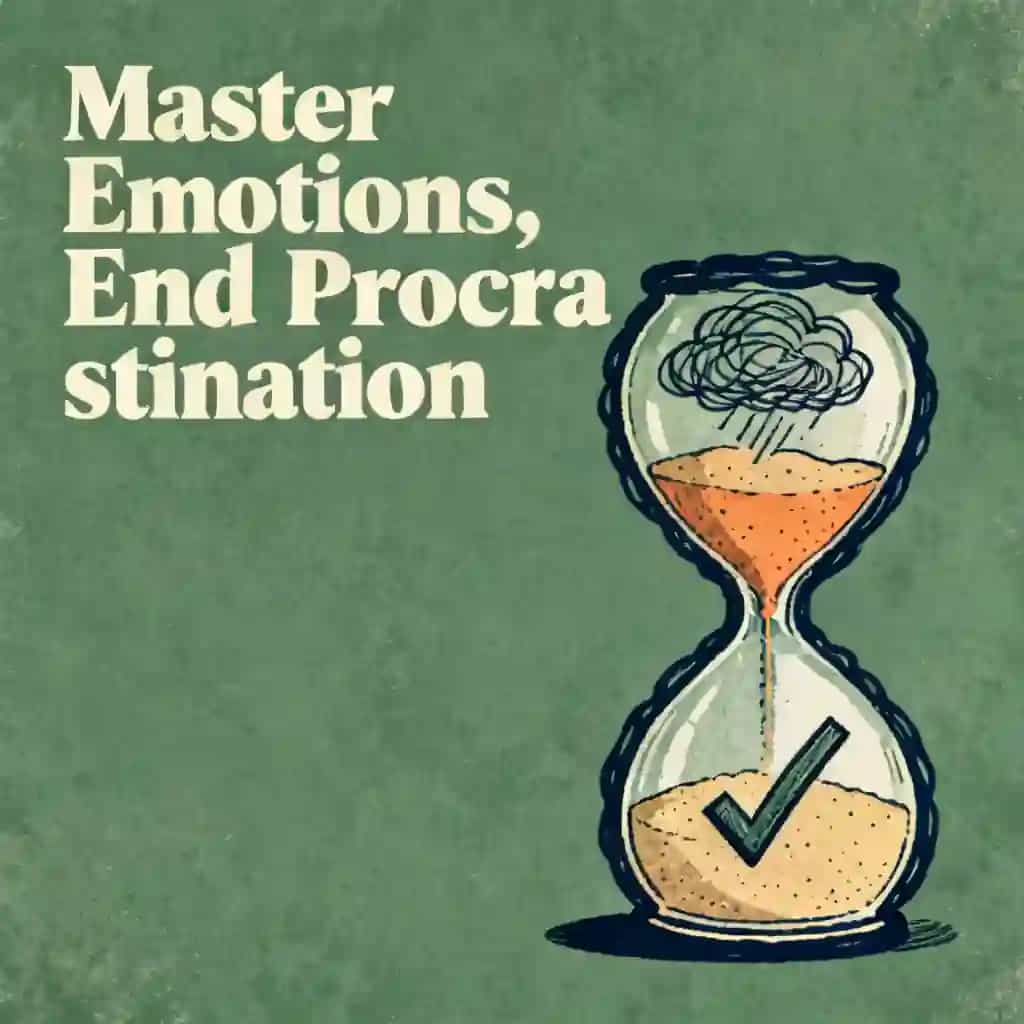
    Miles: It’s this all or nothing mindset. If I’m not 100% perfect, I’m a 0% failure . There’s no middle ground. When we link our performance directly to our self worth, every task feels like a high stakes gamble on our value as a person. If I try and I’m just "okay" at it, then in my head, I’m not just a person who did an okay job—I’m a failure .
    Lena: That explains why starting is so hard! If I don't start, I can't fail. It’s like procrastination becomes this weird form of self protection. I was reading that this is sometimes called "self handicapping" . We wait until the last minute so that if we fail, we can blame the clock instead of our actual abilities.

    Miles: Exactly. We tell ourselves, "I’m still smart, I just didn't have enough time." It’s a crutch. But the problem is that this "socially prescribed perfectionism"—where we feel like others are judging us—is incredibly toxic for our wellbeing . It creates this paralyzing fear of shame and embarrassment, which are really the core emotions driving the whole thing.

    Lena: It’s interesting how we perceive that judgment. Sometimes the "external" judge we’re afraid of is actually just a projection of our own inner critic. We assume people will lose interest in us or be upset if we don’t hit some impossible standard .

    Miles: And that’s where we have to start separating our "perfectionistic strivings"—which is just wanting to do a good job—from "perfectionistic concerns," which is that harsh, negative evaluation of ourselves . Wanting to be great is fine. It’s the constant self bashing that keeps us from actually getting there.

    Lena: I love the idea of looking at performance on a continuum instead of a binary. Like a teacher grading a paper—one typo doesn’t sink the whole grade . There’s weight given to creativity and flow, too. If we can see ourselves as a "complex, multilayered" person instead of just our latest project, the stakes don't feel so life or death .

    Miles: That shift is everything. It allows you to be "gentler and more patient" with yourself, which, ironically, is what actually boosts productivity . You can’t shame yourself into being a high achiever—at least not for very long.

    Учитесь дальше с этим эпизодом

    Изучите идеи этого эпизода глубже с помощью направленного обучения в BeFreed.

    Глава 3

    Micro Actions and the Two Minute Rule

    Lena: Okay, so if we accept that we’re stalling because we’re scared or overwhelmed, how do we actually get the engine turning? I’ve heard about breaking things down, but sometimes even the "smaller" tasks feel like too much.

    Miles: That’s where the "two minute rule" comes in. You pick a task that takes less than two minutes and you just do it . It’s about lowering the barrier to entry until it’s almost impossible to say no. If the goal is "clean the house," that’s a mountain. If the goal is "take out the trash," that’s a two minute win.

    Lena: It’s like habit stacking. You do one tiny thing, and that success gives you a little hit of momentum to do the next tiny thing. I think we underestimate how much we need that "momentum" to rebuild our confidence .

    Miles: Definitely. And it’s important to reward those small wins. Our brains need to associate effort with positive outcomes, not just relief from stress . If you pay one bill, give yourself fifteen minutes of your favorite show. It sounds simple, but it tells your nervous system that doing the thing is actually safe and rewarding.

    Lena: I’m also a fan of the Pomodoro technique for this—working in those focused 25 minute intervals . It’s much easier to commit to 25 minutes than to "an entire afternoon of work." It gives you a light at the end of the tunnel.

    Miles: And speaking of time, we have to be smart about when we do the hard stuff. You should schedule those demanding, brain heavy tasks during your peak energy hours . If you’re a morning person, don't leave the scary stuff for 4:00 PM when you’re already mentally depleted.

    Lena: That makes so much sense. I’ve noticed that when I’m tired, my "avoidance" kicks into high gear. It’s like my brain doesn’t have the energy to manage the anxiety of the task, so it just shuts down and heads for social media.

    Miles: That’s exactly it. "Rest is not a reward; it’s required for productivity" . If you’re trying to cut down a tree with a dull saw, you’re just going to get exhausted. Taking a break to "sharpen the saw"—whether that’s a walk outside or just some mindfulness—is what actually makes the work possible .

    Lena: So, taking a break isn’t procrastinating?

    Miles: Not if it’s intentional! There’s a huge difference between a scheduled break to recharge and a "distraction" like scrolling because you’re avoiding a feeling . One gives you energy back; the other just drains you further while keeping the task hanging over your head.

    Глава 4

    Reframing Failure as a Growth Mechanism

    Lena: We’ve talked about the "how" of getting started, but we still have to deal with that underlying fear of failing once we do start. It’s one thing to say "don't be afraid," but how do we actually change our relationship with failure?

    Miles: It starts with a mindset shift—moving from a "fixed mindset" to a "growth mindset" . In a fixed mindset, you believe your abilities are set in stone. So, if you fail, it means you just aren't good enough. Period. But in a growth mindset, you see failure as "part of learning rather than a personal flaw" .

    Lena: I love the example of a toddler learning to walk . They don’t fall down once and think, "Well, I guess I’m just not a walker." They stumble, fall, and get back up because they’re learning through the failure. They don’t have that layer of shame yet.

    Miles: Right! And we can build that "failure muscle" in low stakes environments. Try a new hobby where you know you’re going to be bad at it—like a cooking class or hip hop dancing—and just allow yourself to fail playfully . If you mess up, try to laugh about it. It teaches your brain that the world doesn't end when you make a mistake.

    Lena: It’s also helpful to remember that even the most successful people failed constantly. Thomas Edison said he didn't fail 10,000 times; he just found 10,000 ways that didn't work . It’s that "grit"—that combination of passion and perseverance—that actually leads to success .

    Miles: There’s also this concept of "black box thinking," which is about destigmatizing failure and treating it as data . In some industries, when something goes wrong, they do a "failure analysis" to figure out what they can learn. We can do that in our own lives, too. Instead of self recrimination, we ask, "What is the lesson here?" .

    Lena: "There is no failure, only feedback" . If we can truly embrace that, the "emotional risk" of starting a task disappears. It’s not about our worth anymore; it’s just about the process.

    Miles: And honestly, it’s much worse to never try than to fail publicly . When we avoid failure at all costs, we "shrink our field of play" . We stop growing. Embracing failure is really an act of courage.

    Lena: It feels like the more we "face our fears" through something like "graded exposure"—gradually doing the things that scare us—the more we realize that our anxiety was actually worse than the reality of failing .

    Учитесь дальше с этим эпизодом

    Изучите идеи этого эпизода глубже с помощью направленного обучения в BeFreed.

    Глава 5

    Networking Without the Performative Mask

    Miles: Let’s pivot to the other part of the listener’s goal: making connections. For a lot of people—especially introverts—the word "networking" sounds like a nightmare where you have to stand in a crowded room with a warm drink and pretend to be someone you’re not .

    Lena: Ugh, the "schmooze" factor. It feels so transactional, like you’re only talking to people to see what you can get from them. But the reality is that relationship driven hiring is more common than ever—over half of jobs are filled through some kind of connection .

    Miles: That sounds intimidating, but here’s the good news: you don't need to be an extrovert to be great at this. In fact, introverts have some huge "unfair advantages," like careful listening and a preference for depth over breadth . You don't need a thousand contacts; you just need 30 to 50 people who actually know what you do well .

    Lena: That’s a relief. So it’s not about owning the room; it’s about having a few real conversations. I’ve read that introverts who lean into their natural strengths actually report higher relationship satisfaction in their careers .

    Miles: It’s because they’re not "performing extraversion," which is unsustainable and just leads to burnout . When you show up as your "quieter, more deliberate" self, the people you connect with are connecting with the real you. That’s how you build a network that actually lasts .

    Lena: I like the idea of "picking formats that match how you work" . If a big mixer drains you, why not do a one on one coffee chat or a small dinner? Or even just thoughtful engagement online. LinkedIn has matured into a real channel where a well placed comment or a short DM can do more than a noisy reception ever could .

    Miles: Exactly. And the "prep" is what gives introverts their biggest advantage. If you spend twenty minutes on LinkedIn before an event and pick two or three people you actually want to meet, you can walk in with a specific opener instead of a generic "so, what do you do?" .

    Lena: "I saw your team launched that new project in March; how’s it going?" That’s so much easier to say than trying to be charming from scratch . It shows you actually pay attention, which most people are starved for in professional settings .

    Miles: And that’s the secret: "Help before you ask" . If you can share a resource, an article, or an intro without expecting anything back, you’re building "durable" relationships . It’s about being a person who adds value, not just a person who’s looking for a referral.

    Глава 6

    The Power of the Deep Conversation

    Lena: One thing that really resonated with me from the research is the idea of "skipping a level" in conversation . Small talk is so draining for introverts because it feels pointless. But we can move past it if we ask better questions.

    Miles: Right! Instead of asking "What do you do?", try "What’s the most interesting problem you’re working on right now?" . It invites a genuine answer and lets you actually use your listening skills. Introverts process social information more thoroughly, so when we’re in a deep conversation, we’re actually in our element .

    Lena: It’s almost like the "small talk" is just a bridge to get to the good stuff. And once you’re there, you don't even have to talk that much. If you’re aiming for 60% listening and 40% talking, you’re already doing better than most people in the room .

    Miles: And people remember how you made them feel—specifically, that you made them feel "genuinely heard" . That’s what builds trust. It’s not about being the most interesting person; it’s about being the most interested person.

    Lena: I also think it’s important to give yourself "permission to leave" when your energy runs low . There’s no point in staying for three hours if you’re running on fumes and not really listening anymore. A 45 minute conversation where you’re fully present is worth way more than three hours of diminishing returns .

    Miles: That’s such a key point. Our nervous systems are just wired differently. Social stimulation can be literally "depleting" for introverts, while it energizes extroverts . Understanding that isn’t a weakness; it’s just neuroscience. It allows you to plan for recovery.

    Lena: So, if you’ve got a big event, maybe protect the next morning as "quiet time" . That’s not being lazy—that’s maintaining your "engine" so you can actually follow up with the people you met.

    Miles: And "follow up is the whole game" . It’s where a ten minute conversation turns into a relationship. Since it’s usually written and asynchronous, it’s a perfect fit for the way introverts process information .

    Lena: You don't even have to overthink it. Just a short note referencing something specific you talked about and maybe a link to something useful. If you do that within 48 hours, you’re already ahead of 90% of the people there .

    Учитесь дальше с этим эпизодом

    Изучите идеи этого эпизода глубже с помощью направленного обучения в BeFreed.

    Глава 7

    Strategies for Sustainable Connection

    Miles: I think what we’re really talking about here is a "sustainable cadence." A lot of people decide they need to network, sign up for five events in a month, get totally burned out, and then don't do anything for a year .

    Lena: That sounds like me with the gym! But the better way is "small, regular, sustainable" touches . Maybe it’s just one or two intentional things a week. A coffee chat here, a thoughtful LinkedIn comment there.

    Miles: Exactly. There’s a "realistic weekly cadence" you can follow that doesn't require any extroverted performance at all. On Monday, you comment on two posts. Tuesday, you send a short DM to someone you admire. Wednesday, you reach out to an old colleague for a 20 minute catch up .

    Lena: That only takes maybe 90 minutes a week, but after three months, you’ve had a dozen real conversations and built a network that "compounds" over time . It’s about intentionality, not volume.

    Miles: And remember that your "weak ties"—those people you’re not super close with but who know your work—are often where the best information and opportunities come from . You don't need everyone to be your best friend; you just need them to respect what you do.

    Lena: I also love the idea of "volunteering" or having a job to do at an event. It’s much easier to meet people when you’re working on a shared goal, like organizing a meetup or contributing to a project . The relationship builds organically through the work, so you don't have to manufacture connection from scratch.

    Miles: That’s a great "introvert hack." And it applies to your current work, too. Being a "panelist or a workshop facilitator" might sound scary, but it actually gives you a defined role and a reason for people to come to you with genuine questions .

    Lena: It’s about playing to your strengths rather than trying to fix your "perceived" flaws. If you’re a great writer, use that in your follow ups. If you’re a great listener, use that in your one on ones.

    Miles: "Show up as yourself" . If you try to fake a personality, the relationships you build won't survive the real you anyway. The professional world needs people who are "quieter, more deliberate, and more thoughtful" . Those are features, not bugs.

    Глава 8

    Putting the Pieces Together for the Listener

    Lena: We’ve covered a lot of ground today. From the "emotion management" of procrastination to the "growth mindset" of failure, and finally to the "strategic depth" of networking. For the person who sent in this goal, it probably feels like a lot to take in.

    Miles: It is, but the beauty of it is that it all starts with the same small step: being "gentler and more patient" with yourself . Whether you’re trying to start a project or reach out to a new person, the biggest barrier is often the "inner judge" telling you that you have to be perfect.

    Lena: So, let’s give our listener a "practical playbook" they can use right now. Step one: pick one tiny thing you’ve been putting off—something that takes less than two minutes—and just do it . Don't worry about the whole project. Just do that one task and give yourself a small reward.

    Miles: Step two: Reframe one recent "failure" as feedback . Write down one thing you learned from it that will make you better next time. Take the shame out of it and treat it like data.

    Lena: Step three: Reach out to one person today. Not to ask for a job or a favor, but just to share something useful or tell them you admire their work . Use a format that feels safe for you—a short email or a LinkedIn DM.

    Miles: And finally, "schedule your breaks" . Give yourself permission to rest and "sharpen the saw" so you have the emotional energy to keep moving forward. Remember that "rest is required for productivity" .

    Lena: I think the most important thing to hold onto is that "procrastination isn't a single cause or solution" . What works for one person might not work for you, and that’s okay. It’s about exploring different approaches until you find the rhythm that fits your life and your brain.

    Miles: And don't forget about "active procrastination" . If you realize you do your best work under pressure, you can actually use that as a deliberate strategy rather than something to feel guilty about. It’s about "using time purposefully" and having conviction in your ability to get things done .

    Lena: It’s all about building that "failure muscle" and that "connection muscle" slowly. You don't have to change your entire life overnight. You just have to "step forward, face your fears," and allow yourself to grow through the process .

    Учитесь дальше с этим эпизодом

    Изучите идеи этого эпизода глубже с помощью направленного обучения в BeFreed.

    Глава 9

    Closing Reflections on the Journey Ahead

    Miles: As we bring this to a close, I’m struck by how much of this really comes down to "self acceptance" . When we stop fighting our introversion or our tendency to delay, and instead start working with our nature, everything becomes so much easier.

    Lena: Exactly. We’re not trying to become different people; we’re trying to become the most effective versions of ourselves. Whether that means using a kitchen timer for 25 minutes or choosing a coffee chat over a cocktail party, these are just tools to help us "flourish and thrive" .

    Miles: I hope for everyone listening that this feels like a bit of a weight has been lifted. You’re not broken, and you’re certainly not lazy. You’re just navigating a complex emotional landscape, and you now have a few more maps to help you find your way.

    Lena: It’s a multi year project, like building a network or a career. But every "small, realistic step" you take today empowers you for tomorrow . I’d love for everyone to take just a moment after this ends to reflect on one thing they heard that really clicked for them.

    Miles: Maybe it was the idea that procrastination is about "emotion management," or that you only need 50 real connections to have a powerful network. Whatever it is, hold onto that one thing and see how you can apply it today.

    Lena: Thank you so much for exploring this with us. It’s been a really deep dive, and I feel like I’ve learned a lot just by talking through it with you, Miles.

    Miles: Same here, Lena. It’s always a good reminder to sharpen my own saw every now and then.

    Lena: To our listener—we’re rooting for you. You have the courage and the tools to face those fears and make those connections. Take a deep breath, pick your two minute task, and go for it.

    Miles: Take care of yourselves out there. It’s a journey, not a race. Reflect on what you’ve learned, and we’ll see you in the next one.

    Lena: Thanks for listening.

    ★★★★★

    Вы дошли до конца: The Emotional Roots of Procrastination: Why It's Not Laziness

    “Прошло 23 дня, и я пользуюсь приложением каждый день. Теперь оно стало частью моей повседневной жизни.”

    jayallen

    Лучшая цитата из The Emotional Roots of Procrastination: Why It's Not Laziness

    “

    Procrastination is not a failure of willpower or a time management glitch, but an emotion management problem where our brains try to protect us from the negative vibes we associate with the work.

    ”
    J

    Generated by Joe

    Вопрос для ввода

    I want to stop procrastination and also lose my fear of failure. I’d also like to learn how to make connections and not just read about making connections with people that can help me.

    Голоса ведущих
    Lenaplay
    Milesplay
    Источники знаний
    9 Strategies To Stop Procrastinating
    link
    https://health.clevelandclinic.org/how-to-stop-procrastinating
    How to Finally Stop Procrastinating | Psychology Today
    link
    https://www.psychologytoday.com/intl/blog/how-be-yourself/202108/how-finally-stop-procrastinating
    How to Overcome Fear of Failure: Your Ultimate Guide
    link
    https://positivepsychology.com/fear-of-failure/
    Networking for Introverts: A Quiet Person's Playbook | ZapResume
    link
    https://zapresume.io/networking-for-introverts
    Networking for Introverts: What Actually Works
    link
    https://ordinaryintrovert.com/introvert-networking-events-strategic-approach/

    Часто задаваемые вопросы

    According to the discussion, procrastination is not a failure of willpower or a time management glitch. Instead, it is an emotion management problem where our brains try to protect us from negative feelings associated with a task. While we often label ourselves as lazy, the behavior is actually a human response to internal stress, boredom, or the fear of looking incompetent.

    We often avoid important projects because the tasks themselves feel overwhelming or stressful. To cope, we engage in activities like scrolling social media or reorganizing to get a quick hit of relief. This is described as 'giving in to feel good' in the moment, as our brains prioritize immediate comfort over the long-term peace of finishing the actual work.

    While avoiding a task provides a quick hit of relief, it is ultimately a fake and fleeting boost. This temporary escape from anxiety is a double-edged sword because it is quickly replaced by feelings of guilt and shame. By trading long-term peace for five minutes of avoiding negative vibes, we end up trapped in a cycle that harms our overall self-regulation.

    Reframing procrastination as an emotional issue rather than a character flaw allows for a more compassionate approach to productivity. Understanding that it is about how we handle our internal weather—such as stress and fear—rather than just how we use a planner is a huge step. This shift in perspective helps individuals move past the stigma of laziness to better manage the negative vibes associated with their work.

    Создано выпускниками Колумбийского университета | в Сан-Франциско

    BeFreed объединяет глобальное сообщество любознательных людей

    4.7

    средняя оценка

    Более 7,84 тыс. оценок приложения

    Сообщество BeFreed

    Честно говоря, я ещё даже не изучила приложение полностью, но за последние несколько дней оно меня по-настоящему впечатлило… BeFreed — совсем другой уровень по сравнению с любыми учебными приложениями, которыми я пользовалась. Оно невероятно увлекает и действительно улучшает концентрацию — то, что нужно всем, кто бесконечно листает ленту!

    @ladyInfinity

    Я купил BeFreed ровно 23 дня назад и с тех пор пользуюсь им каждый день. Оно полностью встроилось в мой рабочий процесс и привычку учиться.

    @jayallen

    Честно говоря, приложение превзошло все мои ожидания. Я могу попросить его сгенерировать аудио на любую тему, какой бы она ни была, и результат впечатляет. Моя профессиональная область — специализация в психотерапии, она мультидисциплинарная, но ответы очень точные.

    @Raguipa

    Больше всего я ценю то, насколько меньше я стал листать ленту: меньше времени уходит на поиск и больше — на усвоение информации. Сочетание полных аудиокниг, подкастов и планов обучения — блестящее.

    @colonyofcreatorsNGO

    Я уже 24 года работаю инструктором ускоренного обучения PhotoReading… книги, чтение и обучение — моя стихия, и BeFreed отлично справился, предложив инновационный подход к подаче информации в лёгкой для восприятия форме.

    @BeFreed user

    Это не просто приложение с кратким содержанием книг: я попробовал режим «весёлого чтения», и это гораздо лучший пересказ и способ схватывать идеи, чем традиционный. Уже ради одного этого оно того стоит.

    @austinakon

    Обожаю это приложение. Пользуюсь несколько дней и не могу перестать слушать. Отличный способ начать.

    @jcrules328

    Мне очень нравится это приложение; я тестирую его уже около месяца и считаю настоящей находкой. Оно отлично работает, потому что в BeFreed можно создавать собственные темы, а голос замечательный — с безграничным выбором озвучек.

    @DanielCZ

    Честно говоря, я ещё даже не изучила приложение полностью, но за последние несколько дней оно меня по-настоящему впечатлило… BeFreed — совсем другой уровень по сравнению с любыми учебными приложениями, которыми я пользовалась. Оно невероятно увлекает и действительно улучшает концентрацию — то, что нужно всем, кто бесконечно листает ленту!

    @ladyInfinity

    Я купил BeFreed ровно 23 дня назад и с тех пор пользуюсь им каждый день. Оно полностью встроилось в мой рабочий процесс и привычку учиться.

    @jayallen

    Честно говоря, приложение превзошло все мои ожидания. Я могу попросить его сгенерировать аудио на любую тему, какой бы она ни была, и результат впечатляет. Моя профессиональная область — специализация в психотерапии, она мультидисциплинарная, но ответы очень точные.

    @Raguipa

    Больше всего я ценю то, насколько меньше я стал листать ленту: меньше времени уходит на поиск и больше — на усвоение информации. Сочетание полных аудиокниг, подкастов и планов обучения — блестящее.

    @colonyofcreatorsNGO

    Я уже 24 года работаю инструктором ускоренного обучения PhotoReading… книги, чтение и обучение — моя стихия, и BeFreed отлично справился, предложив инновационный подход к подаче информации в лёгкой для восприятия форме.

    @BeFreed user

    Это не просто приложение с кратким содержанием книг: я попробовал режим «весёлого чтения», и это гораздо лучший пересказ и способ схватывать идеи, чем традиционный. Уже ради одного этого оно того стоит.

    @austinakon

    Обожаю это приложение. Пользуюсь несколько дней и не могу перестать слушать. Отличный способ начать.

    @jcrules328

    Мне очень нравится это приложение; я тестирую его уже около месяца и считаю настоящей находкой. Оно отлично работает, потому что в BeFreed можно создавать собственные темы, а голос замечательный — с безграничным выбором озвучек.

    @DanielCZ

    Мне очень нравится, что полезную, сжатую информацию и идеи можно получить в виде аудио в стиле подкаста на 8–15 минут. Я не большой фанат подкастов из-за «воды», но здесь её нет совсем.

    @BeFreed user

    Я заканчиваю докторскую и вынужден читать много незнакомого материала… В BeFreed достаточно ввести запрос — приложение само находит источники и создаёт аудиоподкаст. Мне процесс в BeFreed кажется удобнее, чем в NotebookLM.

    @Brad

    Я часто ищу на YouTube, что послушать за завтраком, на прогулке или по дороге на работу, и BeFreed предлагает ещё более точный подход — без рекламы и без «воды»!

    @BeFreed user

    Самое лучшее в этой платформе — её универсальность. Нет буквально ни одной темы, которая была бы ей не по зубам. Она справляется со всем, что ей даёшь… Редко встретишь учебный инструмент без ограничений, который действительно выполняет обещания.

    @jayallen

    BeFreed — потрясающее приложение. Благодаря удобному дизайну я трачу меньше времени на навигацию и больше — на учёбу. Сочетание аудиокниг, подкастов и планов обучения — гениальная комбинация, которая полностью изменила мой распорядок дня.

    @BeFreed user

    Сначала мне понадобилось время, чтобы разобраться, как создавать подкасты на итальянском, а потом — бум! Это же великолепно! Можно попросить объяснить любую тему, и он делает это отлично и очень умно!

    @matteo77

    BeFreed стал моим ежедневным приложением для аудиокниг… Больше всего мне нравится, что ты вставляешь свой текст — и получаешь аудио, которое можно слушать на ходу.

    @kotanzu1

    Мне очень нравится, что полезную, сжатую информацию и идеи можно получить в виде аудио в стиле подкаста на 8–15 минут. Я не большой фанат подкастов из-за «воды», но здесь её нет совсем.

    @BeFreed user

    Я заканчиваю докторскую и вынужден читать много незнакомого материала… В BeFreed достаточно ввести запрос — приложение само находит источники и создаёт аудиоподкаст. Мне процесс в BeFreed кажется удобнее, чем в NotebookLM.

    @Brad

    Я часто ищу на YouTube, что послушать за завтраком, на прогулке или по дороге на работу, и BeFreed предлагает ещё более точный подход — без рекламы и без «воды»!

    @BeFreed user

    Самое лучшее в этой платформе — её универсальность. Нет буквально ни одной темы, которая была бы ей не по зубам. Она справляется со всем, что ей даёшь… Редко встретишь учебный инструмент без ограничений, который действительно выполняет обещания.

    @jayallen

    BeFreed — потрясающее приложение. Благодаря удобному дизайну я трачу меньше времени на навигацию и больше — на учёбу. Сочетание аудиокниг, подкастов и планов обучения — гениальная комбинация, которая полностью изменила мой распорядок дня.

    @BeFreed user

    Сначала мне понадобилось время, чтобы разобраться, как создавать подкасты на итальянском, а потом — бум! Это же великолепно! Можно попросить объяснить любую тему, и он делает это отлично и очень умно!

    @matteo77

    BeFreed стал моим ежедневным приложением для аудиокниг… Больше всего мне нравится, что ты вставляешь свой текст — и получаешь аудио, которое можно слушать на ходу.

    @kotanzu1

    Узнайте больше о том, как обсуждают BeFreed в интернете
    129.7K19.5K
    55.2K19.2K
    154.2K10827355
    48.1K2.5K
    81.2K6.6K
    82.3K1.8K
    Начните своё обучение прямо сейчас
    Приложение BeFreed
    BeFreed

    Учите что угодно персонализированно

    DiscordLinkedIn
    Избранные книги
    Crucial ConversationsThe Perfect MarriageInto the WildNever Split the DifferenceAttachedGood to GreatSay Nothing
    Популярные категории
    Self HelpCommunication SkillRelationshipMindfulnessPhilosophyInspirationProductivity
    Списки чтения знаменитостей
    Elon MuskCharlie KirkBill GatesSteve JobsAndrew HubermanJoe RoganJordan Peterson
    Коллекция наград
    Pulitzer PrizeNational Book AwardGoodreads Choice AwardsNobel Prize in LiteratureNew York TimesCaldecott MedalNebula Award
    Избранные темы
    ManagementAmerican HistoryWarTradingStoicismAnxietySex
    Лучшие книги по годам
    2025 Best Non Fiction Books2024 Best Non Fiction Books2023 Best Non Fiction Books
    Избранные авторы
    Chimamanda Ngozi AdichieGeorge OrwellO. J. SimpsonBarbara O'NeillWinston ChurchillCharlie Kirk
    BeFreed vs другие приложения
    BeFreed vs. Other Book Summary AppsBeFreed vs. ElevenReaderBeFreed vs. ReadwiseBeFreed vs. Anki
    Инструменты обучения
    Knowledge VisualizerAI Podcast Generator
    Информация
    О насarrow
    Ценыarrow
    Частые вопросыarrow
    Блогarrow
    Карьераarrow
    Партнёрствоarrow
    Программа амбассадоровarrow
    Каталогarrow
    BeFreed
    Try now
    © 2026 BeFreed
    Условия использованияПолитика конфиденциальности
    BeFreed

    Учите что угодно персонализированно

    DiscordLinkedIn
    Избранные книги
    Crucial ConversationsThe Perfect MarriageInto the WildNever Split the DifferenceAttachedGood to GreatSay Nothing
    Популярные категории
    Self HelpCommunication SkillRelationshipMindfulnessPhilosophyInspirationProductivity
    Списки чтения знаменитостей
    Elon MuskCharlie KirkBill GatesSteve JobsAndrew HubermanJoe RoganJordan Peterson
    Коллекция наград
    Pulitzer PrizeNational Book AwardGoodreads Choice AwardsNobel Prize in LiteratureNew York TimesCaldecott MedalNebula Award
    Избранные темы
    ManagementAmerican HistoryWarTradingStoicismAnxietySex
    Лучшие книги по годам
    2025 Best Non Fiction Books2024 Best Non Fiction Books2023 Best Non Fiction Books
    Инструменты обучения
    Knowledge VisualizerAI Podcast Generator
    Избранные авторы
    Chimamanda Ngozi AdichieGeorge OrwellO. J. SimpsonBarbara O'NeillWinston ChurchillCharlie Kirk
    BeFreed vs другие приложения
    BeFreed vs. Other Book Summary AppsBeFreed vs. ElevenReaderBeFreed vs. ReadwiseBeFreed vs. Anki
    Информация
    О насarrow
    Ценыarrow
    Частые вопросыarrow
    Блогarrow
    Карьераarrow
    Партнёрствоarrow
    Программа амбассадоровarrow
    Каталогarrow
    BeFreed
    Try now
    © 2026 BeFreed
    Условия использованияПолитика конфиденциальности

    Похожий контент

    Обложка книги The Emotional Roots of Procrastination
    How to Stop Procrastinating: The Science and Practical Fixes – FociHow to finally break your procrastination habit, according to a psychology professor | BBC Science Focus MagazineBest Productivity Frameworks for Deep Workers 2026 | NeurosityMonk Mode: The Science-Backed Guide to Radical Focus (And How to Know If It's Working) | 10000Hours Blog
    7 sources
    The Emotional Roots of Procrastination
    Struggling to start? Learn why your brain prioritizes mood over productivity and how to use neurochemistry to finally bridge the gap to focus.
    1135 min
    Обложка книги Procrastination and the Emotional Brain
    9 Strategies To Stop ProcrastinatingHow to Stop Procrastinating With 25 ToolsTargeting Procrastination Using Psychological Treatments: A Systematic Review and Meta-Analysis - PMCA neuro-computational account of procrastination behavior | Nature Communications
    4 sources
    Procrastination and the Emotional Brain
    Struggling to start a task? Learn why your brain prioritizes immediate comfort over future goals and how to manage the emotions that cause avoidance.
    22 min
    Обложка книги Procrastination: The Emotional Brain at Work
    Frontiers | Effects of acupuncture and exercise on EEG characteristics and cognitive control in college students with high procrastination tendencyNow I feel like I’m going to get to it soon: a brief, scalable intervention for state procrastination | BMC Psychology | Springer Nature LinkProven Ways to Overcome Procrastination: 12 Science-Backed Strategies for 2026 | The ExperimentHow to Stop Procrastinating: 8 Evidence-Based Strategies That Actually Work – Calmevo
    5 sources
    Procrastination: The Emotional Brain at Work
    Struggling to start? Learn why your brain treats tasks as threats and how to use neuro-reset tools to bridge the gap between your present and future self.
    29 min
    Обложка книги Procrastination: Emotion, Not Time Management
    How to Stop ProcrastinatingThe Science of Getting StartedGet Things DoneLevel Up
    16 sources
    Procrastination: Emotion, Not Time Management
    Discover why procrastination is about managing feelings, not schedules. Learn science-backed strategies to overcome avoidance, build sustainable systems, and finally finish what you start.
    21 min
    Обложка книги Procrastination and Emotional Regulation
    ProcrastinationThe Procrastination EquationLower metacognitive abilities predict procrastination: a cross-sectional study of a healthy adult sample | BMC Psychology | Springer Nature LinkHow to stop procrastination for students - BBC Bitesize
    7 sources
    Procrastination and Emotional Regulation
    Struggling to start a difficult task? Learn why procrastination is an emotional struggle rather than a time management flaw and how to break the cycle.
    14 min
    Обложка книги Procrastination and the Emotional Brain
    The Procrastination EquationA two-minute fix for procrastination | The CurrentHow to Overcome Procrastination Using Neuroscience | NeurosityWhat happens in the brain when we procrastinate | National Geographic
    8 sources
    Procrastination and the Emotional Brain
    Struggling to start a difficult task? Learn why your brain treats stress like a threat and how simple science-backed rituals can break the cycle.
    1338 min
    Обложка книги Stop Procrastinating by Managing Your Emotions
    The Science of Getting StartedThe Procrastination CureThe Procrastination EquationThe Art of Taking Action
    28 sources
    Stop Procrastinating by Managing Your Emotions
    Procrastination isn't laziness—it's a brain response to stress. Learn how to bypass task aversion and use simple plans to build lasting momentum.
    20 min
    Обложка книги Stop procrastinating by managing your emotions
    The Science of Getting StartedHow to Stop ProcrastinatingThe Procrastination EquationThe Art of Taking Action
    24 sources
    Stop procrastinating by managing your emotions
    Procrastination isn't about laziness; it's an emotional response to stress. Learn how to lower resistance and use small starts to break the cycle.
    32 min

    Recommended Learning Plans

    Stop Procrastinating and Start Doing
    ПЛАН ОБУЧЕНИЯ

    Stop Procrastinating and Start Doing

    Chronic procrastination is often a failure of emotional regulation rather than time management. This plan is essential for professionals and students who feel paralyzed by large projects and need a structured framework to move from avoidance to consistent action.

    1 h 30 m•3 Разделы
    Beat procrastination now
    ПЛАН ОБУЧЕНИЯ

    Beat procrastination now

    Procrastination affects nearly everyone, yet few understand its psychological roots or how to effectively overcome it. This learning plan bridges the gap between understanding why we procrastinate and implementing practical strategies to break free from avoidance patterns, benefiting anyone who struggles with delayed action on important goals.

    3 h 30 m•4 Разделы
    Understand the resistance before tasks
    ПЛАН ОБУЧЕНИЯ

    Understand the resistance before tasks

    This plan is essential for professionals and students who struggle with chronic procrastination and the mental friction that precedes difficult work. It provides a deep dive into the psychological roots of avoidance, offering actionable CBT tools to help high-achievers reclaim their focus.

    4 h 6 m•4 Разделы
    Act on small things I keep avoiding
    ПЛАН ОБУЧЕНИЯ

    Act on small things I keep avoiding

    Many people struggle with procrastination not due to laziness, but because of how their brain processes perceived threats in small tasks. This plan is ideal for professionals and students who feel paralyzed by minor to-dos and want to transition from chronic avoidance to effortless action.

    3 h 1 m•4 Разделы
    The Science of Starting
    ПЛАН ОБУЧЕНИЯ

    The Science of Starting

    This plan is essential for professionals and students who struggle with procrastination and the paralysis of starting new tasks. It provides a scientific approach to overcoming biological resistance and optimizing your digital environment for maximum output.

    1 h 45 m•3 Разделы
    Morning Momentum for Chronic Procrastinators
    ПЛАН ОБУЧЕНИЯ

    Morning Momentum for Chronic Procrastinators

    This plan is essential for professionals and students who struggle with morning inertia and the 'snooze' cycle. It combines biological insights with behavioral engineering to help chronic procrastinators build a reliable system for starting their day with purpose.

    1 h 30 m•3 Разделы
    Self-Mastery: Build Discipline & End Escapism
    ПЛАН ОБУЧЕНИЯ

    Self-Mastery: Build Discipline & End Escapism

    In an era of constant digital distraction, mastering self-regulation is the ultimate competitive advantage. This plan is designed for professionals and students who feel stuck in cycles of procrastination and want to build the psychological framework necessary for long-term success.

    4 h 16 m•4 Разделы
    How to be more organized and disciplined
    ПЛАН ОБУЧЕНИЯ

    How to be more organized and disciplined

    This plan is essential for professionals and students struggling with procrastination or inconsistent performance. It provides a structural approach to self-mastery by shifting the focus from raw willpower to systematic habit architecture.

    3 h 51 m•4 Разделы