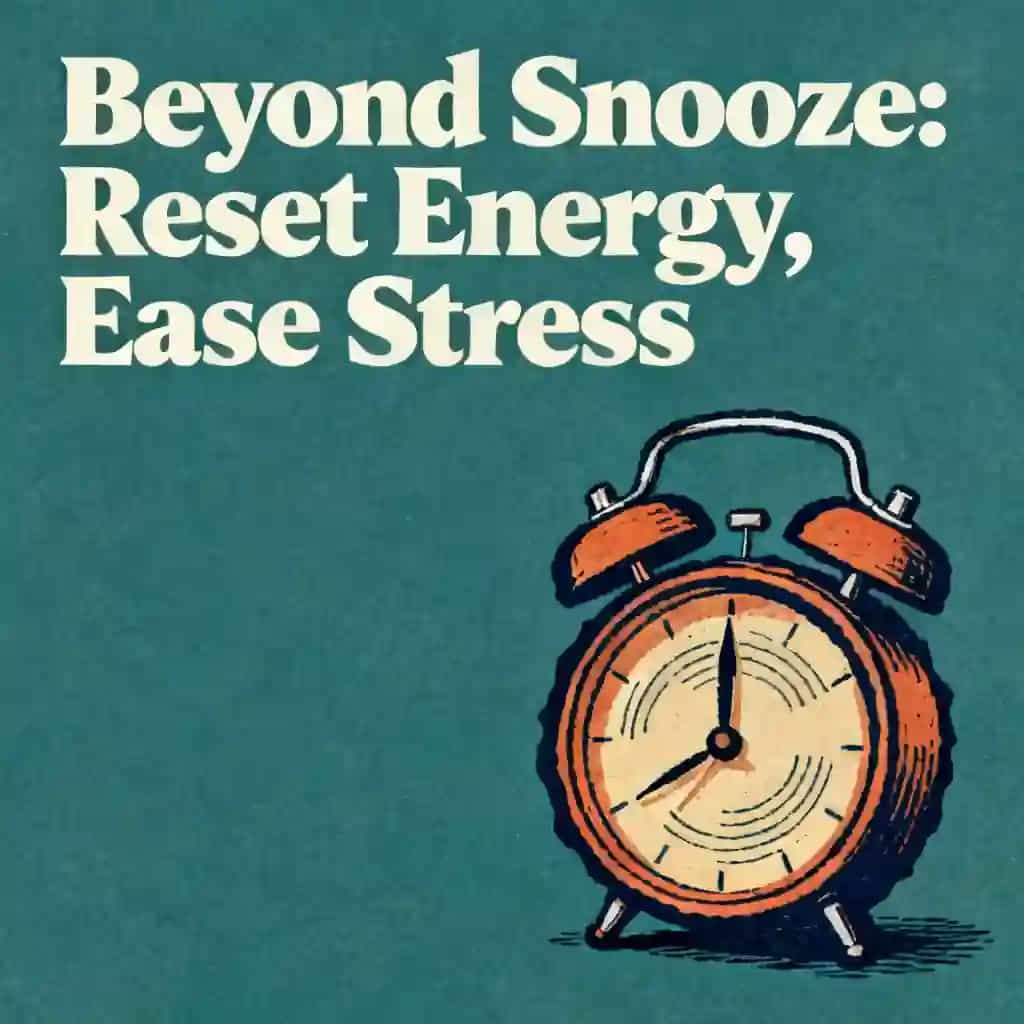
Explore the science of the snooze button and sleep inertia. Learn how fragmented sleep cycles affect habitual snoozers and discover tips to reclaim your morning.

The secret to becoming a morning person isn't about having more willpower—it is about reducing the friction between your pillow and the floor.
Strategies and psychology to stop hitting the snooze button, specifically focusing on the tactic of placing the phone in another room and building a consistent early rising habit.


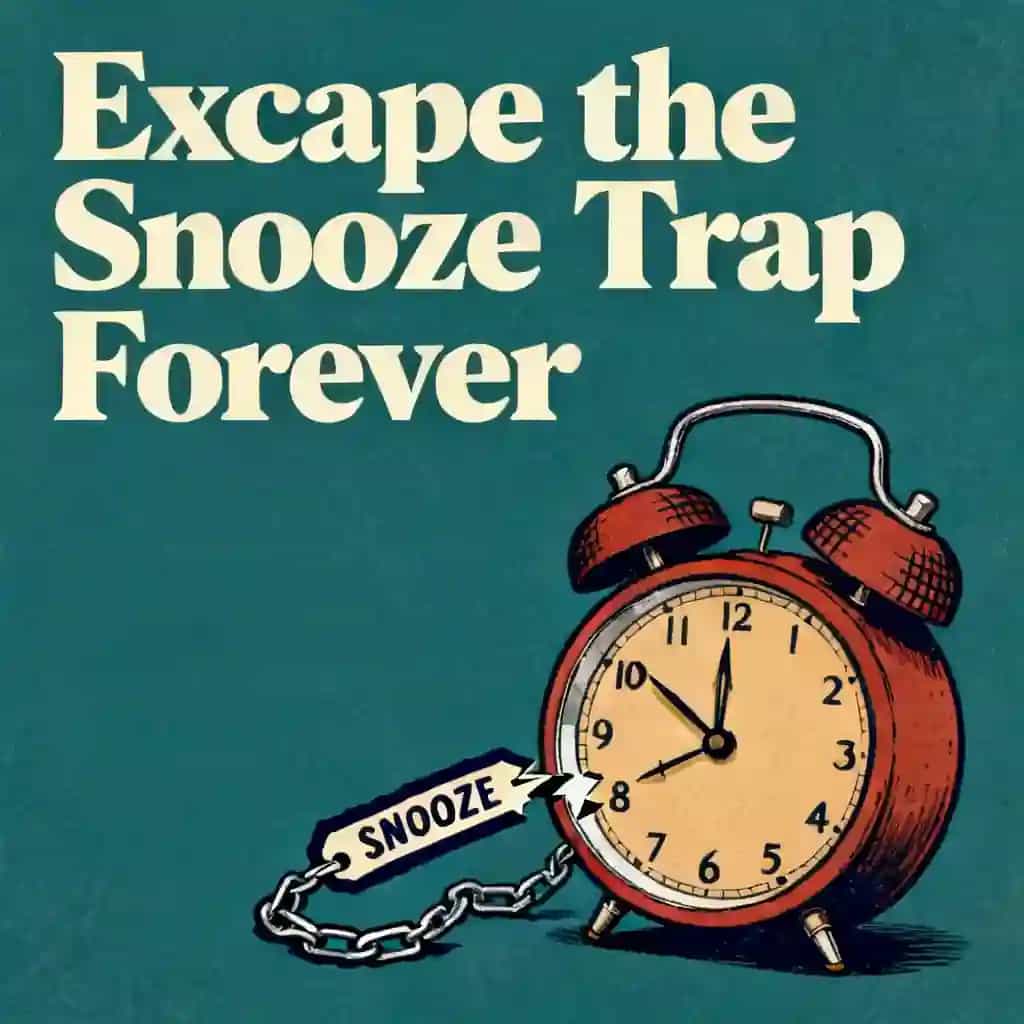
Sleep inertia is a heavy, disorienting fog that occurs when you trick your brain into starting a brand new sleep cycle it cannot finish. When habitual snoozers hit the button, they enter a physiological state of limbo. This fragmented sleep is often more exhausting than simply waking up with the first alarm, as the brain struggles to navigate the interrupted cycle, leaving you feeling depleted instead of rested.
Research indicates that hitting the snooze button is a very common morning ritual. A 2022 study found that roughly 57% of people identify as habitual snoozers. Furthermore, data from late 2025 involving over 21,000 participants revealed that 45% of people admit to hitting snooze almost every single morning. This frequent negotiation with the alarm clock is a struggle shared by nearly half of the population.
Fragmented sleep gained in ten or twenty-minute increments is considered a harmless indulgence by many, but it actually functions as a betrayal of your morning intentions. By repeatedly interrupting the sleep cycle, you prevent your body from waking up naturally. Understanding the science of the snooze button shows that this habit creates a cycle of exhaustion that willpower alone often cannot break, requiring a deeper look at biological triggers.
Becoming a morning person is less about willpower and more about understanding the biology of light and the physics of distance. To break the cycle of fragmented sleep, you must address why the brain lies to you at 6:00 AM. By leveraging biological cues and physical environment changes, you can overcome sleep inertia and stop the ritual of negotiation that leads to feeling exhausted every Tuesday morning.
Создано выпускниками Колумбийского университета в Сан-Франциско
"Instead of endless scrolling, I just hit play on BeFreed. It saves me so much time."
"I never knew where to start with nonfiction—BeFreed’s book lists turned into podcasts gave me a clear path."
"Perfect balance between learning and entertainment. Finished ‘Thinking, Fast and Slow’ on my commute this week."
"Crazy how much I learned while walking the dog. BeFreed = small habits → big gains."
"Reading used to feel like a chore. Now it’s just part of my lifestyle."
"Feels effortless compared to reading. I’ve finished 6 books this month already."
"BeFreed turned my guilty doomscrolling into something that feels productive and inspiring."
"BeFreed turned my commute into learning time. 20-min podcasts are perfect for finishing books I never had time for."
"BeFreed replaced my podcast queue. Imagine Spotify for books — that’s it. 🙌"
"It is great for me to learn something from the book without reading it."
"The themed book list podcasts help me connect ideas across authors—like a guided audio journey."
"Makes me feel smarter every time before going to work"
Создано выпускниками Колумбийского университета в Сан-Франциско