Scaling Notification Systems: Managing the Weather Alert Crisis
Learn how to scale notification systems for high-stakes events like weather alerts. Explore system architecture, database connections, and distributed systems.
Лучшая цитата из Scaling Notification Systems: Managing the Weather Alert Crisis
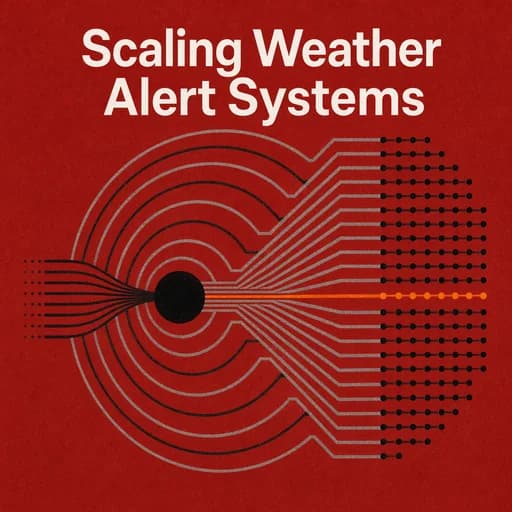
It's really about moving from a simple 'send message' mindset to a 'reliable delivery' mindset. You must never lose an alert, but you must also ensure that every interruption is valuable rather than annoying.
Generated by Anmol
Create a beginner-friendly system-design podcast about building a notification platform where users subscribe to topics and receive relevant updates. Follow a weather-alert topic from the moment a publisher creates an event until millions of subscribers receive push notifications, emails, or SMS messages. Explain publishers, subscribers, topics, subscriptions, event ingestion, message brokers, fan-out workers, templates, delivery channels, user preferences, priority levels, scheduling, batching, and delivery status. Cover APIs, databases, queues, partitioning, retries, exponential backoff, dead-letter queues, deduplication, idempotency, ordering, rate limiting, monitoring, and third-party providers. Discuss failed deliveries, duplicate notifications, notification fatigue, unavailable providers, large topics, urgent alerts, unsubscribed users, regional outages, and privacy. Use simple analogies such as postal sorting centres and subscriber mailing lists. End with the final event flow, architectural components, reliability strategy, bottlenecks, and trade-offs.






Часто задаваемые вопросы
The system failure occurred because the platform could not handle a massive burst of traffic during a routine weather event. Specifically, the system attempted to process forty thousand notifications per minute while relying on a database that only had fifty connections available. This mismatch between incoming demand and available resources illustrates the danger of treating notification platforms as simple tools rather than complex distributed machines.
According to industry standards, the gold standard for a life-saving disaster system is the ability to notify one million targeted users in under five seconds. Achieving this level of scalability requires precise system architecture where every millisecond counts. For developers and designers, reaching this benchmark means ensuring that every potential failure point is addressed to prevent the system from collapsing under heavy load.
While calling an API might seem simple, building a notification platform at scale involves managing complex distributed systems. As user numbers grow into the millions, simple 'send and forget' methods often fail. Developers must account for database connection limits and system architecture to ensure the platform remains stable during critical moments, such as when the National Weather Service triggers automated alerts for school delays or storms.
Создано выпускниками Колумбийского университета в Сан-Франциско
"Instead of endless scrolling, I just hit play on BeFreed. It saves me so much time."


"I never knew where to start with nonfiction—BeFreed’s book lists turned into podcasts gave me a clear path."


"Perfect balance between learning and entertainment. Finished ‘Thinking, Fast and Slow’ on my commute this week."
"Crazy how much I learned while walking the dog. BeFreed = small habits → big gains."
"Reading used to feel like a chore. Now it’s just part of my lifestyle."

"Feels effortless compared to reading. I’ve finished 6 books this month already."
"BeFreed turned my guilty doomscrolling into something that feels productive and inspiring."

"BeFreed turned my commute into learning time. 20-min podcasts are perfect for finishing books I never had time for."
"BeFreed replaced my podcast queue. Imagine Spotify for books — that’s it. 🙌"

"It is great for me to learn something from the book without reading it."
"The themed book list podcasts help me connect ideas across authors—like a guided audio journey."
"Makes me feel smarter every time before going to work"
Создано выпускниками Колумбийского университета в Сан-Франциско
"Instead of endless scrolling, I just hit play on BeFreed. It saves me so much time."
"I never knew where to start with nonfiction—BeFreed’s book lists turned into podcasts gave me a clear path."
"Perfect balance between learning and entertainment. Finished ‘Thinking, Fast and Slow’ on my commute this week."
"Crazy how much I learned while walking the dog. BeFreed = small habits → big gains."
"Reading used to feel like a chore. Now it’s just part of my lifestyle."
"Feels effortless compared to reading. I’ve finished 6 books this month already."
"BeFreed turned my guilty doomscrolling into something that feels productive and inspiring."
"BeFreed turned my commute into learning time. 20-min podcasts are perfect for finishing books I never had time for."
"BeFreed replaced my podcast queue. Imagine Spotify for books — that’s it. 🙌"
"It is great for me to learn something from the book without reading it."
"The themed book list podcasts help me connect ideas across authors—like a guided audio journey."
"Makes me feel smarter every time before going to work"
"Instead of endless scrolling, I just hit play on BeFreed. It saves me so much time."
"I never knew where to start with nonfiction—BeFreed’s book lists turned into podcasts gave me a clear path."
"Perfect balance between learning and entertainment. Finished ‘Thinking, Fast and Slow’ on my commute this week."
"Crazy how much I learned while walking the dog. BeFreed = small habits → big gains."
"Reading used to feel like a chore. Now it’s just part of my lifestyle."
"Feels effortless compared to reading. I’ve finished 6 books this month already."
"BeFreed turned my guilty doomscrolling into something that feels productive and inspiring."
"BeFreed turned my commute into learning time. 20-min podcasts are perfect for finishing books I never had time for."
"BeFreed replaced my podcast queue. Imagine Spotify for books — that’s it. 🙌"
"It is great for me to learn something from the book without reading it."
"The themed book list podcasts help me connect ideas across authors—like a guided audio journey."
"Makes me feel smarter every time before going to work"
"Instead of endless scrolling, I just hit play on BeFreed. It saves me so much time."
"I never knew where to start with nonfiction—BeFreed’s book lists turned into podcasts gave me a clear path."
"Perfect balance between learning and entertainment. Finished ‘Thinking, Fast and Slow’ on my commute this week."
"Crazy how much I learned while walking the dog. BeFreed = small habits → big gains."
"Reading used to feel like a chore. Now it’s just part of my lifestyle."
"Feels effortless compared to reading. I’ve finished 6 books this month already."
"BeFreed turned my guilty doomscrolling into something that feels productive and inspiring."
"BeFreed turned my commute into learning time. 20-min podcasts are perfect for finishing books I never had time for."
"BeFreed replaced my podcast queue. Imagine Spotify for books — that’s it. 🙌"
"It is great for me to learn something from the book without reading it."
"The themed book list podcasts help me connect ideas across authors—like a guided audio journey."
"Makes me feel smarter every time before going to work"