Reading People: The Body’s Silent Language
When words and body language don't match, you're missing the real story. Learn to decode the honest signals of the feet, hands, and torso.

Лучшая цитата из Reading People: The Body’s Silent Language
If you are only listening to the words, you are basically trying to watch a movie while 80 percent of the screen is blacked out. You are missing the plot.
Generated with BeFreed
Reading People Like a Page






Часто задаваемые вопросы
The feet are considered the most honest part of the body because we are rarely trained to control them. From childhood, we are taught to manage our facial expressions to be polite or to hide our feelings, but we almost never think about what our feet are doing. Consequently, the feet often reveal our true intentions through "limbic leaks," such as "happy feet" wiggling during moments of high confidence or a foot angling toward a door when we subconsciously want to leave a conversation.
The "lying brain" refers to the neocortex, which is the thinking part of the brain that allows us to perform complex tasks and consciously construct lies or conceal emotions. In contrast, the "limbic system" is the "honest brain." It is the emotional and survival-focused part of the brain that reacts instinctively to our environment. Because the limbic system is hardwired to our nervous system and cannot be cognitively regulated, it broadcasts our genuine feelings through physical signals like freezing, distancing, or pacifying behaviors.
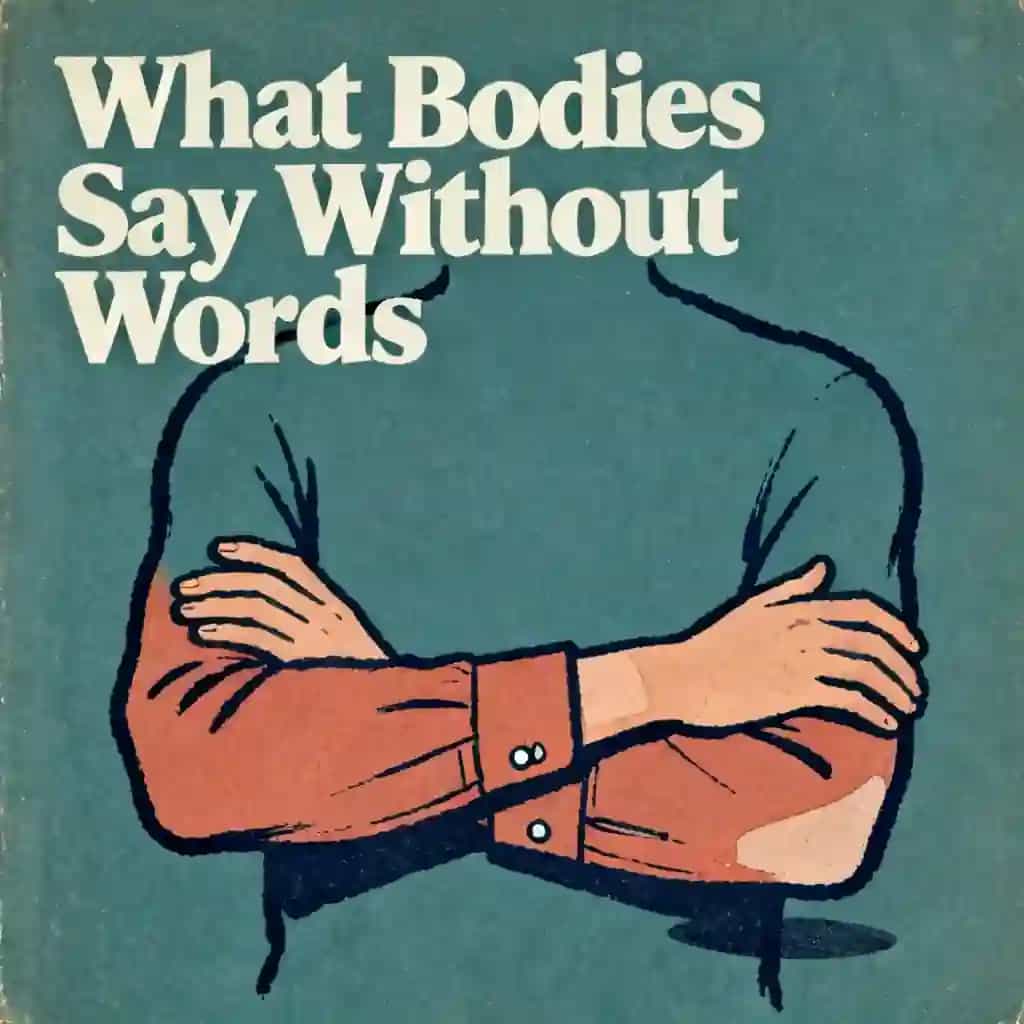
You can identify discomfort by looking for "barrier behaviors" and "pacifying behaviors." When the limbic brain feels threatened, it tries to protect the vital organs in the torso, leading a person to cross their arms, lean away, or place objects like a coffee cup or bag in front of themselves. Additionally, people under stress often use pacifying behaviors to soothe their nervous system, such as rubbing their neck, touching their jewelry, biting their nails, or "ventilating" by pulling at their shirt collar.
No, the idea that looking away indicates lying is a common myth. Research suggests that looking away often simply means a person is thinking deeply, as it is cognitively demanding to maintain eye contact while processing complex information. Experts like Joe Navarro emphasize that there is no single "Pinocchio effect" or gesture that always proves deception. Instead of looking for a single "tell," you should look for "clusters" of behaviors—such as feet pointing away, arms crossing, and eyes squinting simultaneously—that deviate from a person's normal baseline.
Steepling is a nonverbal gesture where a person touches their fingertips together to form a shape like a church steeple. It is considered one of the most powerful signals of confidence and shows that a person is sure of what they are saying. Conversely, hiding the hands in pockets or tucking the thumbs away are often signs of insecurity, withdrawal, or a lack of status in a given situation.
Создано выпускниками Колумбийского университета в Сан-Франциско
"Instead of endless scrolling, I just hit play on BeFreed. It saves me so much time."


"I never knew where to start with nonfiction—BeFreed’s book lists turned into podcasts gave me a clear path."


"Perfect balance between learning and entertainment. Finished ‘Thinking, Fast and Slow’ on my commute this week."
"Crazy how much I learned while walking the dog. BeFreed = small habits → big gains."
"Reading used to feel like a chore. Now it’s just part of my lifestyle."

"Feels effortless compared to reading. I’ve finished 6 books this month already."
"BeFreed turned my guilty doomscrolling into something that feels productive and inspiring."

"BeFreed turned my commute into learning time. 20-min podcasts are perfect for finishing books I never had time for."
"BeFreed replaced my podcast queue. Imagine Spotify for books — that’s it. 🙌"

"It is great for me to learn something from the book without reading it."
"The themed book list podcasts help me connect ideas across authors—like a guided audio journey."
"Makes me feel smarter every time before going to work"
Создано выпускниками Колумбийского университета в Сан-Франциско
"Instead of endless scrolling, I just hit play on BeFreed. It saves me so much time."
"I never knew where to start with nonfiction—BeFreed’s book lists turned into podcasts gave me a clear path."
"Perfect balance between learning and entertainment. Finished ‘Thinking, Fast and Slow’ on my commute this week."
"Crazy how much I learned while walking the dog. BeFreed = small habits → big gains."
"Reading used to feel like a chore. Now it’s just part of my lifestyle."
"Feels effortless compared to reading. I’ve finished 6 books this month already."
"BeFreed turned my guilty doomscrolling into something that feels productive and inspiring."
"BeFreed turned my commute into learning time. 20-min podcasts are perfect for finishing books I never had time for."
"BeFreed replaced my podcast queue. Imagine Spotify for books — that’s it. 🙌"
"It is great for me to learn something from the book without reading it."
"The themed book list podcasts help me connect ideas across authors—like a guided audio journey."
"Makes me feel smarter every time before going to work"
"Instead of endless scrolling, I just hit play on BeFreed. It saves me so much time."
"I never knew where to start with nonfiction—BeFreed’s book lists turned into podcasts gave me a clear path."
"Perfect balance between learning and entertainment. Finished ‘Thinking, Fast and Slow’ on my commute this week."
"Crazy how much I learned while walking the dog. BeFreed = small habits → big gains."
"Reading used to feel like a chore. Now it’s just part of my lifestyle."
"Feels effortless compared to reading. I’ve finished 6 books this month already."
"BeFreed turned my guilty doomscrolling into something that feels productive and inspiring."
"BeFreed turned my commute into learning time. 20-min podcasts are perfect for finishing books I never had time for."
"BeFreed replaced my podcast queue. Imagine Spotify for books — that’s it. 🙌"
"It is great for me to learn something from the book without reading it."
"The themed book list podcasts help me connect ideas across authors—like a guided audio journey."
"Makes me feel smarter every time before going to work"
"Instead of endless scrolling, I just hit play on BeFreed. It saves me so much time."
"I never knew where to start with nonfiction—BeFreed’s book lists turned into podcasts gave me a clear path."
"Perfect balance between learning and entertainment. Finished ‘Thinking, Fast and Slow’ on my commute this week."
"Crazy how much I learned while walking the dog. BeFreed = small habits → big gains."
"Reading used to feel like a chore. Now it’s just part of my lifestyle."
"Feels effortless compared to reading. I’ve finished 6 books this month already."
"BeFreed turned my guilty doomscrolling into something that feels productive and inspiring."
"BeFreed turned my commute into learning time. 20-min podcasts are perfect for finishing books I never had time for."
"BeFreed replaced my podcast queue. Imagine Spotify for books — that’s it. 🙌"
"It is great for me to learn something from the book without reading it."
"The themed book list podcasts help me connect ideas across authors—like a guided audio journey."
"Makes me feel smarter every time before going to work"