Learn how a podcast content strategy builds brand awareness and thought leadership. Discover how to engage your target audience and drive podcast conversions.

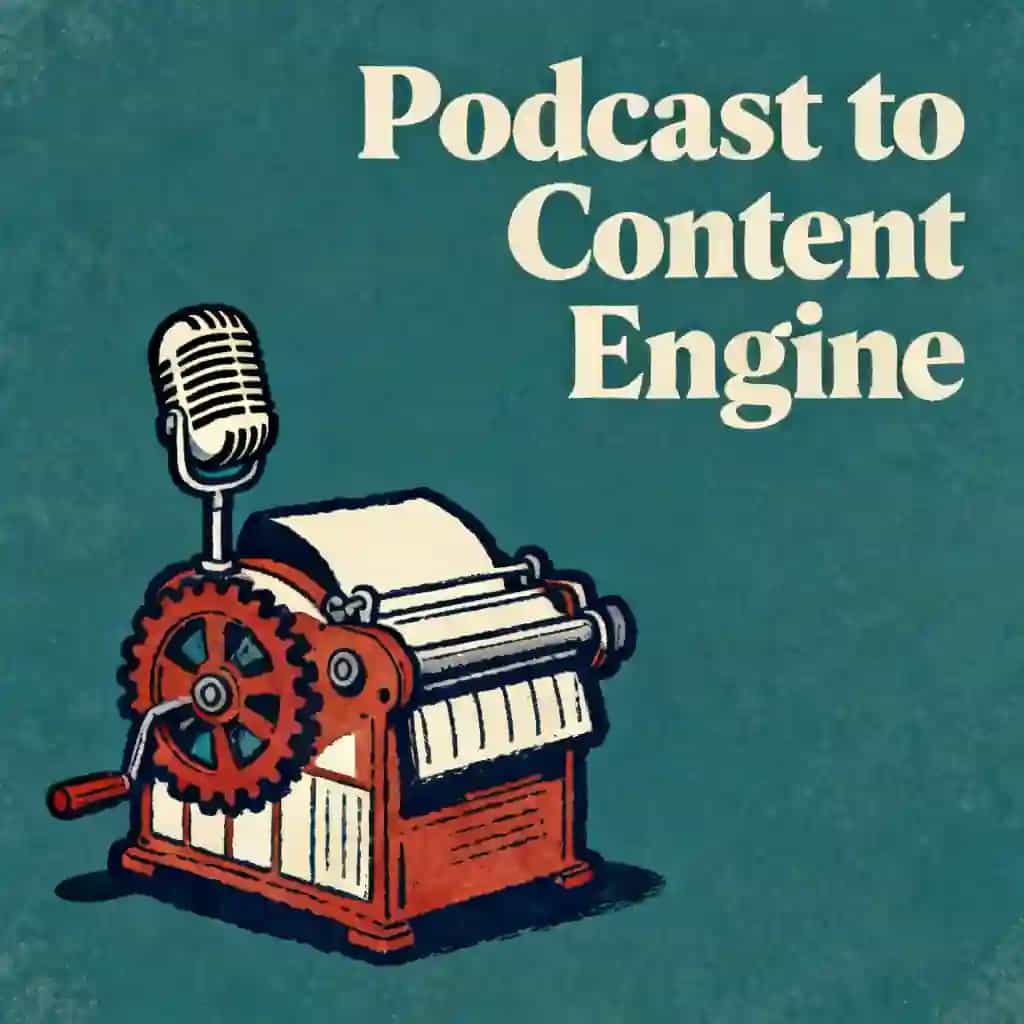
Stop seeing your podcast as 'content' and start seeing it as 'infrastructure.' It’s an engine for trust, and the opportunity is massive for the brands that are willing to stop shouting and start building relationships.
Creating engaging and informative podcast content to build brand awareness, establish thought leadership, and drive conversions through audio content that resonates with target audiences.

Создано выпускниками Колумбийского университета в Сан-Франциско
"Instead of endless scrolling, I just hit play on BeFreed. It saves me so much time."
"I never knew where to start with nonfiction—BeFreed’s book lists turned into podcasts gave me a clear path."
"Perfect balance between learning and entertainment. Finished ‘Thinking, Fast and Slow’ on my commute this week."
"Crazy how much I learned while walking the dog. BeFreed = small habits → big gains."
"Reading used to feel like a chore. Now it’s just part of my lifestyle."
"Feels effortless compared to reading. I’ve finished 6 books this month already."
"BeFreed turned my guilty doomscrolling into something that feels productive and inspiring."
"BeFreed turned my commute into learning time. 20-min podcasts are perfect for finishing books I never had time for."
"BeFreed replaced my podcast queue. Imagine Spotify for books — that’s it. 🙌"
"It is great for me to learn something from the book without reading it."
"The themed book list podcasts help me connect ideas across authors—like a guided audio journey."
"Makes me feel smarter every time before going to work"
Создано выпускниками Колумбийского университета в Сан-Франциско

Jackson: You know, Nia, I was just thinking about how much noise there is in the marketing world today. It feels like every brand is shouting, but hardly anyone is actually being heard.
Nia: It’s true! But here’s the wild part: even in this crowded space, podcasts now account for 40% of all spoken-word listening in the U.S. People aren't just tuning in; they’re leaning in for 30 to 60 minutes at a time.
Jackson: That is an incredible amount of high-quality attention. But I see so many companies treat their show like a side experiment rather than a real "marketing engine."
Nia: Exactly. The biggest mistake is making the show about the brand instead of the listener. Fortune 500s succeed because they treat their podcast as an audience-growth system, not just a series of audio files.
Jackson: Right, it’s about earning attention rather than just interrupting it with an ad. So, let’s explore how to build a strategy that actually drives conversions and authority.
Jackson: So, if we’re moving away from that "side experiment" mindset, Nia, where do we actually start? I mean, everyone says "strategy," but what does that look like on a Monday morning when you're staring at a blank recording schedule?
Nia: You hit the nail on the head. It starts with defining the "job" of the podcast. Before you buy a single microphone or book a guest, you have to ask: what is this show actually doing for the business? And I don't mean just "getting downloads." I mean, is it for demand generation? Is it an account-based marketing tool? Or maybe it’s for customer retention?
Jackson: That’s such an important distinction. Because if the "job" is demand generation, your episodes should probably focus on educating buyers around their biggest pain points. But if it's about authority, you’re looking for those deep, high-level strategy conversations with respected operators.
Nia: Exactly. And once that job is clear, you need a one-sentence positioning promise. Something like: "This show helps B2B sales leaders achieve 30% higher pipeline velocity without increasing their headcount." It forces you to get incredibly specific. If your positioning is too broad—like "A Show About Business"—you’re going to find that growth is painfully slow. Specificity is actually the fastest way to scale.
Jackson: I love that. It’s like a compass for the whole project. But let's talk about the structure. You mentioned these "pillars" earlier. How do we build a system that doesn't just rely on me having a "good idea" every Tuesday morning?
Nia: That’s where the content engine comes in. Most podcasts stall because they rely on bursts of inspiration. But the winners in 2026 rely on systems. You need a documented, repeatable process. Think of it as a playbook. You have an audience question bank—where you’re pulling real questions from sales calls or LinkedIn threads—and you turn those into "Operator Playbooks." These are tactical, execution-focused episodes that people actually save and share internally.
Jackson: Right, so instead of just "chatting," you’re creating assets. And it’s not just about the audio, right? I was reading that today, packaging actually matters more than the content itself in the beginning, because you’re competing in an algorithm-driven world.
Nia: Absolutely. We’re not just in podcast apps anymore. We’re on YouTube, where over a billion monthly users are watching podcast content. We’re on Spotify, which has over 250,000 video shows now. If your title is "A Conversation with Sarah," nobody is clicking that. But if it’s "How B2B Leaders Cut CAC by 32%," now you’ve got a conversion point. You have to earn that click before you can earn the listen.
Jackson: It makes total sense. It’s about moving from being a "creator" to being a "systems architect." You’re building a piece of infrastructure. And I think that's the bridge to our next big piece: the "pipeline-first" approach.
Nia: Yes! That is the game-changer for B2B. It shifts the focus from "how many people heard me?" to "who did I build a relationship with today?"
Jackson: This "pipeline-first" idea really flips the traditional marketing funnel on its head, doesn't it? Instead of trying to reach a million strangers, you're using the podcast to get into the room with the exact people you want to do business with.
Nia: Precisely. It’s what we call strategic relationship engineering. Think about it—if you send a cold email to a C-suite executive asking for a sales meeting, your chances are slim. But if you invite them to be a guest on a high-end show to share their expertise? The power dynamic changes instantly. You’ve moved from "Can I pitch you?" to "Can I feature you?"
Jackson: And that activates all those psychological triggers we see in the research—like reciprocity and authority. By giving them a platform, they naturally feel a sense of rapport with you. It’s basically a 45-minute deep-dive discovery call disguised as a fascinating conversation.
Nia: That’s exactly what it is! And the data back this up. Some companies using this account-based podcasting model see a 10% conversion rate from guests to customers. Think about that—one out of every ten guests eventually becomes a client or a partner because you’ve built that high-trust foundation in the studio.
Jackson: I saw a case study about a cybersecurity firm that did exactly this. They stopped chasing "influencers" and started inviting the CISOs of their top 50 target accounts. Within just four months, they’d attributed nearly seven hundred thousand dollars in pipeline directly to those relationships. It wasn't about the downloads; it was about the guest list.
Nia: And that’s why guest selection is the most critical part of the lead-gen engine. You have to map your guests to your business development goals. Are they potential customers? Strategic partners? If they’re complementary service providers, they might not buy from you, but they can become referral engines. One B2B firm interviewed a fractional CFO and ended up getting seven referrals that turned into three high-ticket clients. That’s the compound effect of the right relationship.
Jackson: It feels like the "before and after" of the recording is just as important as the interview itself. I’ve heard of CEOs who block an extra fifteen minutes on both sides of the call just to build that rapport.
Nia: Oh, absolutely. The "green room" time is where the real business happens. You’re asking about their success metrics for the next year or their biggest bottlenecks. Then, after the mic is off, you can naturally say, "You know, based on what you said about your talent acquisition challenges, we actually have a framework that might help. Should we chat about that next week?" It’s a seamless transition because the trust is already there.
Jackson: But I guess the danger is making it feel "salesy," right? If the guest feels like they've been lured into a trap, you've destroyed the trust instantly.
Nia: That is the cardinal sin. You have to be a "producer" first, not a "salesperson." The goal is to deliver massive value to the guest. You give them the clips, the graphics, the spotlight. If you treat them like a celebrity, they’ll treat you like a trusted peer. It’s about social capital exchanges—maybe you introduce them to someone else in your network. When you lead with value, the revenue follows naturally.
Jackson: So, we've got the guest side down—building that one-on-one pipeline. But what about the listeners? How do we turn the people who are actually tuning in into qualified leads without ruining the "vibe" of the show?
Nia: That’s where the "distribution engine" comes in. We have to stop thinking of the podcast as just an audio file and start seeing it as the center of a content ecosystem.
Jackson: Okay, so we've recorded this amazing interview. We've built a great relationship with the guest. But if we just hit "publish" and post one link on LinkedIn, we’re essentially leaving 90% of the value on the table, right?
Nia: Oh, at least 90%. In 2026, "distribution-first" beats "publish-first" every single time. You have to realize that one 40-minute episode is actually the raw material for fifteen to twenty-five pieces of content. If you aren't repurposing, you're working ten times harder than you need to.
Jackson: I love the "engine" metaphor here. It’s like the podcast is the power plant, and then you have all these transmission lines carrying that energy to different platforms. What does that look like in practice?
Nia: It looks like a structured "Content Yield." From that one recording, you should be pulling out three to five high-impact video clips—those 60-second "talking head" moments where the guest says something counterintuitive or tactical. Those go to LinkedIn, TikTok, and YouTube Shorts. Then you turn the transcript into a long-form SEO blog post. Not just a "summary," but a real, searchable asset that ranks for keywords.
Jackson: And I’m guessing those clips are the primary discovery tool now. I saw a stat that 76% of Gen Z listeners discover shows through social clips. It’s like the "trailer" for the movie.
Nia: Exactly. And don't forget the "owned" channels. Your email list is your most reliable distribution tool because you aren't at the mercy of an algorithm. When you send out a new episode, you shouldn't just say "Hey, new episode." You should share a specific insight or a "curiosity gap" that makes them need to listen.
Jackson: And what about SEO? I think a lot of people overlook how much search matters for podcasts. It’s not just about being found in Apple Podcasts anymore.
Nia: It’s huge! Google is processing billions of searches a day, and if you have dedicated episode pages with full transcripts and "topic clusters," your podcast starts attracting listeners months—even years—after the launch. It’s about "search compounding." Instead of your content expiring after a week, it becomes a permanent asset.
Jackson: I’ve noticed that some of the most successful shows also use "partnership distribution." They don't just hope the guest shares it; they make it impossible for them *not* to.
Nia: Right! You give them a "Guest Promo Kit." You provide the pre-written copy, three different graphic variations, and the vertical video clips. The easier you make it, the more likely they are to blast it to their entire audience. And that’s free amplification to a warm, relevant crowd.
Jackson: We should also talk about the "Video-First" shift. You mentioned YouTube earlier, but it’s really become the second-largest podcast platform, hasn't it?
Nia: It has. And that’s why the "Visual Authority" is so important. If you’re recording on a grainy laptop camera with a messy bedroom background, you’re signaling "amateur" to your prospects. But if you have that cinematic, multi-cam look—the kind of quality you see from Fortune 500 brands—it validates your authority before you even speak. It’s about the "Aesthetics of Retention."
Jackson: So, if we’ve got this engine running—the guest relationships are building, the content is being chopped up and distributed everywhere—how do we actually know if it’s working? Because "downloads" feel like a bit of a vanity metric at this point.
Nia: You’re so right. Downloads tell you about exposure, but they don't tell you about impact. To move the needle, we have to look at "Audience Health" and, ultimately, "Business Impact."
Jackson: This is the part that usually makes marketers sweat—the ROI conversation. When the CFO asks, "Why are we spending all this time and money on a podcast?", how do we answer that in a way that actually connects to the bottom line?
Nia: You have to look at it through three layers: Direct ROI, Indirect ROI, and Content Efficiency. Direct ROI is the easiest to explain but sometimes the slowest to show up—it’s the leads, the sales, and the pipeline growth. We’re looking at "Influenced Pipeline." That means tracking if a prospect engaged with the podcast before they signed a contract.
Jackson: I’ve seen companies add a "How did you hear about us?" field on their demo forms, and "your podcast" is becoming a top answer. That’s a massive signal.
Nia: It really is. And in B2B, podcasts are proven to shorten the sales cycle. Why? Because when a prospect has been listening to you for months, the trust is already built. They don't need a three-month "getting to know you" phase. They’ve already spent ten hours with you in their car or at the gym. They convert 20 to 30% faster than cold leads.
Jackson: That’s a huge win for the sales team. But what about the Indirect ROI? The "Authority" piece?
Nia: That’s the "Category Expert" play. In a world where AI can churn out a million blog posts in an hour, a human voice is the ultimate differentiator. It builds "Brand Recall." Nielsen found that host-read ads have a 71% brand recall rate. That’s significantly higher than traditional ads. You’re becoming a trusted voice in the listener’s ear.
Jackson: And then there’s that "Content Efficiency" layer you mentioned. If the podcast is fueling your entire LinkedIn, email, and blog strategy, you’re actually saving the marketing team ten to fifteen hours of "creative brainstorming" every week.
Nia: Exactly! You’re not starting from scratch. You’re just repurposing. That’s a massive cost saving. But the real "gold" is in the listener behavior data. We have to look past total downloads and look at "Completion Rate." If people are dropping off at minute ten, your hook is weak. If they’re staying for forty minutes, you’ve earned their trust.
Jackson: I think "Follower Growth" is also a better metric than "Downloads." A download can be a one-time thing, but a "Follow" is an intent to return. It’s the difference between a passerby and a subscriber.
Nia: Spot on. And for the ABM-focused shows, the metric is even simpler: "Guest-to-Opportunity Rate." If you interviewed twenty prospects this quarter, how many of them moved into a discovery call? That’s a number any executive will understand.
Jackson: It really changes the conversation from "Are we famous?" to "Are we effective?" But I’m thinking about the person listening right now who’s thinking, "This sounds great, but I don't have a Hollywood studio or a team of ten people to do all this repurposing." How do we make this practical for them?
Nia: That’s the beauty of the 2026 playbook. You don't need a huge team if you have the right tools and a "Pipeline-First" mindset. Let’s break down the actual "Practical Playbook" for the listener.
Jackson: Okay, Nia, let's get tactical. If someone is listening and they want to turn their show into a "marketing engine" starting today, what are the first few steps? What does the "90-day growth plan" look like?
Nia: Step one is the "Audit." Look at your current show. Is it about you, or is it about the listener? Fix your packaging immediately. Rewrite your titles to lead with a clear outcome or a "tension" point. If your episode is "Interview with John Smith," change it to "How John Smith Scaled to $10M Using This One Referral Loop."
Jackson: Right, earn the click first. And then, I’m guessing, fix that first sixty seconds. No more three-minute-long branded intros or housekeeping.
Nia: Oh, please! Start with the hook. Give them a reason to stay in the first thirty seconds. "In this episode, you’re going to learn X, Y, and Z." Then move into the "Guest Strategy." Identify your "Dream 200"—the 200 people you most want to build a relationship with—and start inviting them.
Jackson: And don't just "wing it" on the tech, right? You don't need to spend ten thousand dollars, but a hundred-dollar microphone and some basic room treatment—like some rugs and curtains—can make a world of difference for that "Authority" signal.
Nia: Definitely. Use a remote recording tool that captures local audio, like Riverside, so you don't have that "internet glitch" sound. And then, establish your "Repurposing Workflow." Every episode should yield at least three video clips and one blog post. If you can’t do it yourself, look into tools like Descript or Opus Clip that use AI to help speed up the process.
Jackson: And I think a "Quick Win" for anyone listening is to look at their "Before and After" windows. Next time you record, block that extra fifteen minutes. Don't just jump into the interview. Build that rapport. Ask about their business goals. That’s where the revenue starts.
Nia: And don't forget the "Email Capture." Every episode needs one specific, topic-based call to action. Not just "visit our website," but "download the checklist we discussed in this episode." Move them from "listener" to "subscriber."
Jackson: It’s all about consistency, isn't it? It’s better to do one high-quality, repurposed episode every two weeks than to do three a week that nobody hears and you eventually burn out on.
Nia: Consistency beats perfection every time. Build a buffer—record four to eight episodes in a batch so you’re never scrambling on a Monday morning. When you have a system, growth becomes predictable.
Jackson: This feels so much more achievable when you break it down into these "engine" components. It’s not magic; it’s just a process. But I’m curious, Nia, as we look at all these moving parts—the SEO, the clips, the ABM strategy—is there one "secret sauce" that ties it all together?
Nia: I think it’s the storytelling. Even in B2B, we’re still humans. If you can wrap your insights in a compelling narrative, that’s what makes the engine truly purr.
Jackson: You know, Nia, I love that we’re ending on storytelling. Because we’ve talked so much about systems and data and "engines," but at the end of the day, someone is listening to a voice in their ear. If that voice isn't telling a good story, the system eventually fails.
Nia: Exactly. There’s a misconception that B2B has to be dry and technical—all "figures and no feelings." But behind every "game-changing strategy" is a human with a challenge, a human who’s trying to solve a problem. We bond with stories, not data.
Jackson: I saw a great point about this—that stories activate more areas of the brain than just facts. Emotion, empathy, memory... it all lights up. So, how do we make a "business story" actually good?
Nia: It needs four things: Relatability, Conflict, Transformation, and a Takeaway. Your listener should see themselves in the frustration. There needs to be an obstacle—a broken process or a failed experiment. Then, you show the transformation—what changed? And finally, the takeaway—what can the listener do with this information today?
Jackson: I love that idea of "following the change." If nothing changed, there is no story. It’s just a report.
Nia: Right! And you can find these stories everywhere. They’re in your internal meetings, your customer success calls, even your failed experiments. Instead of asking your team "What should we talk about?", ask them "What moment last month taught us something important?"
Jackson: That’s such a better question. It invites a narrative. And audio is the perfect medium for this. It’s intimate. It’s personal. You can hear the passion or the frustration in someone’s voice. You can’t get that from a white paper.
Nia: You really can't. And that’s the "Secret to Better B2B Podcasts." It’s making the business sound human. When you combine that human element with the strategic distribution and the pipeline-first guest strategy, you’ve built something that doesn't just "work"—it compounds.
Jackson: It becomes a long-term asset. It builds "Brand Equity" that stays with the company long after the episode is over.
Nia: Exactly. It’s the difference between a "campaign" and a "channel." A campaign is a sprint; a channel is an engine that keeps running.
Jackson: Well, Nia, I feel like we’ve covered the whole blueprint today. From the very first "job" of the podcast to the "ROI of authority." It’s been a fascinating look at where the medium is heading in 2026.
Nia: It really has. The opportunity is massive for the brands that are willing to stop shouting and start building relationships.
Jackson: So, Nia, as we bring this whole conversation together, what’s the one big takeaway you hope stays with everyone who’s been listening?
Nia: I think it’s the shift in mindset. Stop seeing your podcast as "content" and start seeing it as "infrastructure." It’s an engine for trust. Whether you’re using it to build a guest pipeline or to establish category authority, the power is in the relationship.
Jackson: That really is the heart of it. It’s not about the millions of anonymous downloads; it’s about the forty or fifty strategic conversations you have every year. Those are the relationships that build businesses.
Nia: Exactly. And for everyone listening, remember that you don't have to do it all at once. Start with one thing. Maybe it’s fixing your hooks. Maybe it’s inviting three "Dream 200" guests. Just start building the engine.
Jackson: I love that. Small, consistent actions create that "compound effect" over time. And in a world that’s increasingly noisy, that human-to-human connection is the ultimate competitive advantage.
Nia: It really is. Trust is the currency of 2026. And there’s no better way to build trust than through an authentic, well-told story in someone’s ear.
Jackson: Nia, this has been such a blast. I feel like I have a whole new perspective on how to approach audio.
Nia: Me too! It’s an exciting time to be a creator and a marketer. The tools are better, the audiences are bigger, and the path to ROI is clearer than it’s ever been.
Jackson: So, to everyone who’s been with us today—thank you so much for leaning in. We’ve covered a lot of ground, and I hope you’ve found at least one or two "Quick Wins" you can apply to your show right now.
Nia: Definitely. Take a moment to reflect on your show’s "job." Is it doing what you need it to do? If not, today is the perfect day to start re-engineering that engine.
Jackson: Thanks for listening, everyone. It’s been a pleasure exploring the future of podcasting with you.
Nia: Yes, thank you! It’s time to go out there and build something that truly resonates.