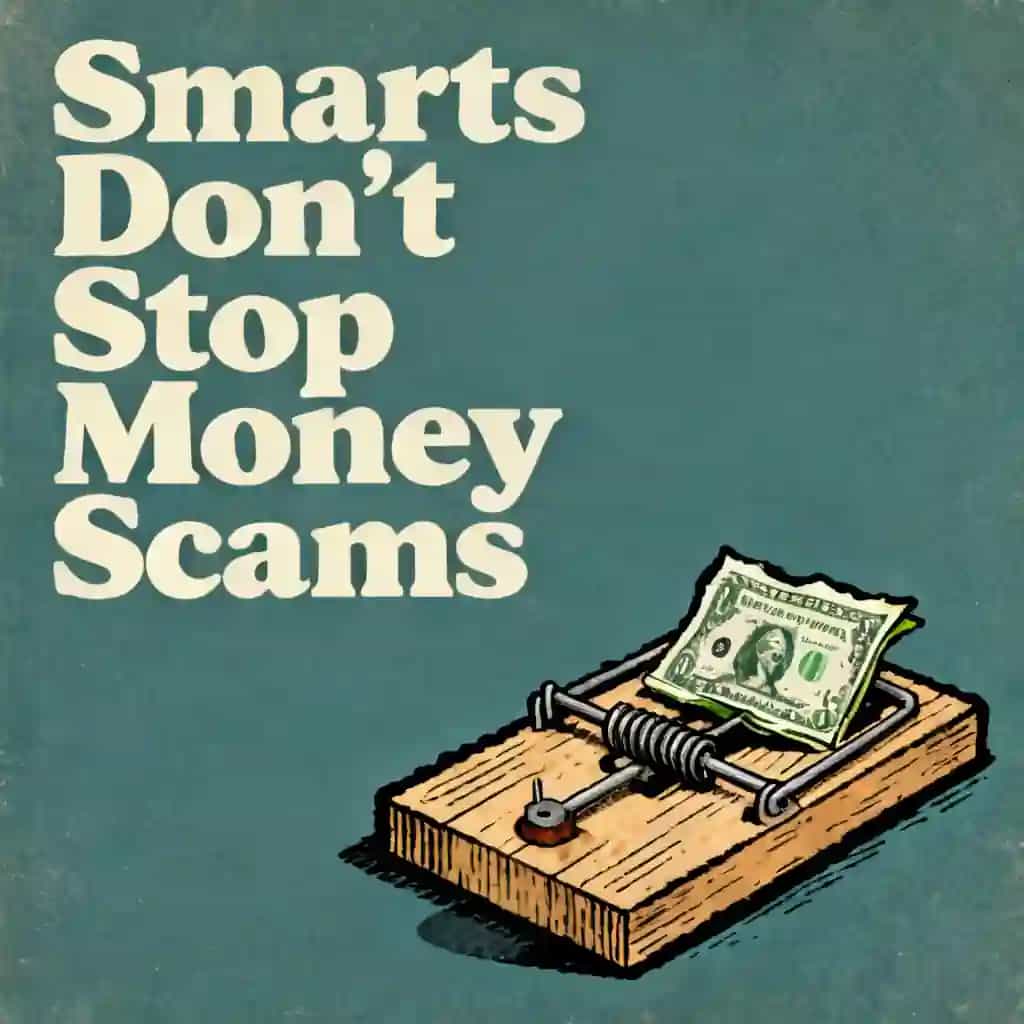
History’s Greatest Cons: The Psychology of the Sting
We think we’re too smart to be scammed, but elite grifters actually target our best human instincts. Learn how they bypass logic to steal billions.

Лучшая цитата из History’s Greatest Cons: The Psychology of the Sting
Scammers aren't looking for 'stupid' people—they’re looking for humans with human brains. All of us are vulnerable to a persuasive approach if the timing is right and the trigger hits home.
Generated with BeFreed
History's Greatest Cons, and Who Fell for Them






Часто задаваемые вопросы
Falling for a scam is not a reflection of intelligence, but rather a result of how the human brain is wired. Scammers use "visceral triggers" to spark raw emotions like fear, greed, or hope, which causes the brain's logical filters to swing open. By using mental shortcuts called heuristics, scammers can create a "system crash" in a person's judgment. Research indicates that vulnerability often stems from universal human traits, such as a high respect for authority, a desire for consistency, or being easily swayed by social influence.
Phantom fixation is a psychological tactic where a scammer makes a victim become obsessed with a massive potential "prize" or reward. Once the victim is fixated on this "what if" factor, their brain begins to minimize the risks involved. This makes the small fees or personal information requested by the scammer seem insignificant in comparison to the imagined payout. This obsession reduces the victim's motivation to process information deeply or look for red flags.
Victor Lustig, known as "the Count," utilized authority and confidentiality to pull off his famous con. He used fake government stationery and luxury settings to convince scrap metal dealers that the tower was being sold for parts as a state secret. He successfully targeted Andre Poisson by acting like a corrupt official who wanted a bribe, which perversely made the deal seem more authentic to the victim. Lustig was able to attempt the scam a second time because the first victim was too embarrassed to report the crime to the police.
The "sunk cost" trap, or the principle of commitment and consistency, occurs when a victim feels pressured to keep going with a deal because they have already invested time or money. Once a person takes a small initial step, such as paying a "processing fee," their brain tells them that stopping would mean admitting a mistake or losing that initial investment. Scammers exploit this by asking for increasingly larger amounts of money to "protect" what the victim has already paid.
The most important defense is to pause whenever you feel a manufactured "sense of urgency," as scammers use deadlines to force rushed decisions. You should also be wary of anyone who seems like a "perfect match" by constantly agreeing with your views, as this is a tactic to build false trust. Instead of focusing on what you could gain, experts suggest asking, "How much could I lose here?" Finally, if you feel the need to keep a deal secret from friends or family, it is a major red flag that your intuition already senses something is wrong.
Создано выпускниками Колумбийского университета в Сан-Франциско
"Instead of endless scrolling, I just hit play on BeFreed. It saves me so much time."


"I never knew where to start with nonfiction—BeFreed’s book lists turned into podcasts gave me a clear path."


"Perfect balance between learning and entertainment. Finished ‘Thinking, Fast and Slow’ on my commute this week."
"Crazy how much I learned while walking the dog. BeFreed = small habits → big gains."
"Reading used to feel like a chore. Now it’s just part of my lifestyle."

"Feels effortless compared to reading. I’ve finished 6 books this month already."
"BeFreed turned my guilty doomscrolling into something that feels productive and inspiring."

"BeFreed turned my commute into learning time. 20-min podcasts are perfect for finishing books I never had time for."
"BeFreed replaced my podcast queue. Imagine Spotify for books — that’s it. 🙌"

"It is great for me to learn something from the book without reading it."
"The themed book list podcasts help me connect ideas across authors—like a guided audio journey."
"Makes me feel smarter every time before going to work"
Создано выпускниками Колумбийского университета в Сан-Франциско
"Instead of endless scrolling, I just hit play on BeFreed. It saves me so much time."
"I never knew where to start with nonfiction—BeFreed’s book lists turned into podcasts gave me a clear path."
"Perfect balance between learning and entertainment. Finished ‘Thinking, Fast and Slow’ on my commute this week."
"Crazy how much I learned while walking the dog. BeFreed = small habits → big gains."
"Reading used to feel like a chore. Now it’s just part of my lifestyle."
"Feels effortless compared to reading. I’ve finished 6 books this month already."
"BeFreed turned my guilty doomscrolling into something that feels productive and inspiring."
"BeFreed turned my commute into learning time. 20-min podcasts are perfect for finishing books I never had time for."
"BeFreed replaced my podcast queue. Imagine Spotify for books — that’s it. 🙌"
"It is great for me to learn something from the book without reading it."
"The themed book list podcasts help me connect ideas across authors—like a guided audio journey."
"Makes me feel smarter every time before going to work"
"Instead of endless scrolling, I just hit play on BeFreed. It saves me so much time."
"I never knew where to start with nonfiction—BeFreed’s book lists turned into podcasts gave me a clear path."
"Perfect balance between learning and entertainment. Finished ‘Thinking, Fast and Slow’ on my commute this week."
"Crazy how much I learned while walking the dog. BeFreed = small habits → big gains."
"Reading used to feel like a chore. Now it’s just part of my lifestyle."
"Feels effortless compared to reading. I’ve finished 6 books this month already."
"BeFreed turned my guilty doomscrolling into something that feels productive and inspiring."
"BeFreed turned my commute into learning time. 20-min podcasts are perfect for finishing books I never had time for."
"BeFreed replaced my podcast queue. Imagine Spotify for books — that’s it. 🙌"
"It is great for me to learn something from the book without reading it."
"The themed book list podcasts help me connect ideas across authors—like a guided audio journey."
"Makes me feel smarter every time before going to work"
"Instead of endless scrolling, I just hit play on BeFreed. It saves me so much time."
"I never knew where to start with nonfiction—BeFreed’s book lists turned into podcasts gave me a clear path."
"Perfect balance between learning and entertainment. Finished ‘Thinking, Fast and Slow’ on my commute this week."
"Crazy how much I learned while walking the dog. BeFreed = small habits → big gains."
"Reading used to feel like a chore. Now it’s just part of my lifestyle."
"Feels effortless compared to reading. I’ve finished 6 books this month already."
"BeFreed turned my guilty doomscrolling into something that feels productive and inspiring."
"BeFreed turned my commute into learning time. 20-min podcasts are perfect for finishing books I never had time for."
"BeFreed replaced my podcast queue. Imagine Spotify for books — that’s it. 🙌"
"It is great for me to learn something from the book without reading it."
"The themed book list podcasts help me connect ideas across authors—like a guided audio journey."
"Makes me feel smarter every time before going to work"