The Shores of 1492 and the Shock of the New
Anika: You know, Tess, I was looking at a map of North America the other day, and it’s so easy to take those straight lines and big blocks of color for granted. But if you could just peel back the layers of time—like one of those old-school acetate overlays—the sheer chaos of how this continent came together is mind-blowing. It wasn't just a discovery; it was a total collision.
Tess: It really was. And if you’re trying to wrap your head around how we got to the modern USA, Mexico, and Canada, you have to start with that absolute lightning bolt of a moment in 1492 . Before Columbus even hit the beach in the Bahamas, this place was already a massive, intricate puzzle of cultures—everything from tiny family bands to huge empires like the Aztecs . But once that first contact happened, the "New World" wasn't just a place anymore; it became a prize.
Anika: And a deadly one, too. I mean, the numbers are staggering. The Native populations didn't just decline; they plummeted, mostly because of diseases they had zero immunity to . It’s like the biological equivalent of a nuclear blast before the first real colonies even got their footings.
Tess: Exactly. And what’s fascinating for you to keep in mind is that while Spain was the first to really kick the door down, they weren't the only ones looking for a key. You’ve got John Cabot exploring the Canadian coast for England just five years after Columbus, in 1497 . Then you’ve got the French sending Jacques Cartier into the St. Lawrence River in the 1530s . It was this slow-motion race where everyone was looking for gold or a shortcut to India, and nobody really knew exactly what they’d found yet.
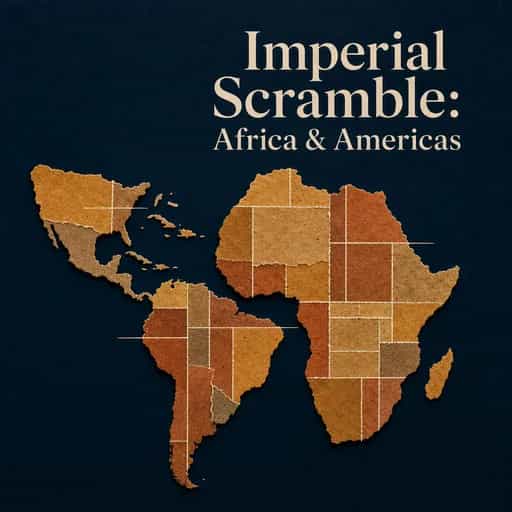
Anika: It’s wild because they were basically drawing the map as they went, often over each other’s lines. Like the Treaty of Tordesillas in 1494—Spain and Portugal literally tried to divide the entire world outside of Europe with a single line down the Atlantic .
Tess: Talk about ambition, right? "We'll take this half, you take that half." But the reality on the ground was way messier. While the Spanish were toppling the Aztec Empire in 1521—which basically laid the foundation for what would become Mexico—other powers were starting to nibble at the edges of the continent . And that’s really where our story picks up speed—how these initial grabs for land turned into the massive colonial machines that defined the next few centuries. So, let’s dive into how Spain tried to turn a "backwater" like Florida into a continental fortress.