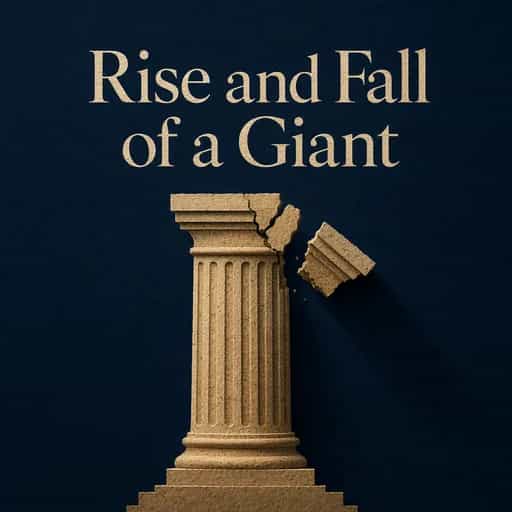
Britannica: The Rise and Fall of a Giant
How did a 244-year-old empire vanish in five years? Explore how Britannica’s greatest strengths became the anchors that pulled it underwater.

Лучшая цитата из Britannica: The Rise and Fall of a Giant
The very things that make a company great—its brand, its elite sales force, its reputation for quality—can become the heavy anchors that pull it underwater when the tide turns.
Generated with BeFreed
The Rise and Fall of a Giant






Часто задаваемые вопросы
Britannica’s refusal was based on logical business concerns of the time. In 1985, very few households owned computers, and management did not want to jeopardize their core business of selling fifteen-hundred-dollar book sets for a cheap digital product. Most importantly, they feared that a low-cost CD-ROM would cause their elite sales force to desert the company, as these representatives relied on high commissions from expensive print sales.
Diseconomies of scope refer to internal conflicts where the strengths of an old business model become liabilities for a new one. For Britannica, their highly successful door-to-door sales force was an asset for selling prestigious books but a hindrance for software. The company tried to protect the sales force by pricing digital products high and using them only as "closers" for book sales, which prevented them from competing effectively with cheaper, more accessible digital alternatives like Encarta.
Microsoft played a completely different game by focusing on the digital experience rather than just intellectual authority. While Britannica prioritized dense, expert-written text, Encarta focused on multimedia features like hyperlinks, search functionality, and audio clips that appealed to home PC users. Additionally, Microsoft "failed fast" by pivoting from a high price point to a 99-dollar retail strategy, selling more copies in one holiday season than Britannica sold books in its best year.
No, Britannica was actually a technical pioneer in the digital space. Their "Advanced Technology Group" registered eb.com in 1993 and launched a full online database via the Mosaic browser in 1994, well before the general public was online. However, while they had the technical prowess, the revenue from online subscriptions was a mere fraction of the losses they were sustaining in their collapsing home book market, making it impossible to save the company in its original form.
In a classic example of creative destruction, the disruptor was eventually disrupted. In 2009, Microsoft shut down Encarta because it could no longer compete with the rise of Wikipedia. This illustrates that the cycle of innovation is relentless, and even a company that successfully topples an industry giant can eventually find its own business model rendered obsolete by newer, more accessible platforms.
Создано выпускниками Колумбийского университета в Сан-Франциско
"Instead of endless scrolling, I just hit play on BeFreed. It saves me so much time."


"I never knew where to start with nonfiction—BeFreed’s book lists turned into podcasts gave me a clear path."


"Perfect balance between learning and entertainment. Finished ‘Thinking, Fast and Slow’ on my commute this week."
"Crazy how much I learned while walking the dog. BeFreed = small habits → big gains."
"Reading used to feel like a chore. Now it’s just part of my lifestyle."

"Feels effortless compared to reading. I’ve finished 6 books this month already."
"BeFreed turned my guilty doomscrolling into something that feels productive and inspiring."

"BeFreed turned my commute into learning time. 20-min podcasts are perfect for finishing books I never had time for."
"BeFreed replaced my podcast queue. Imagine Spotify for books — that’s it. 🙌"

"It is great for me to learn something from the book without reading it."
"The themed book list podcasts help me connect ideas across authors—like a guided audio journey."
"Makes me feel smarter every time before going to work"
Создано выпускниками Колумбийского университета в Сан-Франциско
"Instead of endless scrolling, I just hit play on BeFreed. It saves me so much time."
"I never knew where to start with nonfiction—BeFreed’s book lists turned into podcasts gave me a clear path."
"Perfect balance between learning and entertainment. Finished ‘Thinking, Fast and Slow’ on my commute this week."
"Crazy how much I learned while walking the dog. BeFreed = small habits → big gains."
"Reading used to feel like a chore. Now it’s just part of my lifestyle."
"Feels effortless compared to reading. I’ve finished 6 books this month already."
"BeFreed turned my guilty doomscrolling into something that feels productive and inspiring."
"BeFreed turned my commute into learning time. 20-min podcasts are perfect for finishing books I never had time for."
"BeFreed replaced my podcast queue. Imagine Spotify for books — that’s it. 🙌"
"It is great for me to learn something from the book without reading it."
"The themed book list podcasts help me connect ideas across authors—like a guided audio journey."
"Makes me feel smarter every time before going to work"
"Instead of endless scrolling, I just hit play on BeFreed. It saves me so much time."
"I never knew where to start with nonfiction—BeFreed’s book lists turned into podcasts gave me a clear path."
"Perfect balance between learning and entertainment. Finished ‘Thinking, Fast and Slow’ on my commute this week."
"Crazy how much I learned while walking the dog. BeFreed = small habits → big gains."
"Reading used to feel like a chore. Now it’s just part of my lifestyle."
"Feels effortless compared to reading. I’ve finished 6 books this month already."
"BeFreed turned my guilty doomscrolling into something that feels productive and inspiring."
"BeFreed turned my commute into learning time. 20-min podcasts are perfect for finishing books I never had time for."
"BeFreed replaced my podcast queue. Imagine Spotify for books — that’s it. 🙌"
"It is great for me to learn something from the book without reading it."
"The themed book list podcasts help me connect ideas across authors—like a guided audio journey."
"Makes me feel smarter every time before going to work"
"Instead of endless scrolling, I just hit play on BeFreed. It saves me so much time."
"I never knew where to start with nonfiction—BeFreed’s book lists turned into podcasts gave me a clear path."
"Perfect balance between learning and entertainment. Finished ‘Thinking, Fast and Slow’ on my commute this week."
"Crazy how much I learned while walking the dog. BeFreed = small habits → big gains."
"Reading used to feel like a chore. Now it’s just part of my lifestyle."
"Feels effortless compared to reading. I’ve finished 6 books this month already."
"BeFreed turned my guilty doomscrolling into something that feels productive and inspiring."
"BeFreed turned my commute into learning time. 20-min podcasts are perfect for finishing books I never had time for."
"BeFreed replaced my podcast queue. Imagine Spotify for books — that’s it. 🙌"
"It is great for me to learn something from the book without reading it."
"The themed book list podcasts help me connect ideas across authors—like a guided audio journey."
"Makes me feel smarter every time before going to work"