Giving AI Agents Hands: Designing Custom Tools for LLMs
Learn how to give AI agents hands by designing custom tools. Explore the architecture of tool use, including schemas and functions, to move beyond chatbots.

Лучшая цитата из Giving AI Agents Hands: Designing Custom Tools for LLMs
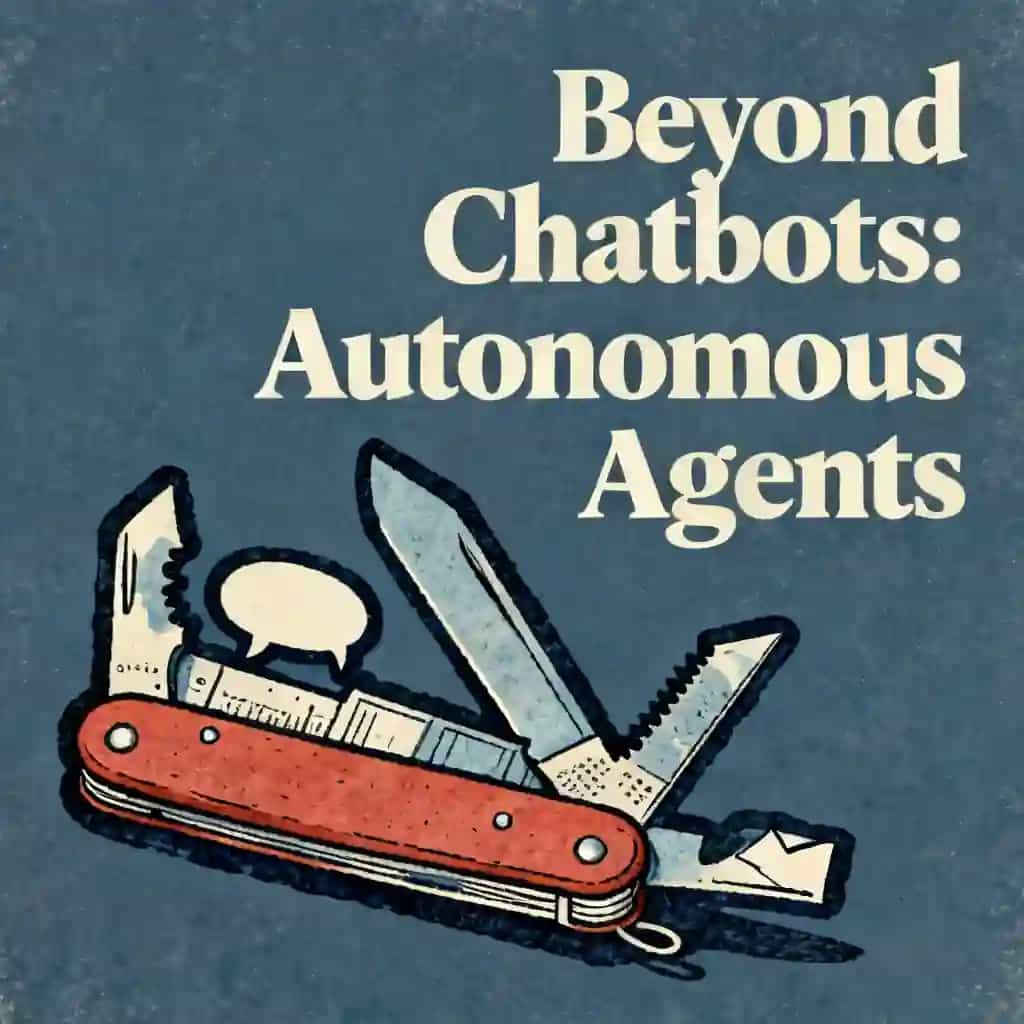
A model without tools is essentially a prisoner in a room full of books—it can reason and plan with breathtaking depth, but it simply cannot act.
Generated by T
Building AI agents and workflows with a specific focus on designing and implementing custom tools, and how to integrate them with files and prompts.






Часто задаваемые вопросы
Giving an AI agent hands refers to the process of designing custom tools that allow a Large Language Model to move beyond reasoning and start taking action. Without these tools, an agent is like a strategist who can plan a complex task but cannot physically interact with the world. By integrating custom tools, you enable the agent to reach out and touch files or APIs, transforming a mere chatbot into a functional agent capable of executing tasks.
The architecture of giving an AI agent agency relies on a three-part contract consisting of a schema, a function, and a result. The schema is particularly vital because it serves as the digital label that the AI actually sees, allowing it to understand how to use the tool. This structure ensures that the model can move from theorizing about a problem to actually performing the necessary function and receiving a specific result from the system.
Schema design is the most critical piece of the tool-building process because the schema is the only part of the tool that the AI model actually perceives. It acts as the interface or label on the tool's handle, providing the necessary context for the agent to understand when and how to trigger a specific function. Without a well-designed schema, an agent might reason with depth but will fail to correctly identify or utilize the tools needed to interact with external APIs.
Standard LLM reasoning allows a model to plan, calculate, and theorize with breathtaking depth, but it remains a prisoner to its training data without the ability to act. Custom tools provide the physical hands necessary for an agent to perform real-world tasks like pulling deployment logs or organizing a calendar. While a model can narrate how it would solve a problem, custom tools and function calling are what allow it to actually execute those plans in a digital environment.
Создано выпускниками Колумбийского университета в Сан-Франциско
"Instead of endless scrolling, I just hit play on BeFreed. It saves me so much time."


"I never knew where to start with nonfiction—BeFreed’s book lists turned into podcasts gave me a clear path."


"Perfect balance between learning and entertainment. Finished ‘Thinking, Fast and Slow’ on my commute this week."
"Crazy how much I learned while walking the dog. BeFreed = small habits → big gains."
"Reading used to feel like a chore. Now it’s just part of my lifestyle."

"Feels effortless compared to reading. I’ve finished 6 books this month already."
"BeFreed turned my guilty doomscrolling into something that feels productive and inspiring."

"BeFreed turned my commute into learning time. 20-min podcasts are perfect for finishing books I never had time for."
"BeFreed replaced my podcast queue. Imagine Spotify for books — that’s it. 🙌"

"It is great for me to learn something from the book without reading it."
"The themed book list podcasts help me connect ideas across authors—like a guided audio journey."
"Makes me feel smarter every time before going to work"
Создано выпускниками Колумбийского университета в Сан-Франциско
"Instead of endless scrolling, I just hit play on BeFreed. It saves me so much time."
"I never knew where to start with nonfiction—BeFreed’s book lists turned into podcasts gave me a clear path."
"Perfect balance between learning and entertainment. Finished ‘Thinking, Fast and Slow’ on my commute this week."
"Crazy how much I learned while walking the dog. BeFreed = small habits → big gains."
"Reading used to feel like a chore. Now it’s just part of my lifestyle."
"Feels effortless compared to reading. I’ve finished 6 books this month already."
"BeFreed turned my guilty doomscrolling into something that feels productive and inspiring."
"BeFreed turned my commute into learning time. 20-min podcasts are perfect for finishing books I never had time for."
"BeFreed replaced my podcast queue. Imagine Spotify for books — that’s it. 🙌"
"It is great for me to learn something from the book without reading it."
"The themed book list podcasts help me connect ideas across authors—like a guided audio journey."
"Makes me feel smarter every time before going to work"
"Instead of endless scrolling, I just hit play on BeFreed. It saves me so much time."
"I never knew where to start with nonfiction—BeFreed’s book lists turned into podcasts gave me a clear path."
"Perfect balance between learning and entertainment. Finished ‘Thinking, Fast and Slow’ on my commute this week."
"Crazy how much I learned while walking the dog. BeFreed = small habits → big gains."
"Reading used to feel like a chore. Now it’s just part of my lifestyle."
"Feels effortless compared to reading. I’ve finished 6 books this month already."
"BeFreed turned my guilty doomscrolling into something that feels productive and inspiring."
"BeFreed turned my commute into learning time. 20-min podcasts are perfect for finishing books I never had time for."
"BeFreed replaced my podcast queue. Imagine Spotify for books — that’s it. 🙌"
"It is great for me to learn something from the book without reading it."
"The themed book list podcasts help me connect ideas across authors—like a guided audio journey."
"Makes me feel smarter every time before going to work"
"Instead of endless scrolling, I just hit play on BeFreed. It saves me so much time."
"I never knew where to start with nonfiction—BeFreed’s book lists turned into podcasts gave me a clear path."
"Perfect balance between learning and entertainment. Finished ‘Thinking, Fast and Slow’ on my commute this week."
"Crazy how much I learned while walking the dog. BeFreed = small habits → big gains."
"Reading used to feel like a chore. Now it’s just part of my lifestyle."
"Feels effortless compared to reading. I’ve finished 6 books this month already."
"BeFreed turned my guilty doomscrolling into something that feels productive and inspiring."
"BeFreed turned my commute into learning time. 20-min podcasts are perfect for finishing books I never had time for."
"BeFreed replaced my podcast queue. Imagine Spotify for books — that’s it. 🙌"
"It is great for me to learn something from the book without reading it."
"The themed book list podcasts help me connect ideas across authors—like a guided audio journey."
"Makes me feel smarter every time before going to work"