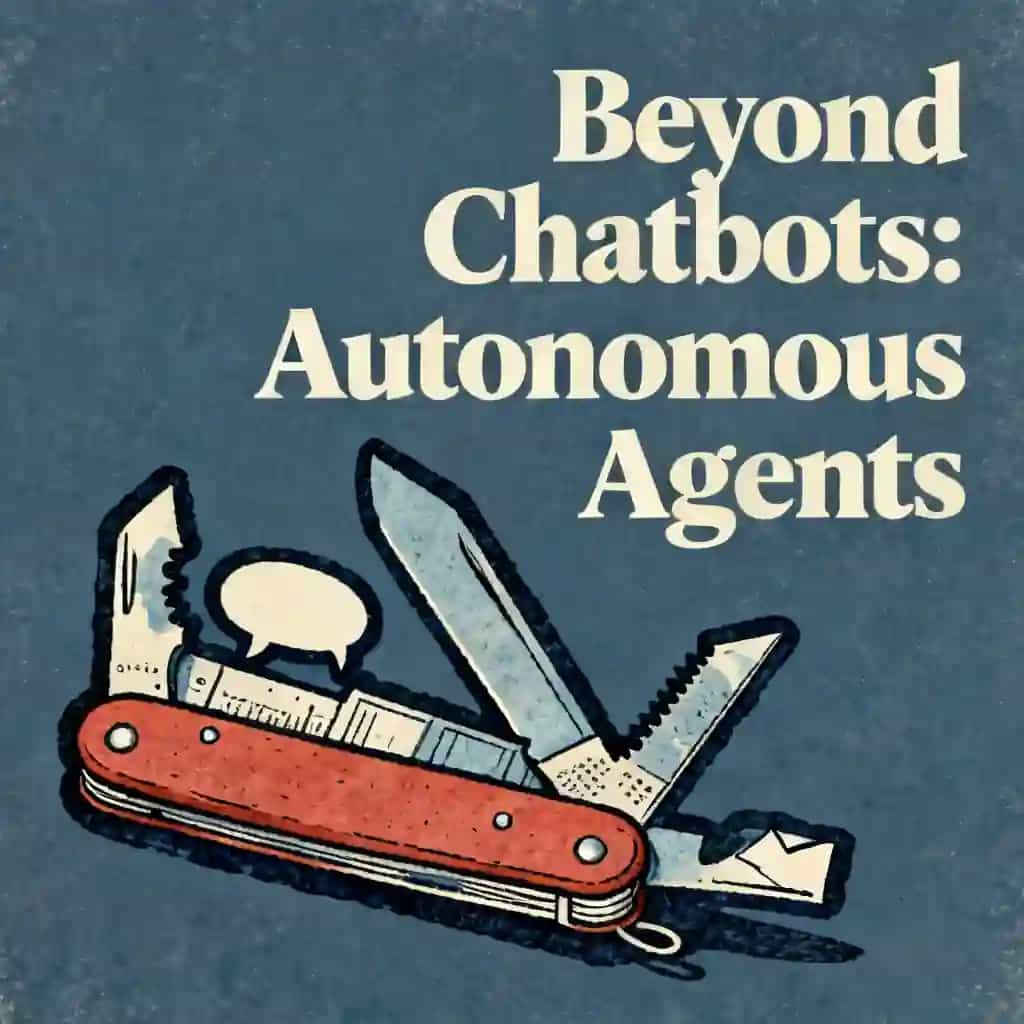
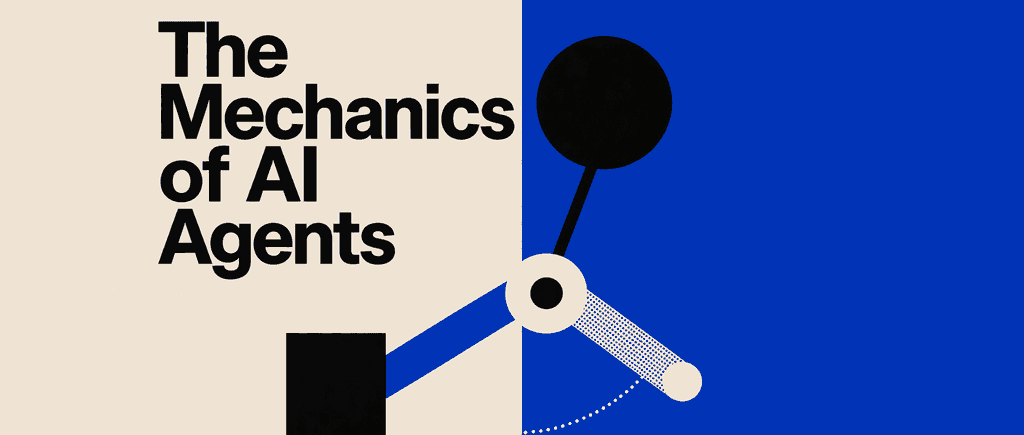
AI agents are more than just better prompting
Stop babysitting your AI. Learn how agents use planning and memory to solve complex tasks autonomously so you can move beyond simple chat prompts.

Лучшая цитата из AI agents are more than just better prompting
It’s the difference between giving a single order and hiring a brain to achieve a goal. We are moving from a text bubble to a system that can actually see a problem, plan a fix, and execute it.
Generated by Jenny Jones
Create a beginners guide or a 101 version for understanding agentic ai and how it differs from just chat prompting



Часто задаваемые вопросы
The primary difference lies in autonomy and goal-orientation. While a standard chatbot is "reactive" and provides a single response to a specific prompt, an AI agent is "active" and works to achieve a high-level goal. Agents use a continuous control loop to observe, reason, plan, and execute multiple steps without needing a human to "babysit" every intermediate task. Essentially, a chatbot is like a map that shows you a route, while an agent is like a GPS navigator that actively guides you and recalculates when it encounters an error.
Agents utilize a layered memory architecture to overcome the "Goldfish Effect" of standard AI. This includes short-term memory for immediate tasks and long-term memory, often powered by vector databases, to store semantic representations of past interactions. By using episodic memory to record experiences and procedural memory to store successful problem-solving methods, an agent can remember user preferences and project constraints over months. This persistent memory eliminates the "re-entry cost" of having to re-explain context every time you start a new session.
Tool use, or "function calling," gives the AI "hands" to interact with the digital world. While a standard AI can only talk about a task, an agent with tool access can actually perform it by logging into software like Shopify, Salesforce, or a terminal. The agent identifies which tool is needed for a specific subtask, executes the call through an API, and then uses the output to update its plan. This allows agents to perform "read-write" actions, such as processing a refund or running code to verify if it works, rather than just providing text-based instructions.
Multi-agent systems involve a team of specialized agents working together to solve complex problems, based on the principle that specialization beats generalization. In this setup, an "Orchestrator" or "Manager" agent breaks down a massive goal and delegates subtasks to specialized agents, such as a "Legal Agent" or a "Coding Agent." This approach is used for high-stakes enterprise work because it allows for "Consensus Coordination," where agents can debate and peer-review each other's work, significantly reducing the risk of errors and hallucinations.
To manage the risks of autonomy, developers and users implement "guardrails" and "Human-in-the-Loop" (HITL) patterns. This includes setting budget limits on tokens and iterations to prevent infinite loops, and using "sandboxed" environments to keep the agent away from sensitive data. For high-stakes decisions, the agent is programmed to pause and seek human approval. Additionally, "Critic Agents" are often employed to act as a quality control layer, reviewing the primary agent's work for bugs, inconsistencies, or security threats before any action is finalized.
Создано выпускниками Колумбийского университета в Сан-Франциско
"Instead of endless scrolling, I just hit play on BeFreed. It saves me so much time."


"I never knew where to start with nonfiction—BeFreed’s book lists turned into podcasts gave me a clear path."


"Perfect balance between learning and entertainment. Finished ‘Thinking, Fast and Slow’ on my commute this week."
"Crazy how much I learned while walking the dog. BeFreed = small habits → big gains."
"Reading used to feel like a chore. Now it’s just part of my lifestyle."

"Feels effortless compared to reading. I’ve finished 6 books this month already."
"BeFreed turned my guilty doomscrolling into something that feels productive and inspiring."

"BeFreed turned my commute into learning time. 20-min podcasts are perfect for finishing books I never had time for."
"BeFreed replaced my podcast queue. Imagine Spotify for books — that’s it. 🙌"

"It is great for me to learn something from the book without reading it."
"The themed book list podcasts help me connect ideas across authors—like a guided audio journey."
"Makes me feel smarter every time before going to work"
Создано выпускниками Колумбийского университета в Сан-Франциско
"Instead of endless scrolling, I just hit play on BeFreed. It saves me so much time."
"I never knew where to start with nonfiction—BeFreed’s book lists turned into podcasts gave me a clear path."
"Perfect balance between learning and entertainment. Finished ‘Thinking, Fast and Slow’ on my commute this week."
"Crazy how much I learned while walking the dog. BeFreed = small habits → big gains."
"Reading used to feel like a chore. Now it’s just part of my lifestyle."
"Feels effortless compared to reading. I’ve finished 6 books this month already."
"BeFreed turned my guilty doomscrolling into something that feels productive and inspiring."
"BeFreed turned my commute into learning time. 20-min podcasts are perfect for finishing books I never had time for."
"BeFreed replaced my podcast queue. Imagine Spotify for books — that’s it. 🙌"
"It is great for me to learn something from the book without reading it."
"The themed book list podcasts help me connect ideas across authors—like a guided audio journey."
"Makes me feel smarter every time before going to work"
"Instead of endless scrolling, I just hit play on BeFreed. It saves me so much time."
"I never knew where to start with nonfiction—BeFreed’s book lists turned into podcasts gave me a clear path."
"Perfect balance between learning and entertainment. Finished ‘Thinking, Fast and Slow’ on my commute this week."
"Crazy how much I learned while walking the dog. BeFreed = small habits → big gains."
"Reading used to feel like a chore. Now it’s just part of my lifestyle."
"Feels effortless compared to reading. I’ve finished 6 books this month already."
"BeFreed turned my guilty doomscrolling into something that feels productive and inspiring."
"BeFreed turned my commute into learning time. 20-min podcasts are perfect for finishing books I never had time for."
"BeFreed replaced my podcast queue. Imagine Spotify for books — that’s it. 🙌"
"It is great for me to learn something from the book without reading it."
"The themed book list podcasts help me connect ideas across authors—like a guided audio journey."
"Makes me feel smarter every time before going to work"
"Instead of endless scrolling, I just hit play on BeFreed. It saves me so much time."
"I never knew where to start with nonfiction—BeFreed’s book lists turned into podcasts gave me a clear path."
"Perfect balance between learning and entertainment. Finished ‘Thinking, Fast and Slow’ on my commute this week."
"Crazy how much I learned while walking the dog. BeFreed = small habits → big gains."
"Reading used to feel like a chore. Now it’s just part of my lifestyle."
"Feels effortless compared to reading. I’ve finished 6 books this month already."
"BeFreed turned my guilty doomscrolling into something that feels productive and inspiring."
"BeFreed turned my commute into learning time. 20-min podcasts are perfect for finishing books I never had time for."
"BeFreed replaced my podcast queue. Imagine Spotify for books — that’s it. 🙌"
"It is great for me to learn something from the book without reading it."
"The themed book list podcasts help me connect ideas across authors—like a guided audio journey."
"Makes me feel smarter every time before going to work"