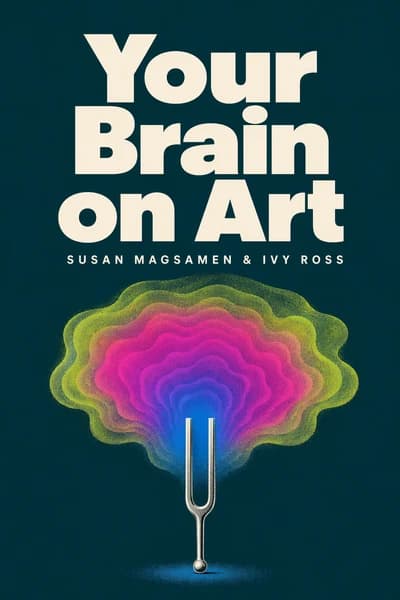
Your Brain on Art
How the Arts Transform Us
Обзор книги Your Brain on Art
Discover how art rewires your brain, reduces cortisol, and may extend your life by ten years. "Your Brain on Art" blends neuroscience with creativity, leaving Angela Duckworth mind-blown and doctors now prescribing museum visits as therapy. Science meets beauty in this transformative bestseller.
Ключевые темы в Your Brain on Art
- neuroaesthetics
- sensory healing
- aesthetic mindset
- brain plasticity
- environmental enrichment
Цитаты из Your Brain on Art
Our bodies are fundamentally wired for arts.
Arts literally rewire our neural pathways.
While we might lie, our bodies reveal truths.
Nature provides our most powerful aesthetic experiences.
Персонажи в Your Brain on Art
- Susan MagsamenNeuroscientist and co-author of the book
- Ivy RossGoogle design executive and co-author of the book
- John O'DonohueIrish poet who explored the essence of awareness
- Marian DiamondNeuroscientist who studied brain enrichment
Об авторе
Об авторе книги Your Brain on Art
Susan Magsamen and Ivy Ross are the authors of the New York Times bestselling book Your Brain on Art: How the Arts Transform Us. They bridge neuroscience, design, and wellness to reveal art’s profound impact on human health.
Magsamen is the founder of Johns Hopkins University’s International Arts + Mind Lab and a leader in applied neuroaesthetics. She combines decades of research on how aesthetic experiences reshape the brain. Ross is Google’s VP of Hardware Design and an award-winning artist. She brings expertise in multisensory design, earning over 225 international awards for her teams’ innovations.
Their collaboration, rooted in interdisciplinary dialogue through salons pairing artists and scientists, positions Your Brain on Art as a landmark exploration of art’s role in enhancing cognitive function, emotional resilience, and community well-being. Magsamen’s prior works include The Classic Treasury of Childhood Wonder, while Ross’s jewelry designs reside in permanent museum collections worldwide.
The authors’ insights have been featured on TED, Science Friday, and in The Washington Post, cementing their authority in the emerging neuroaesthetics field. Their book has been celebrated as a transformative guide by figures like David Byrne and translated into more than 15 languages, solidifying its global influence.
Скачать резюме книги «Your Brain on Art»
Получите резюме книги «Your Brain on Art» в формате PDF или EPUB бесплатно. Распечатайте или читайте офлайн в любое время.
Часто задаваемые вопросы об этой книге
Your Brain on Art explores how artistic engagement biologically alters brain function, reduces stress, enhances learning, and improves community health. Co-authored by Susan Magsamen and Ivy Ross, it synthesizes neuroaesthetics research with real-world examples, showing how even 45 minutes of art can lower cortisol and how museum visits are now prescribed for dementia care.
Educators, healthcare professionals, artists, and anyone interested in science-backed strategies to improve mental/physical health through creativity. The book offers actionable insights for integrating art into daily life, workplaces, and community programs.
Yes. As a New York Times bestseller, it bridges science and art accessibly, with evidence linking aesthetic experiences to longevity, cognitive enhancement, and emotional resilience. Its interdisciplinary approach makes it valuable for both casual readers and experts.
- Neuroaesthetics: How art impacts brain structure and function.
- Cortisol reduction: Art activities lower stress hormones.
- Prescriptive art: Doctors recommending museum visits for health.
- Sensory engagement: Using VR and interactive exhibits to boost memory.
The book details how art activates sensory pathways, rewires neural networks, and triggers dopamine release. For example, vibrations from music or tuning forks counteract stress, while virtual reality therapies aid trauma recovery.
- Create art for 45+ minutes weekly to reduce stress.
- Attend one cultural event monthly to extend lifespan.
- Use music or crafts to enhance learning and focus.
As Google’s VP of Design, Ross integrates tech perspectives, discussing innovations like VR art therapy and sensory-rich exhibits. Her expertise complements Magsamen’s neuroscience research.
Some note the book prioritizes accessible stories over deep technical analysis. However, its strength lies in translating complex neuroscience into relatable narratives about art’s daily applications.
It highlights programs where hospitals prescribe museum visits for loneliness and dementia, and use music therapy to improve motor skills in Parkinson’s patients.
Neuroaesthetics studies how aesthetic experiences alter biology—like how painting stabilizes heart rates or architecture reduces anxiety. The book positions it as a tool for global wellbeing.
Unlike titles focused purely on theory, it emphasizes actionable, arts-based solutions for personal and societal challenges, blending Ivy Ross’s tech insights with Magsamen’s medical research.
Yes. The book cites studies showing one art experience monthly adds up to 10 years to life expectancy by reducing chronic stress and fostering social connection.