Глава 1
Love's Intoxicating Chemistry: The Science Behind Our Most Powerful Emotion
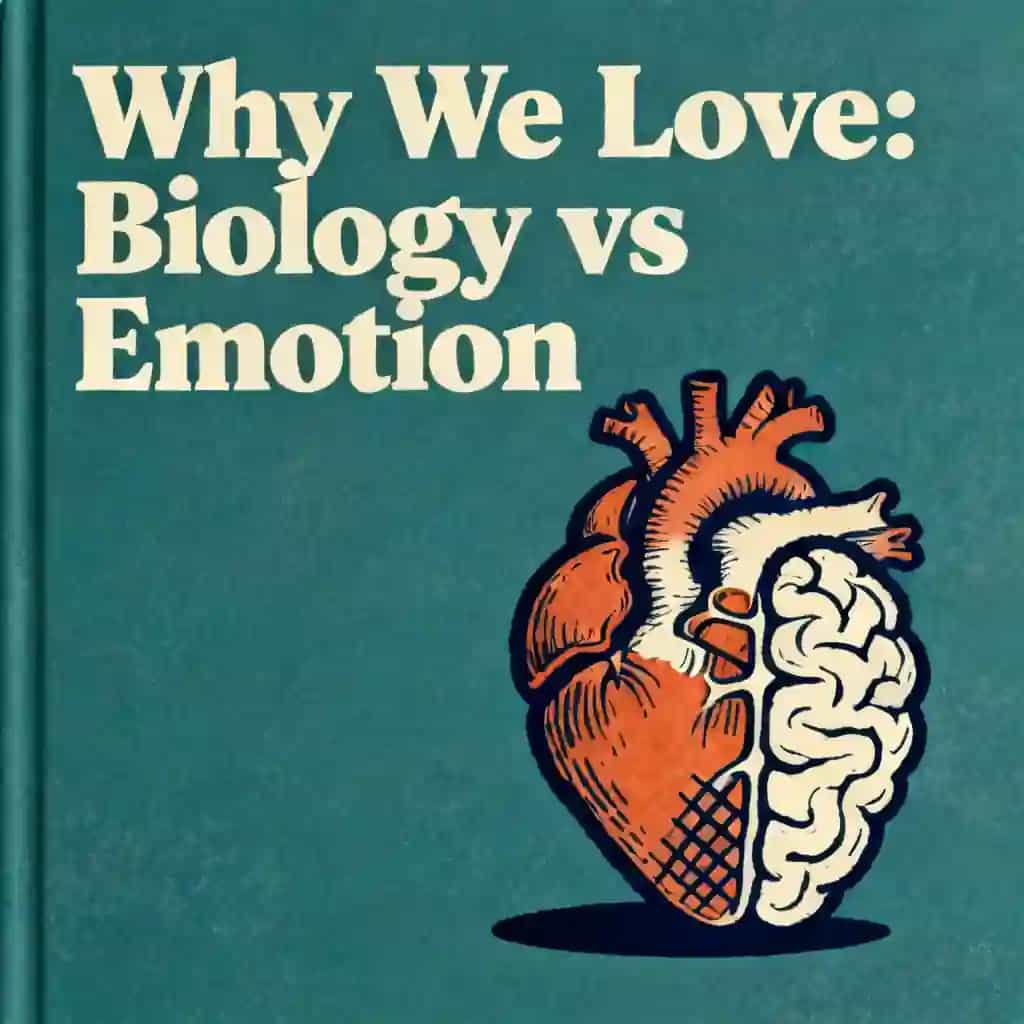
Have you ever wondered why Taylor Swift, one of the most successful songwriters of our generation, creates such compelling music about love? It's because she, like all of us, has experienced the intoxicating chemistry of romantic passion. Helen Fisher's groundbreaking book "Why We Love" has become a cultural touchstone since its publication, praised by relationship experts like Esther Perel and referenced in countless psychology courses. This fascinating exploration of love's biological underpinnings reveals that what poets have described for millennia has a neurochemical basis as real as hunger or thirst. When we fall madly in love, we aren't just experiencing emotions-we're under the influence of a potent cocktail of brain chemicals that evolved over millions of years to help our species survive. What if understanding these mechanisms could help us navigate our own romantic journeys more successfully?
Глава 2
The Unmistakable Symptoms of Love: A Universal Experience
When Cupid's arrow strikes, our entire world transforms. As one man in Fisher's research said, "My whole world had been transformed. It had a new center, and that center was Marilyn." This shift in consciousness creates a private realm where attention focuses exclusively on one person. Fisher's surveys revealed that 79% of men and 87% of women wouldn't date elsewhere when their beloved was unavailable-demonstrating how romantic passion typically centers on just one individual.
This intense focus often leads lovers to neglect work, family, and friends. Philosopher Ortega y Gasset called it an "abnormal state of attention in a normal person." We cherish even trivial moments associated with our beloved-73% of men and 85% of women remembered insignificant things their beloved said or did, while over 80% regularly replayed these memories. This phenomenon appears across cultures and eras-from ninth-century Chinese poet Yuan Chen treasuring a bamboo mat because his beloved once rolled it out, to medieval Lancelot adoring strands of Guinevere's hair found in her comb.
The infatuated person magnifies and idealizes their beloved, often dismissing or even cherishing flaws. This "pink-lens effect" distorts reality as lovers focus overwhelmingly on positive qualities. In Fisher's survey, 65% of men and 55% of women agreed that their beloved's faults "don't really bother me," while 64% of both genders claimed to "love everything about" their partner. As Virginia Woolf noted, love is "an illusion... A story one makes up in one's mind about another person. And one knows all the time it isn't true."
Perhaps most distinctive is the obsessive thinking about the beloved-what psychologists call "intrusive thinking." The lover simply cannot get their beloved out of their head. This mental preoccupation persists regardless of other activities or responsibilities, creating a state where the beloved dominates consciousness like nothing else in human experience.
Глава 3
The Physical Symphony of Passion: How Love Feels in Our Bodies
When lovers feel their passion is returned, they experience a profound lightness-80% of survey respondents agreed they "feel lighter than air" when certain of their beloved's affection. Love triggers intense physical responses: shyness, pallor, flushing, trembling, stammering, sweating, weakness, dizziness, butterflies, and quickened breathing. From Catullus's "You make me crazy" to Japanese poet Ono No Komachi's "bursting, blazing" heart, lovers throughout history have described this emotional whirlwind that makes it difficult to eat or sleep.
This loss of appetite and sleeplessness connects directly to the tremendous surge of energy lovers experience. Most survey respondents reported racing hearts when hearing their beloved's voice and experiencing energy surges in their presence. This psychic and physical pandemonium was documented by Andreas Capellanus in his 12th-century guide to courtly love, noting how "the heart of the lover begins to palpitate" upon seeing the beloved, how lovers turn pale, eat and sleep little, and remain "continually and without interruption obsessed" by thoughts of their beloved-fundamental aspects of romantic love that remain unchanged nearly a thousand years later.
Love creates dramatic emotional oscillations. When the beloved shows attention and affection, the world glows; when they seem indifferent or unresponsive, the lover plunges into despair. These dizzying mood changes range from exhilaration to anxiety, despair, or rage. The Tamil peoples call this romantic suffering mayakkam-intoxication, dizziness, and delusion. Fisher's survey confirmed this emotional dependency, with most respondents acknowledging their emotional state depends on how their beloved feels about them.
Lovers crave emotional union with their beloved, feeling incomplete without this connection. As Plato's Symposium suggests through Diotima's wisdom, love "always lives in a state of need." This overwhelming desire to merge pervades world literature, from Roman poet Paulus Silentiarius's lovers "wanting to go completely inside the other" to Milton's Adam telling Eve "to lose thee were to lose myself." The lover's sense of self becomes blurred, as Freud noted, "threatening to obliterate the boundaries between ego and object."
Глава 4
The Transformative Power of Romantic Passion
When uncertain if their love is returned, lovers become hypersensitive to every signal from the beloved. Over 80% of survey respondents reported dissecting their beloved's actions for clues about their feelings, and many searched for alternative meanings in their words and gestures-"listening for a knock, waiting for a sign," as Robert Graves wrote.
Infatuated people often transform their clothing styles, mannerisms, habits, and even values to win their beloved. They adopt new interests, beliefs, and lifestyles-from sports to music preferences to career changes-all to please their dearest ones. As 12th-century writer Andreas Capellanus noted, "Love can deny nothing to love." Most survey respondents kept their schedules open to accommodate their beloved's availability, rearranging their lives for the relationship.
Lovers become profoundly dependent on their relationship. From Shakespeare's Antony declaring his heart "to thy rudder tied by the strings" to Keats writing of living forever hearing his beloved's breath "or else swoon to death," literature captures this dependency. Separation causes terrible anxiety, making lovers "puppets dangling from the heartstrings of another."
This dependency is balanced by tremendous empathy for the beloved, with most survey respondents agreeing they feel happy when their beloved is happy and sad when they are sad. As e.e. cummings wrote, "she laughed his joy she cried his grief." Many are even willing to sacrifice themselves, like Milton's Adam choosing to join Eve in eating the forbidden fruit despite knowing the consequences: "for with thee / Certain my resolution is to die."
Paradoxically, barriers often intensify romantic passion-what Fisher calls "frustration-attraction" or the "Romeo and Juliet effect." Social or physical obstacles allow lovers to discard reality and focus on their beloved's wonderful qualities. Even arguments or temporary breakups can stimulate passion, as humorously depicted in Chekhov's play "The Bear."
Глава 5
The Biology of Desire: Love's Chemical Cocktail
What creates these powerful feelings? Fisher's groundbreaking research reveals that romantic love is associated with specific brain chemicals. When we fall in love, our brains release increased dopamine and norepinephrine while decreasing serotonin levels-creating the perfect chemical cocktail for obsessive focus, boundless energy, and euphoric feelings.
Dopamine, a powerful neurotransmitter associated with pleasure and reward, floods the brain's motivation centers when we're in love. This explains why lovers talk all night, write extravagant poetry, cross continents for brief encounters, and sometimes even die for one another-they're driven by chemicals that bestow focus, stamina, and vigor through the brain's motivating engine.
Norepinephrine, derived from dopamine, contributes significantly to the lover's high. Though its effects vary by brain region, increasing levels generally produce exhilaration, excessive energy, sleeplessness, and appetite loss-core characteristics of romantic passion. It's also associated with enhanced memory for new stimuli, explaining why lovers remember the smallest details of their beloved's actions and cherished moments together.
The obsessive thinking about a beloved-Fisher's litmus test for romantic love-may be linked to low serotonin levels. People in love often think about their sweetheart over 90% of their waking hours. This connection was supported by Italian scientists who found that both newly-in-love individuals and those with obsessive-compulsive disorder had significantly lower serotonin levels than controls. As dopamine and norepinephrine levels rise during intense romance, they can cause serotonin to plummet, potentially explaining why romantic obsession intensifies as passion grows.
Глава 6
Looking Inside the Brain in Love: Fisher's Groundbreaking Research
To test which brain regions activate during romantic rapture, Fisher developed a brain scanning experiment using functional magnetic resonance imaging (fMRI). The research team compared brain activity when subjects viewed photos of their beloved versus a neutral acquaintance. The fMRI tracked blood flow to active brain regions without invasive procedures.
After complex analysis of the brain scans, the researchers observed beautiful images of "the brain in love" with active regions glowing in bright yellow and deep orange. The human brain contains approximately 10 billion neurons with some 10 trillion synaptic connections, forming specialized networks that integrate thoughts, memories, sensations, emotions, and motivations. The fMRI machine revealed blood flow activity in specific brain regions, allowing researchers to infer which neural circuits and brain chemicals were activated when subjects viewed their beloved.
A crucial finding was significant activity in the caudate nucleus, a large C-shaped region deep in the primitive "reptilian brain." This structure, once known primarily for directing bodily movement, is now recognized as central to the brain's reward system-detecting, discriminating between, and anticipating rewards while generating motivation to acquire them. The more passionate the participants reported being, the more active their caudate became, establishing a direct correlation between subjective experience and neural activity.
Another striking discovery was activity in the ventral tegmental area (VTA), a central part of the brain's reward circuitry and a major source of dopamine. This finding confirmed the hypothesis that romantic love is associated with elevated dopamine levels. The VTA's dopamine-producing cells distribute this neurotransmitter to many brain regions, including the caudate nucleus, producing the focused attention, fierce energy, and concentrated motivation characteristic of romantic love.
Глава 7
Love as a Fundamental Drive: More Than Just Emotion
The brain scanning results changed Fisher's understanding of romantic love from seeing it as merely a constellation of emotions to recognizing it as a fundamental motivation system in the brain-a primary human mating drive. Like other drives, romantic love is tenacious and difficult to extinguish, focused on a specific reward (the beloved), lacks a stereotypic facial expression, is difficult to control, and is associated with elevated dopamine levels. Unlike emotions that come and go, romantic love persists as a need or craving, just as Plato described when he said the god of love "lives in a state of need."
Beyond dopamine, many other brain systems likely contribute to romantic love. Norepinephrine, closely related to dopamine, may be involved but requires further research to confirm. Low serotonin levels, which produce obsessive thinking, may also contribute to romantic ardor. The prefrontal cortex-the brain's "central executive" that collects sensory data, integrates thoughts with feelings, and controls basic drives-must play a role through its connections to the caudate nucleus. This elegant design links the motivation system with positive emotions when love is returned and negative feelings when it's thwarted, while the prefrontal cortex monitors progress toward emotional, physical, and spiritual union with the beloved.
The research revealed how love changes over time by comparing results with a similar London study where participants had been in love longer (2.3 years versus 7 months). The London subjects showed activity in two additional brain regions-the anterior cingulate cortex and insular cortex-that were inactive in newer relationships. When comparing subjects within their own study, those in longer relationships similarly showed activity in these regions, suggesting that as relationships lengthen, brain regions associated with emotions, memory, and attention respond in new ways, possibly consolidating emotional memories or analyzing the relationship.
Глава 8
The Three Faces of Love: Lust, Romantic Love, and Attachment
Throughout history, humans have employed countless supposed aphrodisiacs-from Spanish fly to camel hump-hoping to ignite sexual desire. Yet testosterone remains nature's only true libido enhancer. People with higher testosterone levels engage in more sexual activity, while those who supplement it experience increased sexual thoughts and encounters. Sexual desire naturally peaks in early adulthood when testosterone levels are highest, and often rises in women around ovulation.
When we fall in love, our ardor naturally stimulates sexual desire-a phenomenon celebrated by poets and songwriters throughout history. This happens because dopamine, the chemical of romance, stimulates the release of testosterone, the hormone of sexual desire. Studies show this relationship clearly: dopamine injections increase copulatory behaviors in rats, and humans taking dopamine-enhancing antidepressants often experience improved sexual drive and function. Novel experiences-vacations, new bedroom activities, or new partners-boost dopamine levels, potentially triggering lust.
Can sexual desire spark romantic love? Ovid believed strong sexual attraction could provoke love, but experience shows lust doesn't necessarily ignite romance. Many sexually liberated adults have had regular sex with "friends" without developing romantic feelings. Yet sometimes sex does trigger love-as with Fisher's middle-aged friend who suddenly fell deeply in love with her casual partner after three years of occasional encounters. Biologically, sexual activity can increase dopamine and norepinephrine levels while suppressing serotonin-the exact chemical cocktail for romantic love. This makes casual sex potentially dangerous for those wishing to avoid emotional entanglement.
Scientists have discovered that vasopressin and oxytocin, hormones produced in the hypothalamus and gonads, generate feelings of attachment. In prairie voles, which mate for life, vasopressin triggers male bonding behavior. When scientists injected vasopressin into virgin male prairie voles, they immediately became territorial and possessive of females. Blocking vasopressin turned them into cads who abandoned females after mating.
Oxytocin, released during childbirth and breastfeeding, also stimulates bonding between mothers and infants and plays a role in adult attachment. Both vasopressin and oxytocin, sometimes called "satisfaction hormones," are secreted during sexual stimulation and orgasm-vasopressin increases in men and oxytocin in women. These "cuddle chemicals" create that sense of fusion and closeness felt after intimate connection with a beloved.
Глава 9
Why We Choose Who We Choose: The Science of Attraction
Why do we fall for specific individuals while others leave us unmoved? Richard Burton's overwhelming reaction to Elizabeth Taylor exemplifies this mysterious selectivity. Our choice of romantic partners depends on multiple hidden factors that trigger our brain's primitive circuits.
Love often strikes when we're emotionally available. Those who are starting college, moving to a new city, recovering from a breakup, achieving financial stability, or experiencing loneliness are particularly vulnerable to falling in love. Any emotional arousal-whether joy, sadness, anxiety or fear-increases susceptibility to romance by elevating dopamine and stress hormones, creating the neurochemical foundation for passion.
We tend to choose partners who are physically near us, as one Canadian man discovered when he found his soulmate "literally living in my back yard" rather than meeting his predetermined expectations. Physical closeness creates opportunities for connection that might otherwise be missed.
Both sexes are drawn to those with an element of mystery. As Baudelaire noted, we love in proportion to strangeness. This attraction to the unfamiliar has evolutionary roots-we inherit a natural repulsion toward mating with close family members, a mechanism preventing inbreeding. The Israeli kibbutz experience demonstrates this principle: children raised together from infancy develop strong sibling-like bonds but never romantic attraction. Novelty stimulates dopamine-the neurotransmitter of romance.
Despite our attraction to mystery, most people fall for someone remarkably similar to themselves. We typically choose partners from the same ethnic, social, religious, educational and economic background, with comparable attractiveness, intelligence, values and communication styles. Evolutionary biologists call this "positive assortive mating" or "fitness matching." While interracial marriages have increased 800% since 1960, we still gravitate toward genetic similarity-an evolutionary adaptation that reduces pregnancy complications and produces healthier offspring. Yet too much similarity can be problematic-the "sweaty T-shirt" experiment showed women prefer men with immune systems different but compatible with their own, unconsciously seeking genetic variety in offspring.
Глава 10
The Evolution of Romantic Love: From Animal Attraction to Human Passion
Human romantic love evolved from simpler animal attraction into our uniquely intense focus on a single partner. While all animals have mating preferences and courtship displays, humans developed extraordinarily elaborate talents to impress potential mates-from poetry to skydiving. These exceptional human traits, as evolutionary psychologist Geoffrey Miller argues, are too metabolically expensive to have evolved merely for survival; they emerged primarily to help us win the mating game. Alongside these courtship ornaments, we developed the brain circuitry for romantic love to drive us toward choosing specific partners from among countless possibilities.
Our forest-dwelling ancestors 8 million years ago likely lived much like modern chimpanzees, sharing 98% of our DNA. They probably lived in communities of 80-100 individuals, communicated through various hoots and gestures, used primitive tools, formed social hierarchies, and engaged in both cooperation and conflict. Like today's chimps and bonobos, they were highly sexual, kissing, embracing, and copulating frequently. However, unlike humans, they were promiscuous rather than monogamous. While females might temporarily pair with males during estrus, these bonds lasted only days or weeks. They likely felt attraction but lacked the obsessive focus on a single mate characteristic of human romantic passion.
The human stride-our ability to walk upright on two feet-was a transformative evolutionary development. This bipedalism freed our ancestors' hands to carry stones for protection, sticks for digging, and tools for hunting. It also created a new challenge for females who now had to carry infants in their arms rather than on their backs. This burden made it difficult for mothers to gather food or flee predators while caring for young children. This necessity drove females to seek mates who could help feed and protect them during child-rearing periods. Males found monogamy practical as well, as they could effectively provision and protect a single female and child.
As human brains grew larger, women faced a critical evolutionary challenge: how to deliver big-headed babies through pelvises designed for upright walking. This "obstetrical dilemma" forced women to give birth to increasingly undeveloped, helpless infants who required extended care. Simultaneously, human childhood nearly doubled in length compared to chimpanzees, with "delayed maturation" creating dependence until the late teenage years. These developments created overwhelming parenting demands that became too burdensome for a single parent. The need for long-term partnerships intensified, creating evolutionary pressure for individuals to distinguish themselves through special talents and compatibility to attract suitable long-term mates-setting the stage for human romantic love to emerge.
Глава 11
When Love Ends: The Neuroscience of Rejection and Recovery
Almost everyone on earth knows the agony of romantic rejection. Among college students surveyed, 93% reported being spurned by someone they passionately loved, while 95% admitted rejecting someone who deeply loved them. This rejection creates feelings of emptiness, hopelessness, fear and fury that few escape. As Emily Dickinson wrote, "Parting is all we need to know of hell."
When lovers sense a relationship ending, they become intensely restless, obsessing over reunion. They struggle to sleep, lose weight, and fixate on what went wrong. Every waking moment is consumed by thoughts of their "rejecter." They take extraordinary measures to reconnect-revisiting shared places, calling repeatedly, writing desperate letters, making dramatic entrances and exits. Everything reminds them of their beloved, as Kenneth Fearing wrote, "tonight you are in my hair and eyes, / And every street light that our taxi passes shows me / You again, still you."
Paradoxically, as rejection intensifies, so does romantic passion-what Fisher calls "frustration attraction." This likely stems from brain chemistry: when expected rewards are delayed, dopamine-producing neurons prolong their activities, increasing this natural stimulant in the brain. High dopamine levels generate intense motivation and anxiety. As Roman dramatist Terence noted, "The less my hope, the hotter my love." Like puppies frantically pacing when separated from mothers, rejected lovers experience elevated dopamine and norepinephrine, increasing alertness and driving search behaviors.
Rejected lovers experience "separation anxiety" similar to abandoned baby animals. Their hearts pound as the panic system activates, making them feel weak and breathless. Simultaneously, the stress system triggers cortisol production, activating bodily defenses while suppressing serotonin and increasing dopamine and norepinephrine-ironically intensifying the very chemicals that fuel romantic love. The more the beloved withdraws, the more powerful these passion-inducing chemicals become.
Even when partners leave compassionately, many rejected people swing violently between heartbreak and fury. This happens because love and hate are neurologically linked. The brain circuits for rage run through the amygdala to the hypothalamus and midbrain, connecting closely with prefrontal cortex centers that process reward expectations. When expected rewards become unattainable, these centers trigger rage-the "frustration-aggression hypothesis."
Глава 12
Making Love Last: Strategies for Sustaining Romantic Passion
We can control romantic passion, but one has to trick the brain. Romantic love is a primordial mating drive that can be more powerful than hunger-a true addiction that stimulates the same brain pathways as cocaine and opioids. The lover shows classic addiction symptoms: tolerance (needing more contact), withdrawal (depression when separated), and relapse (renewed craving triggered by memories). Yet with determination, knowledge of brain function, and time, this addiction can be conquered.
To recover from rejected love, remove all evidence of the beloved-discard letters, avoid contact, and leave immediately if you encounter them. Even brief contact can reactivate brain circuits for romantic ardor. Develop positive mantras about your future, focus on your ex's negative traits, and create fantasies about a better partner. Stay busy to elevate dopamine levels-call friends, learn new skills, listen to music. Exercise is particularly effective, increasing dopamine in the brain's reward center while elevating mood-enhancing serotonin and endorphins. Sunlight helps too by stimulating the pineal gland. Even forcing yourself to smile can activate neural pathways that generate feelings of pleasure.
Igniting romantic passion in another person is possible through shared novel experiences. Laboratory experiments confirm that exciting activities enhance attraction. In the famous "creaky bridge" study, men who crossed a scary suspension bridge were more likely to call a female researcher afterward than those who crossed a stable bridge. The danger stimulated adrenaline production, a stimulant related to dopamine. Multiple studies show couples who engage in exciting activities together experience greater relationship satisfaction and more intense romantic feelings. Novel experiences trigger dopamine release-the chemical associated with romantic love.
Sexual intimacy can spark romantic ardor through multiple biological mechanisms. Physical touch and massage trigger oxytocin and endorphin production, creating relaxation and attachment feelings. Orgasm releases oxytocin in women and vasopressin in men-chemicals associated with bonding. Sex also elevates testosterone, which promotes dopamine production-the neurochemical fueling romance. Even seminal fluid contains dopamine, norepinephrine, testosterone, estrogens, oxytocin, and vasopressin-all potentially contributing to romantic feelings.
Despite the natural tendency for passion to fade, some couples maintain romantic love throughout decades of marriage. To maintain romantic passion, Kahlil Gibran's advice to "let there be spaces in your togetherness" proves scientifically sound, as delayed rewards prolong dopamine activity. Regular "dating time" with novel and exciting shared experiences also stimulates pleasure centers in the brain, maintaining the climate of romance.
Глава 13
The Future of Love: Romantic Revolution in the Modern World
As globalization spreads trade, industry, communication and education, arranged marriages are giving way to love matches worldwide. In Nepal, where parents traditionally arranged marriages according to caste and kinship, 90 percent of couples now elope with someone they love. Across 37 societies from Brazil to Indonesia, men and women rank mutual attraction as the primary criterion for choosing a spouse.
This shift represents a return to our evolutionary heritage. For millions of years in hunter-gatherer societies, both sexes worked and maintained relative autonomy. While parents might arrange a first marriage, these often failed, and individuals chose subsequent partners freely. Women's economic contribution (providing 60-80% of daily food) gave them power and independence.
The agricultural revolution 10,000 years ago eroded this autonomy as men gained control of land and wealth. Marriage became primarily a business arrangement exchanging property and forming alliances. Though romance continued through concubines, second marriages, and in myths and legends, most historical societies feared romantic love as a disruptive force.
With industrialization and women's increasing economic independence, romantic love has resurged. As women regain economic power worldwide, they increasingly demand loving partnerships and reject arrangements like polygyny that they once economically needed to endure.
Modern humans have more time for love than ever before. While our natural lifespan hasn't changed in a million years, more people now survive to old age. By 2050, 15-19% of the world's population will be over sixty-five, with 40% of 85-year-olds still fully functional. Many seniors now live independently rather than with children.
Nature likes opportunity. We are built to love at any age. Children fall in love-one study showed as many five-year-olds reported being in love as eighteen-year-olds. An eight-year-old boy perfectly described romantic symptoms to Fisher about a girl he adored. Men and women in their seventies, eighties, and nineties also feel love's magic. Studies confirm no difference in romantic passion intensity across age groups-people love just as strongly at sixty as at sixteen.
Romantic love has become untethered in our modern world. Millions seek it through dating services, personal ads, and online matchmaking. Though science may map the brain circuitry of love, it will never destroy its mystery or ecstasy. Even with complete understanding of romance's biology, we still feel the magic. Humanity is coming full circle to patterns of romance our ancestors expressed a million years ago. If humanity survives another million years, this primordial mating force will still prevail.





![[why-we-love-by-anna-machin:c0000] Why We Love p1-1](/_next/image?url=https%3A%2F%2Fd1y2du6z1jfm9e.cloudfront.net%2Fassets%2Fpodcast%2Fpurple.png&w=1024&q=50)
![[why-we-love-by-anna-machin:c0002] Why We Love p1-1](/_next/image?url=https%3A%2F%2Fd1y2du6z1jfm9e.cloudfront.net%2Fassets%2Fpodcast%2Fyellow.png&w=1024&q=50)
![[why-we-love-by-anna-machin:c0003] Why We Love p1-1](/_next/image?url=https%3A%2F%2Fd1y2du6z1jfm9e.cloudfront.net%2Fassets%2Fpodcast%2Fblue.png&w=1024&q=50)