Глава 1
The Evolutionary Lens: Why Our Bodies Break Down
Have you ever wondered why your body-this marvel of biological engineering-still gets sick? Why, despite millions of years of evolution, do we still suffer from infections, allergies, and cancer? The answer lies in a groundbreaking perspective that's reshaping modern medicine. "Why We Get Sick" by Randolph Nesse and George Williams offers a revolutionary framework for understanding disease through evolutionary biology. This book, which Bill Gates included on his recommended reading list, has quietly transformed how physicians and researchers think about health and illness since its publication. Rather than viewing diseases as simply mechanical failures, Nesse and Williams reveal them as consequences of our evolutionary history-compromises, trade-offs, and adaptations that once served our ancestors but may harm us in modern environments. Their work pioneered the field now known as Darwinian medicine, influencing everything from cancer treatment approaches to our understanding of mental health disorders.
Глава 2
The Mystery of Disease: Why Our Bodies Seem Simultaneously Brilliant and Flawed
The human body is a paradox of engineering. Our bones are stronger than steel yet lighter than aluminum. Our kidneys filter blood with remarkable precision. Our brains can store memories for decades. Yet alongside these marvels, we find what appear to be obvious design flaws: airways that cross food passages creating choking hazards, widespread nearsightedness, and arteries prone to cholesterol buildup. Why would natural selection create such a mix of brilliance and apparent carelessness?
To solve this mystery, we must distinguish between two types of causes. Proximate causes explain how the body works-why fatty foods and certain genes cause heart attacks. Evolutionary causes explain why natural selection hasn't eliminated genes that promote fat craving and cholesterol deposition. Both explanations are necessary for a complete understanding of disease.
Nesse and Williams propose six categories of evolutionary explanations for disease. First, many symptoms we consider diseases are actually defenses-fever, cough, pain, and vomiting are coordinated responses that protect us from harm. Second, infections persist because pathogens evolve countermeasures to our defenses, creating an endless arms race. Third, our bodies were designed for hunting and gathering on African plains, not for modern environments with fatty diets, artificial lights, and central heating. Fourth, disease-causing genes persist either because they were harmless in natural environments or because they provide benefits in certain contexts. Fifth, every adaptation involves trade-offs-walking upright allows carrying food and babies but causes back problems. Finally, evolution works incrementally, constrained by historical structures-we can't simply relocate our windpipe to eliminate choking risks.
This evolutionary perspective doesn't change medicine's ancient goals: "To cure, sometimes; To help, often; To console, always." It simply provides a deeper understanding of why diseases exist, potentially offering new approaches to prevention and treatment. Understanding that fever is an adaptive defense mechanism, for instance, might make us more cautious about routinely suppressing it with medications.
Глава 3
Natural Selection: The Force Behind Our Bodies' Design
Natural selection offers solutions to disease mysteries through a fundamentally simple process: when genetic variation affects survival and reproduction, genes that reduce viable offspring gradually disappear, while those enhancing reproduction spread-even if they have substantial costs. The classic example is dark-winged moths spreading in polluted areas where they better escaped predators on darkened trees. Similarly, sickle cell trait persists in malaria-prone regions because it provides protection against the disease, despite its potential health complications. The antibiotic resistance of bacteria provides another compelling example of natural selection in action, as resistant strains quickly multiply when exposed to antibiotics while susceptible ones die off.
Natural selection involves no plan, goal, or direction-just genes increasing or decreasing based on relative reproductive success. Many misconceptions obscure this simplicity. "Survival of the fittest" misleads because survival only matters if it increases reproduction. The "fittest" individual isn't necessarily the healthiest or strongest, but the one producing the most descendants. For instance, peacocks with elaborate tails survive despite their impractical size because they attract more mates, demonstrating how reproductive success trumps practical efficiency.
Importantly, natural selection benefits genes, not groups or species. As Richard Dawkins emphasized, individuals are merely vessels created by genes for replicating genes. This explains seemingly paradoxical traits like aggressive behavior in male animals that may harm the species overall but increase individual reproductive success. Natural selection doesn't create health, harmony, or stability-it promotes health only when it serves our genes' interests. If anxiety, heart failure, or cancer somehow increased reproductive success, natural selection would favor them despite our suffering. This explains why many genetic diseases persist if they manifest after reproductive age.
While natural selection generally doesn't favor self-sacrifice, it does favor helping relatives when the cost to oneself is less than the benefit to the relative multiplied by the degree of relationship. As J.B.S. Haldane quipped when asked if he'd sacrifice himself for his brother: "No, not for one brother. But I would for two brothers. Or eight cousins." This mathematical relationship, known as Hamilton's Rule, explains many social behaviors in nature, from worker bees sacrificing themselves for their colony to human familial bonds.
Evolution has neither plan nor direction, and chance makes its future course unpredictable. Like engineering, evolution constantly makes compromises. A car manufacturer balances fuel tank thickness against cost and performance, just as natural selection balances energy expenditure against muscle strength or brain size against skull diameter. Natural selection avoids overdesign-if something works well enough, selection can't improve it. Every body part has reserve capacity for extreme circumstances but remains vulnerable when that capacity is exceeded. For example, our kidneys function perfectly well with significant reserve capacity, but this doesn't protect against complete failure when overwhelmed by disease or injury. The human spine, optimized for both upright walking and flexibility, represents another compromise that leaves us vulnerable to back problems. Nothing in the body never goes wrong because perfection isn't necessary for reproduction - only "good enough" solutions survive.
Глава 4
When Symptoms Are Actually Defenses: The Wisdom of Fever and Pain
Just as mice need to detect cat odor despite its unpleasantness, many symptoms we experience during illness serve protective functions. Consider fever during a cold-while uncomfortable, it's an adaptation shaped by natural selection specifically to fight infection. When pediatricians recommend acetaminophen to reduce fever, they may be interfering with a useful defense mechanism.
Research shows overwhelming evidence that fever benefits animals across species. Cold-blooded lizards seek warmth when infected, and rabbits denied fever-inducing capabilities are more likely to die. During fever, the body carefully regulates temperature with the thermostat set higher. Human evidence includes studies showing children with chicken pox taking acetaminophen recovered a day later than those on placebo.
Our bodies defend against infection in numerous ways. Iron withholding-restricting iron availability to pathogens-explains why iron supplements can worsen infections. The contest between parasites and hosts resembles warfare, with every symptom reflecting underlying strategies of one combatant or the other. Some symptoms benefit the host (defenses), others benefit the pathogen, and some are merely incidental effects of their conflict.
Pain motivates escape from damage and teaches avoidance. People born without pain sensation suffer joint deterioration from lack of position changes and rarely survive past thirty. Generalized aches and malaise encourage inactivity that supports immune function and tissue repair. Medications that merely reduce these sensations without addressing underlying causes may interfere with these adaptive responses.
Each body opening offers pathogens an invasion route and has specialized defenses. Saliva washes the mouth, tears protect eyes, antibody-rich secretions clean the respiratory system, and ears secrete antibacterial wax. When threatened, these defenses intensify-producing copious mucus during colds or triggering coughs to expel foreign matter. Diarrhea, though unpleasant, expels intestinal pathogens so effectively that blocking it with medication can prolong illness.
A functional classification of disease symptoms is clinically valuable, helping determine whether a symptom benefits patient or pathogen. Understanding if a pathogen is manipulating the host or attacking defenses allows more sophisticated treatment approaches beyond merely relieving symptoms and attempting to kill pathogens.
Глава 5
The Arms Race: Why We Can't Win the War Against Germs
Just as nations develop weapons and counterweapons in escalating cycles, hosts and parasites engage in relentless evolutionary arms races. This "Red Queen Principle"-named after Lewis Carroll's character who explained to Alice that "it takes all the running you can do, just to keep in the same place"-describes the costly, complex, and ruthlessly destructive struggle between humans and pathogens.
Unlike human weapons development with its rational planning and fresh starts, evolution proceeds solely through slow, unguided trial-and-error tinkering-yet can generate adaptations of extraordinary precision and complexity. Many microbiologists incorrectly assume hosts and pathogens evolve toward cooperation, but this is unrealistic. Both maintain equilibria through trade-offs between competing values like growth rates and defense.
Our fever response is optimized for historically normal conditions-higher fever would better fight pathogens but damage tissues and deplete nutrients. Unlike most human adaptations established over millennia, pathogen evolution occurs rapidly-bacteria can evolve as much in a day as humans can in a thousand years, giving them an enormous advantage in our arms race.
Bacterial resistance to antibiotics arises through gene mutations or new genes from plasmids, not gradual tolerance development. When antibiotics are present, rare resistant strains multiply and replace original bacteria. Even low antibiotic concentrations select for resistant strains. These findings have critical implications for medical practice: trying different antibiotics rather than increasing doses, avoiding long-term antibiotic exposure except when absolutely necessary, and being cautious about consuming animal products from antibiotic-treated livestock.
The evolution of pathogen virulence is widely misunderstood. Conventional wisdom suggests parasites should evolve toward reduced virulence to keep hosts alive longer. This reasoning fails because it ignores pathogens' need to disperse to new hosts and underestimates how quickly pathogens evolve. Within-host selection generally favors increased virulence, while between-host selection favors decreased virulence. The transmission method critically determines optimal virulence: diseases spread by personal contact tend to be milder than vector-borne diseases.
Scientists first identified mimicry in butterfly wing patterns, where non-toxic species evolved to resemble toxic models that birds avoid. Pathogens demonstrate molecular mimicry that's equally complex, with parasitic worms, protozoa, and bacteria evolving surfaces that resemble human proteins to escape immune detection.
Глава 6
Toxins Everywhere: Our Chemical Battleground with Plants and Modern Pollutants
While we now face many synthetic toxins unknown to our ancestors, we're actually exposed to fewer natural toxins than Stone Age humans. Plants defend themselves through chemical warfare-not as accidental byproducts but as targeted defenses against herbivores. Many animals repurpose plant toxins for their own defense, like monarch butterfly caterpillars that consume milkweed's cardiac glycosides to become poisonous themselves.
Our bodies employ multiple defenses against natural toxins. We instinctively avoid suspicious foods through smell, taste, and learned aversions. When toxins are ingested, we expel them through spitting, vomiting, or diarrhea. Our stomach acid denatures many toxins, while the mucous lining protects against others. The liver serves as our primary detoxification organ, with specialized enzymes that neutralize specific toxins.
Novel toxins pose special challenges not because they're inherently more harmful than natural ones, but because our bodies lack evolutionary adaptations to process them. Our livers stand ready for plant toxins but have no enzymatic machinery for substances like PCBs or mercury compounds. Many artificial toxins are undetectable to our senses-DDT and radioactive isotopes taste and smell normal despite their dangers.
Morning sickness, often the first reliable sign of pregnancy, may serve an adaptive function. Margie Profet argues that pregnancy nausea evolved to impose dietary restrictions on mothers, minimizing fetal exposure to toxins during the most vulnerable developmental period. Supporting evidence includes the correlation between toxin concentrations and foods that cause revulsion, and observations that women without pregnancy nausea have higher rates of miscarriage and birth defects.
Children's notorious dislike of vegetables, especially strong-flavored ones high in plant toxins, may also have evolutionary roots. Their sensitivity typically diminishes as they approach adulthood, possibly reflecting an ancestral adaptation to avoid the most toxic plants during vulnerable developmental stages.
Глава 7
Genetic Paradoxes: Why Disease Genes Persist
The chapter opens with a medical school lecture on myopia, where a professor describes nearsightedness as a genetic disorder caused by excessive eye growth. When students question how such a debilitating trait could persist evolutionarily, the professor dismisses their concerns, characterizing the body as "a fragile, jury-rigged device" full of genetic flaws that physicians must fix.
Most serious genetic diseases are rare, affecting fewer than one in ten thousand people. Recessive genetic diseases only manifest when someone inherits two defective copies of a gene, making them more common in marriages between relatives. Natural selection struggles to eliminate rare recessive genes because heterozygous carriers show no disadvantage.
Dominant disease genes like the one causing Huntington's disease are different. This devastating neurological condition typically manifests after age forty, causing memory loss, muscle twitching, and eventually complete incapacitation. The gene persists because it causes little reproductive harm before age forty, illustrating a key principle: natural selection favors reproductive success, not health.
Sickle-cell anemia exemplifies a disease-causing gene maintained by heterozygote advantage. In malaria-prevalent regions, people with one copy of the sickle-cell gene gain protection against malaria, while those with two copies develop the painful, life-threatening blood disorder. This single-nucleotide mutation changes hemoglobin structure, giving heterozygotes higher fitness than either homozygote group.
Some genes compete to get into gametes even at their carriers' expense. Richard Dawkins views the body as merely the gene's vehicle for making more genes. While genes typically cooperate for the organism's survival, some act selfishly. The T-locus gene in mice exemplifies this: two copies are lethal in males, but males with one copy transmit it to over 90% of offspring instead of the expected 50%-a true "outlaw gene" benefiting itself while harming the individual and species.
Many diseases result from complex interactions of multiple genes rather than single-gene defects. Myopia perfectly demonstrates how a condition can be simultaneously strongly genetic and environmental. Though clearly heritable (identical twins share the condition nearly 100% of the time), myopia rarely appears in hunter-gatherer societies. When Arctic natives' children began attending school, 25% developed myopia. These aren't genetic "defects" but rather "quirks"-genes that caused no problems in ancestral environments but create disadvantages in modern settings.
Глава 8
Aging: The Inevitable Trade-off for Reproductive Success
Aging represents humanity's heaviest burden of consciousness-the inevitability of bodily deterioration and death. Despite persistent efforts to overcome aging, from Ponce de Leon's quest for the fountain of youth to modern searches for supercentenarians, the maximum human lifespan remains stubbornly fixed around 115 years. While average life expectancy has increased dramatically in modern societies, the maximum duration of life hasn't budged despite medical and public health advances.
Senescence-the process of bodily deterioration occurring at older ages-manifests as increased susceptibility to disease and decreased repair ability. Death rates follow an exponential curve, starting very low at ages 10-12 (0.2 per 1000), rising to 1.35 per 1000 by age 30, then doubling every 8 years until reaching 169 per 1000 by age 90. Without senescence, half the population would live to age 693, and 13 percent to age 2000!
Oliver Wendell Holmes's poem about a one-horse carriage that "went to pieces all at once" perfectly captures how our organ systems deteriorate at remarkably similar rates. Researchers have measured reserve capacity across body systems-heart, lungs, kidneys, neurons-finding they all decline in parallel. By age 100, every system has lost almost all capacity to meet increased demands.
Senescence presents an evolutionary paradox. The breakthrough came from Haldane, Medawar, and especially George Williams, who developed the pleiotropic theory of senescence. This theory proposes genes with beneficial effects in youth may be selected even if they cause harmful effects later in life. Laboratory evidence supports this: Robert Sokal bred flour beetles for early reproduction, resulting in earlier aging and death. Conversely, Michael Rose bred fruit flies for late reproduction, producing longer-lived flies with fewer total offspring.
Several proximate mechanisms contribute to senescence. Free radicals damage tissues, countered by defenses like Superoxide dismutase (SOD), which correlates directly with species' lifespans. Similarly, uric acid levels correlate with longevity-humans have lost the ability to break down uric acid, potentially trading painful gout for longer life.
Boys born in the United States in 1985 are expected to live seven years less than girls, a pattern seen across countries and time periods. Cross-species comparisons show males that compete for mates have shorter lives than females, even in captivity. This occurs because male reproductive success depends so heavily on competitive ability that male physiology prioritizes competition over bodily preservation.
Evolutionary perspectives on senescence suggest it's not a mistake but a compromise carefully shaped by natural selection. This view discourages hopes that aging can be "cured," though specific diseases of senescence might be postponed. Understanding aging's evolutionary origins may change our perspective, replacing the search for immortality with appreciation for living fully at whatever age we are.
Глава 9
Stone Agers in the Fast Lane: The Mismatch Between Our Bodies and Modern Life
Our anatomical design flaws reveal our evolutionary history. The dangerous crossing of our respiratory and digestive tracts-where food can fatally block our airway-exemplifies this problem. This design isn't functional but historical. Our vertebrate ancestors began as tiny worm-like creatures that filtered food through a sieve-like region behind the mouth. As they grew larger, this food sieve was gradually co-opted for respiration, creating gills. Though evolution gradually separated these systems, the fundamental crossover remained.
Our bodies harbor numerous evolutionary design flaws that cause medical problems. The vertebrate eye's inside-out retina forces light to pass through nerves and blood vessels before reaching light-sensitive cells, creating blind spots and vulnerability to retinal detachment. The appendix, a vestigial caecum remnant from plant-eating ancestors, serves no important function yet makes us vulnerable to potentially fatal appendicitis.
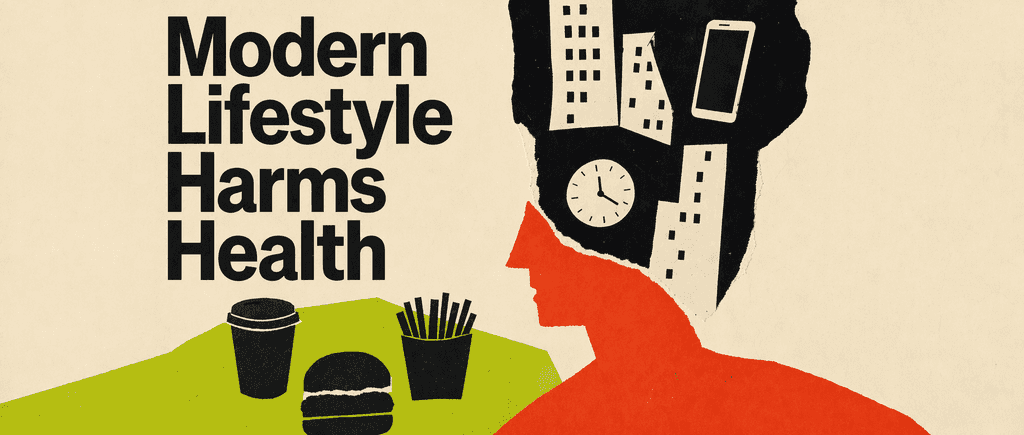
We are specifically adapted to Stone Age conditions that ended a few thousand years ago. Evolution hasn't had time to adapt us to dense populations, modern socioeconomics, low physical activity, and other novel aspects of modern environments. We're adapted to conditions experienced by tribal societies in sub-Saharan Africa, where our species originated and lived for tens of thousands of years-perhaps 90 percent of our fully human history.
Despite romantic notions of an idyllic past, our hunter-gatherer ancestors faced enormous hardship. Infant mortality was high, with deaths from infanticide, predation, poisoning, and accidents common. Infectious diseases, particularly vector-borne protozoa and worms like malaria, caused prolonged suffering and death. Food supplies fluctuated dramatically with climate and seasons, leading to recurring famines.
Human nature formed in what anthropologists call the environment of evolutionary adaptedness (EEA). Stone Age foods would seem inedible or excessively demanding to us today-game was tough and strong-tasting, wild plants often bitter or toxic, and all required extensive preparation. Environmental stresses included smoke pollution from indoor fires, poor sanitation, and accumulated waste-the average Stone Ager essentially lived in a dump, moving when conditions became unbearable. Yet despite these hardships, our ancestors experienced the full range of human emotions, enjoying strong social bonds, and engaging in play, art, music, storytelling and intellectual pursuits during times of plenty.
Глава 10
Diseases of Civilization: The Price of Progress
Our modern lifestyle represents a radical departure from the conditions under which our bodies evolved. Despite the clear advantages of civilization over our ancestors' harsh existence, many modern conveniences create health problems. Reduced mortality from infectious disease means more people live to develop age-related illnesses. Novel environments interact with genetic quirks to create new health problems.
The agricultural revolution created nutritional shortages despite increasing total calories. When diets become less diverse and more dependent on staple crops like wheat, vitamin deficiencies emerge. Iceland provides a telling example, where winter diets lacking vitamin C caused widespread scurvy until spring thaw allowed harvesting of vitamin-rich wild plants.
Our Stone Age taste preferences, evolved in environments where fat, sugar and salt were scarce, now lead us to overconsume these substances in our modern environment of abundance. Like a goose preferring a tennis ball over a real egg because it's a "supernormal stimulus," we choose chocolate eclairs over peaches. The mismatch between our evolved preferences and modern food availability creates devastating health consequences. High-fat diets contribute to heart disease, stroke, cancer and diabetes. While Stone Age hunter-gatherers consumed diets with less than 20% calories from fat, the average American consumes 40%.
Psychotropic substances have been available throughout human history, with most addicting substances created by plants to discourage insect pests. However, substance abuse today is a far greater problem due to technological innovations. Modern civilization brought professional brewing, improved storage, transportation, and most critically, distillation. Converting beverages with a few percent alcohol into high-concentration spirits made addiction easier and more common.
Our modern environment causes developmental problems unheard of in our evolutionary past. The epidemic of dental issues requiring orthodontia and wisdom tooth removal suggests something fundamentally wrong with our developmental conditions. Stone Age children chewed tough, fibrous foods requiring vigorous jaw exercise, while modern children consume soft hamburgers and pasta. This lack of jaw exercise during development may result in underdeveloped jaw muscles and smaller bone structure, leading to crowded teeth and impacted wisdom teeth.
Cold weather represents a novel environmental challenge that humans conquered only tens of thousands of years ago through technological innovations like clothing and fire. But these adaptations created new health problems. Indoor living and clothing dramatically reduce vitamin D synthesis, which depends on skin exposure to sunlight. This deficiency leads to rickets, a developmental disease causing soft, weak bones with abnormal growth.
There is no Eden we can return to, even if such a move were desirable. Instead, we must remain alert to modern dangers and take reasonable steps to address them. When faced with medical problems, we should consider their evolutionary significance. Many of our difficulties arise from adaptations that served us well in the Stone Age but cause problems in modern environments.