Глава 1
Finding Freedom in the Smallest Places: A Modern Roman Holiday
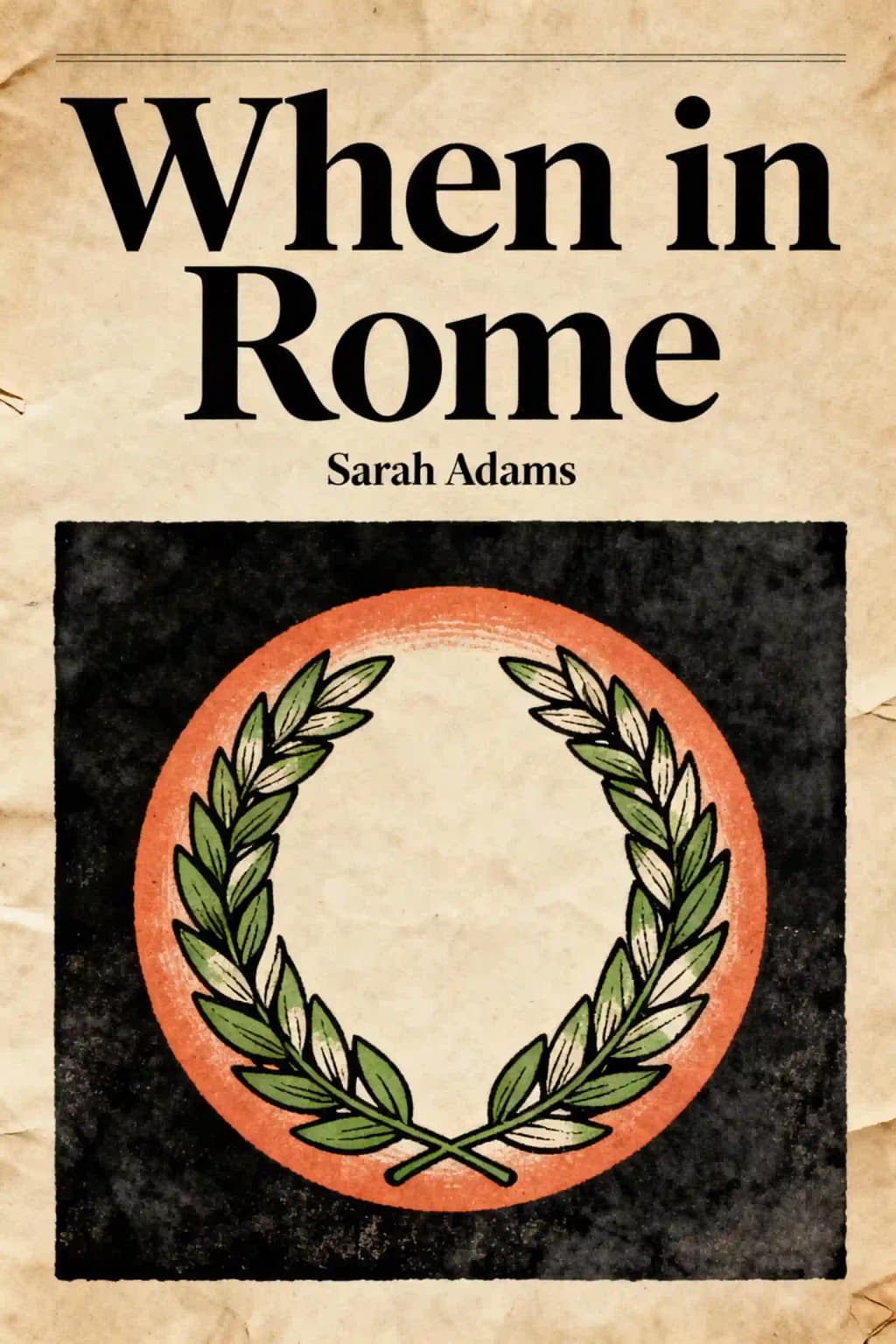
When Audrey Hepburn said "I was born with an enormous need for affection, and a terrible need to give it," she could have been describing Amelia Rose-known to millions as pop superstar Rae Rose. Sarah Adams' delightful romantic comedy "When in Rome" has captured hearts everywhere since its 2022 release, becoming a BookTok sensation and landing on multiple bestseller lists. This charming small-town romance resonates deeply with readers tired of the constant connectivity and performance of modern life. Like Princess Ann in Hepburn's iconic "Roman Holiday," Amelia's journey reminds us that sometimes we need to escape our gilded cages to remember who we truly are-and perhaps find love along the way.
Глава 2
The Suffocating Weight of Fame
Amelia Rose never meant to become Rae Rose, international superstar. What began as a teenager posting YouTube videos quickly transformed into a whirlwind career with Grammy wins and a $90 million contract. But beneath the glittering surface lies a woman drowning in expectations and isolation.
Fame arrived with lightning speed-one day she was a high school student posting videos online, the next an internet sensation with a manager and record deal. The transition left little time for adjustment. The world knows confident, polished Rae Rose, but inside lives Amelia, increasingly disconnected from herself and her passion for music. Her relationship with her mother deteriorated as success grew, transforming from best friends to a transactional relationship where her mother views her primarily as a source of income.
The pressure becomes unbearable as Amelia prepares for a nine-month world tour she dreads. She feels like "a maxed-out credit card that everyone keeps swiping," completely depleted but expected to keep performing. Her manager Susan controls every aspect of her life, from her appearance to her schedule, treating her more like a product than a person. Even her signature long hair isn't her choice-it's part of the "Rae Rose brand" that Susan vigilantly protects.
The most painful aspect of Amelia's fame is the profound loneliness it creates. Despite being constantly surrounded by people, she feels deeply isolated, never knowing if people like her for herself or for what she represents. "Even in crowded rooms I feel isolated," she confesses. Her celebrity status creates a barrier between herself and authentic human connection, leaving her emotionally starved despite her material wealth.
This suffocation drives her desperate midnight escape in her old Toyota Corolla, seeking refuge in Rome, Kentucky-a small town she chose simply because it reminded her of Audrey Hepburn's "Roman Holiday," a film that represents the freedom and authenticity she craves.
Глава 3
An Unwilling Host with Walls Built High
Noah Walker isn't impressed by celebrity. When Amelia's car breaks down in front of his farmhouse, his reluctance to help stems not from cruelty but from a deeply ingrained need to protect himself. As owner of The Pie Shop in Rome, Kentucky, Noah has built a carefully structured life where he maintains control and keeps emotional entanglements at bay.
His resistance to Amelia isn't just about her fame-it's about what she represents: someone passing through, someone who will inevitably leave. Noah has been burned before, following his ex-fiancee Merritt to New York City despite hating big city life. That relationship imploded when his grandmother's health required his return to Rome, revealing the fundamental incompatibility between his small-town roots and Merritt's cosmopolitan ambitions.
Noah's guardedness extends beyond romantic relationships. He rarely speaks about his parents, who died in a hiking accident when he was ten, or his grandmother who raised him and now resides in an assisted-living facility. "I keep my life private," he explains, only letting certain people "know him on this level." Even the townspeople don't know the full truth about his grandmother-he often lets them believe she's deceased because it's easier than explaining and dealing with pity or being treated differently.
His initial coldness toward Amelia reflects his philosophy that "care is reckless, without the protection selfishness offers, and almost always ends in heartbreak." Noah isn't the type for casual flings-he falls hard and fast, making him especially vulnerable to someone who will inevitably return to her glamorous life.
Yet beneath his gruff exterior lies a man of profound loyalty and care. He buys flowers daily from his sister Annie's shop, maintains his father's book collection with reverence, visits his grandmother regularly, and feels responsible for his three younger sisters. Noah embodies the stability and authenticity that Amelia craves, making him both the perfect antidote to her chaotic life and a dangerous temptation for her heart.
Глава 4
Small-Town Magic and Found Family
Rome, Kentucky, with its population small enough that everyone knows everyone else's business, becomes a character in itself. Unlike the anonymous crowds of Amelia's celebrity life, Rome offers something she's desperately missed: community. The town's quirky inhabitants-from nosy Harriet at the market to Phil constantly moving his hardware store sign to get noticed by paparazzi-create a tapestry of authentic human connection.
Noah's three sisters-Emily, Madison, and Annie-immediately embrace Amelia without the filter of her celebrity. Their rowdy sisterly banter and unconditional acceptance give her a taste of the family connection she's lost. When they invite her to Hank's Bar, Emily jumps on the counter and announces that Amelia is to be left alone and treated normally-and amazingly, everyone complies. This simple act of protection and normalization means everything to someone who's been treated as a commodity for years.
The town's protective nature extends beyond Noah's family. When a paparazzo appears outside the hair salon, the women create a human wall to shield Amelia while Noah helps her escape through the back door. Mabel, the elderly innkeeper and town matriarch, fiercely defends Amelia's right to take time for herself: "When did it become a crime to be selfish now and again?" she demands.
This community offers Amelia something her fame never could-the chance to be useful rather than merely valuable. She helps Mabel repaint her bed-and-breakfast lobby, works in Annie's flower shop, and attempts (disastrously) to cook. These simple acts of contribution give her a sense of purpose disconnected from her celebrity status.
Most importantly, Rome gives Amelia the space to rediscover herself. When she confesses to Mabel, "I don't love my career anymore. I haven't even loved singing lately," Mabel responds with wisdom: "No one loves anything they're miserably chained to. But you own the key to your own lock." This permission to reclaim her agency becomes the catalyst for Amelia's transformation.
Глава 5
Reclaiming Identity Through Small Rebellions
Amelia's journey back to herself unfolds through a series of small but significant acts of rebellion against the constraints of her celebrity life. Each step represents her growing courage to reclaim control over her identity.
Her first act of defiance is simply staying in Rome longer than planned. What begins as a car breakdown becomes a deliberate choice to extend her time away from the demands of her career. This seemingly small decision represents an enormous shift-choosing her own needs over the expectations of others.
The physical transformation of cutting her hair becomes a powerful symbol of reclaiming ownership over her image. When Amelia confesses she's wanted to cut her hair for ages but can't because Susan considers it part of her brand, Noah sarcastically notes that he didn't realize it was "Susan's hair." This simple observation empowers her to make the change, getting bangs that mirror Audrey Hepburn's in "Roman Holiday"-connecting her to her childhood idol while asserting her autonomy.
Perhaps her most significant rebellion is firing Susan, her controlling manager. This professional decision represents Amelia's determination to reshape her career on her own terms. Though we don't see the confrontation directly, the aftermath reveals Amelia's growing confidence in directing her own life.
Even her name becomes a battleground for identity. Throughout the novel, she gradually reclaims "Amelia" over "Rae Rose," explaining that instead of creating separation between her private and professional life, "Rae Rose just absorbed me." By introducing herself as Amelia to Noah and the townspeople, she begins the process of reintegrating her fragmented identity.
These acts of rebellion culminate in her rediscovery of joy in music. At James's dinner party, a simple musical game reconnects Amelia with the pure pleasure of performance without pressure. This moment foreshadows her ability to transform her relationship with her career, finding a way to preserve her passion while establishing healthier boundaries.
Глава 6
The Vulnerability of Authentic Connection
The heart of "When in Rome" lies in the gradual dismantling of walls between Noah and Amelia as they risk vulnerability with each other. Their journey from reluctant host and unwanted guest to deeply connected partners unfolds through moments of genuine sharing, each small revelation building a bridge between their seemingly incompatible worlds.
Their initial interactions are marked by mutual wariness and calculated distance. Noah deliberately keeps Amelia at arm's length, his responses clipped and professional, while she hides behind her carefully constructed celebrity persona - all polished smiles and rehearsed charm. The atmosphere in Noah's house is thick with unspoken boundaries, evident in their awkward dinner conversations and careful navigation of shared spaces.
The turning point comes during their fishing trip to Lake Como, when Amelia confesses her loneliness and the painful transformation of her relationship with her mother after achieving fame. She describes how her mother shifted from parent to manager, replacing maternal warmth with business strategy. Noah listens without judgment, creating a space where she feels truly seen, his silence more comforting than any words could be. When he asks if she feels lonely now, her simple "No" carries the weight of revelation - acknowledging not just the authentic connection forming between them, but her growing comfort in dropping her guard.
Noah's decision to introduce Amelia to his grandmother, Maria, represents a significant breakthrough in trust. During their drive to Maria's home, he explains that he only shares this part of his life with people he fully trusts, making this invitation a profound act of vulnerability. His grandmother's house holds memories of his childhood and family history - stories he's never shared with the press despite their persistent interest. Similarly, when he allows Amelia into his bedroom - his most private space filled with his father's beloved book collection and personal photographs - he's literally and metaphorically letting her into the most guarded parts of himself.
Their physical attraction serves as both catalyst and complication, creating moments of intense connection while highlighting the complexity of their situation. Their first kiss at the lake, spontaneous and charged with months of building tension, marks a turning point where they can no longer deny their connection. Yet it also forces them to confront the reality of their different worlds - her life of red carpets and constant scrutiny, his quiet existence in the Italian countryside. Noah's raw confession that he's "trying so hard to stay away" but failing captures the inevitable pull between them despite the practical obstacles they face.
What makes their connection so powerful is how they see beyond each other's public personas to recognize the authentic person beneath. Noah treats Amelia like "a normal woman he met by chance," not as a celebrity to be impressed or exploited, while she recognizes the depth, loyalty, and vulnerability beneath his gruff exterior. This mutual recognition of each other's authentic selves - flaws, fears, and all - creates a foundation for love that transcends their different backgrounds and lifestyles, proving that genuine connection can bridge even the widest of gaps.
Глава 7
The Fear of Inevitable Endings
The central conflict in Noah and Amelia's relationship isn't external obstacles but their shared fear that any happiness between them has an expiration date. Both have experienced painful losses that make them hesitant to invest in something that seems doomed to end.
Noah's reluctance stems from his experience with Merritt, where he compromised his happiness by moving to New York only to have the relationship fail anyway. He sees clear parallels with Amelia-another whirlwind romance with someone passing through who won't stay. He believes her fame and demanding career require someone comfortable with long-distance who can drop everything for her, while he needs roots and stability.
Amelia's fears are equally valid. Her entire adult life has been shaped by the demands of her career, making it difficult to imagine how a relationship with a small-town pie shop owner could possibly work. She knows her tour and professional obligations will call her back to her real life soon, making friendship seem like the safer option.
This fear manifests in their attempts to establish boundaries. Noah repeatedly insists they can only be friends, while Amelia tries to convince herself a temporary connection is all she wants. Their mutual attraction keeps undermining these boundaries, creating a tension between desire and self-protection.
Emily's warning that Noah "deserves a woman who's going to stick around" highlights the stakes. The entire town seems aware of the potential heartbreak brewing, with everyone from Mabel to Noah's sisters offering their perspectives on whether this relationship can overcome the obstacles of distance and different lifestyles.
The resolution of this conflict comes not through magical solutions that erase their differences, but through their mutual commitment to prioritize their relationship despite the challenges. Noah's decision to get a cell phone, install Wi-Fi, and visit Amelia during her tour demonstrates his willingness to step outside his comfort zone, while her determination to return to Rome shows her commitment to creating space in her life for what truly matters.
Глава 8
Finding Balance Between Worlds
The ultimate challenge for Noah and Amelia isn't choosing between their worlds but finding a way to integrate them. Their journey represents the universal struggle to balance personal fulfillment, professional ambition, and meaningful relationships - a delicate dance that many face in an increasingly interconnected world.
Amelia's transformation doesn't require abandoning her career entirely - that would simply be replacing one extreme with another. Instead, she learns to establish boundaries that allow her to preserve her passion for music while creating space for personal happiness. By firing Susan and taking more control over her professional decisions, she begins reshaping her career to serve her life rather than sacrificing her life for her career. This includes negotiating shorter tours, selecting venues that align with her artistic vision, and carving out dedicated time for her personal life. She discovers that setting limits actually enhances her creativity and performance quality, as she's no longer running on emotional empty.
Similarly, Noah must expand his definition of home to include the possibility of temporary absences. His decision to visit Amelia during her tour represents a significant evolution from his previous all-or-nothing thinking. He discovers that maintaining his roots in Rome doesn't mean never leaving - it means having a secure base to return to after ventures into the wider world. Through video calls with his grandmother during his travels and implementing systems at the bakery that can function without his constant presence, he learns that responsibility doesn't always require physical presence.
Their relationship succeeds because they complement each other's weaknesses. As Amelia tells Noah, sometimes opposites make each other better - "like maple syrup and bacon." Noah's groundedness provides the stability Amelia craves, while her spontaneity and broader perspective expand his horizons. Rather than trying to force each other into their respective worlds, they create a third space that incorporates elements of both. This manifests in practical ways: they establish a routine of alternating visits, share their passions with each other (Noah teaching Amelia to bake, Amelia introducing Noah to classical composition), and find creative solutions to maintain their connection across distances.
This balance extends beyond their relationship to Noah's family dynamics. Emily's confession that she's been unfair to her siblings, letting her trauma from their parents' death dictate everyone's lives, parallels Noah's own journey toward a more flexible understanding of loyalty and responsibility. Her offer to help with their grandmother and the shop so Noah can visit Amelia demonstrates how mutual support can create freedom rather than constraint. This shift in family dynamics allows for individual growth while strengthening, rather than weakening, their bonds. The family learns that love can stretch without breaking, and that supporting each other's dreams ultimately enriches their shared life in Rome.
Through their journey, both characters discover that balance isn't about perfect equilibrium but about creating a sustainable rhythm between different aspects of life. They learn that integration doesn't mean compromise - it means finding creative ways to honor all parts of themselves and their relationships.
Глава 9
The Courage to Choose Your Own Story
At its heart, "When in Rome" is about the courage to step off predetermined paths and write your own story. Both Noah and Amelia must overcome powerful external and internal pressures to claim agency over their lives - a journey that challenges deeply ingrained beliefs about success, happiness, and personal fulfillment.
For Amelia, this means challenging the narrative that success equals constant sacrifice and availability. Her manager Susan embodies the voice insisting that deviating from the established path will lead to disaster: "Having fun playing house?" she mockingly asks, dismissing Amelia's need for space as a mental breakdown rather than a legitimate desire for balance. This dismissal reflects a broader cultural narrative that equates ambition with relentless dedication, leaving no room for personal life or mental well-being. Through Amelia's struggles, we see how success often becomes a gilded cage, with expectations and obligations multiplying until they threaten to suffocate the very passion that sparked the journey.
Mabel's wisdom becomes the counterpoint to this pressure: "No one loves anything they're miserably chained to. But you own the key to your own lock." This metaphor perfectly captures Amelia's journey from feeling trapped by her success to recognizing her power to reshape its terms. Her relationship with Mabel deepens throughout the novel, with the older woman sharing stories of her own battles against convention in 1960s Rome. These conversations provide Amelia with both historical perspective and emotional support, helping her understand that the courage to choose differently has always been necessary for meaningful change.
Noah's journey requires overcoming his binary thinking about relationships - the belief that love always demands sacrifice of one person's dreams. His experience with Merritt convinced him that relationships between people from different worlds are doomed to failure, with one person inevitably giving up their happiness for the other. This pessimistic view stems from watching his parents' marriage crumble when his mother's career took off, leaving his father feeling diminished. Through Amelia, he discovers the possibility of compromise that honors both people's needs rather than requiring total surrender from either. Their relationship demonstrates how love can expand possibilities rather than limit them.
The epilogue's revelation that Amelia has disappeared from public view for three months after her tour before announcing her engagement with the cryptic caption "When in Rome..." suggests she's continuing to rewrite the rules of celebrity on her own terms. Like Princess Ann in "Roman Holiday," she's found a way to fulfill her responsibilities while preserving space for authentic joy and connection. This decision resonates with the novel's central theme: that true courage often lies not in grand gestures but in small, daily choices to live authentically despite external pressures.
The story ultimately suggests that choosing your own path isn't a one-time decision but a continuous process of small rebellions and quiet determinations. Through both protagonists' journeys, we see how personal freedom often requires not just the courage to choose differently, but the wisdom to recognize that we have the choice at all.
Глава 10
The Transformative Power of Being Truly Seen
The most profound gift Noah and Amelia give each other is the experience of being truly seen beyond their public personas. In a world where both have been reduced to simplified versions of themselves-Noah as the responsible brother who sacrificed for his family, Amelia as the glamorous star-their ability to recognize each other's complexity becomes revolutionary.
When Amelia accidentally takes sleeping medication with alcohol and reveals her deepest insecurities-"People only like me when I'm easy... I'm drowning and no one sees me"-Noah's simple response, "I see you," becomes a turning point in their relationship. Similarly, when Amelia tells Noah that Merritt didn't deserve him, she's acknowledging his worth beyond his utility to others.
This mutual recognition extends beyond their romantic relationship to the broader community of Rome. When the townspeople protect Amelia from the paparazzi or treat her as just another resident rather than a celebrity, they're offering her the gift of being seen as a complete person rather than a commodity. Annie's simple gift of flowers "as a token of friendship" moves Amelia to tears precisely because it comes with no expectations attached-a rare experience for someone accustomed to transactional relationships.
The novel's resolution suggests that being truly seen creates the courage to make difficult choices. Noah's sisters help him recognize his pattern of pushing people away out of fear, while Amelia's experience in Rome gives her the strength to reclaim control over her career. By the end, both have expanded their self-definitions beyond the limiting narratives that previously constrained them.
Like Audrey Hepburn's Princess Ann, who returns to her royal duties transformed by her brief taste of freedom and authentic connection, Amelia emerges from her "Roman Holiday" with a clearer sense of herself and the courage to reshape her life on her own terms. The epilogue's hint that she and Noah have found a way to bridge their different worlds offers hope that with sufficient courage and creativity, we can all write endings to our own stories that honor both our responsibilities and our hearts.