Глава 1
The Conversation America Refuses to Have
When Martin Luther King Jr. was assassinated in 1968, America's facade of decency crumbled. As a nine-year-old in Detroit's ghetto, I watched his funeral at Ebenezer Baptist Church, beginning to understand my blackness in a world where whiteness loomed unknowingly threatening. James Baldwin attended that funeral too, later writing it was "the most real church service I've ever sat through." Baldwin would inspire generations with his unflinching truth-telling about America's racial divide.
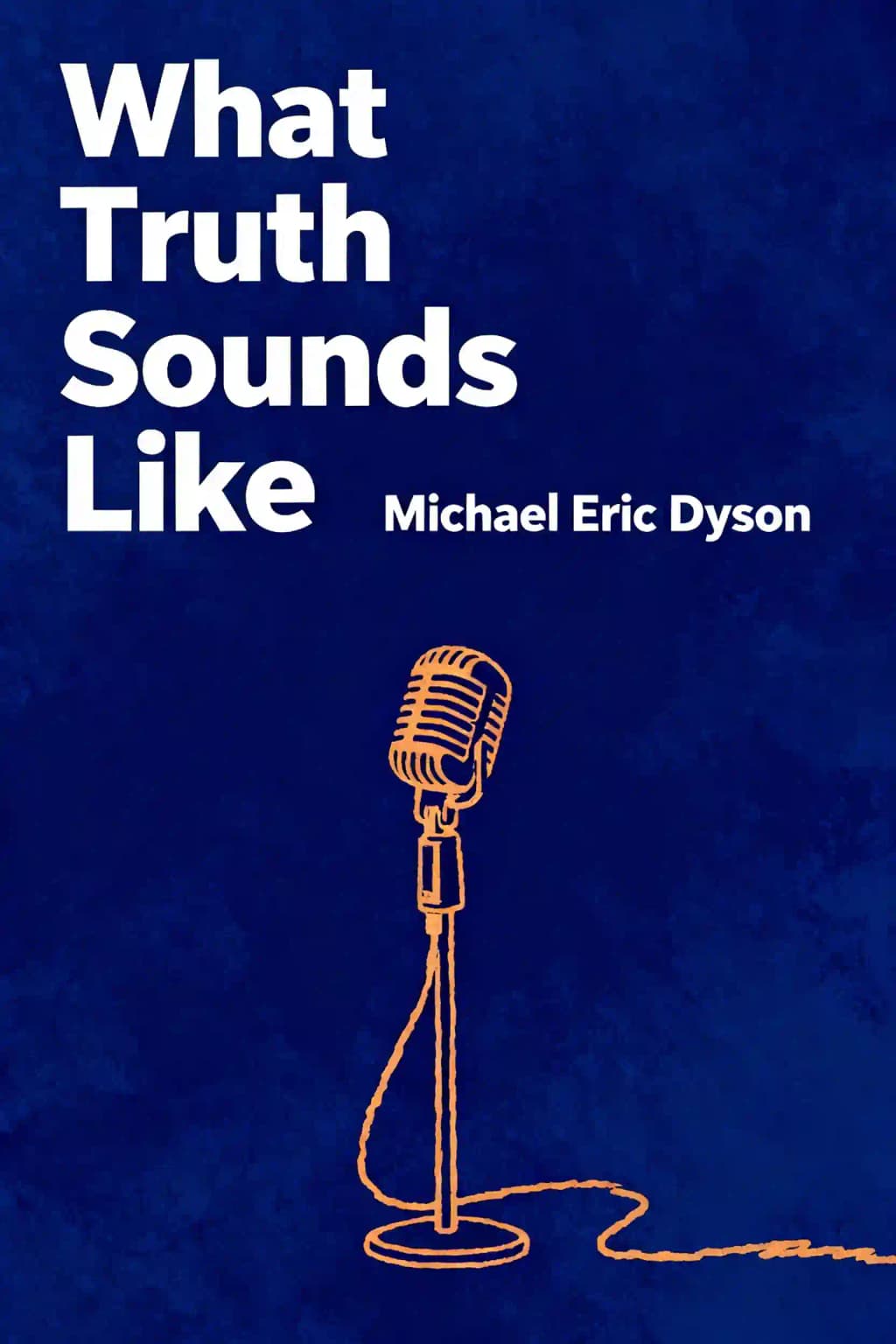
What Truth Sounds Like explores a pivotal yet largely forgotten 1963 meeting between Robert Kennedy and James Baldwin's assembled group of Black intellectuals, artists and activists. This confrontation became a watershed moment in American race relations, forcing Kennedy to hear unfiltered Black truth without the usual white-pleasing filters. The book has resonated deeply with readers seeking to understand America's ongoing racial tensions, with cultural icons from Oprah to Ta-Nehisi Coates praising its relevance to our current political moment. As racial justice movements like Black Lives Matter face the same resistance Baldwin encountered, this examination of how truth sounds when it finally breaks through couldn't be more timely.
Глава 2
When Truth Confronted Power
On May 25, 1963, The New York Times reported that Attorney General Robert Kennedy had held a "secret meeting" with prominent Black figures including James Baldwin, Lorraine Hansberry and Lena Horne. This gathering occurred during a landmark year for the civil rights movement, as Martin Luther King Jr.'s Birmingham protests were changing the trajectory of Black freedom struggles. The Kennedy administration's credibility among Black Americans had diminished due to political vacillation - appearing liberal to southern segregationists while making minimal actual progress.
Bobby Kennedy and James Baldwin seemed destined for this confrontation. Kennedy, the third son in a family of nine, grew up feeling invisible and compensated with raw courage and tenacity. Despite once being McCarthy's apologist, he developed tough-minded empathy for the less fortunate, though he occasionally revealed troubling racial sentiments. Baldwin, born in Harlem's cultural epicenter, was shaped by the Holiness-Pentecostal church where he preached as a youth. His eloquence combined biblical language, Jamesian prose rhythms, and fiery moral prophecy. Though he fled to France and Turkey seeking respite from American racism, he returned to fight alongside his comrades.
The Kennedy administration approached civil rights with ambivalence, reluctantly engaging as racial crises demanded federal intervention. John Kennedy's southern federal judge appointments often defied decency, including Mississippi's Harold Cox who called Black voters "a bunch of niggers" from the bench. As attorney general, Robert Kennedy initially followed his brother's lead while seeking his own path. By early 1963, he believed in eventual Black suffrage, employment opportunities, and desegregated public accommodations and schools. However, both brothers only slowly grasped how to address America's cascading racial crises.
After witnessing Bull Connor's brutality against protesters in Birmingham, Baldwin sent Kennedy a blistering telegram declaring the crisis "neither regional nor racial" but "a matter of the nation's life or death," demanding recognition that "the negro is a man." Kennedy, energized after helping broker the Birmingham resolution, saw Baldwin as an independent voice who could explain Black America's perspective. They arranged to meet the following afternoon in Manhattan with a group Baldwin would assemble.
Глава 3
The Witnesses to Black Truth
Baldwin called friends without fully realizing what he'd undertaken. The meeting would include not just civil rights officials but independent Black voices - his secretary Edward False, his brother David, attorney Clarence Jones (who also represented King), actor Rip Torn, Chicago Urban League head Edwin Berry, and most notably, Harry Belafonte, Lena Horne, and Lorraine Hansberry.
Harry Belafonte was a chart-topping artist who transformed his light-skinned privilege into a platform for radical politics. Like Malcolm X and Louis Farrakhan, he channeled Caribbean roots into advocacy for Black masses, mastering the art of coded messaging through entertainment while generously supporting civil rights causes. Lena Horne, another light-skinned star, had gradually evolved from Hollywood success to social activism, her stunning beauty becoming a political asset as she grew more outspoken.
Lorraine Hansberry brought formidable intellectual power as the first Black winner of the New York Drama Critics Circle Award. Though closeted as a queer woman, she had deep activist roots - protesting for integration, leading leftist organizations, supporting Henry Wallace's presidential campaign, joining the Communist Party, and working with Paul Robeson on the radical journal Freedom. Her masterpiece A Raisin in the Sun subtly critiqued capitalism's impact on Black working-class aspirations while navigating intersections of gender, race, sexuality and class.
Kenneth Clark embodied the role of "Black public intellectual" before the term existed. With his Columbia doctorate in psychology, he merged world-class scholarship with activism, fighting white supremacy through writing, advising congressional committees, and tireless speaking. With his wife Mamie, he pioneered the famous doll test showing how Black children preferred white dolls, revealing racism's psychological damage. His research for Brown v. Board of Education provided comprehensive empirical examination of prejudice's social and psychological foundations.
Despite the assembled Black genius, Freedom Rider Jerome Smith proved the most important witness to Black struggle. In town for medical treatment after vicious beatings by white attackers, his authentic suffering commanded immediate respect from the others.
Глава 4
When Truth Erupts
Kennedy started at a severe disadvantage in the meeting, quickly finding himself overwhelmed and silenced by the feisty, uncompromising resistance of his insurgent interlocutors. When he attempted to establish credibility by claiming to work closely with Martin Luther King Jr., the room erupted in disbelieving jeers and bitter laughter. The assembled group knew well the complex and often antagonistic relationship between the Kennedys and Dr. King. For the remaining three hours, Kennedy largely abandoned his usual assertive stance and just listened, appearing increasingly dazed and resentful at finding himself, perhaps for the first time in his privileged life, on the wrong side of history.
Kenneth Clark, the renowned psychologist present at the meeting, called it "one of the most violent, emotional verbal assaults" he'd ever witnessed in his long career of civil rights involvement. The Black activists and artists likely hammered Kennedy relentlessly about northern liberal hypocrisy, pointing out how segregation and discrimination flourished in Boston just as it did in Birmingham. They spoke of the crushing economic and social despair drowning Black America, and the Kennedys' calculated duplicity in playing both sides of the racial divide - courting Black voters while appeasing southern Democrats. With surgical precision, they unmasked Bobby's white privilege and criticized his characteristically technocratic, utilitarian rather than introspective approach to civil rights.
After the meeting, Kennedy's immediate reaction revealed his wounded pride. He became petulant and vengeful, hurling homophobic epithets at Baldwin and suggesting the successful Blacks in attendance had "complexes" about their achievements - a psychological defense mechanism to avoid confronting his own shattered assumptions. He dismissed Baldwin as a "nut" and, in a particularly vindictive move, even had the FBI collect detailed information on many meeting attendees, adding them to the bureau's expanding surveillance lists.
Yet this confrontation, despite its initial bitterness, proved deeply transformative for Kennedy's understanding of race in America. As former deputy attorney general Nicholas Katzenbach astutely noted, "The fact that he thought he knew so much-and learned he didn't-was important." Kennedy gradually turned his initial resentment to resolve, implementing substantial changes in Justice Department hiring practices and pushing his brother toward stronger civil rights legislation. In a remarkable evolution, Bobby later confessed he might react exactly like Jerome Smith if he'd endured similar trauma and discrimination, developing what critics called "understanding through empathy" and making the profound psychological leap "from contempt to identification." This transformation would shape his evolving stance on civil rights for the remainder of his political career.
Глава 5
Politics and the Defense of Whiteness
When Robert Kennedy met with Baldwin and his friends, he confronted enduring truths: that politics and the state exist primarily to defend white interests; that witness is crucial for expressing Black grievance; that white bigotry at all government levels must be opposed; and that a new politics is needed for true democracy.
The bigotocracy clings to a distorted history that denies slavery's ongoing legacy while benefiting from what W.E.B. Du Bois called the "psychological wage" of whiteness. As LBJ noted, convincing the poorest white man he's better than the best Black man ensures he won't notice his pocket being picked.
Black Americans face the disheartening reality that childhood struggles against racism may become the legacy bequeathed to their children. The Trump administration has shown little empathy for victims of white bigotry, actively encouraging hatred through both action and inaction, demonstrating moral bankruptcy.
John Kelly's claim that "lack of compromise led to the Civil War" exemplifies the administration's troubling strategy of memory warfare. Kelly's views echo Shelby Foote, whose Civil War trilogy tilted toward Confederate perspectives, dangerously framing the conflict as more about states' rights than Black enslavement. Even when acknowledging Black pain over Confederate symbols, Foote declared Black people "wrong" in their interpretation.
To be true patriots requires becoming disloyal to chronically prejudiced views of American society. Senator Kamala Harris believes slavery remains central to understanding race in America: "It's the sin, the blemish, a shameful part of our history." She credits smartphones with finally allowing white people to witness racial injustice directly, comparing it to colonialism where oppressors believe they've "discovered" something merely because they're seeing it for the first time.
Глава 6
Black Art as Resistance and Revelation
Black Panther offers a multidimensional vision of blackness that is simultaneously Afro-futuristic (projecting Black people in future science and technology), Afro-gnostic (presenting a universe of Black knowledge), Afro-pessimistic (showing Blackness as resilient rather than static), Afro-realistic (depicting the cumulative consequences of racial history), and Afro-idealistic (supplying cultural norms that pursue self-expression to its limits).
Chadwick Boseman faced the same dilemmas Harry Belafonte encountered 50 years earlier. He proudly rejected a role opposite a major white star after discovering his character couldn't read, drive or swim despite supposedly being street-smart about money. The film's cultural impact has been profound, with Black audiences turning screenings into celebratory communal experiences that Boseman describes as "carnival in the best sense" - an extension of theater, ritual and culture.
Keegan-Michael Key believes humor, especially satire, helps address difficult social issues by making medicine go down with sugar. He sees today's social turmoil as "the last gasps" of a dying old guard, with humor's job being to reflect society in all its facets. Key argues many supposed race issues are actually class issues, though genuine racism persists when "poor white men who rob stores and run don't get shot in the back."
Jordan Peele's masterful film Get Out has become a language for racial demystification, using horror to decode the esoteric meanings of Blackness and decipher whiteness's arcane horrors. The film brilliantly portrays the Black body as host for symbiotic whiteness and its deepest desires, beginning with a Black man walking through suburbs - deliberately evoking Trayvon Martin so that "everybody watching the movie is Black." The "sunken place" symbolizes silencing Black voices - our greatest weapon against injustice - as when Colin Kaepernick and other athletes are condemned for peaceful protest or Jemele Hill was suspended for calling the president racist.
Глава 7
Intellectual Witness and the Burden of Representation
Cornel West's failure to define prophecy leads to sweeping claims about Black community values declining from service to individualism. His vague criteria for prophets - criticizing elites, identifying with the poor, resisting police brutality - could apply to figures like Russell Brand or Tupac Shakur. Unlike ordained ministers who face institutional accountability, West answers only to himself as a "freelancing, itinerant, nonordained, self-anointed prophet."
True prophets embrace religious authority while standing against it for higher principles. West fails to distinguish between types of prophets - central prophets who work within power structures versus peripheral prophets who embrace margins. This blinds him to Martin Luther King Jr.'s complex prophetic identity, who as a central prophet helped pass crucial civil rights legislation through his access to presidents from Eisenhower to Johnson before shifting toward peripheral prophecy in his final years.
West's attacks on Sharpton and Jackson for seeking insider status ignore that King had similar access to power. Ironically, West shares Obama's desire to bridge ideological divides - both advocated personal responsibility alongside structural change. While Obama "talked right but veered left" in policy, West "talks left but thinks right," arguing in "Race Matters" that "nihilism" rather than structural racism is Black America's greatest threat.
Erin Aubry Kaplan represents a new generation of Black female public intellectuals, bringing "Baldwinesque fusion of personal narrative and political reflection" as a "racial cosmopolitan" skeptical of absolutist racial claims. Her work on Obama beautifully captures his "two-step" with Black America - appearing to embrace Black culture while abandoning substantive support. Kaplan brings distinctive gender perspective to Black experience, questioning racial orthodoxies with "irresistible logic" while examining the pressure to maintain positivity despite profound sadness in Black life.
Глава 8
Activism's Enduring Tensions
Black activism has existed as long as white supremacy, from Nat Turner to Black Lives Matter protesters. The 1963 meeting between Bobby Kennedy and James Baldwin represents a watershed moment revealing the limits of liberal goodwill and the power of truth through testimony. Their clash epitomizes an ongoing tension in Black activism: whether progress comes through government policy or through ethical witness outside the system.
Kennedy and King's 1961 phone exchange revealed their fundamental differences. When King insisted Freedom Riders must stay in jail as "a matter of conscience and morality," Kennedy dismissed this approach: "The fact that they stay in jail is not going to have the slightest effect on me." King emphasized the moral witness of oppressed people seeking creative, nonviolent solutions, while Kennedy insisted problems would only be solved through "strong federal action."
The meeting with Baldwin's group exposed Kennedy's unwillingness to bear witness to Black suffering. While policy discussions offered refuge from confronting painful truths, the activists insisted on acknowledgment of their lived experiences - the lynchings, poverty, disenfranchisement, and daily humiliations that policy alone couldn't address.
The confrontation between Black activists and white political leaders continues across generations, as demonstrated in the 2015 meeting between Hillary Clinton and Black Lives Matter activists. When Julius Jones asked what had changed in Clinton's heart regarding anti-Blackness, she responded: "I don't believe you can change hearts. I believe you change laws...allocation of resources...the way systems operate." This echoed the policy-focused approach Kennedy had taken with Baldwin's group.
Глава 9
From Witness to Movement
Black Lives Matter emerged from the desperate need to acknowledge unarmed Black victims of violence, particularly those killed by police and racist vigilantes. After George Zimmerman's acquittal in Trayvon Martin's killing, three Black women-Patrisse Cullors, Opal Tometi, and Alicia Garza-created the hashtag #BlackLivesMatter, which quickly grew into a national movement addressing the root causes of Black suffering.
BLM faced predictable backlash as a "racist and terrorist organization" from alt-right reactionaries. Unlike the predominantly white Parkland students who received celebrity funding and widespread support for their gun control activism, BLM activists were "roundly condemned and broadly resisted." This disparity revealed how "witness is racialized, and black witness...is never seen as legitimate" but rather as "unjustified rage."
By August 2016, the Movement for Black Lives coalition released "A Vision for Black Lives: Policy Demands for Black Power, Freedom & Justice," which historian Robin D.G. Kelley called "a remarkable blueprint for social transformation." This demonstrated BLM's understanding of the connection between emotional witness and policy reform.
The clash between BLM and establishment figures represents a fundamental divide in Black activism. While some older leaders value negotiation, political etiquette, and a seat at the table, younger activists believe in immediate action that goes beyond King's direct action approach. Frederick Haynes, a 58-year-old Dallas megachurch pastor, bridges this gap, arguing that "Nothing in this country that has progressed has happened without the politics of disruption," citing examples from the Boston Tea Party to the abolition movement.
Глава 10
Athletes as Witnesses
When Colin Kaepernick knelt during the national anthem to protest police brutality against Black Americans, he faced charges of being un-American and ungrateful. His protest showed how Black athletes translate the aspirations of Black masses to the broader society. As Martin Luther King told baseball star Don Newcombe: "You'll never know how easy you and Jackie and Doby and Campy made it for me to do my job by what you did on the baseball field."
The baseball bat symbolically fights the billy club in the war for white America's mind. Athletes like Robinson demonstrated the civil rights movement's aims: give Black folk a chance, treat us fairly, and we will do well. Today's athletes speak up because they see the contradiction between American ideals and their arbitrary application to people of color.
Unlike white athletes who carry no such burden, Black athletes must often serve as spokespeople for their race. Sadly, many follow Michael Jordan's politically silent path rather than Muhammad Ali's outspoken one, performing politically neutral humanitarian deeds instead of risking endorsement deals by challenging injustice.
LeBron James has consistently spoken his mind about race, referencing Emmett Till when racist graffiti was scrawled on his home. His return to Cleveland in 2014 demonstrated his moral courage and forgiveness after facing undeserved hate. Social media now allows athletes like Michael Bennett and Richard Sherman to speak directly to audiences, though it cannot escape the analog bigotries that resurface in our day - even from the highest office.
Глава 11
The Transformation of Bobby Kennedy
Bobby Kennedy's assassination in 1968 crystallized his evolution into the racial healer he had steadily become. His journey began with skepticism during that fateful meeting with James Baldwin and other Black leaders in 1963, where he initially struggled to comprehend their perspective on American racism. However, this encounter marked the beginning of a profound personal transformation that would define his later years in public life.
Through extensive travels to impoverished neighborhoods, from Bedford-Stuyvesant in Brooklyn to Mississippi Delta communities, Bobby witnessed firsthand the devastating reality of urban poverty and systemic racism. He visited Native American reservations, walked through Latino neighborhoods, and spent time in African American communities, developing a deeper understanding of how racism served as a corrosive force eating away at America's moral foundation.
The assassination of Martin Luther King Jr. in April 1968 marked a crucial moment in Kennedy's evolution. Speaking to a predominantly Black crowd in Indianapolis on the night of King's death, Bobby delivered an impromptu speech that revealed his transformed consciousness. Drawing from his own experience of losing a brother to violence, he spoke with raw emotion about the need for compassion and understanding across racial lines. The city remained calm while others erupted in riots, testament to the power of his words.
Despite this growth, Kennedy wasn't without contradictions. His comment that King's death wasn't "the greatest tragedy in the history of the Republic" revealed lingering blind spots in his understanding. Yet these imperfections make his transformation more remarkable and human. From his initial defensive stance at the Baldwin meeting, he had grown into someone who could genuinely empathize with and fight for marginalized communities.
His own martyrdom, coming just two months after King's death, elevated him beyond his earthly accomplishments. Kennedy became a symbol of what might have been - a leader who learned to listen to uncomfortable truths and evolved from privileged detachment to genuine engagement with society's most vulnerable. The lessons from his transformation - particularly the importance of listening to and learning from those whose experiences differ from our own - remain vitally relevant for addressing contemporary racial divisions.
That pivotal meeting with Baldwin and other "angry Black folk" taught Kennedy a fundamental lesson about the power of bearing witness to others' pain and the necessity of uncomfortable dialogue in achieving real understanding. His journey from skeptic to advocate demonstrates how exposure to different perspectives and lived experiences can fundamentally reshape one's worldview and moral compass.
Глава 12
Wakanda Forever: The Power of Representation
Wakanda exists because what should be real-justice, truth, love-isn't here. White Americans already have their Wakanda in democracy, in Iowa and New York, in bread and cars and schools-wherever whiteness exists as normal and invisible. We keep returning to Wakanda because it celebrates our Blackness without apology or explanation. In Wakanda, microaggressions die, and we're freed from constantly explaining ourselves-why touching our hair isn't cool, why white privilege is real, why affirmative action isn't reverse racism, why our children are treated differently.
Wakanda is our "told you so" that Black films can do well here and abroad, that Black superheroes can be loved universally, that white folk can watch us just like we watch you. Wakanda is what we are when we're done with explanations and exult in exclamations of our Blackness. Is it sad this was inspired by a movie? Perhaps, but art has always helped us see ourselves in ways not permitted by narrow versions of reality.
From this moment, let Wakanda be our vibrant affirmation, our joyous "amen." You like something Black? Wakanda. Our rhythms excite you? Wakanda. Our brains bring you to the edge? Wakanda. Our love can redeem this world? Wakanda. Wakanda exists because our minds and souls have never existed as they should in those who look on us with contempt or pity. Wakanda is our pledge to never let any of that determine how we see or love ourselves.