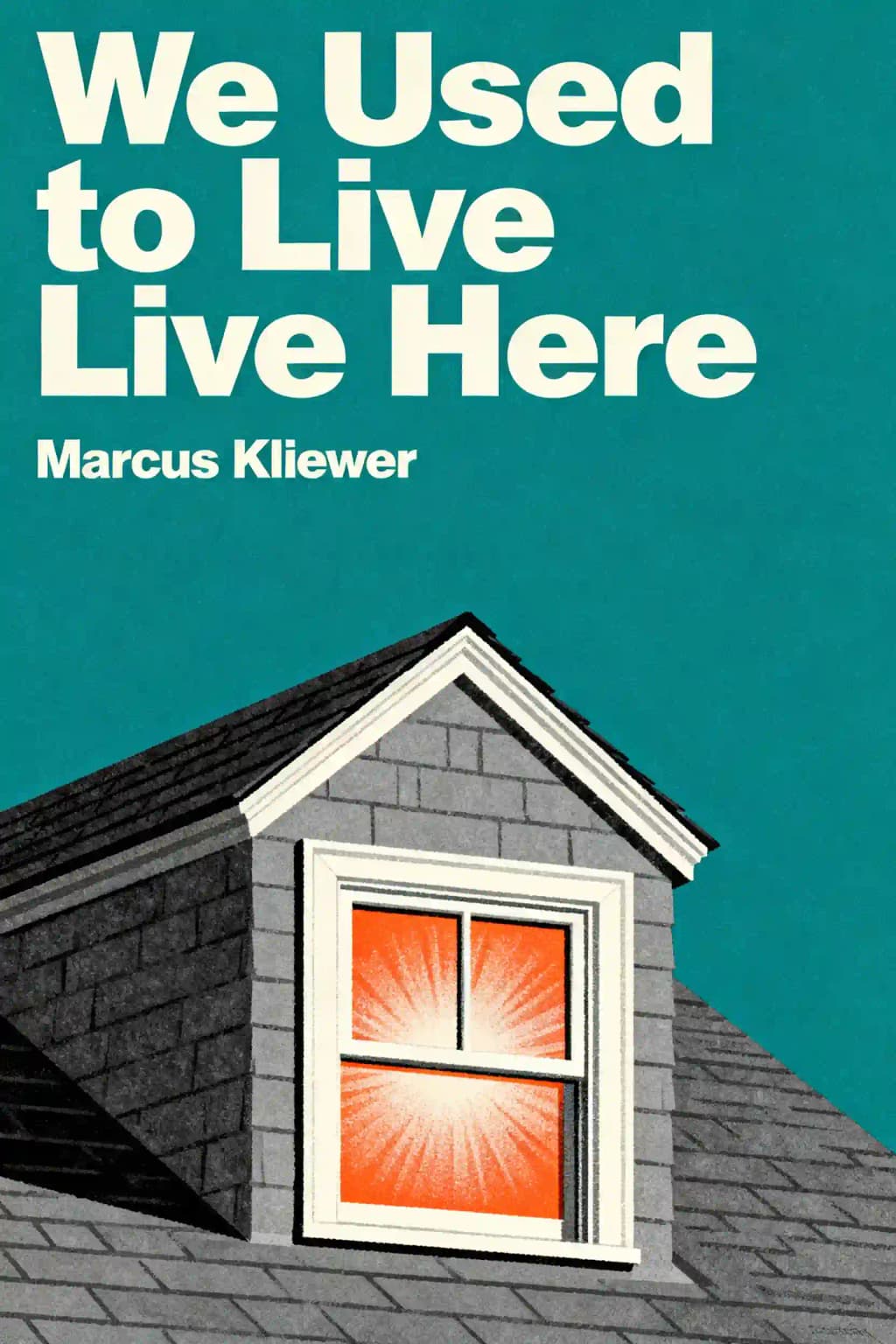
From Reddit horror sensation to Netflix film starring Blake Lively - "We Used to Live Here" delivers psychological terror through a queer couple's house-flipping nightmare. Kliewer's debut blends digital culture with spine-chilling suspense that bestselling author Erin Craig calls "macabre and unsettling."
Marcus Kliewer is the author of We Used to Live Here, a breakout horror novelist whose Reddit origins story captivated millions. A writer and stop-motion animator based in Vancouver, Canada, Kliewer's debut novel began as a serialized short story on Reddit's NoSleep forum.
Kliewer's story won the Scariest Story of 2021 award among 18 million members. His background in stop-motion animation shapes his cinematic approach to psychological horror, building suspense with meticulous visual precision.
The book explores themes of home invasion, gaslighting, and reality distortion through the experience of a queer couple terrorized in their newly purchased home. Before Kliewer even expanded the story into a full novel, Netflix acquired film rights with Blake Lively attached to star, while Simon & Schuster secured publishing rights—a rare simultaneous acquisition that underscores the story's cultural impact. His work blends the domestic dread of Get Out with the claustrophobic tension of Parasite.
We Used to Live Here follows Charlie and Eve, a queer couple who flip houses in Oregon. Their lives spiral into horror when a family claiming to be former residents visits their new home and refuses to leave. As the visitors' youngest child goes missing and Charlie disappears, Eve confronts a supernatural phenomenon involving alternate realities, shifting rooms, and the mysterious "Old House" conspiracy theory that traps unwary visitors between dimensions.
Marcus Kliewer is a Vancouver-based writer and stop-motion animator whose debut novel We Used to Live Here began as a serialized story on Reddit's NoSleep forum, where it won the Scariest Story of 2021 award among eighteen million members. Netflix acquired the film rights before Simon & Schuster published the expanded novel in June 2024. Kliewer combines his storytelling background in animation with literary horror, creating what critics call "macabre and unsettling" narratives.
We Used to Live Here appeals to horror fans who enjoy psychological thrillers with supernatural elements, particularly readers of authors like Stephen King and Agustina Bazterrica. The book suits those interested in LGBTQ+ representation in horror, alternate reality concepts, and unconventional narrative structures featuring found documents and internet conspiracy theories. Readers who appreciate Reddit's NoSleep community and atmospheric, slow-burn horror that blends domestic unease with cosmic dread will find this debut particularly engaging.
We Used to Live Here earned Goodreads Choice Award nominations for Readers' Favorite Horror and Debut Novel in 2024, with critics praising it as "quicksand: the further you delve into its pages, the more immobilized you become". The novel's unique origin as a Reddit sensation, combined with Netflix's film adaptation and Simon & Schuster's acquisition, demonstrates its cultural impact. Its innovative structure blending traditional narrative with found documents and hidden messages provides depth beyond typical horror fare.
The Old House conspiracy theory in We Used to Live Here describes a portal connecting alternate realities where visitors become trapped. According to fictional internet forums and documents woven throughout the narrative, the house shifts between dimensions, causing inhabitants to disappear from their original reality while records of their existence vanish. Hidden messages reveal: "Old man with the scar has lived in the cabin for centuries and goes by many different names," suggesting a malevolent intelligence controls the house.
Charlie mysteriously vanishes after the Faust family arrives, leaving only her locket behind as evidence of her existence. Eve discovers the house's rooms constantly changing and encounters a woman in a hospital gown chasing her through the basement. After Eve kills Paige Faust in self-defense and attacks Thomas, police arrest her, but all records show she's actually "Emma," Thomas's sister. The novel ends with Charlie posting online that Eve has disappeared and no evidence of Eve's existence remains.
We Used to Live Here alternates between Eve's main narrative and fictional documents including internet conspiracy theory posts, transcripts from Old House experiencers, and police reports. Marcus Kliewer nods to the book's Reddit origins by supplementing the story with these "documents" that build the mythology around the supernatural house. This unconventional structure, inspired by Stephen King's approach to fictional locations, allows Kliewer creative freedom while providing multiple perspectives on the horror unfolding.
We Used to Live Here contains encrypted messages throughout its interludes using Morse code and unconventional capitalization. Each interlude ends with a single word in Morse code that collectively spells: "Old man with the scar has lived in the cabin for centuries and goes by many different names". Additionally, strategically capitalized letters in one document spell: "The old gods see all," suggesting ancient, supernatural forces control the house's reality-warping properties.
We Used to Live Here began as a serialized short story on Reddit's NoSleep forum, where Marcus Kliewer posted installments that won the community's Scariest Story of 2021 award. The story's viral success among NoSleep's eighteen million members attracted Netflix, which acquired film rights before the full novel existed. Simon & Schuster's Atria Books then purchased publishing rights and released the expanded novel on June 18, 2024, making it one of horror's most successful Reddit-to-traditional-publishing transitions.
We Used to Live Here centers Charlie and Eve, a queer couple navigating both house-flipping ambitions and supernatural horror. The novel incorporates homophobia through the Faust family's uncomfortable dinner conversation where Paige discusses Christianity and homosexuality, adding social tension alongside supernatural dread. Marcus Kliewer's inclusion of authentic queer protagonists in atmospheric horror represents growing LGBTQ+ visibility in the genre, with the book described as "queer atmospheric horror" that doesn't use sexuality as trauma fodder.
Netflix acquired the film rights to We Used to Live Here before Simon & Schuster published the full novel, demonstrating exceptional confidence in Marcus Kliewer's story. The adaptation is described as an upcoming "Netflix original movie" in promotional materials. While specific production details, release dates, or casting announcements haven't been revealed as of October 2025, the pre-publication acquisition suggests Netflix recognized the story's cinematic potential during its viral Reddit phase.
We Used to Live Here distinguishes itself through its Reddit origins, earning the Scariest Story of 2021 award on NoSleep before traditional publication. Marcus Kliewer employs an innovative structure mixing conventional narrative with found documents, internet forum posts, and encrypted messages in Morse code that reward careful readers. The novel's exploration of alternate realities and dimensional portals through the "Old House" mythology, combined with authentic queer representation and people-pleasing psychology, creates a unique blend of cosmic horror and domestic psychological thriller.
Почувствуйте книгу через голос автора
Превратите знания в увлекательные, богатые примерами идеи
Захватите ключевые идеи мгновенно для быстрого обучения
Наслаждайтесь книгой в весёлой и увлекательной форме
Words without changed behavior mean nothing.
The house becomes a character in its own right.
The house transforms the comfort of domestic space into something sinister.
Politeness becomes peril.
The house becomes a physical manifestation of the story's central horror.
Разбейте ключевые идеи We Used to Live Here на понятные тезисы, чтобы понять, как инновационные команды создают, сотрудничают и растут.
Выделите из We Used to Live Here быстрые подсказки для запоминания, подчёркивающие ключевые принципы открытости, командной работы и творческой устойчивости.

Погрузитесь в We Used to Live Here через яркие истории, превращающие уроки инноваций в запоминающиеся и применимые моменты.
Задавайте любые вопросы, выбирайте голос и совместно создавайте идеи, которые действительно находят у вас отклик.

Создано выпускниками Колумбийского университета в Сан-Франциско
"Instead of endless scrolling, I just hit play on BeFreed. It saves me so much time."
"I never knew where to start with nonfiction—BeFreed’s book lists turned into podcasts gave me a clear path."
"Perfect balance between learning and entertainment. Finished ‘Thinking, Fast and Slow’ on my commute this week."
"Crazy how much I learned while walking the dog. BeFreed = small habits → big gains."
"Reading used to feel like a chore. Now it’s just part of my lifestyle."
"Feels effortless compared to reading. I’ve finished 6 books this month already."
"BeFreed turned my guilty doomscrolling into something that feels productive and inspiring."
"BeFreed turned my commute into learning time. 20-min podcasts are perfect for finishing books I never had time for."
"BeFreed replaced my podcast queue. Imagine Spotify for books — that’s it. 🙌"
"It is great for me to learn something from the book without reading it."
"The themed book list podcasts help me connect ideas across authors—like a guided audio journey."
"Makes me feel smarter every time before going to work"
Создано выпускниками Колумбийского университета в Сан-Франциско

Получите резюме книги «We Used to Live Here» в формате PDF или EPUB бесплатно. Распечатайте или читайте офлайн в любое время.
Imagine answering your doorbell on a chilly evening to find strangers claiming your house used to be their home. Would you let them in? Eve Palmer made that fatal mistake. When Thomas Faust, his wife Paige, and their three children appeared on her doorstep asking to tour her newly purchased Victorian home, Eve's politeness overrode her instincts. Despite her girlfriend Charlie being away and an inner warning voice she calls "Mo," Eve reluctantly invites them inside. Thomas's unsettling familiarity with the house - effortlessly opening closets, pointing out hidden features, and showing his children a strange symbol carved under the banister - creates immediate unease. When his youngest daughter Jenny hides in the basement and refuses to come out, Thomas merely knocks a pattern on a pipe, receives two knocks in response, and insists they leave her there. This seemingly innocent tour becomes the first step in Eve's descent into a nightmare where the boundaries between reality and delusion slowly dissolve.
