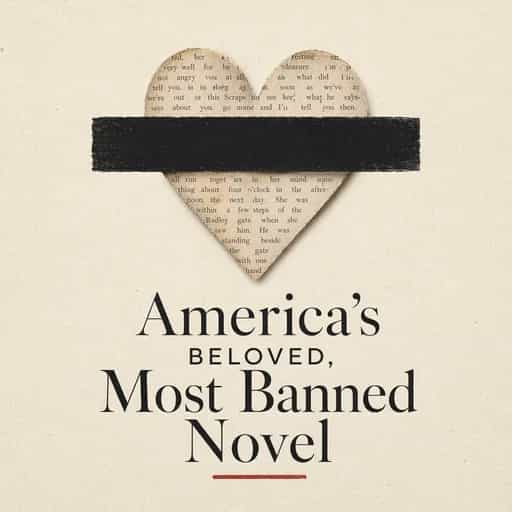
Обзор книги Uncle Tom's Cabin
Before the Civil War, one novel ignited America's conscience. "Uncle Tom's Cabin" sold 300,000 copies in its first year, prompting Abraham Lincoln to call Harriet Beecher Stowe "the little lady who started this big war." What moral courage might you discover within?
- Harriet Beecher Stowe frames slavery as incompatible with Christian morality through Tom’s martyrdom
- Uncle Tom’s Cabin reveals slavery’s psychological trauma via forced family separations and child sales
- The novel contrasts Northern industrial ethics with Southern plantation brutality through parallel plotlines
- Stowe weaponizes sentimental fiction to make white readers feel slavery’s human costs personally
- Simon Legree embodies slavery’s dehumanizing effects through unchecked violence against enslaved women and men
- Eliza’s river-crossing escape became an iconic abolitionist symbol of maternal courage under oppression
- Stowe blends documentary realism with religious allegory to condemn the Fugitive Slave Act
- The book’s international success proved fiction could drive political change more effectively than speeches
- Uncle Tom’s redemptive suffering model sparked debates about resistance strategies in Black communities
- Eva St. Clare’s deathbed plea for emancipation mirrors Stowe’s own grief-driven abolitionist awakening
- Secondary characters like Topsy expose slavery’s intergenerational damage to Black identity and self-worth
- Stowe’s “key scenes” technique—violent separations, martyrdom—became blueprint for activist literature
Об авторе книги Uncle Tom's Cabin
Harriet Beecher Stowe, the influential abolitionist and bestselling author of Uncle Tom’s Cabin, crafted one of the 19th century’s most pivotal anti-slavery novels. Born in 1811 in Litchfield, Connecticut, Stowe grew up in the deeply religious Beecher family, which shaped her moral fervor and commitment to social reform.
Her firsthand exposure to slavery’s horrors while living in Cincinnati, coupled with her Christian convictions, drove her to write the groundbreaking novel. Blending themes of human dignity, religious morality, and familial bonds, Uncle Tom’s Cabin exposed slavery’s cruelty through vivid characters like Uncle Tom and Eliza, galvanizing anti-slavery movements in the North and sparking international outrage.
Stowe’s other notable works include The Mayflower, a collection of historical sketches, and A Key to Uncle Tom’s Cabin, a factual defense of her novel’s claims. A prolific writer and lecturer, she leveraged her platform to advocate for women’s rights and educational reform. Uncle Tom’s Cabin sold over 300,000 copies in its first year, was translated into 60 languages, and remains a cornerstone of American literature. Adapted into plays and widely debated, it is often cited as a catalyst for the Civil War, cementing Stowe’s legacy as a transformative voice for justice.
Часто задаваемые вопросы о Uncle Tom's Cabin
What is Uncle Tom’s Cabin by Harriet Beecher Stowe about?
Uncle Tom’s Cabin follows the lives of enslaved individuals in pre-Civil War America, centering on Tom, a devout Christian sold into brutal conditions, and Eliza, who escapes to protect her son. The novel exposes slavery’s inhumanity through family separations, physical violence, and moral corruption, culminating in Tom’s martyrdom. It became a pivotal abolitionist work, galvanizing anti-slavery sentiment in the 1850s.
Who should read Uncle Tom’s Cabin?
This book is essential for readers interested in American history, social justice, or classic literature. Students studying themes of race, religion, or 19th-century cultural movements will find it particularly impactful. Its emotional narrative also appeals to those exploring moral philosophy or the roots of the Civil War.
Is Uncle Tom’s Cabin worth reading today?
Yes—its critique of systemic oppression remains relevant, offering historical insight into slavery’s psychological and societal toll. While criticized for racial stereotypes, it’s a cornerstone of anti-racist literature and a key text for understanding America’s racial legacy.
What are the main themes in Uncle Tom’s Cabin?
Key themes include the evil of slavery, Christian morality vs. hypocrisy, maternal love, and resilience. Stowe contrasts Northern and Southern ideologies, emphasizing slavery’s destruction of families and the redemptive power of suffering.
How does Uncle Tom’s Cabin use religious symbolism?
Tom’s Christ-like forgiveness and Eva’s angelic purity symbolize Christian ideals of love and sacrifice. Their deaths highlight moral resistance to oppression, framing slavery as a sin against divine and human bonds.
Why was Uncle Tom’s Cabin banned in some regions?
Southern states banned it as abolitionist propaganda, fearing its influence. Modern debates focus on outdated racial portrayals, though its anti-slavery message is widely acknowledged.
What role do female characters play in the novel?
Women like Eliza and Mrs. Bird embody moral authority, advocating for empathy and resistance. Their actions underscore motherhood as a force against slavery’s dehumanization.
How does Simon Legree represent slavery’s brutality?
Legree personifies greed and cruelty, using violence to control enslaved people. His downfall illustrates Stowe’s argument that slavery corrupts both the oppressed and the oppressor.
What is the significance of Uncle Tom’s cabin?
Tom’s cabin symbolizes the warmth of family and community, contrasting with the dehumanizing plantations. It becomes a metaphor for the domestic stability slavery destroys.
How did Uncle Tom’s Cabin influence the abolitionist movement?
The novel humanized enslaved individuals for Northern readers, strengthening anti-slavery sentiment. Abraham Lincoln allegedly credited Stowe with “starting the Civil War” due to its cultural impact.
Are there criticisms of Uncle Tom’s Cabin’s portrayal of race?
Yes—modern scholars note stereotypical “mammy” or “noble savage” tropes, which some argue perpetuate racism despite Stowe’s abolitionist goals. These critiques highlight the tension between intent and impact.
How does Uncle Tom’s Cabin compare to Stowe’s A Key to Uncle Tom’s Cabin?
Key provides documentary evidence supporting the novel’s depictions, blending fiction with real-life accounts to strengthen its anti-slavery argument. It contextualizes the novel’s themes with historical data.
Почувствуйте книгу через голос автора
Превратите знания в увлекательные, богатые примерами идеи
Захватите ключевые идеи мгновенно для быстрого обучения
Наслаждайтесь книгой в весёлой и увлекательной форме
Ключевые темы в Uncle Tom's Cabin
Цитаты из Uncle Tom's Cabin
I'm your church now!
"I will write something. I will if I live."
Slavery at its most depraved.
What made Uncle Tom's Cabin revolutionary was Stowe's masterful use of analogy.
The novel's moral framing of slavery helped maintain British neutrality.
Персонажи в Uncle Tom's Cabin
Режим Краткое резюме - Прочитайте или прослушайте краткое содержание Uncle Tom's Cabin за 9 минут

Разбейте ключевые идеи Uncle Tom's Cabin на понятные тезисы, чтобы понять, как инновационные команды создают, сотрудничают и растут.

Режим Карточки - Топ-10 идей из Uncle Tom's Cabin кратко

Выделите из Uncle Tom's Cabin быстрые подсказки для запоминания, подчёркивающие ключевые принципы открытости, командной работы и творческой устойчивости.

Режим Развлекательно - Уроки из Uncle Tom's Cabin в 24-минутных историях

Погрузитесь в Uncle Tom's Cabin через яркие истории, превращающие уроки инноваций в запоминающиеся и применимые моменты.
Режим Персонализация - Прочитайте или прослушайте краткое содержание Uncle Tom's Cabin за 0 минут

Задавайте любые вопросы, выбирайте голос и совместно создавайте идеи, которые действительно находят у вас отклик.

Создано выпускниками Колумбийского университета в Сан-Франциско
"Instead of endless scrolling, I just hit play on BeFreed. It saves me so much time."


"I never knew where to start with nonfiction—BeFreed’s book lists turned into podcasts gave me a clear path."


"Perfect balance between learning and entertainment. Finished ‘Thinking, Fast and Slow’ on my commute this week."
"Crazy how much I learned while walking the dog. BeFreed = small habits → big gains."
"Reading used to feel like a chore. Now it’s just part of my lifestyle."

"Feels effortless compared to reading. I’ve finished 6 books this month already."
"BeFreed turned my guilty doomscrolling into something that feels productive and inspiring."

"BeFreed turned my commute into learning time. 20-min podcasts are perfect for finishing books I never had time for."
"BeFreed replaced my podcast queue. Imagine Spotify for books — that’s it. 🙌"

"It is great for me to learn something from the book without reading it."
"The themed book list podcasts help me connect ideas across authors—like a guided audio journey."
"Makes me feel smarter every time before going to work"
Создано выпускниками Колумбийского университета в Сан-Франциско
"Instead of endless scrolling, I just hit play on BeFreed. It saves me so much time."
"I never knew where to start with nonfiction—BeFreed’s book lists turned into podcasts gave me a clear path."
"Perfect balance between learning and entertainment. Finished ‘Thinking, Fast and Slow’ on my commute this week."
"Crazy how much I learned while walking the dog. BeFreed = small habits → big gains."
"Reading used to feel like a chore. Now it’s just part of my lifestyle."
"Feels effortless compared to reading. I’ve finished 6 books this month already."
"BeFreed turned my guilty doomscrolling into something that feels productive and inspiring."
"BeFreed turned my commute into learning time. 20-min podcasts are perfect for finishing books I never had time for."
"BeFreed replaced my podcast queue. Imagine Spotify for books — that’s it. 🙌"
"It is great for me to learn something from the book without reading it."
"The themed book list podcasts help me connect ideas across authors—like a guided audio journey."
"Makes me feel smarter every time before going to work"
"Instead of endless scrolling, I just hit play on BeFreed. It saves me so much time."
"I never knew where to start with nonfiction—BeFreed’s book lists turned into podcasts gave me a clear path."
"Perfect balance between learning and entertainment. Finished ‘Thinking, Fast and Slow’ on my commute this week."
"Crazy how much I learned while walking the dog. BeFreed = small habits → big gains."
"Reading used to feel like a chore. Now it’s just part of my lifestyle."
"Feels effortless compared to reading. I’ve finished 6 books this month already."
"BeFreed turned my guilty doomscrolling into something that feels productive and inspiring."
"BeFreed turned my commute into learning time. 20-min podcasts are perfect for finishing books I never had time for."
"BeFreed replaced my podcast queue. Imagine Spotify for books — that’s it. 🙌"
"It is great for me to learn something from the book without reading it."
"The themed book list podcasts help me connect ideas across authors—like a guided audio journey."
"Makes me feel smarter every time before going to work"
"Instead of endless scrolling, I just hit play on BeFreed. It saves me so much time."
"I never knew where to start with nonfiction—BeFreed’s book lists turned into podcasts gave me a clear path."
"Perfect balance between learning and entertainment. Finished ‘Thinking, Fast and Slow’ on my commute this week."
"Crazy how much I learned while walking the dog. BeFreed = small habits → big gains."
"Reading used to feel like a chore. Now it’s just part of my lifestyle."
"Feels effortless compared to reading. I’ve finished 6 books this month already."
"BeFreed turned my guilty doomscrolling into something that feels productive and inspiring."
"BeFreed turned my commute into learning time. 20-min podcasts are perfect for finishing books I never had time for."
"BeFreed replaced my podcast queue. Imagine Spotify for books — that’s it. 🙌"
"It is great for me to learn something from the book without reading it."
"The themed book list podcasts help me connect ideas across authors—like a guided audio journey."
"Makes me feel smarter every time before going to work"

Получите резюме книги «Uncle Tom's Cabin» в формате PDF или EPUB бесплатно. Распечатайте или читайте офлайн в любое время.




![[PDF] THE DIVIDED TOWN OF VISALIA California remained loyal to the ...](/_next/image?url=https%3A%2F%2Fd1y2du6z1jfm9e.cloudfront.net%2Fassets%2Fpodcast%2Fblue.png&w=1024&q=50)