Глава 1
The Road Less Traveled: A Journey Through Our Traffic Psyche
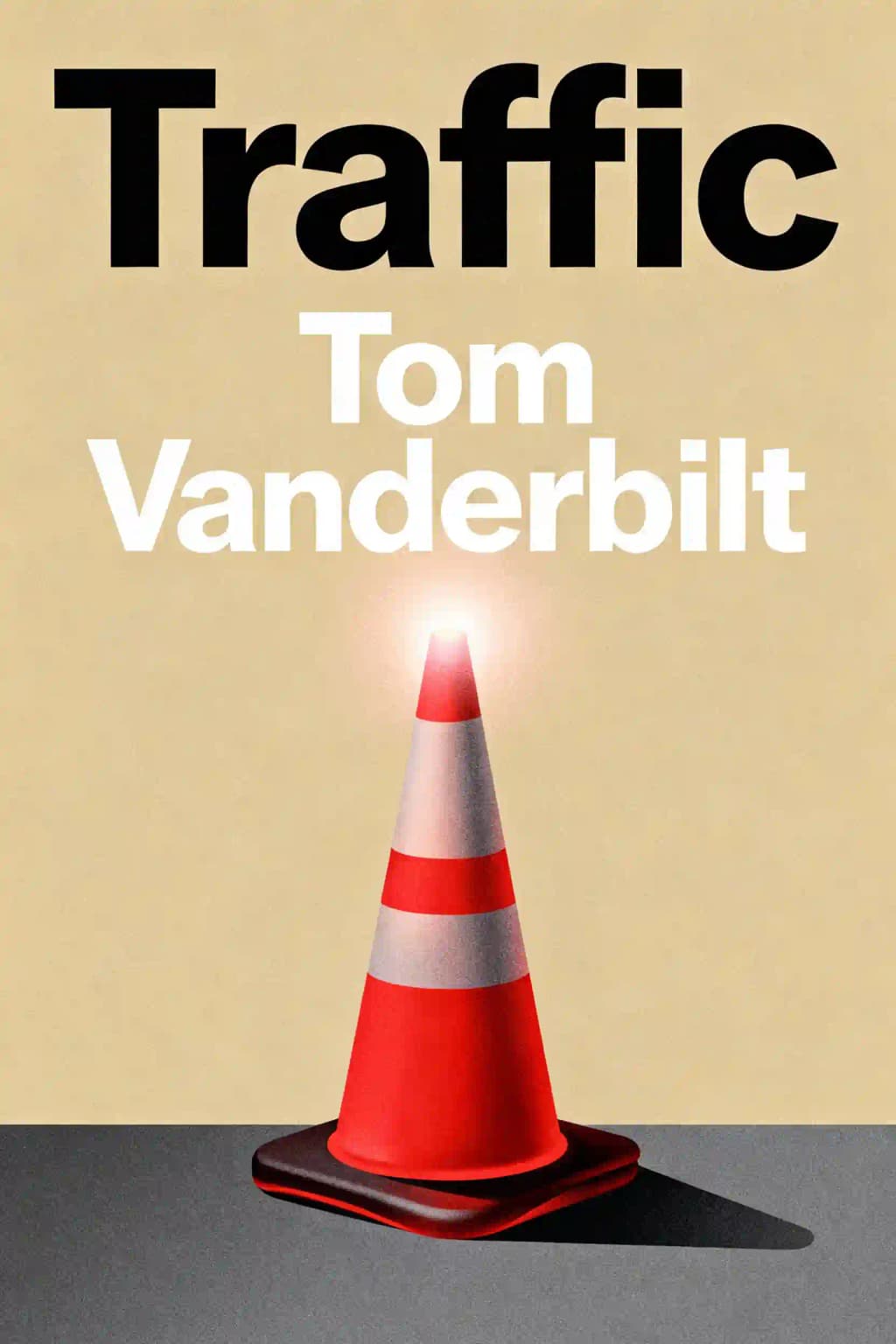
Traffic is more than just a daily inconvenience-it's a complex social experiment that reveals profound truths about human nature. Tom Vanderbilt's "Traffic: Why We Drive the Way We Do (and What It Says About Us)" has become a cultural touchstone since its publication, praised by figures from Malcolm Gladwell to urban planners worldwide. The book's genius lies in transforming something we consider mundane-our daily commute-into a fascinating exploration of psychology, sociology, and human behavior.
What makes this work particularly compelling is how it's influenced modern urban design. Cities from Copenhagen to Singapore have implemented policies directly influenced by Vanderbilt's insights. The book remains on bestseller lists because it speaks to a universal experience-we all participate in traffic, yet few of us understand its hidden dynamics. As one reviewer noted, "After reading this book, you'll never see your morning commute the same way again." Let's embark on this journey through the surrealistic landscape of traffic, where our most primal instincts meet modern technology in ways that might surprise you.
Глава 2
Behind the Wheel: How Cars Transform Our Personalities
Have you ever noticed how the most mild-mannered person can transform into an aggressive road warrior once they get behind the wheel? This Jekyll-and-Hyde phenomenon isn't just your imagination-it's a well-documented psychological effect. Disney captured this perfectly in the animated short "Motor Mania," where gentle Goofy becomes a raging monster when driving. The transformation isn't coincidental; it reveals something fundamental about human nature.
Cars create a unique psychological environment. They simultaneously isolate us from others while placing us in competition with them. The anonymity of being encased in metal and glass removes the social constraints that typically govern our behavior. Without the immediate feedback of seeing another person's reaction to our rudeness, we feel liberated to act in ways we never would face-to-face.
Communication between drivers is severely limited. We have horns, lights, and gestures-all crude instruments compared to the nuanced verbal and facial expressions we rely on in normal social interactions. This communication deficit leads to misunderstandings and frustrations. A slight delay at a green light might be interpreted as deliberate obstruction rather than momentary distraction.
When conflicts arise, we tend to fall victim to what psychologists call the "fundamental attribution error"-attributing others' mistakes to character flaws while excusing our own as circumstantial. The other driver isn't just someone who made a mistake; they're an incompetent idiot who shouldn't be allowed on the road. Meanwhile, when we make the same error, it's because we were distracted by something important or faced unusual circumstances.
The car becomes an extension of ourselves, a metal exoskeleton that both protects and represents us. This fusion of identity explains why a minor scratch on our vehicle can feel like a personal assault. Passengers experience traffic differently-they remain detached observers while drivers enter a unique psychological state where the boundaries between self and vehicle blur. This merging of identities transforms driving from a mere act of transportation into a complex social interaction laden with status, identity, and territorial claims.
Глава 3
The Power of Eye Contact: Social Dynamics on the Road
Have you ever locked eyes with another driver at an intersection and felt an immediate connection-or perhaps tension? That brief moment of eye contact does more than acknowledge another's presence; it activates ancient social mechanisms that govern human interaction. Unlike the anonymous shield of our vehicles, eye contact creates a momentary bridge between isolated drivers, triggering either cooperation or competition.
This social dynamic on the road mirrors our prehistoric social systems. When we let someone merge ahead of us, we're engaging in what anthropologists call "reciprocal altruism"-a behavior that builds social capital. We expect that someday, someone will return the favor. Studies in game theory and behavioral economics show that humans have an innate sense of fairness that shapes these interactions. The famous "Ultimatum Game" experiments reveal that people will reject unfair offers even at personal cost, demonstrating our deep-seated desire for equity.
Interestingly, aggression in traffic sometimes serves as a form of "strong reciprocity"-punishment for those who violate social norms. When we honk at someone who cuts us off, we're not just expressing frustration; we're enforcing community standards. This enforcement, while sometimes unpleasant, actually helps maintain cooperative behavior in the long run.
At busy intersections where formal rules break down, eye contact becomes crucial for negotiating right-of-way. A quick glance can communicate intention more effectively than any turn signal. Drivers in places with chaotic traffic systems, like parts of India or Italy, rely heavily on these visual cues to navigate successfully.
The power of eye contact explains why pedestrians often feel vulnerable at crosswalks-without this crucial connection, they can't be sure they've been seen. Similarly, motorcyclists and cyclists frequently try to make eye contact with car drivers to ensure their presence is acknowledged.
These silent conversations happening through windshields and across lanes represent one of the most fundamental aspects of human interaction-the need to be seen and recognized by others. In traffic, as in life, these small moments of connection are what transform a collection of individuals into a functioning social system, however imperfect it may be.
Глава 4
The Psychology of Waiting: Why Your Lane Always Seems Slowest
Have you ever switched lanes in traffic only to watch your original lane speed ahead? This maddening experience isn't just bad luck-it's a product of how our brains perceive time and fairness. The frustration of congestion goes beyond mere delays; it challenges our understanding of queues and reveals fascinating aspects of human psychology.
Unlike orderly lines at banks or grocery stores, traffic creates an irregular, unpredictable waiting pattern that particularly aggravates us. David Maister's research on queuing psychology explains why: unoccupied time feels longer than occupied time, and anxiety about unknown wait duration magnifies our frustration. This explains why innovations like countdown signals at intersections or real-time delay information on highways help reduce stress-they transform unknown waits into known ones.
Our perception of time warps dramatically when we're waiting. Studies show we consistently overestimate how long we've been waiting in traffic by 25% or more. This distortion intensifies when we believe the wait is unfair or unexplained. Watching others move while we're stuck feels particularly unjust, activating strong emotional responses.
The phenomenon of always picking the "wrong" lane stems from a simple perceptual bias. When your lane moves slowly, you have ample time to observe other lanes passing you. But when your lane moves quickly, you're focused on driving, not on comparing speeds. This creates a skewed impression that other lanes move faster more often than they actually do.
A fascinating Canadian study tracked lane-changing behavior and found that despite drivers' perceptions, frequent lane changes saved minimal time-often just seconds over a lengthy commute-while significantly increasing stress and accident risk. This illustrates how our intuitions about traffic efficiency can be profoundly wrong.
Loss aversion also plays a role-the pain of watching others advance while we're stuck exceeds the pleasure of moving ahead ourselves. This asymmetry in emotional response makes traffic particularly frustrating.
Interestingly, our queue behavior reveals deeper social values. People react strongly to perceived "cutting in line" because it violates fundamental fairness norms. This explains the popularity of single-line queuing systems at banks and airports-they eliminate the anxiety of lane choice and ensure first-come, first-served fairness.
Understanding these psychological factors doesn't eliminate traffic frustration, but it helps explain why congestion affects us so deeply. It's not just about delay-it's about uncertainty, perceived unfairness, and the limits of human perception in complex systems.
Глава 5
The Late Merge Revolution: Efficiency vs. Etiquette
Have you ever felt the moral dilemma of a lane closure ahead? Most drivers merge early, forming a single line well before the actual bottleneck. Meanwhile, a few "rude" drivers zoom ahead in the empty lane, merging at the last possible moment. Who's right? Surprisingly, traffic engineers have a clear answer-and it challenges our intuitions about fairness and efficiency.
The "Late Merge" concept (sometimes called "zipper merge") increases traffic flow by approximately 15 percent. The principle is simple: in heavy traffic approaching a lane closure, drivers should use both lanes fully until reaching the merge point, then take turns in a "zipper" fashion. This approach utilizes the full road capacity until the last possible moment, rather than creating a single long line that extends back unnecessarily.
Early merging, while seemingly polite, actually creates inefficiency. When drivers abandon a lane prematurely, they effectively reduce the road's capacity before necessary. This creates longer backups and slower overall progress. Additionally, early merging often leads to inconsistent gaps between vehicles, causing the "accordion effect" where traffic alternately bunches and spreads.
The Late Merge system also promotes fairness by establishing a clear protocol-everyone moves at roughly the same speed, and everyone takes turns at the merge point. This eliminates the frustration of watching others speed ahead while you wait patiently in line.
Despite these benefits, implementing the Late Merge faces significant cultural resistance. Drivers who use the open lane often face hostility from those who merged early, including deliberate blocking maneuvers. This resistance stems from deeply ingrained notions of fairness and queue etiquette that override considerations of system efficiency.
Several states, including Minnesota and Michigan, have attempted to promote the Late Merge through education campaigns and signage. These efforts show that changing driver behavior requires not just information but addressing underlying social norms about fairness in traffic.
The Late Merge controversy reveals a fascinating tension between individual ethics and system optimization. What feels right (merging early) can actually make the situation worse for everyone. This paradox appears throughout traffic systems, where intuitive individual choices often produce suboptimal collective outcomes.
Глава 6
The Complexity of Driving: What Robots Teach Us About Human Skills
Have you ever considered how many decisions you make in a single minute of driving? The seemingly simple act of navigating a vehicle involves countless subskills that we perform automatically-judging distances, anticipating others' movements, interpreting ambiguous signals, and constantly adjusting to changing conditions. These complexities become apparent when engineers attempt to teach machines to drive.
Stanford University's autonomous vehicles, Stanley and Junior, represent cutting-edge attempts to replicate human driving ability. These robots must translate the analog world of traffic-with its infinite variations and ambiguities-into digital instructions. The challenge reveals just how sophisticated human driving actually is.
Consider a four-way stop intersection. Humans navigate this with relative ease, using subtle cues like slight vehicle movements, eye contact, and an intuitive sense of turn-taking. Programming a robot to understand these nuanced social interactions proves extraordinarily difficult. Junior, Stanford's autonomous SUV, had to be specifically programmed to inch forward at four-way stops-mimicking human behavior to signal its intention to proceed.
Even more challenging are unexpected scenarios. When Junior encountered a road completely blocked by construction barriers during a test, it had to improvise a three-point turn in a confined space-a maneuver requiring spatial reasoning that humans perform intuitively but that requires complex algorithms for machines.
The difficulty of teaching robots to drive highlights several aspects of human cognition we take for granted. We excel at pattern recognition, quickly distinguishing between relevant and irrelevant information. We anticipate others' behavior based on subtle cues and past experience. We adapt fluidly to novel situations without explicit instructions.
Interestingly, the development of autonomous vehicles may eventually lead to safer roads. Unlike humans, robots don't get distracted, tired, or emotional. They don't text while driving or exceed speed limits. The Stanford team estimated that replacing human drivers with robots like Junior could potentially reduce traffic fatalities by 90 percent.
This comparison between human and robotic driving illuminates both the remarkable capabilities and limitations of human cognition. We perform incredibly complex tasks with seeming effortlessness yet remain vulnerable to distractions and emotional reactions that machines don't experience. Understanding these differences helps us appreciate the sophisticated nature of skills we often take for granted while pointing toward potential improvements in road safety through technological assistance.
Глава 7
The Feedback Vacuum: Why We Think We're Better Drivers Than We Are
Why do 93% of American drivers rate themselves as above average? This mathematical impossibility reveals a fundamental problem in how we assess our driving skills-we operate in a feedback vacuum. Unlike other activities where we receive immediate and clear feedback on our performance, driving rarely provides objective assessment of our abilities.
Consider the contrast with online platforms like eBay, where reputation systems create accountability. Each transaction receives ratings, building a public record of trustworthiness. No such system exists on the road. When we make mistakes-tailgating, failing to signal, or cutting someone off-we rarely face immediate consequences or learn from them.
This lack of feedback creates a perfect environment for what psychologists call "optimistic bias"-our tendency to believe we're better than average at familiar tasks. Without clear evidence to the contrary, we naturally assume our skills are superior. This bias is particularly strong with driving because we successfully reach our destinations most of the time, interpreting this basic outcome as evidence of excellence rather than mere adequacy.
Some entrepreneurs have attempted to create feedback systems for driving, such as "How's My Driving?" bumper stickers with phone numbers to report behavior. However, these systems suffer from low participation rates and lack meaningful consequences. More sophisticated approaches use technologies like DriveCam, which records incidents triggered by unusual vehicle movements, providing concrete evidence of driving behavior.
When drivers do receive objective feedback through such systems, the results are often shocking. People who considered themselves excellent drivers watch recordings of themselves tailgating, drifting between lanes while distracted, or narrowly avoiding collisions. This confrontation with reality can be transformative, leading to genuine improvement.
Our self-assessment is further distorted by how we categorize driving events. We attribute our own mistakes to unusual circumstances ("The sun was in my eyes") while viewing others' errors as reflecting their character ("What an incompetent driver!"). This fundamental attribution error shields us from recognizing our own limitations.
The feedback vacuum in driving has serious consequences for road safety. Without accurate self-assessment, drivers continue risky behaviors, confident in their superior abilities. Breaking this cycle requires creating better feedback mechanisms-whether through technology, education, or cultural changes that promote more honest self-evaluation on the road.
Глава 8
The Myth of Accidents: Reframing How We Think About Crashes
The language we use shapes how we think about road safety. When we call collisions "accidents," we imply they're unpredictable and unavoidable-acts of fate rather than consequences of choices. This framing obscures a crucial reality: most crashes result from specific, identifiable behaviors that could have been prevented.
DriveCam footage reveals that what drivers describe as "accidents" often stem from clear negligence-texting while driving, following too closely, or operating while fatigued. These aren't random misfortunes but predictable outcomes of risky decisions. By reframing these events as "crashes" rather than "accidents," we acknowledge their preventable nature and our responsibility in avoiding them.
Our legal system often reinforces this problematic framing. When crashes occur without alcohol or drugs involved, consequences are typically minimal, even when negligence is evident. This leniency reflects our cultural acceptance of certain risks as inevitable parts of driving rather than preventable harms.
The "accident" mindset also feeds our optimistic bias about driving skills. If crashes are merely bad luck, then avoiding them doesn't require improving our driving-just hoping fortune favors us. This perspective undermines the motivation to develop safer habits or accept feedback about risky behaviors.
Technology is helping challenge this mindset. Systems like DriveCam provide objective evidence of what actually happens before crashes, making it harder to dismiss them as unpredictable events. When drivers review footage of their near-misses and risky behaviors, they confront the reality that safety depends on consistent choices, not chance.
Safety experts increasingly use the "safety pyramid" concept to illustrate how minor infractions and near-misses, which occur frequently but often go unnoticed, create the conditions for serious crashes. For every fatal collision, there are hundreds of near-misses and thousands of minor violations that, if addressed, could prevent tragedy.
This reframing has practical implications for how we approach road safety. Rather than focusing exclusively on catastrophic outcomes, effective interventions address the everyday behaviors that make crashes more likely-speeding, distraction, fatigue, and aggressive driving. By recognizing crashes as culminations of choices rather than strokes of bad luck, we empower ourselves to create safer roads through better decisions.
Глава 9
The Attention Paradox: Why Driving Demands More Than We Think
Have you ever arrived at your destination with no memory of the journey? This common experience, sometimes called "highway hypnosis," illustrates a fundamental paradox of driving: the task is simultaneously demanding enough to require constant attention yet familiar enough that our minds wander. Understanding this tension helps explain why attention-related crashes remain so common despite our confidence in multitasking abilities.
Driving becomes an "overlearned" activity for experienced drivers-we perform basic maneuvers automatically, without conscious thought. This automaticity creates the dangerous illusion that driving requires minimal attention, opening the door to distractions. The problem isn't that driving is too difficult but that it seems easier than it actually is.
Our attention has significant limitations. Humans excel at focused concentration for brief periods but struggle to maintain vigilance over extended timeframes. This vigilance decrement-the declining ability to sustain attention-becomes problematic during long drives when critical situations require sudden focus after periods of routine driving.
Distractions compound these attention challenges. Modern vehicles offer numerous diversions-radios, navigation systems, climate controls-and smartphones introduce even more compelling attention magnets. Each distraction creates "attentional blindness," temporarily removing our focus from the road.
Research using eye-tracking technology reveals how dramatically distractions affect our visual attention. When talking on a phone (even hands-free), drivers scan a narrower field of view, check mirrors less frequently, and miss peripheral information. This tunnel vision means we might look directly at a hazard yet fail to process it consciously if our mind is elsewhere.
The misconception that humans are effective multitaskers further complicates matters. Cognitive science clearly shows that rather than doing multiple things simultaneously, we rapidly switch attention between tasks. Each switch carries a cognitive cost, slowing reaction times and reducing performance quality. When one of those tasks is controlling a vehicle at high speed, these momentary attention gaps can have serious consequences.
Perhaps most troubling is that we rarely recognize our own attentional limitations. Studies consistently show that people overestimate their ability to drive safely while distracted. This overconfidence leads to risk-taking behaviors like texting or complex conversations that compromise safety.
Understanding the attention paradox in driving suggests practical strategies for safer roads: designing vehicles that minimize unnecessary distractions, creating road environments that maintain driver engagement, and developing personal habits that prioritize attentional resources for the critical task of controlling a vehicle in unpredictable environments.
Глава 10
The Illusion of Visibility: How Our Eyes Deceive Us on the Road
Our visual system, remarkable as it is, contains fundamental limitations and biases that affect driving safety. These perceptual quirks create a dangerous gap between what we think we see and what's actually happening on the road.
Consider how we judge the speed and distance of approaching vehicles. Research shows we consistently underestimate the speed of larger vehicles like trucks and buses. Their size creates an illusion of slowness that can lead to dangerous misjudgments when merging or crossing intersections. Conversely, we tend to overestimate the speed of smaller vehicles like motorcycles, sometimes avoiding turns unnecessarily.
Weather conditions dramatically affect visibility in ways drivers often fail to appreciate. In fog, the reduced contrast between objects makes distances particularly difficult to judge. Yet studies show drivers typically overestimate their visual capabilities in such conditions, maintaining speeds too high for their actual visual range. This overconfidence explains the catastrophic multi-vehicle pileups that occur in foggy conditions.
Night driving presents another visibility challenge. Our visual acuity diminishes significantly in low light, yet many drivers maintain daytime speeds after dark. The problem is compounded by high-beam usage patterns-drivers typically underuse high beams when they would be beneficial (on dark rural roads) and overuse them when they create glare for others.
Aging affects these visual capabilities in ways drivers may not recognize. By age 60, the eye typically needs three times more light to achieve the same visual performance as at age 20. Older drivers who haven't adjusted their habits to accommodate these changes face increased risk, particularly at night or in poor weather.
Motion perception, crucial for safe driving, contains built-in illusions. After traveling at high speed for a period (like on a highway), our perception adapts, making slower speeds feel even slower than they actually are. This "velocity adaptation" explains why drivers often exceed speed limits immediately after exiting highways-their perceptual system has temporarily recalibrated what feels "normal."
These visual limitations interact with attention in complex ways. The phenomenon of "inattentional blindness" means we can look directly at something yet fail to see it if our attention is directed elsewhere. Famous experiments show that people focused on counting basketball passes can miss a person in a gorilla suit walking through the scene-a laboratory demonstration of how drivers might miss motorcycles, pedestrians, or other hazards despite looking in their direction.
Understanding these perceptual limitations doesn't mean we can overcome them entirely, but awareness helps us develop compensatory strategies-reducing speed in challenging conditions, allowing greater safety margins, and recognizing situations where our eyes are most likely to deceive us.
Глава 11
Nature's Traffic Engineers: What Ants and Crickets Teach Us About Flow
The next time you're stuck in gridlocked traffic, consider this consolation: at least you're not likely to be eaten by your fellow commuters. This grim fate awaits Mormon crickets during their mass migrations across western American highways. These flightless insects move in enormous bands, driven forward by a simple motivation-avoid being cannibalized by the cricket behind you.
This seemingly cooperative movement actually emerges from intensely self-interested behavior, creating an important parallel to human traffic. Both systems demonstrate how individual actions, driven by personal goals, create collective patterns that no individual intended.
Ants provide a striking contrast to human traffic congestion. Despite lacking traffic signals, lane markings, or centralized control, ant colonies move efficiently along their trails without jams. When researchers study ant traffic, they discover several principles that human systems might emulate.
First, ants maintain consistent spacing and speed. Unlike human drivers who accelerate aggressively then brake suddenly, ants move at steady paces that maximize flow. Second, when congestion begins to form, ants spontaneously open new lanes by widening their trails or finding alternative routes. Third, ants prioritize colony efficiency over individual advantage-no ant attempts to "cut in line" or gain personal advantage at collective expense.
Perhaps most remarkably, ants demonstrate sophisticated adaptation to density. As traffic increases, they adjust their behaviors to maintain flow. Some species even practice a form of "platooning," where groups move in coordinated clusters to maximize efficiency-a strategy that human traffic engineers are now trying to implement with connected vehicle technology.
These natural examples reveal important principles about traffic flow that apply across species. Consistent speeds maintain better flow than the stop-and-go pattern typical of human highways. Cooperative behavior, where individuals consider system needs alongside personal goals, produces better outcomes for everyone. And adaptive responses to changing conditions-rather than rigid adherence to fixed patterns-help maintain efficiency under varying circumstances.
Human traffic systems face unique challenges, of course. Unlike ants, we operate vehicles much larger than ourselves, at speeds far beyond our evolutionary design. We make independent decisions based on limited information, without the chemical communication channels that coordinate ant behavior. And perhaps most significantly, we bring complex psychologies-impatience, competitiveness, distraction-to the driving task.
Yet these natural examples suggest possibilities for improvement. Technologies that promote consistent speeds and spacing, like adaptive cruise control, mimic ant-like efficiency. Design approaches that encourage cooperation rather than competition can reduce the "every driver for themselves" mentality that creates bottlenecks. And systems that provide better information about conditions ahead help drivers make decisions that benefit both themselves and the system as a whole.
Глава 12
The Paradox of Congestion: Why More Roads Create More Traffic
If you build it, they will come-and bring their cars. This twist on the famous movie line captures the counterintuitive reality of road expansion. When cities add lanes or build new highways to relieve congestion, the expected relief often proves temporary as traffic expands to fill the available space. This phenomenon, known as "induced demand," challenges conventional wisdom about solving traffic problems.
The principle works like this: Many potential drivers avoid congested routes or peak times, finding alternatives like different routes, departure times, or transportation modes. When new capacity appears, these "latent" drivers quickly fill the space. Additionally, easier driving conditions encourage longer or more frequent trips that people previously avoided due to congestion.
A natural experiment during a port strike in Los Angeles demonstrated this principle dramatically. When trucks disappeared from the 710 freeway, cars immediately filled the vacated space. Traffic flow increased by 25 percent within days as drivers who had been using alternative routes returned to the now-less-congested highway.
Research by transportation economists confirms this pattern. Studies in California found that for every 10 percent increase in road capacity, vehicle miles traveled increased by 9 percent within five years-almost completely offsetting the new capacity. Similar patterns appear worldwide, suggesting a fundamental relationship between available road space and driving volume.
This relationship works in reverse too. When road capacity decreases-due to construction, lane closures, or deliberate road diets-some predicted traffic simply "disappears" as drivers find alternatives. London, Stockholm, and other cities have removed central road capacity without creating the gridlock that opponents predicted.
The induced demand phenomenon reflects a basic economic principle: when you lower the "price" of a good (in this case, the time cost of driving), consumption increases. This insight suggests different approaches to managing congestion. Rather than continually expanding supply (building more roads), cities might focus on managing demand through strategies like congestion pricing, improved alternatives to driving, or land-use policies that reduce trip distances.
Some transportation experts compare endless road expansion to treating obesity by loosening your belt-it accommodates the problem without addressing its causes. Instead, they advocate for more balanced transportation systems that provide genuine choices about how to travel.
This doesn't mean road expansion is never warranted. Growing regions need infrastructure to support development. However, the induced demand principle suggests that building our way out of congestion is unlikely to succeed as a standalone strategy. A more comprehensive approach recognizes the dynamic relationship between infrastructure supply and travel demand, seeking balanced solutions that manage both sides of this equation.
Глава 13
Counterintuitive Safety: When "Dangerous" Roads Are Safer
What if making roads seem more dangerous actually makes them safer? This paradoxical idea challenges conventional wisdom about traffic safety but finds support in both research and real-world examples. The principle works through a simple mechanism: when drivers perceive danger, they become more attentive and cautious, often resulting in fewer and less severe crashes.
Sweden's "Dagen H" provides a fascinating historical example. In 1967, the country switched from left-side to right-side driving overnight. Despite apocalyptic predictions, accident rates actually dropped significantly in the weeks following the change. Why? Drivers, suddenly conscious of a new and unfamiliar system, drove with heightened attention and reduced speed. As they gradually became comfortable with the new pattern, accident rates returned to normal-demonstrating how perceived risk affects behavior.
Modern roundabouts illustrate this principle in action. Initially intimidating to many drivers, roundabouts require active decision-making and negotiation with other vehicles. This engagement produces better safety outcomes than traditional intersections where drivers often proceed on "autopilot," relying on signals rather than their own judgment. Studies consistently show that converting conventional intersections to roundabouts reduces injury crashes by 75-80 percent.
Dutch traffic engineer Hans Monderman pioneered this approach with his "shared space" concept. By removing traffic signs, signals, and even curbs in some areas, he created environments where all road users-drivers, cyclists, pedestrians-must negotiate space through eye contact and human interaction rather than following rigid rules. Counter to expectations, these spaces often show improved safety records while creating more pleasant urban environments.
The psychological mechanism behind this effect involves risk homeostasis-the idea that people adjust their behavior to maintain a consistent level of perceived risk. When roads feel dangerous (even if they're actually designed with safety features), drivers compensate by being more careful. Conversely, when roads feel safe (wide lanes, clear visibility, few obstacles), drivers often compensate by increasing speed or paying less attention.
This insight doesn't mean we should deliberately create hazardous conditions. Rather, it suggests that safety interventions should consider how design affects behavior, not just how it mitigates crash consequences. The goal is to create environments that naturally elicit appropriate caution without relying solely on compliance with rules and signals.
Some cities now implement "psychological traffic calming" using visual cues that make streets appear narrower or more complex than they actually are. These approaches maintain efficient traffic flow while encouraging speeds appropriate to the environment-particularly in residential areas or places with vulnerable road users.
This counterintuitive approach to safety challenges the prevailing "forgiving roads" philosophy that dominated highway design for decades. While forgiving features like wide shoulders and clear zones remain important on high-speed roads, different principles may apply in contexts where human interaction and attention matter most.
Here's the condensed version:
Глава 14
Global Traffic Culture: What Driving Styles Reveal About Societies
Traffic patterns reflect a society's cultural values and social structures, from organized chaos to strict order. Different cities exemplify distinct approaches to road behavior and rule adherence.
In Delhi, an apparent chaos of vehicles-from lorries to auto-rickshaws-operates through informal communication systems of horns, lights, and movements. The system prioritizes flexibility over rigid rules, with sacred cows adding another layer of complexity.
Copenhagen represents the opposite extreme, where pedestrians strictly observe traffic signals even at empty intersections. This reflects deep-seated cultural values of social conformity and collective responsibility.
New York City offers a middle ground. Despite similar regulations, New Yorkers pragmatically jaywalk when safe, demonstrating American individualism through the prioritization of personal judgment over strict rule compliance.
Corruption levels significantly influence traffic behavior. In societies where enforcement is perceived as arbitrary or corrupt, drivers are less likely to follow rules, creating a cycle of unpredictable road behavior.
Smeed's Law describes how traffic safety evolves with economic development: fatalities initially spike during early motorization, then decline as infrastructure improves. However, safety variations between equally wealthy nations suggest that cultural factors and enforcement practices play crucial roles.
These patterns demonstrate that traffic systems are social constructs, reflecting how societies balance individual freedom with collective welfare, and how they establish and maintain public order.
Глава 15
The Risk Equation: Understanding What Makes Driving Dangerous
Our perception of driving risks often conflicts with statistical reality, leading to misplaced fears and overlooked hazards. Research at Henry Ford Hospital shows how our brains instinctively fear large vehicles like trucks, yet data indicates most car-truck collisions result from car drivers' errors, not truck drivers'.
Risk perception operates through two systems: analytical (logical) and emotional (intuitive). While driving, we primarily rely on emotional responses, which evolved for different threats than those on modern roads. This explains why we fear dramatic but rare events more than common dangers like distracted driving.
Optimism bias further complicates risk assessment. Most people acknowledge the general risk of serious crashes (1 in 3 lifetime chance) while believing they personally face lower odds, enabling risky behaviors like texting while driving.
Safety improvements reveal another paradox through risk compensation-drivers often take greater risks when feeling protected by safety features. For example, the third brake light's projected 50% reduction in rear-end collisions actually resulted in only 4.3% improvement as drivers adapted their behavior.
Speed's relationship with risk is complex. While higher speeds increase crash severity exponentially, crash likelihood depends more on context and speed variance within traffic flow. A safe speed on a highway might be dangerous on a residential street.
Traditional gender differences in risk-taking (with young males showing higher crash rates) are evolving as gender roles change and women drive more. These risk dynamics help explain counterintuitive statistics, such as higher fatality rates on rural roads versus urban ones, and more crashes in good weather than bad-though bad-weather crashes tend to be more severe.
Understanding how our intuitive risk assessment can mislead us enables better decision-making for road safety.